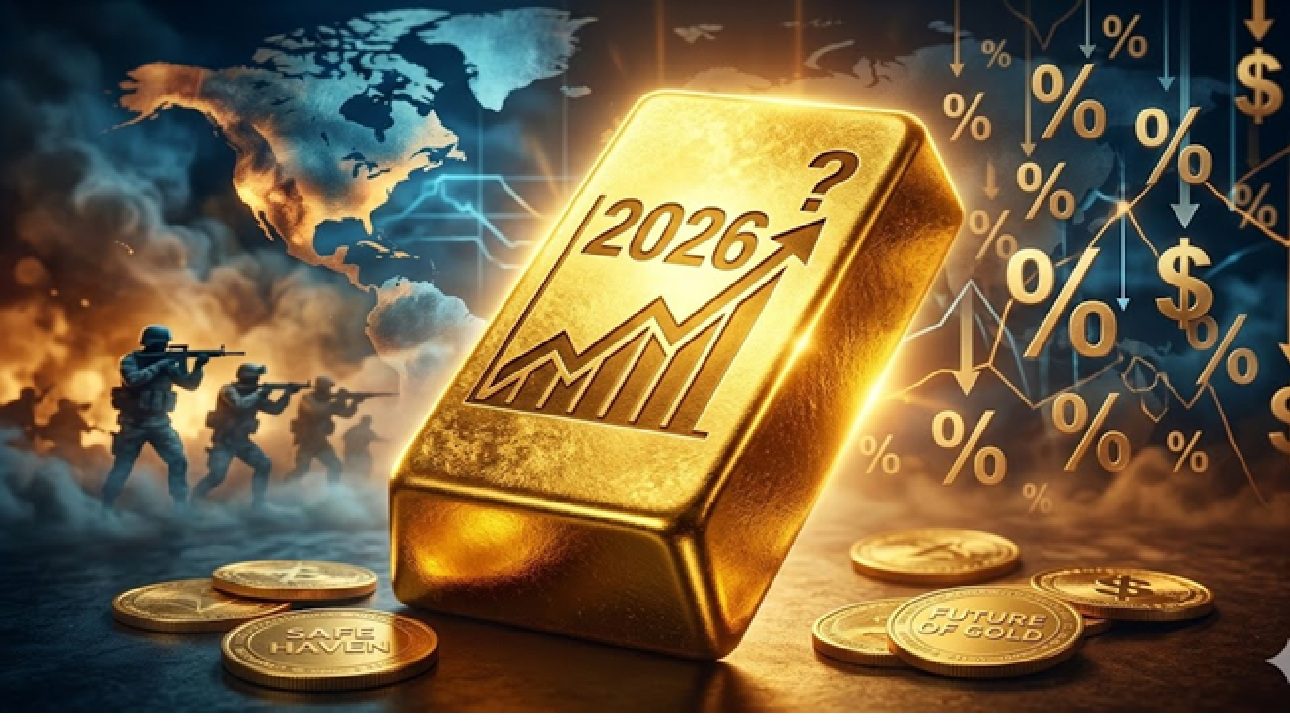
The Rising Global Fascination With Gold
Gold has always held a special place in the global financial system. For centuries, civilizations have treated this precious metal as a symbol of wealth, security, and stability. Even in the era of digital currencies and advanced financial instruments, gold continues to command immense trust among investors, governments, and financial institutions. When economic uncertainty rises or geopolitical tensions escalate, gold often becomes the center of attention.
Recent global developments have once again placed gold under the spotlight. Economic volatility, inflation concerns, and geopolitical conflicts have pushed investors toward assets perceived as safe. Analysts report that gold prices have surged dramatically in recent years, with forecasts suggesting continued momentum in the coming years. Some financial institutions even predict gold could reach $6,000 per ounce in the near future, driven by structural shifts in the global economy and increasing demand from central banks and investors.
Why does gold behave this way during uncertain times? The answer lies in trust. Unlike currencies issued by governments or bonds issued by institutions, gold carries no counterparty risk. It is a tangible asset that cannot be printed or manipulated by monetary policy. This unique characteristic has allowed gold to maintain its reputation as the ultimate financial insurance policy.
In today’s unpredictable world, investors are increasingly asking a crucial question: Will gold continue to shine in the coming years? To answer that, we must explore the deeper economic forces shaping the gold market—from global conflicts and energy routes to bond yields and central bank policies.
Why Gold Always Gains Attention During Crises
Whenever the world faces geopolitical instability or financial stress, gold prices tend to rise sharply. This phenomenon is not random; it is rooted in human psychology and economic fundamentals. Investors instinctively move their wealth away from risky assets such as equities or volatile currencies and toward safer alternatives.
Gold sits at the top of that safe-haven hierarchy. During wars, economic recessions, or financial crises, investors seek assets that can preserve purchasing power. Gold fulfills this role because its supply is limited and it has intrinsic value recognized globally. When uncertainty rises, demand increases rapidly, pushing prices upward.
History provides several examples of this behavior. During the 2008 global financial crisis, gold prices surged as investors feared the collapse of major financial institutions. Similarly, during periods of geopolitical conflict—such as wars in the Middle East or tensions between major powers—gold markets typically experience strong upward momentum.
Another important factor is that gold acts as a hedge against currency depreciation. When governments increase spending or print more money to manage crises, the value of fiat currencies may weaken. Investors often buy gold to protect themselves against this erosion of purchasing power.
This combination of psychology and economic fundamentals explains why gold has repeatedly proven its resilience. When uncertainty dominates headlines, the demand for gold tends to surge, reinforcing its reputation as the world’s most trusted safe-haven asset.
Historical Examples of Gold as a Safe Haven
Throughout history, gold has demonstrated remarkable stability during periods of economic turmoil. For instance, during the 1970s inflation crisis, gold prices skyrocketed as the purchasing power of major currencies declined. Investors sought protection from inflation, and gold offered exactly that.
Another significant moment occurred during the European debt crisis in the early 2010s. As several countries faced potential default, investors worried about the stability of global financial systems. Gold demand surged once again, reinforcing its status as a hedge against systemic risk.
The COVID-19 pandemic provided yet another example. When global markets collapsed in early 2020, investors rushed into gold, driving prices to historic highs. The crisis highlighted how quickly financial markets can destabilize and how crucial safe-haven assets become during such times.
These historical patterns reveal a simple truth: gold thrives during uncertainty. Whether the trigger is inflation, financial instability, or geopolitical conflict, the precious metal consistently attracts investors seeking security.
How Geopolitical Conflicts Influence Gold Prices
Geopolitical conflicts play a major role in shaping commodity markets, particularly gold. When tensions escalate between nations, the resulting uncertainty can ripple across global financial systems. Investors often anticipate economic disruptions, supply shortages, or currency fluctuations, prompting them to shift their capital into safer assets.
Recent tensions in the Middle East illustrate this phenomenon clearly. Conflicts in energy-producing regions can disrupt supply chains, trigger oil price spikes, and create broader economic instability. These conditions often push investors toward gold as a hedge against volatility.
One critical region frequently mentioned in global financial discussions is the Strait of Hormuz, a narrow waterway that serves as a major gateway for oil exports from the Persian Gulf. This strategic chokepoint is essential for global energy supply and plays a crucial role in shaping economic stability worldwide.
The Strategic Importance of the Strait of Hormuz
The Strait of Hormuz is one of the most critical energy corridors in the world. Located between Iran and Oman, it connects the Persian Gulf with the Gulf of Oman and the Arabian Sea. This narrow passage serves as the primary route through which oil from Gulf nations reaches global markets.
Approximately 20–30% of the world’s oil supply passes through this strait, making it one of the most strategically important shipping routes on the planet.
Any disruption in this region can have immediate consequences for global energy markets. Recent geopolitical tensions have already caused significant concerns about shipping safety and energy supply. Reports indicate that disruptions in the strait can drive up energy prices and create ripple effects across global markets.
When energy prices surge, inflationary pressure often follows. Higher energy costs affect transportation, manufacturing, and overall economic activity. Investors anticipating these effects frequently turn to gold as a hedge against inflation and uncertainty.
Energy Supply Shocks and Their Ripple Effects
Energy markets and gold markets are more interconnected than many people realize. When oil prices spike due to geopolitical tensions or supply disruptions, the resulting inflation fears can push investors toward precious metals.
For example, if shipping routes through key chokepoints become unstable, global oil prices can surge quickly. This sudden increase can trigger inflation across multiple sectors of the economy. As inflation expectations rise, investors often purchase gold to preserve their purchasing power.
This dynamic creates a powerful feedback loop. Rising geopolitical tension increases oil prices, which increases inflation concerns, which in turn boosts gold demand. Understanding this relationship helps explain why gold often rallies during periods of geopolitical uncertainty.
The Safe Haven Status of Gold Explained
Gold’s safe-haven status comes from a combination of scarcity, universal acceptance, and independence from government control. Unlike fiat currencies, which depend on central bank policies, gold’s value is determined by global demand and supply dynamics.
Another reason gold remains a preferred safe asset is its lack of counterparty risk. When investors hold bonds or bank deposits, they rely on institutions to honor those obligations. Gold, however, is a physical asset that does not depend on any government or corporation.
This feature becomes especially important during financial crises. When trust in institutions declines, investors prefer assets that do not require trust in a third party. Gold provides exactly that level of security.
As a result, gold continues to serve as a cornerstone of wealth preservation strategies around the world.
Gold vs. U.S. Bonds – The Key Investment Dilemma
Investors often compare gold with government bonds, particularly U.S. Treasury bonds. Both are considered relatively safe investments, but they behave differently in financial markets.
Bonds offer fixed yields, meaning investors receive regular interest payments. Gold, on the other hand, does not provide income. Its value comes purely from price appreciation and its role as a store of wealth.
When bond yields rise significantly, investors may prefer bonds because they offer guaranteed income. However, when yields fall or economic uncertainty increases, gold often becomes more attractive.
Understanding Bond Yields and Their Impact on Gold
Bond yields play a crucial role in determining gold prices. When interest rates rise, the opportunity cost of holding gold increases. Investors may prefer bonds because they provide income while gold does not.
However, when yields decline, this opportunity cost decreases. In such environments, investors may shift funds into gold, driving prices higher.
This dynamic explains why gold prices often move inversely to interest rates. When central banks lower interest rates to stimulate economic growth, gold frequently benefits from increased demand.
Central Banks and Their Growing Appetite for Gold
Central banks have become some of the largest buyers of gold in recent years. Their purchases reflect a broader shift in global financial strategy.
In 2025 alone, central banks purchased approximately 863 tons of gold, reflecting continued strong demand despite slight declines from previous record levels.
These purchases are often motivated by the desire to diversify reserves and reduce dependence on foreign currencies. Gold provides stability and independence, making it an attractive reserve asset for governments.
De-Dollarization and the Shift Away From the U.S. Dollar
Another major factor driving gold demand is the growing trend of de-dollarization. Some countries are exploring ways to reduce reliance on the U.S. dollar in international trade.
Economic alliances and emerging financial systems are increasingly discussing alternative reserve structures. Gold could play a major role in these systems because it is universally accepted and politically neutral.
As this trend develops, gold demand could continue rising globally.
Gold Price Technical Analysis and Market Trends
From a technical perspective, gold markets often move in cycles of consolidation and breakout. Traders analyze price charts to identify resistance levels where selling pressure may occur.
If gold prices break above major resistance levels, the resulting momentum can trigger strong rallies. Some analysts believe that continued geopolitical tension and central bank demand could drive further price increases.
In recent years, gold has experienced record-breaking rallies, with analysts forecasting even higher prices in the future.
Portfolio Strategy: How Much Gold Should You Own?
Financial experts often recommend including gold as part of a diversified investment portfolio. Gold helps balance risk because it tends to perform well during economic downturns.
A common recommendation is allocating around 10% of a portfolio to gold or precious metals. This allocation provides protection against inflation, currency depreciation, and financial crises.
For long-term investors, gold should not be viewed as a speculative asset but as a financial insurance policy. Its role is to protect wealth during uncertain times rather than generate short-term profits.
Conclusion
Gold’s enduring appeal lies in its unique ability to provide stability during uncertain times. From geopolitical conflicts and energy disruptions to falling bond yields and rising central bank demand, multiple factors continue to support the precious metal’s long-term outlook.
Recent developments in global politics and financial markets have once again highlighted gold’s importance as a safe-haven asset. As investors seek protection from volatility, gold remains a trusted store of value.
While short-term price fluctuations are inevitable, the broader trends suggest that gold will likely remain a key component of global financial systems for years to come.
FAQs
1. Why does gold price rise during wars?
Gold rises during wars because investors move their money from risky assets to safer ones. Gold has historically preserved value during geopolitical instability.
2. Is gold a better investment than stocks?
Gold and stocks serve different purposes. Stocks are growth assets, while gold acts as a hedge against inflation and economic uncertainty.
3. How much gold should be in an investment portfolio?
Most financial planners recommend allocating around 5–10% of a portfolio to gold for diversification and risk protection.
4. Do central banks really buy gold?
Yes. Central banks worldwide purchase gold as part of their reserves to diversify assets and reduce reliance on foreign currencies.
5. Can gold prices reach $6000 per ounce?
Some financial institutions and analysts believe gold could reach $6,000 per ounce due to geopolitical tensions, central bank demand, and global economic shifts.