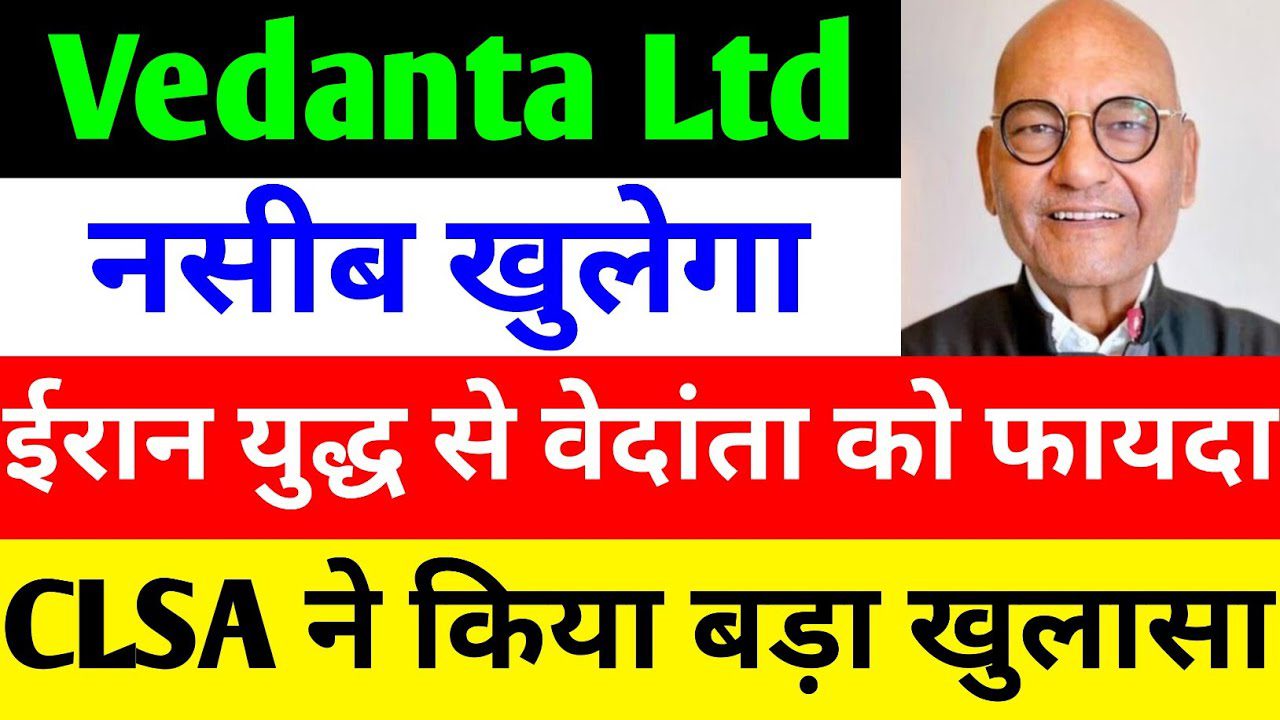
The global financial landscape is currently navigating a period of intense geopolitical volatility. As tensions escalate in the Middle East between Iran and Israel, global markets have retreated into a cautious, bearish stance. However, amidst the widespread selling on Dalal Street, a contrarian narrative is emerging from top-tier global brokerages. CLSA, a leading institutional brokerage, recently released a provocative report suggesting that the ongoing conflict could transform specific Indian metal giants—specifically Vedanta Limited and Tata Steel—into “profit machines.”
While war typically disrupts economic growth, the structural shifts in global supply chains and the unique “backward integration” models of these Indian companies provide them with a strategic advantage. For shareholders of Vedanta, this geopolitical crisis coincides with a massive corporate demerger, creating a perfect storm for value unlocking. This comprehensive analysis explores how Vedanta is positioned to capitalize on rising commodity prices, the mechanics of its upcoming 1-for-4 share split, and why institutional investors remain bullish despite the market correction.
The Global Supply Chain Fracture: Aluminum and Steel Scarcity
The Middle East is a critical artery for the global metal industry. The region accounts for approximately 9% of the world’s primary aluminum production capacity, churning out roughly 6.9 million tons annually. As the conflict intensifies, the logistical and operational risks to this production have reached a breaking point.
The Risk of Smelter Shutdowns
Aluminum production is an energy-intensive process that relies heavily on a stable supply of natural gas. CLSA reports that several major smelters in the Middle East have already begun curtailing production due to supply chain disruptions and energy security concerns.
- The High Cost of Restarting: Once an aluminum smelter shuts down, restarting it is an incredibly expensive and time-consuming process. This means that even if the conflict resolves quickly, the global supply of aluminum will remain constrained for a significant period.
- Price Volatility: We are seeing a situation reminiscent of the 2022 European energy crisis. If global supply drops while demand in sectors like automotive and construction remains steady, aluminum prices will skyrocket.
Impact on Global Commodity Prices
When supply from a major hub like the Middle East is threatened, international buyers scramble for alternatives. This “scramble” drives up the spot prices of metals globally. For companies that produce these metals in stable regions like India, this represents a significant margin expansion opportunity.
Vedanta’s Strategic Advantage: The Power of Backward Integration
CLSA’s bullish stance on Vedanta is not based on speculation but on the company’s structural “Backward Integration” model. In a high-inflation environment, the winners are always the companies that control their own raw materials.
Self-Sufficiency in Raw Materials
Vedanta possesses a robust ecosystem that includes its own bauxite mines, zinc reserves, and oil and gas exploration units.
- Insulation from External Costs: While competitors might struggle with the rising cost of importing raw materials or energy, Vedanta’s integrated model allows it to produce metals at a fixed internal cost and sell them at inflated global market prices.
- Oil and Gas Synergy: Vedanta’s significant presence in the oil and gas sector through Cairn India provides a natural hedge against rising energy costs, which is a primary expense for aluminum smelting.
Vedanta vs. Hindalco: A Comparative Analysis
The brokerage report specifically notes that Vedanta is better positioned than its peer, Hindalco.
- The Hedging Disadvantage: Hindalco has already “hedged” a significant portion of its future sales at older, lower prices. Consequently, Hindalco will not benefit from the current price surge as much as Vedanta will.
- Energy Costs in Europe: Hindalco’s international operations, particularly in Europe, are vulnerable to rising natural gas prices, whereas Vedanta’s domestic-heavy operations remain insulated.
The Mega Demerger: Unlocking Value for Shareholders
The most anticipated event for Vedanta investors is the upcoming corporate demerger. The company is in the process of splitting its massive conglomerate into five separate, independently listed entities.
The 1-for-4 Share Distribution
Under the demerger plan, for every one share of Vedanta Limited currently held, investors will receive four new shares representing the newly formed entities (Aluminum, Oil & Gas, Power, and Base Metals).
- Portfolio Diversification: Instead of holding a single diversified stock, investors will own five specialized companies. This allows the market to value each business based on its specific sector’s P/E multiple, often resulting in a higher combined valuation.
- Institutional Attraction: Pure-play companies are often more attractive to institutional investors and sector-specific mutual funds, which can drive up the stock prices of the individual units post-listing.
Tata Steel: The “Safe Bet” in the Steel Sector
While Vedanta leads the charge in the non-ferrous space, Tata Steel is emerging as the “vanguard” of the steel industry during this crisis.
Control Over Iron Ore Mines
The primary reason for Tata Steel’s resilience is its captive iron ore mines.
- Protecting Margins: As global iron ore prices fluctuate due to shipping risks in the Middle East and Red Sea, Tata Steel remains protected. It does not have to pay market premiums for its ore, ensuring its production costs remain among the lowest in the world.
- The Coking Coal Challenge: Unlike JSW Steel or Jindal Steel, which rely heavily on imported coking coal, Tata Steel’s integrated supply chain mitigates much of the “input-cost shock” that typically hits steelmakers during geopolitical turmoil.
Financial Growth: A Record-Breaking Trajectory
Despite the market’s short-term volatility, Vedanta’s long-term financial health is stronger than ever. The company’s growth over the last four years demonstrates its operational efficiency.
| Metric | FY 2021 | FY 2025 (Projected) | Growth |
| Revenue | ₹88,210 Crore | ₹1,52,968 Crore | ~73% |
| Net Profit | ₹15,033 Crore | ₹25,534 Crore | ~70% |
These figures highlight that even before the current price surge, Vedanta was scaling its operations effectively. The current conflict acts as a catalyst that could propel these numbers even higher in the coming fiscal years.
The “Dividend King” Status and Valuation
Vedanta remains a favorite among income-focused investors due to its aggressive dividend policy.
- Dividend Yield: The company currently offers a 7.26% dividend yield, which is significantly higher than most Nifty 50 companies and even many fixed-income instruments.
- Attractive Valuation: Vedanta trades at a P/E ratio of 19.71. While this is an increase from previous years, it remains highly attractive compared to global peers when considering its growth rate and the impending demerger.
- Stability in Volatility: During the recent 10,000-point correction in the Sensex, Vedanta showed remarkable resilience. While the Metal Index fell by over 2.6%, Vedanta’s decline was limited to 1.6%, showing that “quality buying” is happening at every dip.
Market Sentiment and Institutional Volume
Analysis of trading volumes suggests that institutional players are using the current correction to accumulate Vedanta shares.
- Stable Delivery Percentage: Over the past month, delivery volumes have remained steady at around 55% to 65%. This indicates that the selling is mostly speculative or “noise,” while long-term investors are taking delivery of the stock.
- CLSA’s Upgraded Rating: By increasing its valuation and rating for Vedanta, CLSA has signaled to the global investment community that India’s metal sector is a “safe haven” during the Middle East crisis.
Conclusion: A Strategic Window for Investors
The Iranian conflict is undoubtedly a tragic and destabilizing event for the world. However, from a purely economic perspective, it has created a “supply-side shock” that benefits resource-rich, integrated companies. Vedanta Limited, with its 73% revenue growth, its high dividend yield, and its impending 1-for-4 demerger, stands as a primary beneficiary of this shift.
As the company transitions into five independent entities, it offers a unique opportunity for “Value Unlocking.” For shareholders, the current market dips represent a strategic entry point into a company that CLSA rightly describes as a “Profit Machine.”
Primary SEO Keywords: Vedanta Share News Today, Vedanta Demerger Latest Update, Iran-Israel War Impact on Stock Market, CLSA Metal Sector Report, Tata Steel vs JSW Steel, Vedanta Dividend Yield 2026, Commodity Price Surge 2026.