The Indian stock market in 2025 brims with opportunities and challenges, driven by corporate earnings, regulatory shifts, and global economic trends. Investors seeking to capitalize on high-growth stocks must stay informed about critical updates from leading companies like BSE Limited, Varun Beverages Limited (VBL), and Bajaj Finance Limited. This comprehensive analysis dives into the latest developments, including BSE’s Q4 earnings expectations, VBL’s robust growth trajectory, and Bajaj Finance’s bonus issue and market outlook. With actionable insights, this guide empowers investors to make informed decisions in a dynamic financial landscape.
BSE Limited: Navigating Q4 Earnings Expectations
Understanding BSE’s Market Position
BSE Limited, Asia’s oldest stock exchange, plays a pivotal role in India’s capital markets. As a key player facilitating equity trading, derivatives, and mutual fund distribution, BSE’s financial performance reflects broader market trends. With its Q4 FY25 earnings slated for release on May 6, 2025, investors are keenly awaiting results that could shape the stock’s trajectory.
Q4 FY25 Earnings Outlook
Market expectations for BSE’s Q4 performance are tempered by mixed signals from the capital markets sector. While BSE reported impressive year-on-year (YoY) growth in its previous quarter, with a 95% revenue surge and over 100% profit increase, quarter-on-quarter (QoQ) figures showed a notable decline. This inconsistency raises questions about the company’s ability to sustain momentum.
- Revenue Projections: Analysts anticipate moderate QoQ growth, driven by stable trading volumes. However, YoY comparisons may reflect a slowdown due to high base effects from the previous year.
- Profit Margins: Profit growth could face pressure if trading volumes remain subdued, as observed in Q4 FY24, where volumes dropped significantly.
- Market Sentiment: BSE’s high price-to-earnings (P/E) ratio, currently hovering around 90, signals lofty investor expectations. A failure to deliver exceptional results could trigger a correction.
Challenges in the Capital Markets Sector
The capital markets sector faces headwinds, as evidenced by competitors like CDSL, which reported a 6% YoY revenue decline and a 20% drop in profits in Q4 FY24. These trends highlight reduced trading volumes and lower investor activity, which could impact BSE similarly. Investors must weigh these risks against BSE’s diversified revenue streams, including listing fees and technology services.
Strategic Considerations for Investors
BSE’s elevated P/E ratio, close to its all-time high of 105-110, underscores the market’s demand for stellar earnings. Should Q4 results fall short, the stock may face selling pressure, as investors reassess growth prospects. Conversely, strong numbers could reinforce BSE’s premium valuation. Investors should:
- Monitor trading volume trends leading up to the earnings release.
- Evaluate management commentary on future growth initiatives.
- Stay updated via BSE’s investor relations portal or trusted financial news platforms.
Varun Beverages Limited (VBL): A Growth Powerhouse
VBL’s Stellar Q4 Performance
Varun Beverages Limited, a leading PepsiCo franchisee, has emerged as a standout performer in the FMCG sector. Its Q4 FY24 earnings showcased remarkable growth, with a 29% YoY revenue increase and a 30% surge in volume growth. These figures underscore VBL’s ability to capitalize on strong consumer demand and operational efficiency.
Driving Factors Behind VBL’s Success
VBL’s success stems from its strategic focus on domestic and international expansion, coupled with a robust product portfolio. Key drivers include:
- Domestic Market Stability: VBL’s dominance in India’s beverage market, particularly in carbonated soft drinks and energy drinks, ensures steady revenue streams. Seasonal demand patterns favor strong Q4 performance, aligning with peak consumption periods.
- International Expansion: VBL’s aggressive push into markets like South Africa and Zimbabwe enhances its global footprint. The company’s ability to replicate its Indian success abroad fuels long-term growth.
- Capacity and Distribution Investments: VBL continues to expand its manufacturing facilities and distribution network, including the addition of visi-coolers in domestic and international markets. These investments bolster market penetration and sales volumes.
Brokerage Insights and Market Expectations
Motilal Oswal Financial Services recently published a research report affirming VBL’s growth trajectory. The brokerage maintained its earnings estimates for CY25-26, citing VBL’s consistent volume growth and global expansion plans. Key takeaways include:
- Double-Digit Revenue Growth: VBL’s management projects sustained double-digit revenue growth, driven by favorable industry trends and strategic investments.
- Stable Earnings Momentum: The company’s ability to maintain earnings momentum, despite seasonal fluctuations, reassures investors of its resilience.
- Long-Term Outlook: Brokerages remain bullish on VBL, with target prices reflecting confidence in its ability to outperform peers.
Why VBL Stands Out
Unlike many FMCG peers grappling with inflation and supply chain disruptions, VBL benefits from a favorable industry tailwind. The beverage sector’s resilience, coupled with VBL’s operational excellence, positions it as a top pick for growth-oriented investors. Those considering VBL should:
- Track volume growth metrics in upcoming quarters.
- Assess the impact of international revenues on overall profitability.
- Leverage brokerage reports for updated target prices and recommendations.
Bajaj Finance Limited: Bonus Issue and Market Dynamics
Q4 Earnings and Market Response
Bajaj Finance Limited, a leading non-banking financial company (NBFC), reported its Q4 FY24 earnings recently, but the market’s response was lukewarm. Despite solid operational performance, multiple brokerages expressed cautious optimism, citing concerns over margins and regulatory changes. However, the company’s announcement of a bonus issue and stock split has reignited investor interest.
Bonus Issue and Stock Split Details
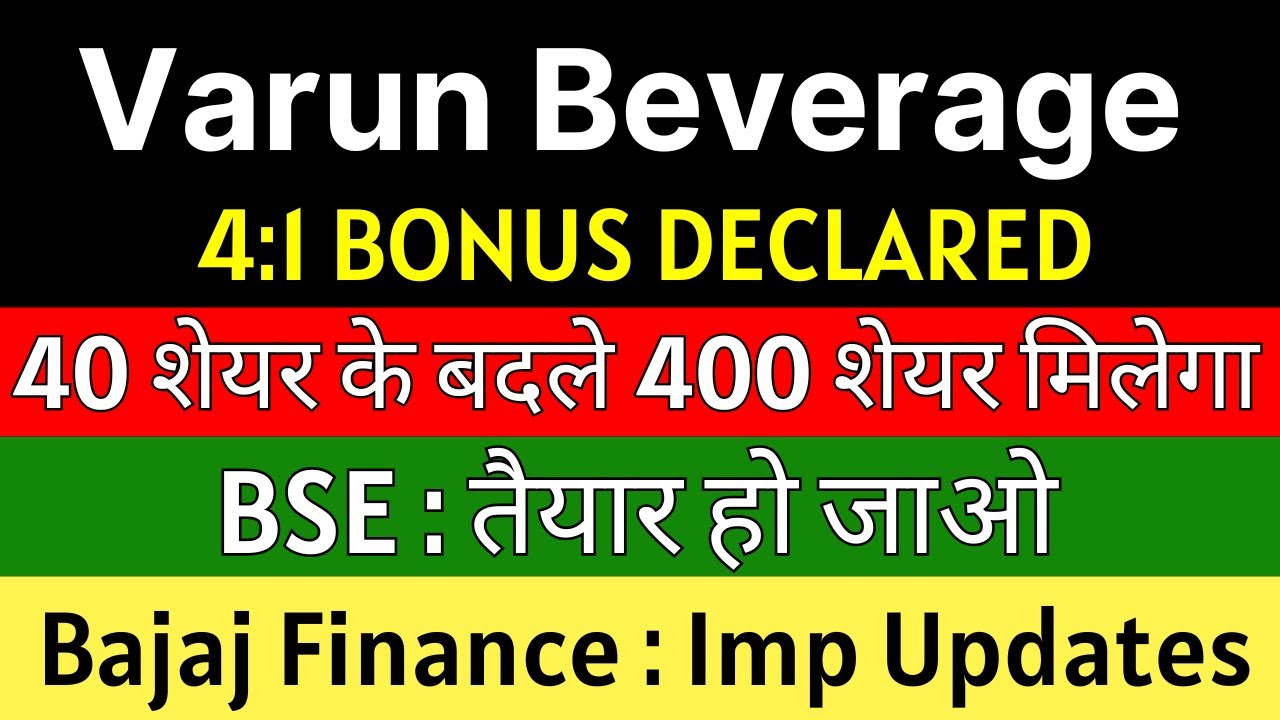
Bajaj Finance announced a 4:1 bonus issue and a 1:2 stock split, significantly enhancing shareholder value. Under the bonus issue:
- For every 10 equity shares held, shareholders receive 40 additional shares.
- For 20 shares, investors receive 80 additional shares.
The stock split reduces the face value of each share, making it more accessible to retail investors. These moves aim to improve liquidity and broaden the investor base, potentially driving long-term demand.
Impact of RBI’s Rate Cuts
The Reserve Bank of India (RBI) recently implemented a 25-basis-point rate cut, lowering the repo rate to stimulate economic growth. This development has significant implications for Bajaj Finance:
- Lower Borrowing Costs: Reduced interest rates make loans more affordable, encouraging higher loan disbursals. Bajaj Finance, with its diverse loan portfolio spanning consumer, SME, and housing finance, stands to benefit.
- Economic Boost: A lower rate environment typically spurs consumer spending and business investments, driving demand for credit.
- Margin Pressures: SBI Chairman C.S. Setty noted that further rate cuts (potentially 50 basis points) could compress bank and NBFC margins. However, Bajaj Finance’s strong asset under management (AUM) growth may offset these pressures.
Bajaj Finance’s Growth Trajectory
Despite margin concerns, Bajaj Finance’s AUM growth remains robust, reflecting its ability to capture market share in a competitive NBFC landscape. The company’s digital transformation initiatives, including its app-based lending platform, enhance customer acquisition and retention. Investors should note:
- AUM Growth: Bajaj Finance’s AUM grew steadily in FY24, driven by strong demand for consumer and personal loans.
- Rate Cut Benefits: A potential 100-basis-point rate cut by FY26 could amplify AUM growth, as lower rates stimulate borrowing.
- Regulatory Risks: Investors must monitor RBI’s stance on NBFC regulations, which could impact lending practices.
Strategic Investment Considerations
Bajaj Finance’s bonus issue and stock split make it an attractive proposition for both existing and new investors. The company’s ability to navigate margin pressures while capitalizing on rate cuts positions it for sustained growth. Investors should:
- Evaluate the impact of rate cuts on loan disbursals and profitability.
- Monitor brokerage updates for revised earnings estimates.
- Consider the stock’s post-split valuation for entry opportunities.
Broader Market Context: Opportunities and Risks
Capital Markets Trends
The capital markets sector, including BSE and CDSL, faces challenges from fluctuating trading volumes and investor sentiment. While BSE’s diversified revenue streams provide some cushion, the sector’s overall performance hinges on macroeconomic stability and retail participation. Investors should watch:
- FII inflows and domestic institutional investments.
- Regulatory changes impacting trading fees and market operations.
- Technological advancements in trading platforms.
FMCG Sector Resilience
VBL’s success highlights the FMCG sector’s resilience, particularly in beverages and packaged foods. Rising disposable incomes and urbanization drive demand, making FMCG stocks like VBL attractive for long-term portfolios. Key trends include:
- Shift toward healthier beverage options, such as low-sugar and energy drinks.
- Expansion into tier-2 and tier-3 cities, boosting rural consumption.
- Sustainability initiatives, influencing consumer preferences.
NBFC Sector Dynamics
Bajaj Finance operates in a competitive NBFC sector, where digital lending and regulatory compliance are critical. Rate cuts and economic recovery could propel NBFC growth, but investors must remain vigilant about:
- Asset quality risks in a low-rate environment.
- Competition from banks and fintech players.
- RBI’s monetary policy outlook for FY26.
Actionable Strategies for Investors
Diversify Across Sectors
Balancing investments across capital markets (BSE), FMCG (VBL), and NBFCs (Bajaj Finance) mitigates sector-specific risks. Each company offers unique growth drivers, from BSE’s market dominance to VBL’s global expansion and Bajaj Finance’s digital prowess.
Stay Informed with Real-Time Updates
Subscribing to financial news platforms, brokerage reports, and company announcements ensures timely insights. For BSE investors, tracking Q4 earnings on May 6, 2025, is critical. VBL and Bajaj Finance shareholders should monitor volume growth and AUM trends, respectively.
Leverage Technical Analysis
Technical charts, as shared by SEBI-registered analysts, provide valuable entry and exit points. VBL’s recent chart updates, for instance, highlight bullish patterns, while Bajaj Finance’s post-split price action could signal buying opportunities.
Assess Risk-Reward Profiles
BSE’s high P/E ratio demands caution, while VBL’s stable growth and Bajaj Finance’s rate-cut benefits offer compelling risk-reward profiles. Conduct thorough due diligence, factoring in macroeconomic trends and company fundamentals.
Conclusion: Seizing Opportunities in 2025
The Indian stock market in 2025 presents a wealth of opportunities for astute investors. BSE Limited’s Q4 earnings will test its premium valuation, while Varun Beverages’ robust growth and Bajaj Finance’s bonus issue underscore their potential. By staying informed, diversifying portfolios, and leveraging technical and fundamental analysis, investors can navigate market volatility and unlock significant returns. Embrace these insights to build a resilient investment strategy tailored to the dynamic financial landscape of 2025.