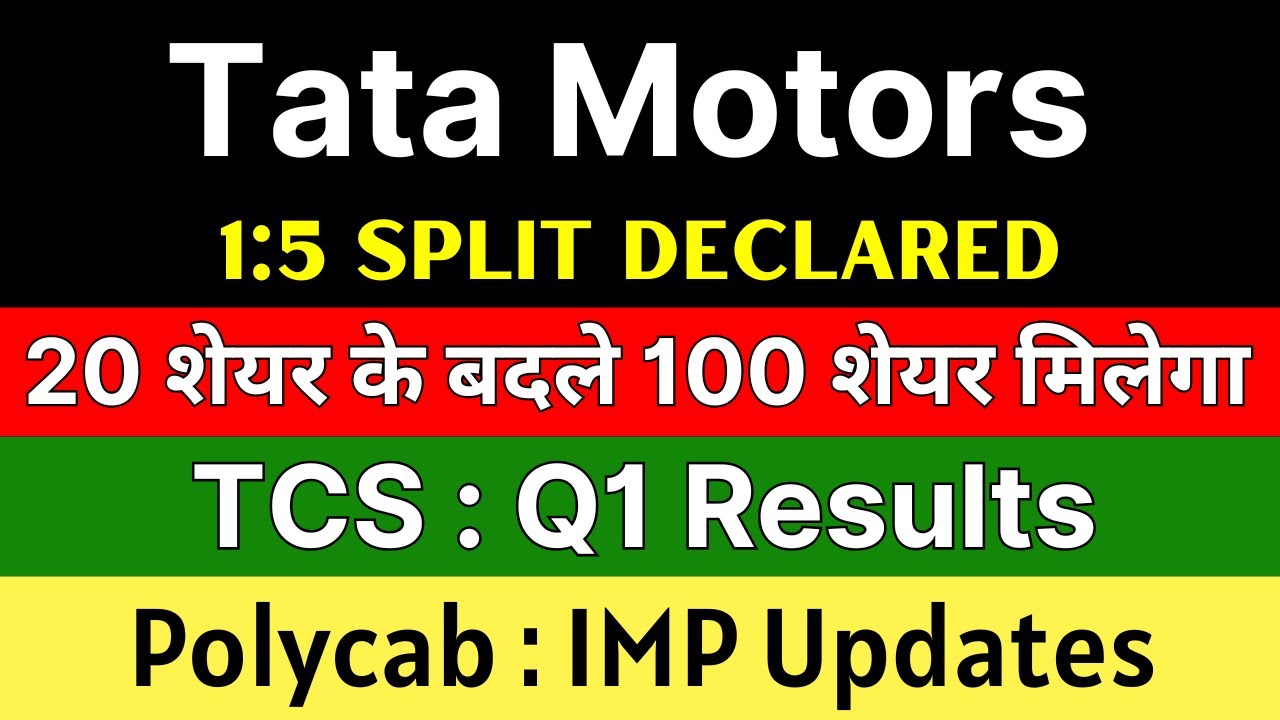
The Indian stock market is abuzz with significant updates from leading companies like Tata Motors, Tata Consultancy Services (TCS), and Polycab India. These updates, ranging from stock splits to quarterly results and strategic business moves, are shaping investor sentiment and market trends. This comprehensive article dives into the latest developments surrounding these companies, offering insights into their financial performance, market strategies, and potential impacts on the share market in 2025. Whether you’re an investor or simply tracking market trends, this guide provides actionable insights to stay ahead.
TCS: Leading the IT Sector with Q1 2025 Results on the Horizon
TCS as India’s IT Powerhouse
Tata Consultancy Services (TCS) stands tall as India’s largest IT company and the second-largest globally, trailing only Accenture. With a massive market capitalization, TCS is a bellwether for the Indian IT sector. Its performance influences not only its stock price but also sets the tone for other IT companies like Infosys, Wipro, and HCL Technologies. As TCS prepares to release its Q1 2025 quarterly results on July 10, 2025, investors are keenly watching for insights into the company’s growth trajectory and the broader IT sector’s outlook.
Expectations for TCS Q1 2025 Results
Analysts anticipate robust growth for TCS in Q1 2025, driven by strong demand for IT services globally. Brokerage houses project that Indian IT companies, including TCS, will report a year-on-year revenue growth of approximately 6%. Additionally, EBITDA is expected to rise by 7%, and profit after tax is forecasted to grow by 6.5%. These projections reflect a positive outlook compared to the previous quarter, where TCS reported a 5% year-on-year revenue increase.
The market’s focus on TCS stems from its role as a market leader. When TCS announces its results, it provides a benchmark for the IT sector’s performance. Investors use these numbers to gauge the health of other IT firms, making TCS’s earnings a critical event for the market. Furthermore, the company’s guidance for the upcoming quarters will be closely scrutinized, as it could signal trends in IT spending, digital transformation, and global economic conditions.
Factors Influencing TCS’s Performance
Several factors will shape TCS’s Q1 2025 results:
- Global IT Demand: The demand for cloud services, artificial intelligence, and cybersecurity solutions continues to drive growth in the IT sector. TCS’s ability to capitalize on these trends will be crucial.
- Currency Fluctuations: As a major exporter, TCS benefits from a weaker Indian rupee, which boosts its revenue in dollar terms.
- Client Spending Patterns: Large enterprises in the U.S. and Europe, TCS’s key markets, are expected to maintain steady IT budgets, supporting revenue growth.
Additionally, the market is watching external factors like the U.S.-India trade negotiations, particularly the tariff pause ending on July 9, 2025. Any developments in these talks could impact TCS’s operations, given its significant U.S. client base.
Why TCS Matters to Investors
TCS’s results are more than just numbers; they reflect the health of the IT sector and influence broader market sentiment. A strong performance could lift other IT stocks, while any underperformance might trigger caution. Investors holding TCS shares or those in competing IT firms should monitor the company’s guidance, revenue growth, and margin trends to make informed decisions.
Tata Motors: Navigating Challenges with a Strategic Focus on EVs
Tata Motors’ Ambitious PLI Scheme Goals
Tata Motors, a leading player in India’s automotive industry, is making headlines with its plan to secure ₹6,500 crore through the Production Linked Incentive (PLI) scheme by 2028. This initiative, backed by the Indian government, aims to boost domestic manufacturing, particularly in the electric vehicle (EV) sector. Tata Motors plans to achieve this by expanding its EV portfolio across passenger and commercial segments, introducing new models, and scaling production capacity.
This move aligns with India’s push for sustainable mobility and positions Tata Motors to capitalize on the growing demand for EVs. By leveraging the PLI scheme, the company aims to enhance its competitiveness, reduce production costs, and strengthen its market position.
Challenges in the EV Market
Despite its early dominance in India’s EV market, Tata Motors has faced challenges in maintaining its market share. In June 2025, competitors like Mahindra and MG Motors captured 53% of EV sales, while Tata Motors’ share dropped to 35.8% from a high of over 80%. This decline has impacted the company’s revenue and profit growth, which previously saw double-digit increases but have now slowed significantly.
The loss of market share highlights the intensifying competition in the EV space. Mahindra’s aggressive product launches and MG Motors’ innovative offerings have challenged Tata Motors’ dominance. To regain its position, the company must innovate, improve its product lineup, and address consumer preferences for range, affordability, and technology.
Debt Reduction: A Strategic Priority
Tata Motors is prioritizing debt reduction to strengthen its balance sheet and achieve a debt-free status. In recent years, the company has made significant progress:
- FY 2023: Borrowed ₹43,000 crore, repaid ₹62,000 crore.
- FY 2024: Borrowed ₹18,000 crore, repaid ₹47,000 crore.
- FY 2025: Borrowed ₹13,000 crore, repaid ₹21,000 crore.
As a result, Tata Motors has reduced its debt by nearly 40-50% from ₹134,000 crore in 2023. This aggressive debt repayment strategy demonstrates financial discipline and positions the company for future investments. Once debt levels are manageable, Tata Motors could redirect funds toward R&D, new EV models, and market expansion, potentially recapturing its lost market share.
Tata Motors’ Stock Split Announcement
In a significant move for shareholders, Tata Motors announced a 1:5 stock split, meaning one share will be divided into five equity shares. This decision aims to make the stock more affordable, increase liquidity, and attract retail investors. While a stock split does not alter the company’s fundamental value, it often boosts investor sentiment and trading volumes.
Investment Outlook for Tata Motors
Tata Motors presents a mixed outlook for investors. On one hand, its focus on debt reduction and the PLI scheme signals long-term growth potential. On the other hand, the declining EV market share and competitive pressures pose risks. Investors should conduct thorough research, focusing on the company’s ability to innovate, expand its EV portfolio, and maintain financial discipline.
Polycab India: Capitalizing on Infrastructure Growth
Polycab India’s ₹6,448 Crore Bharat Net Order
Polycab India, a leading manufacturer of cables and wires, has secured a massive ₹6,448 crore order from Bharat Sanchar Nigam Limited (BSNL) under the Bharat Net project. This initiative aims to provide high-speed internet connectivity to rural India, and Polycab’s role underscores its importance in the country’s infrastructure development. The deal’s size is a testament to Polycab’s manufacturing capabilities and its ability to secure high-value contracts.
This order is a significant positive for Polycab, as it strengthens its revenue pipeline and enhances its reputation as a trusted supplier. The Bharat Net project aligns with India’s digital transformation goals, and Polycab’s involvement positions it to benefit from government-led infrastructure spending.
Potential Shift to Mid-Cap Category
A recent report suggests that Polycab India may be reclassified from a large-cap to a mid-cap stock. This potential downgrade could impact mutual fund investments, as large-cap funds typically prioritize stability, while mid-cap funds focus on growth. If Polycab moves to the mid-cap category, it may see reduced inflows from large-cap mutual funds, potentially affecting its stock price.
However, the impact of this reclassification may be limited if Polycab continues to deliver strong financial performance. The company’s growth in the cables and wires sector, driven by infrastructure projects and rising demand for electrical products, supports its long-term potential.
Polycab’s Growth Drivers
Polycab India’s growth is fueled by several factors:
- Infrastructure Boom: India’s focus on smart cities, renewable energy, and rural electrification creates strong demand for Polycab’s products.
- Export Opportunities: The company is expanding its presence in international markets, diversifying its revenue streams.
- Product Innovation: Polycab’s investments in R&D enable it to offer high-quality, innovative products that meet evolving consumer needs.
Investor Considerations for Polycab India
Polycab India offers a compelling investment case, driven by its strong order book and exposure to India’s infrastructure growth. However, the potential mid-cap reclassification warrants caution. Investors should monitor the company’s execution of the Bharat Net order, its ability to maintain margins, and its response to competitive pressures in the cables and wires industry.
Zensar Technologies: Boosting Investor Confidence with a Stock Split
Zensar’s 1:5 Stock Split
Zensar Technologies recently announced a 1:5 stock split, a move designed to enhance share affordability and liquidity. By dividing one share into five, Zensar aims to attract a broader investor base, particularly retail investors. This announcement has generated positive sentiment among shareholders, as stock splits often signal management’s confidence in future growth.
Zensar’s Role in the IT Sector
As a mid-sized IT services company, Zensar Technologies operates in a competitive space dominated by giants like TCS and Infosys. However, its focus on niche areas like digital transformation, cloud computing, and data analytics has helped it carve out a market position. The stock split could further boost its visibility and appeal to investors seeking exposure to the IT sector.
Investment Implications
The stock split makes Zensar’s shares more accessible, potentially increasing trading volumes. However, investors should evaluate the company’s fundamentals, including revenue growth, client acquisition, and profitability, before making investment decisions. While the stock split is a positive signal, it does not guarantee long-term gains.
Market Context: U.S.-India Tariff Negotiations
Impact of Tariff Talks on Indian Companies
The ongoing U.S.-India tariff negotiations, set to conclude on July 9, 2025, could have far-reaching implications for Indian companies, particularly those with significant U.S. exposure like TCS and Tata Motors. The 90-day tariff pause has provided temporary relief, but the outcome of these talks will determine trade terms moving forward. A favorable deal could boost exports, while stricter tariffs may increase costs for Indian firms operating in the U.S.
Broader Market Implications
The tariff negotiations coincide with TCS’s Q1 results, creating a dual focus for the market. Investors should stay informed about both developments, as they could influence stock prices across sectors. Companies with strong fundamentals and diversified revenue streams are better positioned to navigate potential trade disruptions.
How to Stay Informed and Make Smart Investment Decisions
Leveraging SEBI-Registered Resources
To stay updated on market developments, investors can join SEBI-registered Telegram channels like Trader Pajji, which offer free research, stock charts, and trading calls. With over eight years of experience in options and swing trading, such platforms provide valuable insights for both novice and experienced investors. Always verify the credibility of such resources and cross-check information with your own research.
Conducting Independent Research
While market updates and analyst reports provide valuable insights, investors must conduct their own due diligence. Key steps include:
- Analyzing Financials: Review revenue, profit, and debt metrics to assess a company’s health.
- Monitoring Industry Trends: Stay informed about sector-specific developments, such as EV adoption or IT spending.
- Evaluating Management Guidance: Company outlooks often provide clues about future performance.
Risk Management
Investing in stocks carries inherent risks. To mitigate these, diversify your portfolio, set clear investment goals, and avoid making decisions based solely on market news or stock splits. Consulting a financial advisor can also help tailor your strategy to your risk tolerance and financial objectives.
Conclusion: Positioning for Success in 2025
The latest updates from TCS, Tata Motors, Polycab India, and Zensar Technologies highlight the dynamic nature of the Indian stock market. TCS’s upcoming Q1 results will set the tone for the IT sector, while Tata Motors’ focus on EVs and debt reduction signals long-term potential. Polycab India’s Bharat Net order underscores its infrastructure play, and Zensar’s stock split boosts its appeal to retail investors.
As the market navigates external factors like U.S.-India tariff talks, staying informed and proactive is crucial. By leveraging reliable resources, conducting thorough research, and maintaining a disciplined approach, investors can position themselves for success in 2025. Whether you’re eyeing TCS’s IT dominance, Tata Motors’ EV ambitions, or Polycab’s infrastructure growth, these developments offer opportunities to capitalize on India’s evolving economic landscape.
Disclaimer: The information provided in this article is for educational purposes only and does not constitute investment advice. Always conduct your own research and consult a financial advisor before making investment decisions.