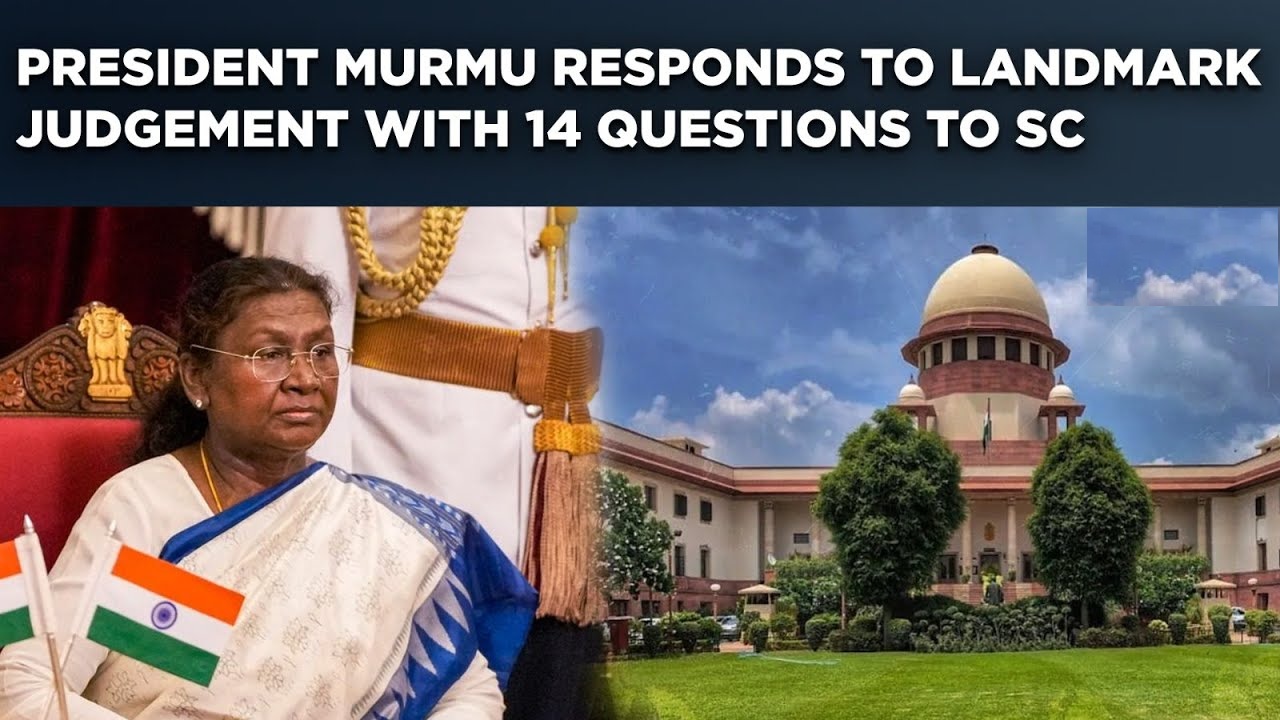
President Droupadi Murmu’s 14 Questions to Supreme Court: Decoding the Governor State Tussle
The relationship between governors and state governments in India has sparked intense debate, particularly in light of recent judicial and constitutional developments. A landmark Supreme Court judgment addressing the actions of Tamil Nadu’s governor has ignited discussions on the scope of gubernatorial powers, the sanctity of state legislative processes, and the judiciary’s role in resolving disputes. In response, President Droupadi Murmu invoked Article 143 of the Indian Constitution to pose 14 critical questions to the Supreme Court, seeking advisory opinions on complex constitutional matters. This article delves into the nuances of this governor-state tussle, the Supreme Court’s rulings, and the implications of the President’s queries, offering a comprehensive analysis for readers seeking clarity on this pivotal issue.
The Genesis of the Governor-State Conflict
The tension between governors and state governments is not new, but it has gained prominence due to recent events in Tamil Nadu. For three to five years, Tamil Nadu Governor R.N. Ravi allegedly delayed or withheld assent to several bills passed by the state assembly. Some bills were kept pending, while others were forwarded to the President for approval, creating a legislative bottleneck. This practice raised questions about the governor’s discretionary powers under Article 200 of the Constitution, which mandates that governors act on bills “as soon as possible.” However, the absence of a specific timeline in Article 200 has allowed governors to delay decisions, sometimes for years, prompting legal and constitutional scrutiny.
The Supreme Court intervened, questioning the Tamil Nadu governor’s prolonged delays and asserting that Article 200 does not grant governors indefinite authority to stall legislative processes. In a significant ruling, the Court invoked Article 142 to ensure “complete justice,” deeming the pending bills—both with the governor and the President—as passed. This decision underscored the judiciary’s commitment to upholding the democratic will of elected state assemblies while highlighting the need for clarity on gubernatorial powers.
Key Issues in the Tamil Nadu Case
- Delayed Assent to Bills: The Tamil Nadu governor’s practice of keeping bills pending for extended periods without action.
- Referral to the President: Forwarding bills to the President, even when state assemblies reaffirmed their decisions without significant changes.
- Constitutional Questions: Whether such delays violate the spirit of Article 200 and undermine state legislative autonomy.
The Supreme Court’s Landmark Judgment
The Supreme Court’s ruling in the Tamil Nadu case clarified the scope of a governor’s powers under Article 200. The Court outlined three options for governors when receiving a bill from the state assembly:
- Assent to the Bill: Approve the bill promptly to enable its enactment.
- Withhold Assent: Return the bill to the assembly with reasons for reconsideration.
- Reserve for the President: Refer the bill to the President for approval in specific circumstances.
The Court emphasized that governors lack the authority to indefinitely delay bills, as Article 200 mandates action “as soon as possible.” Furthermore, the judgment addressed cases where governors referred bills back to the President after state assemblies reaffirmed their decisions without substantial amendments. The Court questioned whether such actions reflected “mala fide intent” or misuse of constitutional powers, suggesting that governors must act within a reasonable timeframe—potentially within three months—to clear pending bills.
Judicial Assertions in the Ruling
- No Indefinite Delays: Governors cannot hold bills hostage for years, as this undermines democratic processes.
- Limited Discretionary Powers: Article 200 does not confer unchecked authority to governors.
- Judicial Oversight: The judiciary can intervene to ensure governors adhere to constitutional mandates.
President Droupadi Murmu’s 14 Questions
In response to the Supreme Court’s ruling, President Droupadi Murmu exercised her powers under Article 143, which allows the President to seek advisory opinions from the Supreme Court on legal or factual matters. The President posed 14 questions to clarify the constitutional boundaries of gubernatorial and presidential powers, the judiciary’s role in reviewing such powers, and the broader implications for India’s federal structure. These questions address critical issues that could reshape the relationship between governors, state governments, and the judiciary.
Overview of Article 143
Article 143 grants the President the authority to consult the Supreme Court for advisory opinions on matters of public importance. These matters may involve legal or factual issues that have arisen or are likely to arise. While the Supreme Court’s advisory opinions are not binding, they carry significant weight in shaping constitutional interpretations and guiding policymaking.
Key Questions Posed by the President
The 14 questions cover a range of constitutional and legal issues, with several standing out for their potential to redefine India’s governance framework. Below are some of the most critical queries:
- Judicial Review of Gubernatorial Discretion: Does the governor’s discretion under Article 200 fall under judicial review? Can the judiciary question the decisions of governors or the President when they exercise their constitutional powers?
- Constitutional Shield Under Article 361: Article 361 provides a constitutional shield to governors and the President, protecting them from legal accountability for actions taken in their official capacity. Does this shield prevent the judiciary from scrutinizing their decisions, such as delaying or referring bills?
- Separation of Powers: By deeming pending bills as passed, did the Supreme Court encroach on the executive and legislative powers of governors and the President? Does such judicial intervention violate the principle of separation of powers?
- Timelines for Action: Can the Supreme Court impose timelines for governors and the President to act on bills, given that the Constitution does not specify such deadlines? Would imposing timelines constitute judicial overreach?
- Scope of Article 142: Can the Supreme Court use Article 142, which allows it to pass orders for “complete justice,” to override the powers of governors and the President under Articles 200 and 201? Does this create a conflict between judicial and executive authority?
- Need for a Larger Constitutional Bench: Should significant constitutional questions, such as those involving gubernatorial powers, be referred to a larger constitutional bench of at least five judges, rather than a smaller bench of two or three judges?
- iteral Review and Judicial Overreach: Is the judiciary acting as a “super legislature” by interpreting constitutional provisions in ways that effectively amend the Constitution? Does this trend toward judicial excess undermine the balance of power?
Implications of the President’s Questions
The President’s queries highlight the delicate balance between federalism, judicial authority, and executive powers in India’s constitutional framework. By seeking clarity on these issues, President Murmu aims to resolve ambiguities that have fueled conflicts between governors and state governments. The Supreme Court’s advisory opinion could set precedents for:
- Gubernatorial Accountability: Defining the extent to which governors can be held accountable for delays or misuse of discretionary powers.
- State Autonomy: Reinforcing the legislative autonomy of state assemblies and protecting them from undue interference by governors.
- Judicial Boundaries: Clarifying the judiciary’s role in overseeing executive actions without overstepping into legislative or executive domains.
- Federal Harmony: Promoting cooperative federalism by ensuring governors act as facilitators rather than obstructions to state governance.
The Broader Context: Governors and Federalism
The governor-state tussle is not unique to Tamil Nadu. Similar conflicts have arisen in states like West Bengal, Kerala, and Telangana, where governors have been accused of acting as agents of the central government rather than impartial constitutional authorities. These disputes underscore the broader challenge of maintaining a balance between central authority and state autonomy in India’s federal structure.
Historical Role of Governors
Governors in India, appointed by the President, serve as the constitutional heads of states. Their primary role is to ensure that state governments function within the bounds of the Constitution. However, their discretionary powers, particularly under Article 200, have often been a source of contention. Historically, governors have been criticized for aligning with the central government’s political agenda, leading to accusations of partisanship.
Federalism Under Strain
The increasing frequency of governor-state conflicts reflects deeper tensions in India’s federal system. As states assert greater autonomy, the role of governors as representatives of the central government has come under scrutiny. The Supreme Court’s rulings and the President’s questions could pave the way for reforms to strengthen cooperative federalism, ensuring that governors act as bridges rather than barriers between the center and states.
Analyzing the Constitutional Provisions
To fully understand the governor-state tussle, it’s essential to examine the key constitutional provisions at play: Articles 200, 201, 142, 143, and 361. Each provision shapes the powers and responsibilities of governors, the President, and the judiciary in distinct ways.
Article 200: Governor’s Powers Over Bills
Article 200 outlines the governor’s options when a bill is presented by the state assembly: assent, withhold assent, or reserve the bill for the President’s consideration. The phrase “as soon as possible” implies prompt action, but the lack of a defined timeline has enabled delays, as seen in Tamil Nadu.
Article 201: President’s Role
Article 201 empowers the President to assent to or withhold assent from bills reserved by the governor. Like Article 200, it does not specify a timeline, creating ambiguity that governors and the President can exploit.
Article 142: Complete Justice
Article 142 grants the Supreme Court broad powers to issue orders necessary for “complete justice.” In the Tamil Nadu case, the Court used this authority to deem pending bills as passed, raising questions about whether such actions infringe on executive powers.
Article 143: Advisory Jurisdiction
Article 143 allows the President to seek the Supreme Court’s advice on matters of public importance. The 14 questions posed by President Murmu leverage this provision to seek clarity on constitutional ambiguities.
Article 361: Constitutional Shield
Article 361 protects governors and the President from legal proceedings for actions taken in their official capacity. The President’s questions probe whether this shield limits judicial scrutiny of their decisions.
Potential Outcomes of the Supreme Court’s Advisory Opinion
The Supreme Court’s response to the President’s questions could have far-reaching consequences for India’s constitutional framework. Possible outcomes include:
- Defined Timelines: The Court may recommend or mandate specific timelines for governors and the President to act on bills, reducing delays.
- Enhanced Judicial Oversight: The Court could affirm its authority to review gubernatorial discretion, ensuring accountability.
- Strengthened Federalism: By curbing misuse of gubernatorial powers, the Court could bolster state autonomy and cooperative federalism.
- Larger Constitutional Bench: The Court may refer the matter to a larger bench to ensure a comprehensive and authoritative ruling.
- Legislative Reforms: The advisory opinion could prompt Parliament to amend the Constitution or enact laws clarifying gubernatorial powers.
Challenges in Implementation
Even if the Supreme Court provides clear guidance, implementing its recommendations may face challenges:
- Political Resistance: Central governments may resist reforms that limit their influence over governors.
- Judicial Restraint: The Court may adopt a cautious approach to avoid accusations of judicial overreach.
- Federal Tensions: States and the center may continue to clash over the balance of power, complicating reforms.
The Road Ahead: Resolving the Tussle
The governor-state tussle underscores the need for constitutional clarity and institutional reforms to strengthen India’s federal democracy. The Supreme Court’s advisory opinion, expected in response to President Murmu’s questions, will likely serve as a turning point in defining the roles of governors, state governments, and the judiciary. As India navigates these challenges, stakeholders—policymakers, jurists, and citizens—must prioritize dialogue and cooperation to ensure that the Constitution’s spirit of federalism and democracy prevails.
Steps Toward Reform
- Constitutional Amendments: Introduce explicit timelines in Articles 200 and 201 to prevent delays.
- Independent Governor Appointments: Reform the appointment process to ensure governors are impartial and independent.
- Judicial Guidelines: Establish clear criteria for when governors can reserve bills for the President.
- Strengthened Federal Dialogue: Foster regular consultations between the center and states to address governance disputes.
Conclusion
President Droupadi Murmu’s 14 questions to the Supreme Court mark a critical juncture in India’s constitutional evolution. By seeking clarity on the governor-state tussle, the President has opened the door to resolving longstanding ambiguities that threaten the balance of power in India’s federal system. The Supreme Court’s advisory opinion will likely shape the future of gubernatorial powers, state autonomy, and judicial oversight, ensuring that India’s democracy remains robust and responsive to the needs of its diverse states. As the nation awaits the Court’s response, one thing is clear: the path to cooperative federalism requires constitutional clarity, institutional accountability, and a shared commitment to democratic principles.