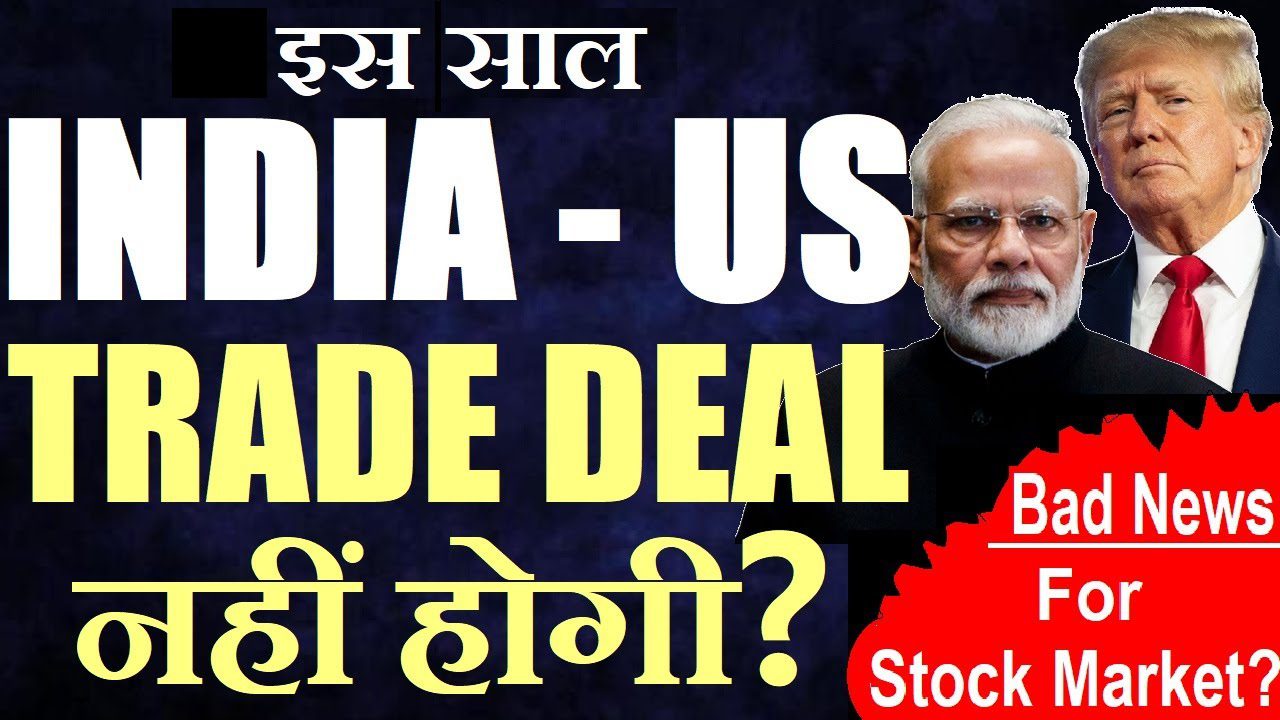
As of December 2025, the bilateral trade deal between these two powerhouses remains a tantalizing prospect, promising to reshape supply chains, boost exports, and stabilize markets. Yet, persistent delays, escalating tariffs, and mixed signals from key figures have injected uncertainty into the equation.
Commerce Minister Piyush Goyal asserts steady progress without deadlines, while US Trade Representative Jamieson Greer hails India’s offers as the “best ever.” Chief Economic Advisor V Anantha Nageswaran even predicts a near-certain closure by March 2026, but whispers of no deal until March 31 suggest otherwise.
This article dives deep into the India-US trade deal 2025 updates, unpacks the tariff disputes at the heart of it all, and analyzes the ripple effects on the Indian stock market. Whether you’re tracking Nifty 50 movements or eyeing export-driven sectors, these insights reveal why this deal could ignite a market rally—or prolong the slump.
Understanding the India-US Trade Deal: A Strategic Partnership in Flux
Leaders from India and the United States kicked off formal negotiations in February 2025, directing officials to forge a mutually beneficial Bilateral Trade Agreement (BTA). The goal? Skyrocket bilateral trade from $191 billion in 2024-25 to a whopping $500 billion by 2030. For context, the US already stands as India’s top trading partner, absorbing 18% of its goods exports and contributing to a $46 billion trade surplus in India’s favor last year.
What drives this push? Geopolitics plays a starring role. With China’s shadow looming large over the Indo-Pacific, the US views India as a vital counterweight. Initiatives like the Quad alliance underscore this, emphasizing secure supply chains in semiconductors, critical minerals, defense tech, and clean energy. India, meanwhile, seeks tariff relief to revive slumping exports—October 2025 saw an 8.58% drop to $6.3 billion, the second consecutive monthly decline.
Negotiators operate on dual tracks: a quick-win framework deal targeting tariffs and a comprehensive pact tackling broader issues like intellectual property (IP) protections and market access. Six rounds of talks have unfolded since spring, with the first phase originally eyed for fall 2025.
Yet, as December unfolds, no signatures grace the dotted line. US Deputy Trade Representative Rick Switzer’s two-day visit to New Delhi on December 10-11 marked yet another chapter, where officials exchanged views on economic ties. Commerce Secretary Rajesh Agrawal met Switzer to hash out differences, but outcomes remain under wraps.
This isn’t just diplomacy; it’s economics in action. Indian exporters in pharmaceuticals, textiles, and IT services crave easier entry into the US market, while American firms eye India’s burgeoning consumer base. A successful deal could diversify global supply chains away from China, fostering resilience against disruptions.
However, sticking points persist—India resists opening its agricultural and dairy sectors to protect 700 million rural livelihoods, while the US demands reciprocity on row crops like corn, soybeans, and wheat. As Greer noted in Senate testimony, India proves a “tough nut to crack,” yet its forward-leaning proposals signal willingness to bend, not break.
Piyush Goyal’s Stance: Progress Without Deadlines in India-US Trade Talks
Enter Piyush Goyal, India’s Commerce and Industry Minister, whose measured optimism anchors the narrative. On December 11, 2025, Goyal told reporters in Jaipur that “talks are continuously progressing… We are moving forward towards a bilateral trade agreement.” He emphasized substance over speed: “We’ve had substantive discussions over several rounds. We should never negotiate with deadlines because you tend to make mistakes then.”
Goyal’s approach reflects India’s playbook—patient, principled, and protective. When pressed on timelines, he sidestepped specifics, noting the current US visit isn’t a formal negotiating round but an introductory one for new Deputy USTR Switzer. This echoes earlier statements: In September, Goyal led a delegation to Washington, followed by a May trip, underscoring sustained momentum. Yet, he fired back at Greer’s praise with a cheeky retort: “If they’re happy with the offer, they should sign. What’s the problem?”
Critics argue this no-deadline policy risks complacency, especially with Trump’s tariffs looming like a storm cloud. But Goyal counters that rushing invites suboptimal terms. His strategy prioritizes India’s red lines—safeguarding farmers and MSMEs—while offering concessions in non-sensitive areas like premium auto imports (think Harley-Davidson easing into Indian roads). This balanced tack has yielded “the best offers ever,” per Greer, including enhanced access for US dairy and meats, though India draws firm boundaries on genetically modified products.
Goyal’s rhetoric also ties into broader economic confidence. With India’s GDP clocking 8.2% growth in Q2 2025, he positions the trade deal as an accelerator, not a lifeline. Exporters echo this: Despite tariff hits, diversification into markets like the EU and Japan cushions the blow. Still, Goyal’s insistence on deadline-free talks fuels speculation—will March 2026 mark victory or another postponement?
US Perspective: Jamieson Greer Calls India a ‘Tough Nut’ with ‘Best-Ever’ Offers
From Washington, the view contrasts yet complements New Delhi’s. US Trade Representative Jamieson Greer, testifying before the Senate Appropriations Committee on December 10, 2025, painted India as a formidable negotiator: “They’re very difficult nut to crack… but they’ve been quite forward leaning. The type of offers they’ve been talking to us about have been the best we’ve ever received as a country.”
Greer’s candor highlights the deal’s high stakes. The US pushes for lower tariffs on industrial goods, almonds, apples, and row crops to diversify agricultural exports away from China-dependent markets. In return, India seeks relief from the 50% tariffs Trump slapped on in early 2025—25% baseline plus 25% for India’s Russian oil purchases, which Washington wants halted entirely. These duties have slashed Indian shipments, exacerbating a trade deficit that irks the White House.
Yet, Greer’s optimism signals breakthroughs. Assistant USTR for South and Central Asia Brendan Lynch, part of Switzer’s delegation, focuses on IP enforcement and regulatory predictability—key for US tech giants eyeing India’s digital boom. House Foreign Affairs Subcommittee Chair Bill Huizenga amplified this on December 10: “A new trade deal… would enhance the relationship… to counterbalance China and preserve a free and open Indo-Pacific.”
Trump’s administration frames the talks as leverage, not punishment. Treasury Secretary Scott Bessent, who attended Supreme Court tariff hearings, warns of fiscal peril if duties vanish without offsets. But with India’s proposals opening doors to US meats and crops, Greer sees a “viable alternative market.” This mutual pragmatism—India’s market access for tariff cuts—hints at phased wins, even if a full free trade agreement (FTA) eludes grasp.
Chief Economic Advisor Hints at March 2026 Closure: Realistic or Overly Optimistic?
V Anantha Nageswaran, India’s Chief Economic Advisor, injects a dose of hope amid the haze. On December 11, 2025, he declared he’d be “surprised if we don’t have it sealed by the end of the financial year”—March 31, 2026. Calling the pact “elusive but nearing completion,” Nageswaran noted that “most issues have been resolved,” crediting ironed-out differences on tariffs and market access.
This timeline aligns with fiscal pragmatism. India’s FY26 budget hinges on export revival; a deal by March could unlock $10-15 billion in additional shipments, per estimates from the Federation of Indian Export Organisations (FIEO). Nageswaran downplays risks: “That’s why it is difficult to give a timeline… However, I would be surprised if there’s no deal by March.”
Skeptics point to historical delays—mini-deals in 2019 fizzled under Biden. Yet, 2025’s geopolitical urgency, post-Trump’s return, shifts dynamics. Nageswaran’s forecast assumes reciprocity: US eases oil-related penalties if India boosts agri-imports. If accurate, it bodes well for rupee stabilization and FII inflows. But whispers of “no deal till March 31” from anonymous sources suggest Nageswaran tempers expectations—progress yes, but fireworks maybe not.
Tariff Disputes at the Core: Trump’s 50% Levies and Supreme Court Showdown
No discussion of the India-US trade deal escapes the tariff elephant in the room. President Trump’s Reciprocal Tariff Policy, enacted via the International Emergency Economic Powers Act (IEEPA) of 1977, imposes 50% duties on Indian exports—10% baseline plus 40% reciprocal for perceived imbalances. Half stems from India’s Russian oil buys, a red line for sanction-hawkish Washington.
Lower courts struck these down as unlawful, affirming Congress’s constitutional commerce authority. The US Court of International Trade ruled in May 2025 that Trump exceeded IEEPA bounds; the Federal Circuit affirmed 7-4 in August. The Supreme Court heard arguments on November 5, 2025, grilling Solicitor General D. John Sauer on emergency powers. Justices across the spectrum—Roberts, Kavanaugh, Barrett—questioned if trade deficits and fentanyl qualify as “emergencies” warranting unilateral tariffs.
A ruling looms imminently, per The Economist’s December 11 analysis. If struck down, refunds could hit $750 billion-$1 trillion, per Treasury estimates—a “fiscal blow” Trump warns could spark depression. Importers like small businesses, represented by Neal Katyal, demand repayments, citing $100 billion in costs and layoffs. Yet, Trump vows a “game two plan,” pivoting to Section 301 or 232 authorities.
For India, victory means tariff evaporation, turbocharging exports. Defeat? Prolonged pain, with October’s 8.5% shipment dip a harbinger. Multinationals like Reliance recalibrate Russian imports, while experts predict rupee breaches 90/USD sans relief. The Court’s shadow adds drama—India watches, waiting to pounce on a favorable verdict before inking terms.
Supreme Court Tariff Case: Implications for India-US Negotiations
The Supreme Court’s tariff scrutiny transcends borders, directly influencing India-US dynamics. Oral arguments revealed bipartisan skepticism: Liberals decried executive overreach; conservatives like Gorsuch probed “major questions” doctrine, demanding clear congressional intent. Chief Justice Roberts noted IEEPA’s silence on tariffs, while Sotomayor highlighted consumer hikes—US households pay 0.5% GDP drag yearly, per Yale’s Budget Lab.
A strike-down, as Reuters predicts likely, forces refunds via the Court of International Trade—feasible, importers insist, via Customs data. Lori Mullins of Rogers & Brown Custom Brokers calls it “not messy” if executed straightforwardly. Trump counters with warnings: Tariffs fund $2,000 rebates; reversal threatens security.
For India, this case is leverage gold. A pro-importer ruling nullifies duties pre-deal, pressuring US concessions. As Seema Sirohi notes on X, tariffs predate talks—lifting them aligns with Quad goals. Yet, Trump’s “other methods” vow—perhaps fentanyl-linked sanctions—keeps India hedging. The December 10 House hearing, with Rep. Bill Huizenga praising India as a China counterweight, underscores stakes: A deal post-ruling could seal Indo-Pacific stability.
Export Declines and Economic Toll: How Delays Hurt Indian Businesses
Delays exact a stealthy toll. India’s US-bound exports, once robust at $86.5 billion in 2024-25, cratered 8.58% in October 2025 amid 50% tariffs. Sectors bear the brunt: Textiles lost 12% market share; pharmaceuticals face IP hurdles; autos grapple with reciprocal duties. FIEO warns of $20 billion annual losses if unresolved.
The rupee, at record lows near 90.46/USD, amplifies pain—import costs soar, eroding margins. Experts like Rajeev Sharan of Brickwork Ratings attribute this to “structural headwinds from higher tariffs and US yields.” Uncertainty fuels volatility: Q3 2025 GST collections dipped 5%, industrial output stagnated.
Businesses adapt—diversifying to EU (post-FTA) and ASEAN—but US remains kingpin. Reliance’s Russian oil pivot exemplifies resilience, yet CEO Mukesh Ambani flags tariff “damages.” Broader economy? GDP holds at 7.2% forecast, but private capex lags, per ADB. A deal could inject 1-2% growth via exports; delays risk stagflation whispers.
Stock Market Reactions: Nifty 50 Slump and FII Exodus Amid Uncertainty
Indian equities mirror the angst. Nifty 50 shed 0.63% on December 11, 2025, closing below 24,700; Sensex plunged 593 points to 80,870. Four-session FII outflows hit ₹98.64 billion ($1.1 billion), per NSE data—year-to-date net sales at ₹2.72 lakh crore. IT dragged indices, down 1.2%, on H-1B jitters despite Trump’s softer tone.
Why the jitters? Trade delay trumps Fed cuts, per Enrich Money’s Ponmudi R.: “Persistent rupee weakness and stalled talks prompt profit-booking.” Mid- and small-caps fell 0.7-1%, with PSUs tanking 3.1% on FDI cap stasis. Q2 earnings offered no balm—weak industrials and GST data soured sentiment.
Analysts like Vinod Nair of Geojit eye consolidation: Nifty range-bound at 24,500-25,000 till clarity. A deal could spark 5-7% rally, FIIs returning on export cheer. Absent that? Boring, volatile trading persists, per transcript echoes. Domestic DIIs stem bleeds (₹3,752 crore inflows December 11), but FIIs dictate direction.
Sector-Specific Impacts: Winners and Losers in Delayed India-US Trade Talks
Not all sectors suffer equally. Pharma and IT, 40% of US exports, face IP and visa crosswinds—yet Greer’s nods suggest concessions. Textiles and gems/jewelry, hit hardest by tariffs, saw 15% YoY declines; a deal revives them via duty cuts.
Autos gleam: India’s premium import relaxations boost US players like Tesla, reciprocating steel tariff relief. Agri-dairy? India’s fortress holds, but limited US crop access averts farmer unrest. Renewables shine—deal accelerates clean energy chains, benefiting Adani Green.
Losers? Exporters like Reliance (oil recalibration) and Tata Steel (aluminum duties). Midcaps in export-heavy baskets lag; Nifty IT eyes rebound on H-1B thaw. Overall, domestics like FMCG weather storms via 8.2% GDP tailwinds.
Rupee Volatility and Currency Risks: Breaching 90/USD?
The rupee’s saga underscores trade woes. At 90.46/USD on December 11, it hit records, down 2.5% quarterly. Anil Kumar Bhansali of Finrex Treasury Advisors pins it on “short positions” and tariff fears: “Deal finalization may initially crumble it further.”
RBI intervenes—$20 billion reserves deployed—but yields pressure persists. Experts forecast 92/USD sans relief, inflating import bills (oil, 80% USD-denominated). A deal stabilizes at 87-88, unlocking FIIs. Nageswaran’s March optimism? It hinges on tariff thaw post-SC ruling.
Geopolitical Dimensions: Countering China and Quad Synergies
Beyond dollars, the deal weaves geopolitics. US Rep. Huizenga’s December 10 hearing framed it as Indo-Pacific bulwark: “Counterbalance China.” Naval pacts, per Jeff Smith, amplify this—India’s Andaman bases check “string of pearls.”
Quad ties deepen: Semicon deals (US chips to India) and minerals pacts fortify chains. Trump’s Russia oil ire tests India, but diversification (US LNG imports up 20%) eases. A pact signals US commitment, deterring Beijing’s aggression.
Corporate Views: Resilience Amid Delays – ET CEO Roundtable Insights
At the ET CEO Roundtable on December 11, titans like Sunil Mittal (Bharti) urged capex surge: “India’s stability is an oasis—scale now.” Uday Kotak echoed: Delays sting, but 7.2% growth endures. JSW’s Sajjan Jindal eyes US infra tie-ups post-deal.
Consensus? India withstands—EU/Japan FTAs buffer. But urgency mounts: “Invest despite overhangs,” Mittal advised, prioritizing innovation over margins.
Future Outlook: Pathways to a Landmark Agreement
As 2025 closes, pathways diverge. Optimists bet on March 2026: SC tariff strike-down forces US hand; phased framework (tariffs first) builds to FTA. Pessimists foresee slips—agri impasses, election-year Trump brinkmanship.
Bull case: $500B trade by 2030, Nifty to 27,000. Bear? Prolonged 24,500 range, rupee woes. X chatter buzzes—@seemasirohi lauds Quad synergies; @borsa_finans101 cheers supply diversification.
Investors, stay vigilant: Switzer’s visit seeds breakthroughs. A signed deal? Markets roar. Delays? Steady the ship. Either way, India-US ties evolve, powering the next economic era.