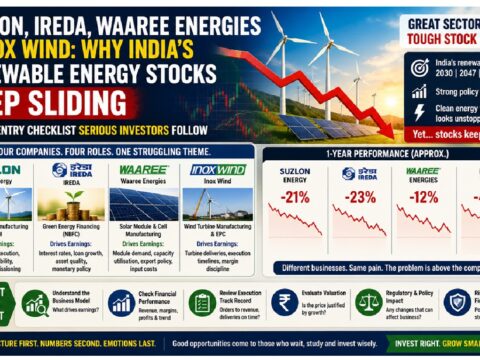
In the dynamic world of finance and investments, staying ahead requires timely and accurate information. This comprehensive article dives into the latest updates on three prominent companies—Bajaj Finance, Indian Renewable Energy Development Agency (IREDA), and Deepak Nitrite. By exploring their recent performance, market expectations, and strategic moves, we aim to provide investors with actionable insights. With a focus on key financial metrics, market trends, and potential growth opportunities, this article is crafted to help you navigate the stock market with confidence.
Bajaj Finance: A Powerhouse in NBFC Sector
Q4 Earnings Expectations Signal Robust Growth
Bajaj Finance, a leading non-banking financial company (NBFC), continues to dominate the Indian financial landscape. As the company prepares to announce its Q4 earnings for the fiscal year 2025, market anticipation is high. Analysts project a double-digit growth in both net interest income (NII) and net profit, driven by strong loan growth observed in the quarter.
According to a Moneycontrol poll, Bajaj Finance’s net interest income is expected to reach ₹9,660 crore, marking a 20% year-on-year (YoY) increase compared to the same quarter last year. Similarly, net profit is forecasted to climb to ₹4,400 crore, reflecting a 15% YoY growth from ₹3,825 crore in Q4 of the previous fiscal year. These projections underscore the company’s ability to capitalize on robust demand for consumer and business loans.
Loan Growth Fuels Optimism
The backbone of Bajaj Finance’s success lies in its consistent loan growth. In Q4, the company reported strong disbursements, particularly in consumer finance and small business loans. This growth aligns with India’s broader economic recovery and increasing consumer spending. The company’s diversified portfolio, spanning personal loans, home loans, and auto financing, positions it to capture market share across multiple segments.
However, investors should note that while revenue growth has been impressive, profit growth has lagged in recent quarters. Over the past year, Bajaj Finance’s revenue grew by 29%, but profit growth was limited to 16%. This disparity highlights the need for improved operational efficiency and cost management, areas the company is likely addressing in its strategic roadmap for 2026.
Potential Bonus, Split, and Dividend Announcements
Adding to the excitement, Bajaj Finance has hinted at potential shareholder rewards, including bonuses, stock splits, or dividends, alongside its Q4 earnings. The company has a history of rewarding investors, and an official update on these initiatives could further boost market sentiment. Investors should closely monitor the announcement for details on the ratio of any bonus or split and the dividend payout, as these moves could enhance the stock’s attractiveness.
Long-Term Growth Outlook
Looking ahead to the financial year 2026, Bajaj Finance’s management guidance will be critical. Analysts expect the company to focus on sustaining loan growth while improving profit margins. With a compounded annual growth rate (CAGR) of 24% in revenue and 29% in profit over the past five years, Bajaj Finance has demonstrated resilience. However, aligning profit growth with revenue growth remains a key challenge. Strategic initiatives, such as leveraging digital platforms and expanding into underserved markets, could drive long-term value creation.
IREDA: Navigating Challenges in the Renewable Energy Sector
A Specialized NBFC Powering Green Energy
The Indian Renewable Energy Development Agency (IREDA), a government-backed NBFC, plays a pivotal role in financing renewable energy projects. Unlike traditional NBFCs, IREDA focuses exclusively on the renewable sector, providing loans and financial support to companies engaged in solar, wind, and other green energy initiatives. As India accelerates its transition to clean energy, IREDA’s strategic importance continues to grow.
Addressing the Gensol Engineering Controversy
Recent news surrounding Gensol Engineering, a renewable energy company, has raised concerns among IREDA investors. Allegations of financial irregularities and promoter misconduct led to a sharp decline in Gensol’s stock price, sparking fears about IREDA’s exposure to the company. Reports suggest that IREDA financed a portion of Gensol’s debt, prompting questions about potential financial risks.
However, a closer analysis reveals that the impact on IREDA is likely minimal. Gensol’s debt represents a small fraction of IREDA’s expansive loan book. Even in a worst-case scenario, any financial strain from Gensol’s collapse would have a marginal effect on IREDA’s overall financials. To mitigate risks, IREDA has taken proactive steps by filing a complaint with the Economic Offences Wing (EOW) against Gensol Engineering, signaling its commitment to recovering funds.
Stock Correction and Valuation Insights
IREDA’s stock has experienced a significant correction, declining by 45% over the past few months. This downturn was partly driven by the Gensol controversy and broader market volatility. Despite the correction, IREDA’s earnings per share (EPS) have remained consistent, indicating underlying financial stability. For long-term investors, the current valuation may present an attractive entry point, provided the company maintains its growth trajectory.
Growth Opportunities in Renewable Energy
India’s ambitious renewable energy targets, aiming for 500 GW of non-fossil fuel capacity by 2030, bode well for IREDA. As a key financier in this sector, IREDA is well-positioned to benefit from increased government spending and private-sector investments in green energy. The company’s government backing further enhances its credibility, ensuring access to low-cost capital for lending.
Investors should focus on IREDA’s loan book growth, asset quality, and management commentary on future projects. While short-term challenges persist, the long-term outlook for IREDA remains promising, driven by India’s renewable energy boom.
Deepak Nitrite: A Chemical Giant Facing Headwinds
Struggles with Profitability
Deepak Nitrite, a leading player in India’s chemical industry, has faced challenges in boosting profitability over the past three years. Both one-year and three-year CAGRs for profit and stock price have been negative, reflecting operational and market pressures. The company’s Q2 results revealed an increase in long-term debt, rising from ₹500 crore to ₹550 crore, raising concerns about its financial health.
Impact of Falling Crude Oil Prices
A silver lining for Deepak Nitrite lies in the recent decline in crude oil prices. Over the past year, crude oil prices have dropped by 24%, with a 12% decline in the last month alone. Since crude oil is a key raw material for chemical production, lower prices could reduce Deepak Nitrite’s input costs, potentially boosting profit margins. If the company capitalizes on this trend, it could see improved financial performance in the coming quarters.
Q4 Earnings Outlook
Expectations for Deepak Nitrite’s Q4 earnings remain subdued, with analysts predicting modest results. However, the company’s revenue growth has been positive, offering a foundation for recovery. The key question is whether Deepak Nitrite can leverage lower raw material costs to enhance margins and drive profit growth. Management’s commentary on margin recovery, revenue growth, and debt reduction will be crucial for restoring investor confidence.
Investor Sentiment and Shareholding Trends
Recent shareholding data indicates slight buying interest from promoters and foreign institutional investors (FIIs). While not significant, this activity suggests cautious optimism about Deepak Nitrite’s prospects. Investors should monitor management guidance on crude oil price trends and their impact on the chemical sector, as these factors could drive a turnaround in 2026.
Strategic Path Forward
To regain momentum, Deepak Nitrite must focus on operational efficiency, debt reduction, and product diversification. The chemical industry is highly cyclical, and companies that adapt to market shifts tend to outperform. By optimizing its cost structure and exploring high-margin product segments, Deepak Nitrite could position itself for a rebound in the next financial year.
Comparative Analysis: Bajaj Finance, IREDA, and Deepak Nitrite
To provide a clearer perspective, let’s compare the three companies across key financial and market metrics:
| Metric | Bajaj Finance | IREDA | Deepak Nitrite |
|---|---|---|---|
| Sector | NBFC (Consumer Finance) | NBFC (Renewable Energy) | Chemicals |
| Q4 NII Growth (YoY) | 20% (Expected) | N/A | N/A |
| Q4 Profit Growth (YoY) | 15% (Expected) | Stable EPS | Negative (Recent Trend) |
| Stock Correction | Stable | 45% Decline | Negative CAGR |
| Key Strength | Strong Loan Growth | Government Backing | Falling Raw Material Costs |
| Key Challenge | Profit Margin Alignment | Gensol Debt Exposure | Profitability and Debt |
| Long-Term Outlook | Positive (Digital Expansion) | Positive (Renewable Boom) | Cautious (Margin Recovery) |
This comparison highlights the unique opportunities and risks associated with each company. Bajaj Finance stands out for its consistent growth, while IREDA offers exposure to the high-potential renewable energy sector. Deepak Nitrite, despite current challenges, could benefit from favorable market conditions in the chemical industry.
Investment Strategies for 2025
Diversification Across Sectors
Investors seeking to capitalize on the updates from Bajaj Finance, IREDA, and Deepak Nitrite should consider diversifying across sectors. Bajaj Finance offers stability in the consumer finance space, IREDA provides exposure to the growing renewable energy market, and Deepak Nitrite represents a cyclical play in the chemical sector. A balanced portfolio can mitigate risks while capturing growth opportunities.
Focus on Management Guidance
For all three companies, management commentary will play a pivotal role in shaping investor sentiment. Bajaj Finance’s guidance on profit margin improvement, IREDA’s outlook on loan book growth, and Deepak Nitrite’s strategy for margin recovery will provide critical insights. Investors should prioritize companies with clear, actionable plans for addressing challenges and driving growth.
Monitor Macro Trends
Macroeconomic factors, such as interest rates, crude oil prices, and government policies, will influence the performance of these companies. For instance, falling crude oil prices benefit Deepak Nitrite, while supportive renewable energy policies bolster IREDA. Staying informed about these trends can help investors make timely decisions.
Long-Term vs. Short-Term Perspective
While short-term volatility may impact stock prices, all three companies have strong long-term potential. Bajaj Finance’s digital transformation, IREDA’s alignment with India’s green energy goals, and Deepak Nitrite’s potential margin recovery make them compelling choices for patient investors. Conduct thorough research and align investments with your risk tolerance and financial goals.
Conclusion: Positioning for Success in 2025
The latest updates on Bajaj Finance, IREDA, and Deepak Nitrite offer valuable insights for investors navigating the Indian stock market. Bajaj Finance’s robust loan growth and potential shareholder rewards make it a standout performer. IREDA, despite recent challenges, remains a key player in the renewable energy sector with significant growth potential. Deepak Nitrite, while facing profitability hurdles, could stage a recovery driven by falling crude oil prices and strategic initiatives.
By staying informed, diversifying investments, and focusing on long-term trends, investors can position themselves for success in 2025. Whether you’re a seasoned investor or a newcomer, these insights provide a roadmap for making informed decisions in a dynamic market.