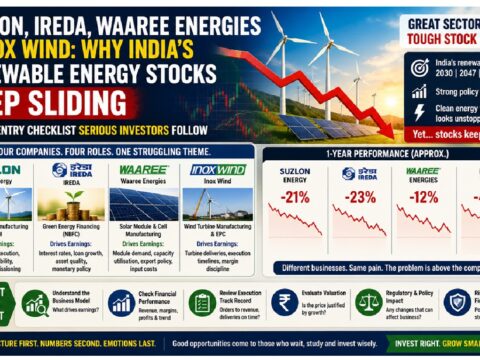
India’s renewable energy revolution is accelerating at an unprecedented pace, and one company determined to stay ahead of the curve is Suzlon Energy. Once known primarily as a wind turbine manufacturer, Suzlon is now preparing for a transformational shift that could redefine its future.
The company has unveiled an ambitious strategy known as Suzlon 2.0, signaling its intention to evolve beyond traditional wind energy and become a comprehensive clean energy solutions provider. The move reflects changing market dynamics, growing demand for energy storage, and the increasing need for uninterrupted renewable power supply.
As investors and industry observers closely monitor the company’s progress, one key question remains: Can Suzlon successfully execute this transformation and emerge as one of India’s largest clean energy companies?
The Renewable Energy Sector Is Entering a New Phase
Renewable energy has long been considered one of the most promising sunrise sectors globally. Governments, businesses, and consumers are increasingly shifting toward sustainable energy solutions as the world aims to reduce carbon emissions and dependence on fossil fuels.
For years, wind and solar power generation dominated discussions around renewable energy. However, the industry is now entering a new phase where simply generating power is no longer enough.
The focus has shifted toward:
- Energy storage solutions
- Grid stability
- Continuous power supply
- Smart energy management
- Integrated clean energy ecosystems
This transition is creating new opportunities for companies willing to adapt.
Suzlon believes the next major growth opportunity lies not just in producing renewable energy but also in storing, managing, and delivering it efficiently.
Why Suzlon Is Rethinking Its Business Model
Traditionally, Suzlon built its business around manufacturing wind turbines and developing wind energy infrastructure.
While wind power remains a critical component of India’s renewable energy strategy, the company recognizes that customer expectations have evolved significantly.
Large industrial consumers, data centers, manufacturing facilities, and commercial enterprises no longer seek standalone renewable power generation solutions. Instead, they demand:
- Reliable 24/7 power availability
- Hybrid renewable energy systems
- Energy storage capabilities
- Operational maintenance support
- End-to-end energy management solutions
This shift is driving Suzlon’s strategic transformation.
The company believes that future growth will increasingly come from businesses that can store renewable energy and deliver it whenever customers need it.
Understanding the Difference Between Energy Generation and Energy Storage
One of the central themes behind Suzlon 2.0 is the distinction between energy generation and energy management.
The Challenge with Renewable Power Generation
Solar and wind energy are inherently variable.
Solar power depends on sunlight availability. Cloud cover, weather conditions, and nighttime periods can significantly impact generation.
Similarly, wind energy depends on wind speeds and weather patterns. If wind conditions are unfavorable, energy production declines.
Because of these factors, renewable energy generation is often categorized as variable energy production.
This variability creates challenges for businesses that require uninterrupted electricity.
Why Energy Storage Is Becoming Critical
Energy storage systems solve this problem by capturing excess renewable energy and storing it for future use.
Instead of relying solely on real-time generation, stored energy can be deployed whenever demand arises.
This allows businesses to:
- Maintain continuous operations
- Reduce dependence on conventional power sources
- Improve energy reliability
- Enhance grid stability
- Optimize energy costs
Suzlon believes this segment represents one of the most attractive growth opportunities in the renewable energy sector.
Suzlon 2.0: A Major Strategic Transformation
Suzlon’s new vision extends far beyond wind turbine manufacturing.
The company plans to build a broader clean energy ecosystem that includes:
Energy Storage Solutions
Energy storage is expected to become a core pillar of Suzlon’s future business strategy.
The company aims to participate in:
- Battery energy storage systems
- Utility-scale storage projects
- Industrial energy storage solutions
- Grid-support applications
Solar Energy Expansion
In addition to wind power, Suzlon intends to expand into solar-related opportunities.
Hybrid renewable systems combining wind and solar power are becoming increasingly attractive because they improve generation consistency and operational efficiency.
Energy Supply and Management
Rather than focusing solely on energy production infrastructure, Suzlon plans to provide comprehensive energy solutions.
This includes:
- Energy supply management
- Project operations
- Long-term maintenance services
- Renewable energy optimization
The goal is to create recurring revenue streams while strengthening customer relationships.
Why Energy Storage Could Become the Most Valuable Segment
Industry experts increasingly believe that the future of renewable energy will be driven by storage and distribution capabilities rather than generation alone.
Consider a simple example.
A solar plant can generate electricity only when sunlight is available.
A wind farm can generate electricity only when favorable wind conditions exist.
However, businesses, factories, hospitals, and data centers require electricity every minute of every day.
This creates immense value for companies capable of:
- Storing energy efficiently
- Managing power availability
- Delivering uninterrupted electricity
Suzlon appears to be positioning itself directly within this high-growth segment.
Growing Demand from Data Centers and Industrial Customers
One of the strongest drivers behind Suzlon’s strategic shift is the rapid growth of energy-intensive industries.
Data Centers
Modern data centers require:
- Continuous power availability
- High reliability
- Low downtime
- Sustainable energy sources
As artificial intelligence, cloud computing, and digital services expand, energy demand from data centers continues to surge.
These facilities are increasingly seeking partners capable of providing complete energy solutions rather than just power generation assets.
Industrial Consumers
Large industrial facilities face similar requirements.
Manufacturers need:
- Stable electricity supply
- Cost-effective energy management
- Reduced carbon footprints
- Reliable backup systems
Companies that can integrate renewable generation with energy storage and supply management are likely to gain a competitive advantage.
Suzlon’s Long-Term Growth Vision
The company has outlined ambitious growth targets under its Suzlon 2.0 strategy.
10 GW Annual Renewable Energy Ambition
Suzlon aims to support approximately 10 gigawatts of renewable energy deployment annually in the future.
This represents a significant scale-up compared to its historical operations.
70 GW Renewable Energy Project Ecosystem
The company also plans to expand its involvement in renewable energy projects, operations, and maintenance services across a much larger installed base.
Long-term maintenance contracts can provide stable recurring revenues and improve earnings visibility.
Becoming a Leading Clean Energy Company
Management has expressed its ambition to transform Suzlon into one of India’s largest clean energy solution providers.
Rather than remaining a pure-play wind energy company, Suzlon wants to become an integrated renewable energy platform.
Financial Performance Shows Significant Improvement
The company’s strategic confidence is supported by a dramatic financial turnaround over recent years.
From Survival Mode to Growth Mode
Just a few years ago, Suzlon faced severe financial challenges.
High debt levels and operational difficulties placed significant pressure on the business.
However, management implemented a series of restructuring initiatives that gradually improved the company’s financial health.
Today, Suzlon is viewed very differently by both investors and industry participants.
Revenue Growth Continues
Recent financial results demonstrate strong business momentum.
The company has reported substantial increases in revenue over the past few years, indicating growing demand for its products and services.
Increasing order inflows and project execution have supported this growth trajectory.
Profitability Has Improved
Alongside revenue growth, Suzlon has also strengthened profitability.
Improved operational efficiency, better cost management, and stronger execution capabilities have contributed to healthier margins and earnings performance.
For investors, sustained profitability is often one of the most important indicators of business quality.
A Stronger Balance Sheet Supports Future Expansion
One of the most encouraging developments has been Suzlon’s balance sheet improvement.
Reduced Debt Burden
The company has worked aggressively to reduce financial leverage.
Lower debt levels provide several advantages:
- Reduced interest expenses
- Greater financial flexibility
- Improved creditworthiness
- Enhanced ability to invest in growth initiatives
Healthy Cash Position
A stronger cash position enables Suzlon to pursue expansion opportunities without excessive reliance on external financing.
This becomes especially important as the company enters capital-intensive areas such as energy storage and integrated clean energy infrastructure.
Institutional Confidence Is Growing
Institutional participation often serves as an indicator of market confidence.
Over time, both domestic and foreign institutional investors have shown increasing interest in Suzlon.
Several factors contribute to this confidence:
- Strong industry tailwinds
- Improved financial performance
- Expanding order book
- Debt reduction efforts
- Long-term growth opportunities
Although institutional ownership does not guarantee future performance, it often reflects extensive due diligence by professional investors.
Execution Will Determine Success
While Suzlon’s vision is ambitious and strategically compelling, execution remains the key factor.
Investors should understand that announcing a strategy and successfully implementing it are two very different things.
Several areas deserve close monitoring:
Capital Allocation
Expanding into energy storage and broader clean energy solutions will require significant investment.
Investors should watch how effectively management allocates capital toward these opportunities.
Project Execution
New projects must be delivered efficiently and profitably.
Execution quality will play a critical role in determining whether growth translates into shareholder value.
Technology Partnerships
Energy storage is a rapidly evolving industry.
Strategic partnerships, technology adoption, and innovation will influence Suzlon’s competitive position.
Market Adoption
Ultimately, customers must embrace the company’s expanded offerings.
Strong adoption rates would validate management’s strategic direction.
Risks Investors Should Consider
Despite the positive outlook, several risks remain.
Competitive Pressure
The renewable energy sector is highly competitive.
Large domestic and global players are actively investing in energy storage and integrated renewable solutions.
Technology Risks
Battery technology continues to evolve rapidly.
Companies must continuously innovate to remain relevant.
Regulatory Changes
Government policies significantly influence renewable energy economics.
Changes in incentives, tariffs, or regulations could impact growth expectations.
Execution Challenges
Large-scale strategic transformations inherently involve operational risks.
Not every expansion initiative delivers the expected results.
Why the Market Is Paying Attention
Suzlon’s transformation is attracting attention because it aligns with broader industry trends.
The renewable energy industry is moving toward:
- Hybrid energy systems
- Battery storage
- Smart grid integration
- Energy-as-a-service models
- Continuous clean power delivery
Companies positioned within these trends may benefit from long-term structural growth.
Suzlon’s decision to evolve beyond wind energy reflects management’s recognition of where the industry is heading.
Final Thoughts
Suzlon Energy is entering a new chapter in its corporate journey. The company is no longer content with being viewed solely as a wind turbine manufacturer. Through its Suzlon 2.0 strategy, management aims to transform the business into a comprehensive clean energy solutions provider focused on renewable generation, energy storage, supply management, and long-term maintenance services.
The opportunity is significant. As India accelerates its renewable energy transition and energy storage demand rises, companies capable of delivering integrated solutions could capture substantial market share.
At the same time, investors should remain focused on execution. Strategic announcements are only the beginning. The real test will be how effectively Suzlon converts its vision into revenue growth, profitability, and sustainable competitive advantages.
If the company successfully executes its clean energy transformation, Suzlon could become one of the most closely watched renewable energy growth stories in India over the coming decade.