The Alakh Pandey Phenomenon: From YouTube to EdTech Unicorn
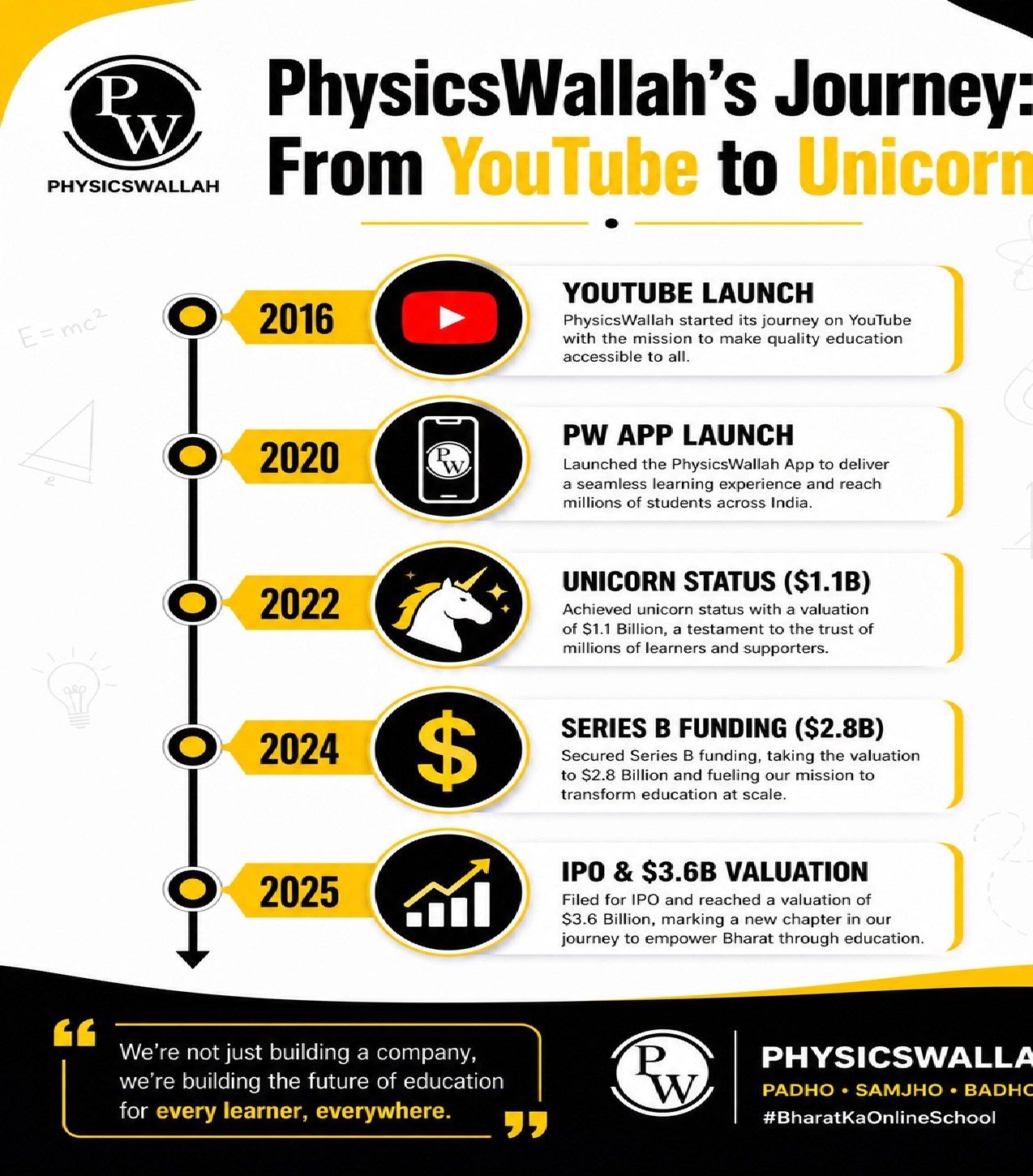
In the dynamic landscape of Indian education, few stories resonate as powerfully as that of PhysicsWallah (PW). What began as a humble YouTube channel by Alakh Pandey in 2016, dedicated to making physics accessible, has blossomed into a formidable edtech unicorn, PhysicsWallah Ltd (PWL). This remarkable journey from a digital classroom to a publicly listed entity on the Indian stock exchange marks a significant milestone, not just for the company but for the entire edtech sector
PhysicsWallah’s rise is a testament to its unique blend of affordability, quality content, and a deep understanding of student needs. In an industry often criticized for its high costs and exclusive nature, PWL has carved a niche by democratizing education, reaching millions of students in Tier-2 and Tier-3 cities across India. But beyond the inspiring narrative, what does PhysicsWallah Ltd (PWL) offer to investors in 2026? Is its stock a golden opportunity, or does it carry inherent risks? This comprehensive analysis will delve into PWL’s business model, financial performance, market position, and future prospects, providing insights for both novice and seasoned investors.
PhysicsWallah’s Hybrid Business Model: A Game Changer in EdTech
PhysicsWallah’s success lies in its innovative hybrid education system, which seamlessly integrates online and offline learning experiences. This model caters to a diverse student base, offering flexibility and accessibility that traditional coaching centers often lack
Online Learning: The Digital Backbone
At its core, PhysicsWallah leverages a robust digital platform, including its mobile app and website, to deliver high-quality educational content. This online segment provides:
•Live and Recorded Classes: Comprehensive courses for competitive exams like JEE, NEET, and UPSC, as well as upskilling programs in data science, finance, and software development.
•Doubt-Solving Sessions: Interactive platforms for students to clarify their queries.
•Affordable Pricing: A key differentiator, offering courses at significantly lower prices compared to competitors, making quality education accessible to a broader demographic.
In FY25, the online segment contributed significantly to PWL’s revenue, demonstrating its continued strength and reach
Offline Expansion: Vidyapeeth and Pathshala Centers
Recognizing the importance of physical presence and personalized interaction, PhysicsWallah has aggressively expanded its offline footprint through Vidyapeeth and Pathshala centers. By March 2025, PWL had established over 198 centers across 109 cities, including residential programs for JEE and NEET aspirants . This expansion strategy is crucial for:
•Enhanced Student Engagement: Providing a structured learning environment and direct interaction with experienced faculty.
•Hybrid Learning Advantage: Combining the flexibility of online learning with the discipline and community of offline classrooms.
•Penetration into Underserved Markets: Reaching students in smaller towns and cities who may not have access to premium coaching facilities.
The offline channel’s contribution to the top line has grown substantially, nearly matching that of the online segment in FY25, underscoring the success of this hybrid approach
Revenue Streams: Diversification and Growth
PhysicsWallah’s revenue model is diversified, ensuring multiple avenues for growth:
•Online & Offline Courses: The primary revenue driver, generating ₹2,498.6 crore in FY25 from coaching services alone
•Books & Merchandise Sales: Sales of study materials, books, and stationery contributed approximately ₹259.2 crore in FY25
•Value-Added Services: Income from hostel facilities, transportation, and content access further bolsters revenue.
•Ads & Partnerships: Additional income from YouTube advertisements and strategic brand promotions.
This multi-faceted approach to revenue generation provides stability and growth potential, differentiating PWL from many pure-play online edtech platforms.
A Deep Dive into PhysicsWallah’s Financial Performance
Understanding PhysicsWallah’s financial trajectory is paramount for any potential investor. The company has demonstrated impressive revenue growth while strategically addressing its profitability challenges.
Revenue Growth: A Consistent Upward Trajectory
PhysicsWallah has exhibited remarkable revenue growth over the past few fiscal years. From ₹744 crore in FY23, its operating revenue surged to ₹1,941 crore in FY24, and further to ₹2,887 crore in FY25, representing a nearly 49% year-on-year growth . Projections for FY26 estimate revenue to reach approximately ₹3,900 crore, indicating sustained expansion. This growth is primarily driven by the increasing adoption of its online and hybrid learning programs, coupled with its aggressive offline expansion.
The Path to Profitability: Navigating Losses to Positive EBITDA
While rapid expansion often comes with initial losses, PhysicsWallah has shown a clear path towards profitability. The company significantly narrowed its net loss from ₹1,131 crore in FY24 to ₹243 crore in FY25, a substantial reduction of 78%. More importantly, PWL achieved a positive EBITDA of ₹192.5 crore in FY25, with an EBITDA margin of 6.33%. This shift to positive operational profitability is a critical indicator of a sustainable business model. The estimated EBITDA for FY26 is around ₹350 crore, signaling continued improvement
Key Financial Metrics: FY23-FY26 Snapshot
To provide a clearer picture, here’s a summary of PhysicsWallah’s key financial metrics:
| Metric | FY23 | FY24 | FY25 | FY26 (Est.) |
| Revenue (₹ Cr) | 744 | 1,941 | 2,887 | 3,900 |
| Net Profit/Loss (₹ Cr) | (84) | (1,131) | (243) | (24) |
| EBITDA (₹ Cr) | Negative | Negative | 192.5 | ~350 |
| Offline ARPU (₹) | 34,467 | 38,000 | 40,405 | 42,000 |
Note: FY26 figures are estimated based on available projections and analyst reports.
The Average Revenue Per User (ARPU) in the offline channel has also steadily increased, from ₹34,467 in FY23 to ₹40,405 in FY25, highlighting the growing value proposition of its physical centers
PhysicsWallah (PWL) Stock Analysis: Post-IPO Performance and Market Outlook
PhysicsWallah’s journey to the public markets has been closely watched, offering valuable insights into its investor appeal and future potential.
IPO Journey and Listing Performance
PhysicsWallah made its trading debut on the Indian stock exchange in November 2025, becoming one of the first edtech companies to list publicly [6]. The company targeted a valuation of $3.19 billion from its $393 million IPO, which garnered significant interest [7]. On its debut, PWL shares soared, listing at a strong premium over the IPO price and sustaining momentum despite broader market weakness [8]. This strong listing performance indicates robust investor confidence in PWL’s business model and growth prospects.
Valuation and Market Capitalization
Post-IPO, PhysicsWallah’s valuation reached approximately $3.6 billion (around ₹31,500 crore), a significant jump from its $2.8 billion valuation after its Series B funding round in 2024 [7]. As of June 4, 2026, PhysicsWallah Ltd (PWL) has a market capitalization of ₹30,424 crore, with its stock trading at ₹106 [9]. The stock is currently trading at 6.73 times its book value [9].
Analyst Projections and Price Targets
Analyst coverage for PhysicsWallah (PWL) is emerging, with some positive outlooks. According to projections from several analysts, the average 12-month price target for PhysicsWallah is around ₹128.20, with a high estimate of ₹135 [10]. JM Financial, for instance, initiated coverage with a ‘Buy’ rating and a March 2027 target price of ₹110 per share [11]. These projections suggest a potential upside for investors, driven by anticipated earnings and revenue growth of 65.9% and 21.5% per annum, respectively
Competitive Landscape: PhysicsWallah vs. The EdTech Giants
The Indian edtech market is highly competitive, with several players vying for market share. PhysicsWallah’s strategic positioning, however, sets it apart.
Strategic Positioning: Affordability and Hybrid Model
Unlike many of its competitors who focused on premium pricing and purely online models, PhysicsWallah has consistently emphasized affordability and a hybrid learning approach. This strategy has allowed it to tap into a massive, underserved market segment, particularly in non-metro areas. By offering quality education at a fraction of the cost, PWL has built a strong brand loyalty and a reputation for being student-centric [2].
Comparative Analysis: Key Players in Indian EdTech
Here’s a brief comparison of PhysicsWallah with some other prominent edtech players in India:
| Company | Valuation (Approx.) | Profitability Status | Primary Strategy |
| PhysicsWallah | $3.6 Billion (Public) | EBITDA Positive | Hybrid (Online + Offline), Affordable |
| Unacademy | ~$2 Billion (Private) | Loss-making | Premium Online, Diverse Offerings |
| Byju’s | Distressed (Private) | Heavy Losses | Aggressive Sales, Content Acquisition |
Note: Valuations for private companies are estimates and can fluctuate significantly. Data as of late 2025/early 2026 [12].
PhysicsWallah’s ability to achieve profitability while maintaining its affordable pricing model is a significant competitive advantage, especially in a market where many edtech unicorns have struggled with sustainability.
Pros and Cons of Investing in PhysicsWallah Ltd (PWL)
Like any investment, PhysicsWallah (PWL) comes with its own set of advantages and disadvantages.
The Upside: Growth Drivers and Competitive Advantages
•Strong Brand Recognition and Student Loyalty: Built on a foundation of trust and affordability, PWL enjoys significant brand equity, particularly among students in Tier-2 and Tier-3 cities [2].
•Proven Hybrid Model: The successful integration of online and offline learning provides a robust and scalable business model that caters to diverse learning preferences [3].
•Path to Profitability: Demonstrating positive EBITDA and a significant reduction in net losses indicates a sustainable financial trajectory [4].
•Massive Addressable Market: India’s vast student population and the increasing demand for competitive exam preparation present a huge growth opportunity [2].
•Diversified Revenue Streams: Multiple income sources, including courses, merchandise, and value-added services, reduce reliance on a single segment [3].
•Experienced Leadership: Founded by Alakh Pandey, a charismatic and visionary leader, the company benefits from strong guidance and a clear mission [2].
The Downside: Risks and Challenges
•Intense Competition: The edtech sector remains highly competitive, with both established players and new entrants vying for market share [12].
•Regulatory Changes: The education sector is subject to evolving government regulations, which could impact business operations and growth [13].
•Scalability of Offline Model: Rapid expansion of offline centers requires significant capital expenditure and efficient management, posing operational challenges [2].
•Dependence on Key Personnel: The brand’s strong association with Alakh Pandey could be a risk if there are changes in leadership or public perception [2].
•Profitability Pressure: While improving, sustaining and increasing profitability in a price-sensitive market will be an ongoing challenge [4].
•Market Volatility: As a newly listed stock, PWL’s share price may experience higher volatility compared to more established companies [9].
Common Mistakes Investors Make in EdTech Stocks
Investing in a rapidly evolving sector like edtech requires careful consideration. Here are some common pitfalls to avoid:
Ignoring Business Fundamentals
Many investors get swayed by growth narratives without scrutinizing the underlying business fundamentals. For edtech companies, it’s crucial to look beyond user acquisition numbers and examine metrics like Average Revenue Per User (ARPU), customer acquisition cost (CAC), and retention rates. A high growth rate coupled with unsustainable losses can be a red flag [14].
Chasing Hype Over Value
The edtech sector has seen significant hype, leading to inflated valuations for some companies. Investors often chase these trends without a thorough valuation analysis. It’s essential to assess whether the company’s current valuation is justified by its intrinsic value, future earnings potential, and competitive advantages [15].
Lack of Diversification
Putting all your investment eggs in one basket, especially in a single sector like edtech, can be risky. Diversifying your portfolio across different sectors, asset classes, and geographies can mitigate risks and protect your investments from sector-specific downturns [16].
Underestimating Regulatory Risks
The education sector is often subject to government oversight and policy changes. New regulations regarding online content, fee structures, or operational guidelines can significantly impact edtech companies. Investors should stay informed about the regulatory landscape and its potential implications [13].
Expert Tips for PhysicsWallah (PWL) Investors
To navigate the investment landscape of PhysicsWallah (PWL) effectively, consider these expert tips:
Focus on Long-Term Growth
PhysicsWallah is still in a growth phase, and its full potential may take several years to materialize. Short-term market fluctuations should not deter long-term investors who believe in the company’s vision and business model. Focus on the company’s ability to expand its reach, diversify its offerings, and improve profitability over time [17].
Monitor Key Performance Indicators (KPIs)
Keep a close eye on PWL’s key financial and operational metrics. These include:
•Revenue Growth: Track year-on-year and quarter-on-quarter growth.
•Profitability: Monitor net profit/loss, EBITDA, and profit margins.
•User Acquisition and Retention: Look at the number of paid users, ARPU, and churn rates.
•Offline Expansion: Track the number of new centers and their contribution to revenue.
•Operating Efficiency: Analyze metrics like operating expenses as a percentage of revenue.
Understand the Competitive Dynamics
The edtech market is constantly evolving. Stay informed about the strategies of PWL’s competitors, new market entrants, and emerging trends. PhysicsWallah’s ability to maintain its competitive edge through innovation and cost-effectiveness will be crucial for its sustained success [12].
Assess Management Quality
Strong leadership is vital for any growing company. Evaluate the management team’s experience, strategic vision, and execution capabilities. Alakh Pandey’s leadership has been a significant factor in PWL’s success, and his continued guidance will be important for future growth [2].
Frequently Asked Questions (FAQs) About PhysicsWallah Ltd (PWL)
Q1: What is PhysicsWallah Ltd (PWL)?
PhysicsWallah Ltd (PWL) is an Indian edtech company that provides affordable online and offline coaching for competitive exams like JEE, NEET, and UPSC, along with upskilling courses. It started as a YouTube channel and has grown into a publicly listed unicorn.
Q2: Is PhysicsWallah (PWL) a profitable company?
PhysicsWallah achieved positive EBITDA of ₹192.5 crore in FY25, indicating operational profitability. While it reported a net loss, it significantly narrowed its losses from previous years, showing a clear path towards overall profitability.
Q3: What is the business model of PhysicsWallah?
PhysicsWallah operates on a hybrid education model, combining online learning through its app and website with a growing network of offline Vidyapeeth and Pathshala centers across India. It focuses on affordability and accessibility.
Q4: When did PhysicsWallah (PWL) go public?
PhysicsWallah (PWL) made its trading debut on the Indian stock exchange in November 2025.
Q5: What is the current market capitalization of PhysicsWallah Ltd (PWL)?
As of June 4, 2026, PhysicsWallah Ltd (PWL) has a market capitalization of approximately ₹30,424 crore ($3.6 billion).
Q6: What are the primary revenue sources for PhysicsWallah?
PhysicsWallah’s primary revenue sources include online and offline course fees, sales of books and merchandise, and value-added services like hostel and transportation fees.
Q7: What are the risks associated with investing in PWL?
Key risks include intense competition in the edtech sector, potential regulatory changes, challenges in scaling the offline model, dependence on key personnel, and market volatility for a newly listed stock.
Q8: What is the analyst price target for PhysicsWallah (PWL) stock?
Analyst projections suggest an average 12-month price target of around ₹128.20, with some estimates going up to ₹135 per share.
Q9: How does PhysicsWallah differentiate itself from competitors?
PhysicsWallah differentiates itself through its focus on extreme affordability, a successful hybrid learning model, and a strong brand built on student trust and quality content, particularly targeting students in non-metro areas.
Q10: Should I invest in PhysicsWallah (PWL) for the short term or long term?
Given its growth phase and the evolving edtech market, PhysicsWallah is generally considered a long-term investment. Short-term investors should be aware of potential market volatility.
Q11: Does PhysicsWallah operate internationally?
While its core market is India, PhysicsWallah has a small international presence, with operations in Dubai and the USA contributing a minor portion to its total operating revenue [3].
Q12: What is the role of Alakh Pandey in PhysicsWallah?
Alakh Pandey is the founder of PhysicsWallah. His vision and teaching style were instrumental in building the brand’s initial popularity and continue to guide the company’s strategic direction.
Conclusion: Is PhysicsWallah Ltd (PWL) the Right Investment for You?
PhysicsWallah Ltd (PWL) represents a compelling investment opportunity in India’s burgeoning edtech sector. Its journey from a YouTube channel to a publicly listed unicorn is a testament to its innovative hybrid business model, commitment to affordability, and strong student-centric approach. The company’s impressive revenue growth and recent achievement of positive EBITDA signal a maturing business with a sustainable financial trajectory.
However, like all investments, PWL comes with its share of risks, including intense competition, regulatory uncertainties, and the challenges of scaling a hybrid model. Investors must conduct thorough due diligence, understand their risk tolerance, and align their investment horizon with the company’s long-term growth potential.
For those seeking exposure to a high-growth sector with a company demonstrating strong fundamentals and a clear competitive advantage, PhysicsWallah Ltd (PWL) warrants serious consideration. By focusing on its unique value proposition and carefully monitoring its performance, investors can potentially unlock significant value in this edtech giant. Before making any investment decisions, consult with a qualified financial advisor.
Disclaimer
This blog post is intended for informational and educational purposes only and does not constitute financial advice. The information provided is based on publicly available data and current market understanding, which may change. Investing in stocks involves risks, including the potential loss of principal. Past performance is not indicative of future results. Readers should conduct their own research and consult with a qualified financial professional before making any investment decisions.