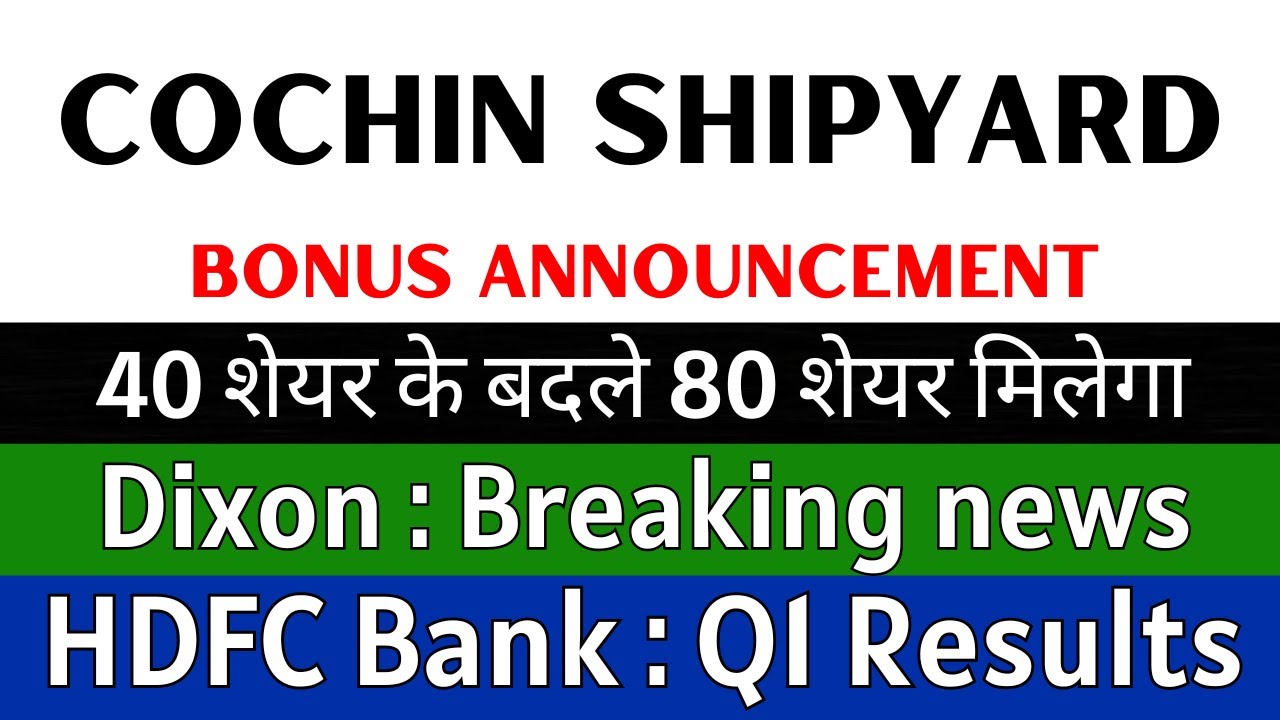
Cochin Shipyard, Dixon Technologies, and HDFC Bank: Latest Stock Market Updates and Insights for 2025. The Indian stock market continues to captivate investors with dynamic updates and strategic developments across various sectors. Among the standout companies making headlines in 2025 are Cochin Shipyard, Dixon Technologies, and HDFC Bank. These firms have recently announced significant updates, from strategic partnerships to quarterly results and bonus issues, sparking interest among investors and analysts alike. This comprehensive article delves into the latest news, financial performance, and market expectations for these companies, offering actionable insights for investors seeking to navigate the evolving market landscape.
Cochin Shipyard: Strategic Partnerships and Defense Sector Opportunities
Strategic MoU with HD Korea Shipbuilding
Cochin Shipyard has emerged as a focal point in the Indian stock market due to its recent strategic partnership with HD Korea Shipbuilding and Offshore Engineering Company Limited (KSOE). The two companies signed a comprehensive Memorandum of Understanding (MoU) on Friday, July 4, 2025, aimed at enhancing collaboration in shipbuilding and maritime development. This partnership is poised to elevate Cochin Shipyard’s global competitiveness by aligning its operations with international standards.
The MoU focuses on improving productivity and capacity utilization rather than immediate order announcements. However, the collaboration signals long-term growth potential, as both companies aim to leverage their expertise to meet global shipbuilding standards. This move is particularly significant given the increasing demand for advanced maritime solutions and India’s push to bolster its domestic shipbuilding industry.
Defense Sector Boost: Potential Orders on the Horizon
Cochin Shipyard’s prominence is further amplified by recent developments in India’s defense sector. The Ministry of Defence has approved acquisitions worth approximately ₹44,000 crore, with a significant portion allocated to the Indian Navy. As a key player in naval shipbuilding, Cochin Shipyard is well-positioned to secure substantial orders in the coming years. Alongside peers like Mazagon Dock and Garden Reach Shipbuilders, Cochin Shipyard could benefit from this defense sector push, potentially driving stock price appreciation.
While no specific orders were detailed in the recent MoU, the strategic alignment with KSOE and the defense sector’s growth trajectory suggest a promising outlook. Investors should monitor Cochin Shipyard for updates on order inflows, as these could significantly impact its financial performance and stock valuation.
Why Cochin Shipyard Stands Out
Cochin Shipyard’s dual focus on commercial and defense shipbuilding makes it a unique investment opportunity. The company’s ability to secure high-value contracts and its strategic partnerships enhance its growth prospects. With India’s maritime and defense sectors gaining momentum, Cochin Shipyard is a stock to watch for long-term investors seeking exposure to these high-growth areas.
Dixon Technologies: Navigating Growth and Competitive Challenges
Recent Performance and Valuation Correction
Dixon Technologies, a leading player in the Electronics Manufacturing Services (EMS) sector, has experienced significant market attention in 2025. The company’s stock has seen a correction of approximately 19% from its 52-week high, bringing its Price-to-Earnings (P/E) ratio down from a peak of 210 to around 120. This adjustment reflects market concerns about future growth and competitive pressures, despite Dixon’s strong historical performance.
Over the past year, Dixon Technologies reported remarkable growth, with revenue increasing by 120% and profits rising by 110%. These figures underscore the company’s robust operational performance and its ability to capitalize on the growing demand for electronics manufacturing in India. However, recent quarterly results indicate a sequential revenue decline, a departure from Dixon’s typical growth trajectory, raising concerns about short-term performance.
Rising Competition in the EMS Sector
The EMS sector is witnessing intensifying competition, which poses challenges for Dixon Technologies. Key clients, such as Motorola, have begun diversifying their manufacturing partnerships, reducing their dependency on Dixon. This shift has sparked concerns about potential slowdowns in order inflows and revenue growth. Brokerage firms like Phillip Capital have highlighted these competitive pressures, contributing to the stock’s valuation correction.
However, not all analysts share this cautious outlook. B&K Securities recently issued a positive commentary, projecting a revenue growth Compound Annual Growth Rate (CAGR) of 42% and a profit growth CAGR of 69% for Dixon Technologies between FY25 and FY27. This optimistic forecast suggests that while short-term challenges exist, Dixon’s long-term growth potential remains intact, driven by its strong market position and expanding client base.
Investment Outlook for Dixon Technologies
Dixon Technologies remains a compelling investment for those bullish on India’s electronics manufacturing boom. The company’s ability to navigate competitive pressures and sustain growth will be critical. Investors should closely monitor Dixon’s quarterly results and client diversification strategies to assess its ability to maintain its competitive edge in the EMS sector.
HDFC Bank: Quarterly Results and Growth Expectations
Q1 FY26 Business Update
HDFC Bank, one of India’s leading private-sector banks, is gearing up to announce its Q1 FY26 results on July 19, 2025. The bank has already released a business update, providing insights into its performance for the quarter ending June 2025. Key highlights include:
- Gross Advances: Grew by 6.7% year-on-year to approximately ₹26.53 lakh crore, with a sequential increase of 0.4%.
- Deposits: Rose by 16.2% year-on-year to ₹27.64 lakh crore, with a sequential growth of 1.8%.
- CASA Deposits: Current and Savings Account (CASA) deposits reached ₹8.6 lakh crore, reflecting a 6% year-on-year growth and a 3.8% sequential increase.
These figures indicate steady growth across key metrics, with single-digit sequential gains and robust year-on-year performance. The market anticipates that HDFC Bank’s Q1 results will reflect this growth trajectory, potentially boosting investor confidence.
Impact of Repo Rate Cuts
The Reserve Bank of India’s recent 1% repo rate cut over the past three months could further enhance HDFC Bank’s performance in Q2 FY26. Lower interest rates typically stimulate borrowing, potentially leading to double-digit growth in advances and deposits. This could narrow the revenue and profit gap observed in previous quarters, positioning HDFC Bank for stronger financial performance in the latter half of 2025.
Why HDFC Bank Remains a Safe Bet
HDFC Bank’s consistent growth, robust deposit base, and strong asset quality make it a cornerstone of many investment portfolios. The bank’s ability to capitalize on favorable macroeconomic conditions, such as repo rate cuts, enhances its appeal. Investors can expect HDFC Bank to deliver steady returns, particularly as it reports its Q1 results on July 19, 2025, which could drive market focus on the following Monday.
Bonus Announcement: Roto Pumps’ 2:1 Bonus Issue
Details of the Bonus Issue
Roto Pumps, a lesser-known but noteworthy player in the industrial sector, recently announced a 2:1 bonus issue. For every share held, shareholders will receive two additional equity shares. The record date for this bonus issue is set for July 11, 2025, meaning investors holding shares by this date will be eligible to receive the bonus shares.
This announcement has generated buzz among existing shareholders, as bonus issues often enhance liquidity and signal management’s confidence in future growth. While Roto Pumps may not garner the same attention as Cochin Shipyard or HDFC Bank, its bonus issue makes it an attractive option for investors seeking value in small-cap stocks.
Investment Considerations
The bonus issue does not inherently increase the company’s market value but can improve share affordability and trading volume. Investors interested in Roto Pumps should conduct thorough research into its financials and growth prospects before making investment decisions.
Key Takeaways for Investors
Navigating Market Opportunities
The updates from Cochin Shipyard, Dixon Technologies, HDFC Bank, and Roto Pumps highlight the diverse opportunities within the Indian stock market. Cochin Shipyard’s strategic partnerships and defense sector exposure position it for long-term growth. Dixon Technologies faces competitive challenges but retains strong growth potential in the EMS sector. HDFC Bank’s steady performance and favorable macroeconomic conditions make it a reliable investment. Meanwhile, Roto Pumps’ bonus issue offers an attractive proposition for small-cap investors.
Importance of Research and Due Diligence
While these updates provide valuable insights, investors must conduct independent research and analysis. Market conditions, competitive dynamics, and macroeconomic factors can significantly impact stock performance. Consulting with SEBI-registered research analysts or financial advisors can further enhance decision-making.
Leveraging Free Resources
Investors can access free research and market updates through platforms like SEBI-registered Telegram channels, such as Trader Paaji, which offers insights into company charts and trading calls. Joining such communities can provide valuable information at no cost, helping investors stay informed about market trends.
Conclusion: Positioning for Success in 2025
The Indian stock market in 2025 is brimming with opportunities, driven by strategic partnerships, robust financial performance, and favorable policy changes. Cochin Shipyard’s collaboration with KSOE and potential defense orders, Dixon Technologies’ growth in the EMS sector, HDFC Bank’s steady performance, and Roto Pumps’ bonus issue highlight the diverse investment avenues available. By staying informed and conducting thorough research, investors can position themselves to capitalize on these developments and achieve their financial goals.