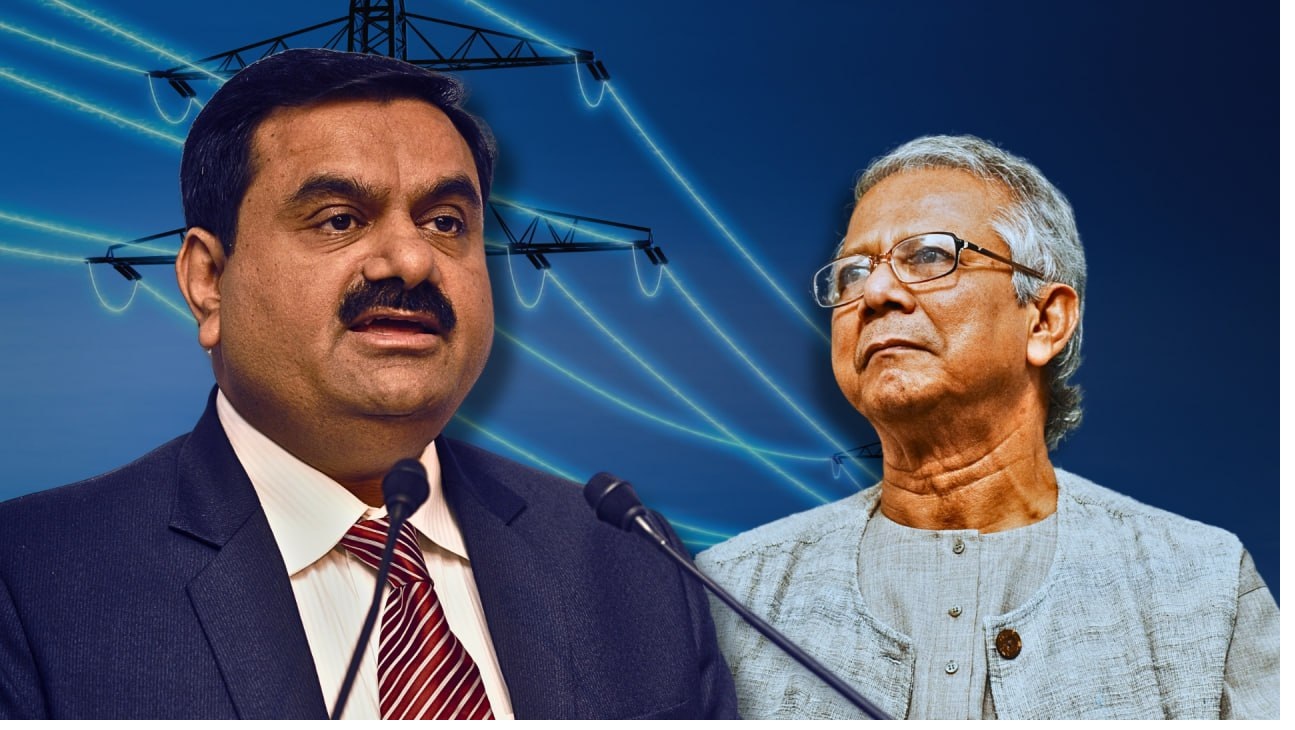
Adani Power sacks Bangladesh power supply 60 percent for non-payment of dues.
About Adani Power: Major Cut to Bangladesh’s Energy Supply
Moving ahead with bold financial accountability, Gautam Adani’s power supply cut has seen Adani Power reduce power supply to Bangladesh by a whopping 60% owing to unreturned dues. With this cutback, Bangladesh faces a gross deficit in energy; the reason behind it is $800 million, or Rs 6,750 crore, worth of unpaid dues. Everywhere within the span of Bangladesh, such reflection due to cuts in power supply has stirred up debates on energy security, financial obligations, and its future with regional energy partnerships.
Early curtailment by Adani Power from Godda Power Plant
Adani Power is India’s largest power supplier that has a 1,600MW plant in Godda in the eastern state of Jharkhand. This has been deployed exclusively to supply power to Bangladesh. In the August earlier this month, it cut down its sale of power to Bangladesh to a low of around 700-750 MW from its normal capacity of 1,400-1,500 MW. The company, however, restricted this supply further to around 520 MW by early November as it kept stepping up efforts to recover the pending payments. This continued reduction has badly affected Bangladesh’s energy grid, and data from Power Grid Bangladesh reflect the full extent of this power drop.
Bangladesh’s Response
To ensure that independence in the supply of energy is maintained, the government of Bangladesh is reportedly not leaving any stone unturned. Muhammad Fauzul Kabir Khan is Bangladesh’s energy advisor in the caretaker government, but he was sure Bangladesh would pay its arrears incrementally. However, he categorically stated Bangladesh “won’t allow any power producer to hold us hostage.” Khan was talking with your correspondent during the ongoing power crisis and reflects Bangladesh’s intent in controlling its energy resources while avoiding undue dependency on any single supplier. He intimated that if the situation calls for an alternative, the government will explore alternative energy sources.
Bangladesh has been engaged in financial negotiations and payment efforts.
Bangladesh had been trying to pay dues. Till early November, the state-owned Power Development Board (BPDB) of Bangladesh reported that Adani Power had softened a deadline for payment which Bangladesh had set earlier following acceleration on the payment front of Bangladesh. Bangladesh has also opened a letter of credit worth $170 million to speed up payments and has been paying around $18 million a week. Still, with Adani’s weekly charge running at more than $22 million, Bangladesh continues to remain aggrieved.
Increased Power Costs: Adani’s Price Rise and Its Implication for BPDB
The other significant cause of debt crises has been a new price hike by Adani Power. Adani Power has also taken over the payment charges from its old rate, resulting in increased payment liabilities for Bangladesh since this July, said officials at BPDB. Though the Power Development Board of Bangladesh has been paying out regularly every week, extra charges have piled up on that weekly debt. Reportedly, the PDB has described some of these extra costs as “expiry of a supplementary agreement with Adani,” who had undertaken to supply coal at reduced prices earlier.
Price of Coal and the Lapsed Supplementary Agreement
The lapsed supplementary agreement on the price of coal also has something to do with the growing energy prices. The rates steadied at relatively lower prices than the then-prevailing coal-based power plants’ prices under the contract. The moment that contract ended, Adani returned to the original PPA calculation, indexed to average prices from both the Indonesian and Australian coal markets. This return to PPA-based pricing of coal contributed to a rise in power costs for Bangladesh.
Steps to Long-Term Energy Security for Bangladesh
At such a time when the power supply of Bangladesh is in a crisis and this causes a great financial challenge, Bangladesh’s government has assured its people to minimize dependence on foreign electricity providers. Though the company Adani Power is the most active participant, Bangladesh is finding new sources of energy and enhancing all sectors of its internal resources. This experience showed that the country requires financial preparedness and also feasible energy partners so that stable supply of energy can be secured.
Conclusion: The Future of the Adani-Bangladesh Energy Partnership
The threat that Adani Power issued through cutting supply due to unpaid dues can stress the need for sound payment systems and balanced energy deals. Bangladesh learnt an important lesson as its energy strategy must be strengthened, and domestic power production must be increased to minimize reliance on other suppliers during the time of need. This financial negotiation over the future energy deals between Bangladesh and Adani Power would prove to be crucial in the configuration of the energy stream, ultimately affecting the regional energy stability factor.
Through this continuous adjustment, both parties are to fine-tune not only the financial terms but also the operational terms that will support a stable, mutually beneficial partnership, ensuring energy security and economic viability not only for Bangladesh but also for Adani Power.


![Thalliki Vandanam Scheme 2025: Check Eligibility, Payment Status, and More on Your Mobile Introduction to Thalliki Vandanam Scheme 2025 The Thalliki Vandanam Scheme, introduced by the Andhra Pradesh government, aims to empower mothers and guardians by providing financial aid for each school-going child in their household. This initiative reflects the state’s commitment to education and family welfare, ensuring that financial constraints do not hinder a child’s academic journey. The scheme offers a streamlined process to check eligibility and payment status via WhatsApp, making it accessible to all residents of Andhra Pradesh. In this article, we’ll explore how to verify your eligibility, understand payment amounts, and address common issues like ineligibility or inactive bank accounts. Whether you’re a parent or guardian, this guide provides actionable steps to leverage the benefits of the Thalliki Vandanam Scheme 2025. What is the Thalliki Vandanam Scheme? The Thalliki Vandanam Scheme is a financial assistance program designed to support mothers or legal guardians of students in Andhra Pradesh. For each eligible child, the scheme provides ₹13,000 annually, directly transferred to the registered bank account of the mother or guardian. The program targets families with school-going children, ensuring that the funds support educational expenses. Key Features of the Scheme Financial Aid: ₹13,000 per child per year. Eligibility Check: Accessible via WhatsApp using the official government number. Direct Bank Transfer: Funds are credited to the registered bank account linked with the Aadhaar number. Transparency: Clear reasons provided for ineligibility, with options to appeal or reapply. How to Check Thalliki Vandanam Eligibility on Your Mobile The Andhra Pradesh government has integrated the Thalliki Vandanam Scheme with its WhatsApp Governance platform, allowing users to check their eligibility and payment status effortlessly. Follow these steps to verify your status: Step 1: Save the Official WhatsApp Number Open your phone’s contact list. Save the official Andhra Pradesh government WhatsApp number: 95523009 as “AP Government WhatsApp.” Ensure the number is saved correctly to avoid errors. Step 2: Initiate a WhatsApp Chat Open WhatsApp and locate the saved contact. Send a simple message: “Hi” to start the conversation. You’ll receive a welcome message from “Mana Mitra,” the Andhra Pradesh government’s citizen assistance service. Step 3: Select Your Preferred Language The system supports multiple languages, including Telugu and English. To switch to English, type “EN” and send. For Telugu, continue with the default settings. The reply will confirm your language selection. Step 4: Choose the Thalliki Vandanam Service The system will display a list of available services. Select “Thalliki Vandanam Status” by tapping the option. You’ll be prompted to enter the Aadhaar number of the mother or guardian. Step 5: Enter Aadhaar Number Input the Aadhaar number of the mother or legal guardian of the student. Confirm the number by tapping the “Verify” option. The system will process your request and provide the eligibility status. Sample Eligibility Response Eligible: “Dear [Name], you are eligible for the Thalliki Vandanam Scheme for [number] child(ren). ₹[amount] will be transferred to your registered bank account.” Ineligible: “Dear [Name], you are not eligible for the Thalliki Vandanam Scheme due to [reason]. Click the button below to raise a complaint.” Understanding Payment Amounts Under Thalliki Vandanam The scheme provides ₹13,000 per eligible child annually. The total amount depends on the number of school-going children in the household. Here’s how it works: One Child: ₹13,000 credited to the registered bank account. Two Children: ₹26,000 credited. Three Children: ₹39,000 credited, and so on. Example Scenarios Single Child Household: If you have one eligible child, you receive ₹13,000. Multiple Children Household: For two eligible children, you receive ₹26,000. The system automatically calculates the total based on the number of students linked to your Aadhaar number. Common Reasons for Ineligibility and How to Address Them Some applicants may find themselves ineligible for the Thalliki Vandanam Scheme due to specific criteria set by the government. Below are common reasons and steps to resolve them: 1. Ownership of a Four-Wheeler Reason: Households owning a four-wheeler (car) are considered ineligible due to assumed financial stability. Solution: If you believe this is an error (e.g., the vehicle is not in your name), visit your local Gram/Ward Sachivalayam to reapply through the six-step validation process. 2. High Electricity Consumption Reason: Households consuming over 300 units of electricity monthly may be deemed ineligible. Solution: Verify your electricity bill records and appeal at the Sachivalayam if the data is inaccurate. 3. Income Tax Payer Status Reason: Families with members filing income tax returns are excluded. Solution: Provide proof that your income is below the taxable threshold to reapply. 4. Large Land Holdings Reason: Owning excessive agricultural land or urban plots (over 1,000 square yards) disqualifies applicants. Solution: Submit updated land records to clarify ownership details. 5. Inactive NPCI Link Reason: The National Payments Corporation of India (NPCI) link between your Aadhaar and bank account is inactive. Solution: Visit your bank branch to activate the NPCI link. Ensure your Aadhaar is linked to your mobile number for OTP verification. 6. Not Included in 2025 Records Reason: Your details are not registered in the 2025 scheme database. Solution: Reapply at the Sachivalayam with updated Aadhaar and student details. How to Appeal or Reapply for Thalliki Vandanam If you’re marked ineligible but believe you qualify, follow these steps to appeal: Visit Gram/Ward Sachivalayam: Locate your nearest Sachivalayam office. Submit Documents: Provide Aadhaar, bank account details, and proof to counter the ineligibility reason (e.g., electricity bill, land records). Six-Step Validation: The office will conduct a verification process to reassess your eligibility. Track Status: Use the WhatsApp number to check updates on your reapplication. Checking Payment Status for Thalliki Vandanam Once eligible, you can verify whether the funds have been credited to your bank account. While the WhatsApp system primarily checks eligibility, payment status updates may require additional steps: Bank Account Check: Log in to your bank’s mobile app or visit a branch to confirm the credit. UPI Apps: Use apps like Google Pay or PhonePe to check recent transactions. Sachivalayam Inquiry: If funds are not credited, visit your Sachivalayam for assistance. The government plans to release a dedicated WhatsApp service for payment status checks in the future. Stay updated through official channels. Troubleshooting Common Issues 1. Aadhaar Not Linked to Mobile Number Issue: You’re unable to receive OTPs for verification. Solution: Visit an Aadhaar Seva Kendra to link or update your mobile number. 2. Inactive Bank Account Issue: Funds cannot be transferred to an inactive account. Solution: Reactivate your account by visiting your bank branch. 3. Incorrect Aadhaar Details Issue: The system does not recognize your Aadhaar number. Solution: Verify your Aadhaar details online at the UIDAI website or update them at an Aadhaar center. Benefits of Using WhatsApp Governance for Thalliki Vandanam The Andhra Pradesh government’s WhatsApp Governance platform, “Mana Mitra,” simplifies access to government services. Benefits include: Convenience: Check status from home using your mobile. Multilingual Support: Available in Telugu, English, and other languages. Real-Time Updates: Instant replies with accurate information. Transparency: Clear reasons for ineligibility and appeal options. To stay informed, join the government’s official WhatsApp or Telegram channels for scheme updates. Tips to Maximize Your Thalliki Vandanam Benefits Ensure Accurate Records: Keep Aadhaar, bank, and student details updated. Monitor Eligibility Regularly: Check your status periodically to address issues promptly. Stay Informed: Follow government announcements for scheme enhancements or new services. Spread Awareness: Share this guide with family and friends to help them benefit from the scheme. Frequently Asked Questions (FAQs) 1. Who is eligible for the Thalliki Vandanam Scheme? Mothers or legal guardians of school-going children in Andhra Pradesh are eligible, provided they meet criteria like not owning a four-wheeler or paying income tax. 2. How much money is provided per child? The scheme offers ₹13,000 per eligible child annually. 3. Can I check eligibility for multiple children? Yes, the system calculates the total amount based on the number of eligible children linked to the mother’s Aadhaar. 4. What if I’m marked ineligible due to a four-wheeler? Appeal at your Sachivalayam with proof that the vehicle is not in your name or household. 5. How do I activate my NPCI link? Visit your bank branch to link your Aadhaar with your bank account for NPCI activation. 6. What if my Aadhaar is not in the 2025 records? Reapply at the Sachivalayam with updated details to register for the scheme. Conclusion The Thalliki Vandanam Scheme 2025 is a game-changer for Andhra Pradesh families, offering financial support to ensure children’s education. By leveraging the WhatsApp Governance platform, you can check your eligibility, understand payment amounts, and resolve issues with ease. Save the official number (95523009) today and follow the steps outlined to access your benefits. If you’re ineligible, don’t lose hope—appeal at your Sachivalayam to rectify errors. Stay proactive, keep your records updated, and share this guide to help others benefit from the Thalliki Vandanam Scheme. For the latest updates, subscribe to official government channels and stay informed about new services like payment status checks. Empower your family’s future with Thalliki Vandanam—start checking your eligibility now!](https://www.tgnns.com/wp-content/uploads/2025/06/Thalliki-Vandanam-Scheme-2025-Check-Eligibility-Payment-Status-and-More-on-Your-Mobile-768x432.jpg)