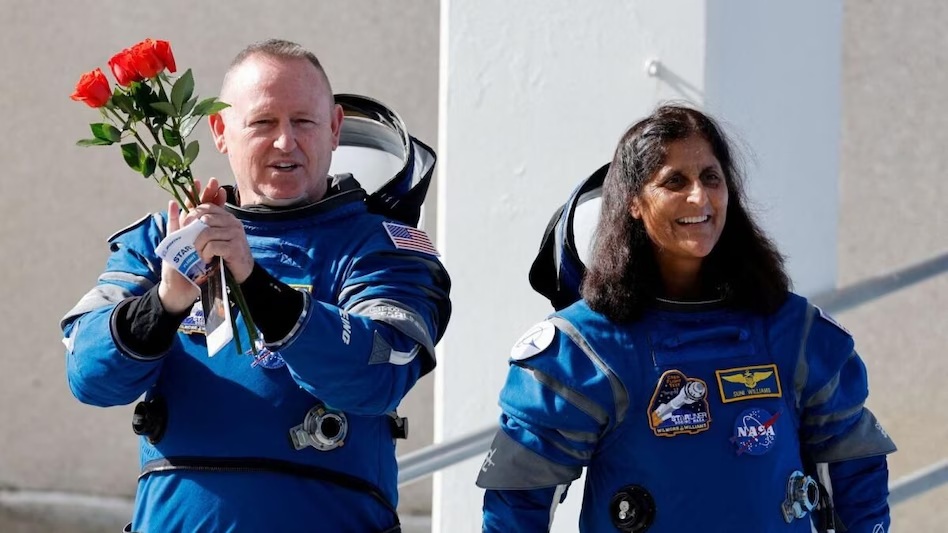
The Boeing Starliner test flight, initially scheduled for an eight-day mission, faced an unexpected delay due to technical issues with the spacecraft. Among these challenges were thruster malfunctions and helium leaks, which extended the mission by 45 to 90 days. Despite these setbacks, Indian-American NASA astronaut Sunita Williams shared fascinating observations from her time in orbit.
Sunita Williams Witnesses Storm Transform into Hurricane from Space
Stationed at the International Space Station (ISS) since June 6, Sunita Williams provided a unique perspective on the development of a storm into Hurricane Beryl. In a live press conference organized by NASA, Williams described the awe-inspiring event she observed from space. This Earth-to-space call aimed to highlight the mission’s progress and offer insights into the daily life of astronauts aboard the ISS.
Key Highlights of Sunita Williams’ Space Journey and NASA’s Starliner Mission
NASA astronaut Sunita Williams, alongside fellow astronaut Butch Wilmore, embarked on a significant mission aboard the Boeing Starliner spacecraft on June 5. The primary goal of this mission is to certify the Starliner for crew transport. Here are seven key points about their journey and the extended mission:
- Mission Overview: Sunita Williams and Butch Wilmore were launched to the ISS with the objective of testing and certifying the Boeing Starliner spacecraft for future crewed missions.
- Technical Challenges: The mission faced several technical issues, including thruster malfunctions and helium leaks. These problems necessitated a delay, prolonging the astronauts’ stay in space.
- Extended Mission: Originally planned for eight days, the mission has been extended by 45 to 90 days to address and resolve the technical difficulties encountered.
- Storm to Hurricane Transformation: While on the ISS, Williams observed a storm evolving into Hurricane Beryl. She described the experience as “quite impressive,” showcasing the power and beauty of natural phenomena from space.
- Live Press Conference: In a live press conference from the ISS, Williams shared her thoughts on the extended mission and the spacecraft’s performance, expressing optimism despite the delays.
- Daily Life in Space: The press conference also provided a glimpse into the astronauts’ daily routines and experiments conducted aboard the ISS, emphasizing the importance of their work in advancing space exploration.
- Future Implications: The successful resolution of these technical issues and the certification of the Boeing Starliner will pave the way for more regular crewed missions to the ISS, marking a significant milestone in NASA’s efforts to maintain a sustainable human presence in space.
The Importance of the Boeing Starliner Mission
The Boeing Starliner mission represents a critical step in NASA’s Commercial Crew Program, aimed at developing reliable and cost-effective transportation to the ISS. The certification of the Starliner spacecraft for crew transport will enhance NASA’s ability to conduct long-term research and maintain a continuous human presence in low Earth orbit.
Observations from Space: A Unique Perspective
Sunita Williams’ observations of the storm transforming into Hurricane Beryl underscore the unique vantage point astronauts have from space. Such observations not only contribute to our understanding of weather patterns and climate change but also inspire awe and curiosity about our planet.
Conclusion: Looking Ahead to Future Missions
Despite the technical challenges faced during this mission, the optimism and resilience demonstrated by astronauts like Sunita Williams highlight the spirit of exploration and discovery that drives space missions. As NASA continues to overcome obstacles and push the boundaries of human spaceflight, each mission brings us closer to a deeper understanding of our universe and our place within it.
The extended mission of the Boeing Starliner, coupled with the remarkable observations made by astronauts aboard the ISS, underscores the importance of continued investment in space exploration. With each mission, we gain invaluable knowledge and experience that will shape the future of space travel and our ability to explore the cosmos.