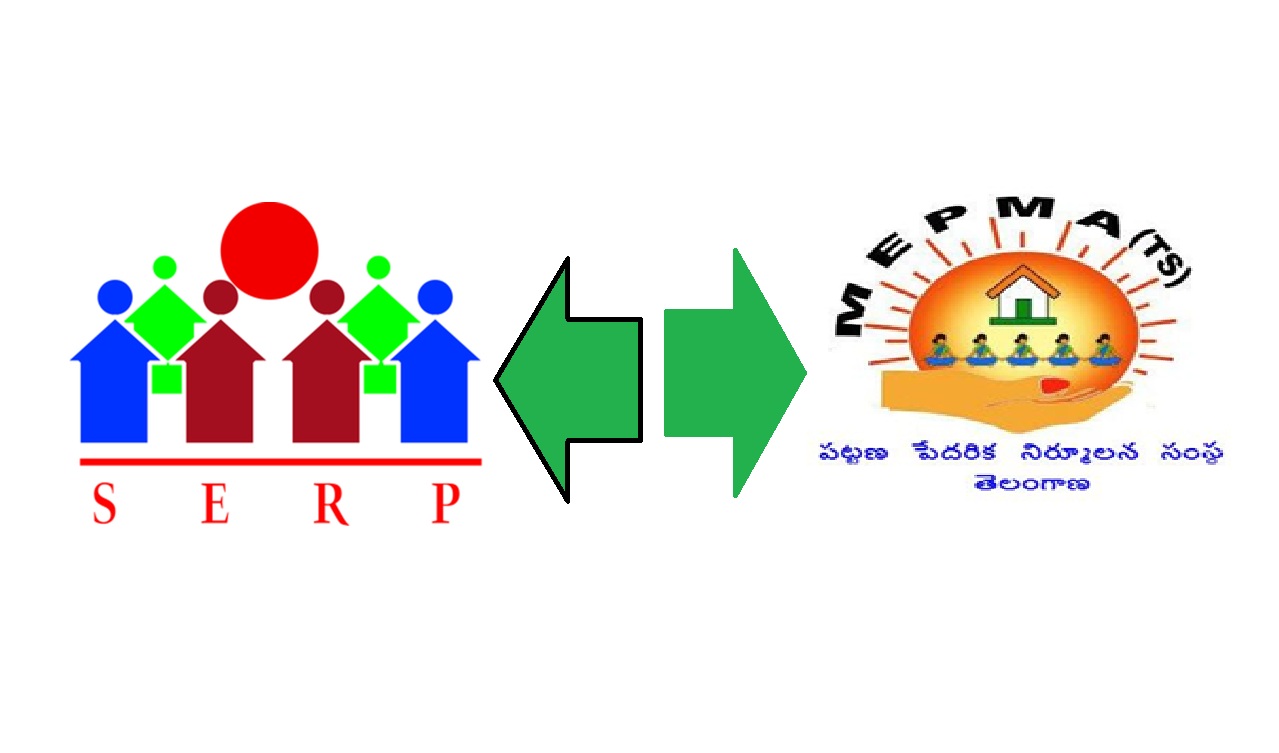
The unification of the Society for Elimination of Rural Poverty (SERP) and the Mission for Elimination of Poverty in Municipal Areas (MEPMA) signals a landmark transformation in Telangana’s poverty alleviation strategy. These two distinct yet complementary entities, previously focused on rural and urban poverty alleviation in silos, are now being brought together to create a seamless, resource-efficient framework aimed at reducing poverty holistically. By merging their functions, Telangana seeks to bridge the rural-urban divide, improve service delivery mechanisms, and align with broader socio-economic development initiatives like women’s empowerment, sustainable livelihoods, and skill development programs. This comprehensive article explores the origins, significance, and future implications of the SERP-MEPMA merger and evaluates how it might redefine the poverty alleviation landscape in Telangana.
Evolution and Historical Foundations of SERP and MEPMA
Understanding SERP: Championing Rural Transformation
The Society for Elimination of Rural Poverty (SERP) was established as an autonomous body under Telangana’s Department of Rural Development. Its primary mission revolved around the implementation of Indira Kranthi Patham (IKP) — a community-driven program focused on uplifting the rural poor, with a special emphasis on the poorest of the poor. SERP operates with a vision of breaking socio-economic barriers through the creation of self-managed community institutions, promoting livelihood enhancement programs, and ensuring fair access to resources for marginalized populations.
Key Initiatives Under SERP
- Women’s Empowerment Initiatives: Facilitating women’s self-help groups (SHGs) to enhance financial independence and intra-family decision-making power.
- Land Access Programs: Resolving land disputes for marginalized communities and promoting awareness of land rights and pro-poor land reforms.
- Disaster Management Expertise: SERP played a critical role in post-2004 tsunami rehabilitation, showcasing its capacity to coordinate large-scale relief and recovery programs.
MEPMA: Driving Urban Poverty Alleviation
The Mission for Elimination of Poverty in Municipal Areas (MEPMA), launched in 2007 under the Department of Municipal Administration and Urban Development, focuses on addressing urban poverty challenges. Its core mission is to institutionalize women’s self-help groups, offer skill development programs, and improve health outcomes in urban slums. MEPMA supports the formation of Slum-Level Federations (SLFs) and Town-Level Federations (TLFs), ensuring these collectives can access financial services and market opportunities.
Major Achievements Under MEPMA
- Health and Nutrition Interventions: Over 230 health camps conducted in urban slums, alongside the training of over 4,800 Community Resource Persons (CRPs) for disease prevention and health savings mobilization.
- Support for Street Vendors: Profiling more than 105,000 street vendors and developing vending zones equipped with infrastructure support, including kiosks.
- Infrastructure Investments: Constructed 298 Community Resource Centers (CRCs) and 132 Mahila Swasakthi Bhavans to serve as hubs for SHG coordination and empowerment activities.
Rationale Behind the Merger: Addressing Redundancies and Enhancing Efficiency
Overlapping Goals and Functional Redundancies
Both SERP and MEPMA target women’s empowerment, SHG mobilization, and financial inclusion, albeit in different geographical contexts. For instance, SERP’s Indira Kranthi Patham (IKP) and MEPMA’s Self Employment Programme for the Urban Poor (SEP-I&G) both aim to promote micro-enterprises and enhance financial access. Combining these overlapping efforts under one unified institutional framework fosters synergy, eliminates duplicative processes, and ensures more strategic resource allocation.
Streamlining Administrative Processes
A unified organizational structure reduces administrative overhead, enabling faster decision-making and better coordination across urban and rural programs. Data collection, program monitoring, and performance evaluations can be streamlined by leveraging SERP’s rural community mobilization experience alongside MEPMA’s urban expertise.
Aligning with Broader State Policies
The merger supports the objectives of Telangana’s TS-iPASS industrial policy, which prioritizes job creation and balanced economic development. Unifying poverty alleviation efforts across rural and urban sectors ensures consistent support mechanisms for migrant workers, who often shift between rural and urban environments.
Structural and Operational Framework for the Merged Entity
Integrated Governance Model
The merged institution will adopt a hybrid governance structure, blending SERP’s multi-stakeholder Executive Committee with MEPMA’s grassroots-level federations. This will enable district-level offices to oversee both rural and urban programs, ensuring better coordination between SHGs, skill training centers, and health camps.
Unified Funding and Flexible Resource Allocation
Historically, SERP relied on rural development funds, while MEPMA accessed urban poverty alleviation grants. The unified body will pool financial resources, creating flexibility to reallocate funds based on the evolving needs of both rural villages and urban slums.
Expected Developmental Impacts of the SERP-MEPMA Merger
Strengthening Rural Development Initiatives
- Enhancing Rural SHG Capacities: Over 154,000 rural micro-enterprises, particularly in food processing sectors, will gain improved market access through MEPMA’s urban networks.
- Facilitating Land Reforms: Establishing unified land records systems will simplify title transfers for rural-to-urban migrants, promoting secure land ownership in peri-urban zones.
Boosting Urban Poverty Alleviation Programs
- Expanding Skill Development Initiatives: Programs like Employment through Skill Training and Placement (EST&P) will expand to rural youth, leveraging SERP’s network of 973 gurukulams.
- Extending Health Camps and Services: Community Resource Persons (CRPs) trained under SERP can extend health education and preventive care services to urban slums, scaling up MEPMA’s proven health camp model.
Challenges and Proposed Solutions
Bureaucratic Resistance and Institutional Barriers
The merger may face resistance from entrenched bureaucratic systems and SHG leadership accustomed to operating in isolation. Addressing this challenge requires transparent communication, capacity-building workshops, and active engagement with community leaders through existing CRC platforms.
Resource Allocation Concerns
Merging funding streams may risk underfunding high-impact programs if allocation decisions lack data-driven prioritization. Adopting a performance-based funding model, similar to Andhra Pradesh’s Food Processing Policy, could incentivize private sector participation in building community infrastructure.
Future Roadmap: Vision for 2030 and Beyond
Tripling SHG Coverage
The new entity aims to expand SHG coverage from 3.5 million households to 10 million households by 2030, with a special focus on remote tribal areas and peri-urban settlements.
Digital Integration and Smart Governance
A unified digital portal will centralize SHG savings records, loan performance data, and grievance redressal mechanisms, enhancing transparency and accountability.
Sustainable Livelihood Promotion
Emphasizing organic farming initiatives in tribal belts and eco-friendly vending zones in urban areas will contribute to sustainable development goals (SDGs) and climate-resilient livelihoods.
Conclusion: Building a National Model for Inclusive Development
The SERP-MEPMA merger represents a paradigm shift in Telangana’s poverty alleviation architecture, bridging the rural-urban divide and fostering a cohesive development ecosystem. By eliminating silos, optimizing resource use, and prioritizing inclusive growth, the unified framework has the potential to become a national template for comprehensive poverty alleviation. Long-term success, however, will depend on political will, technological innovation, and collaborative governance.