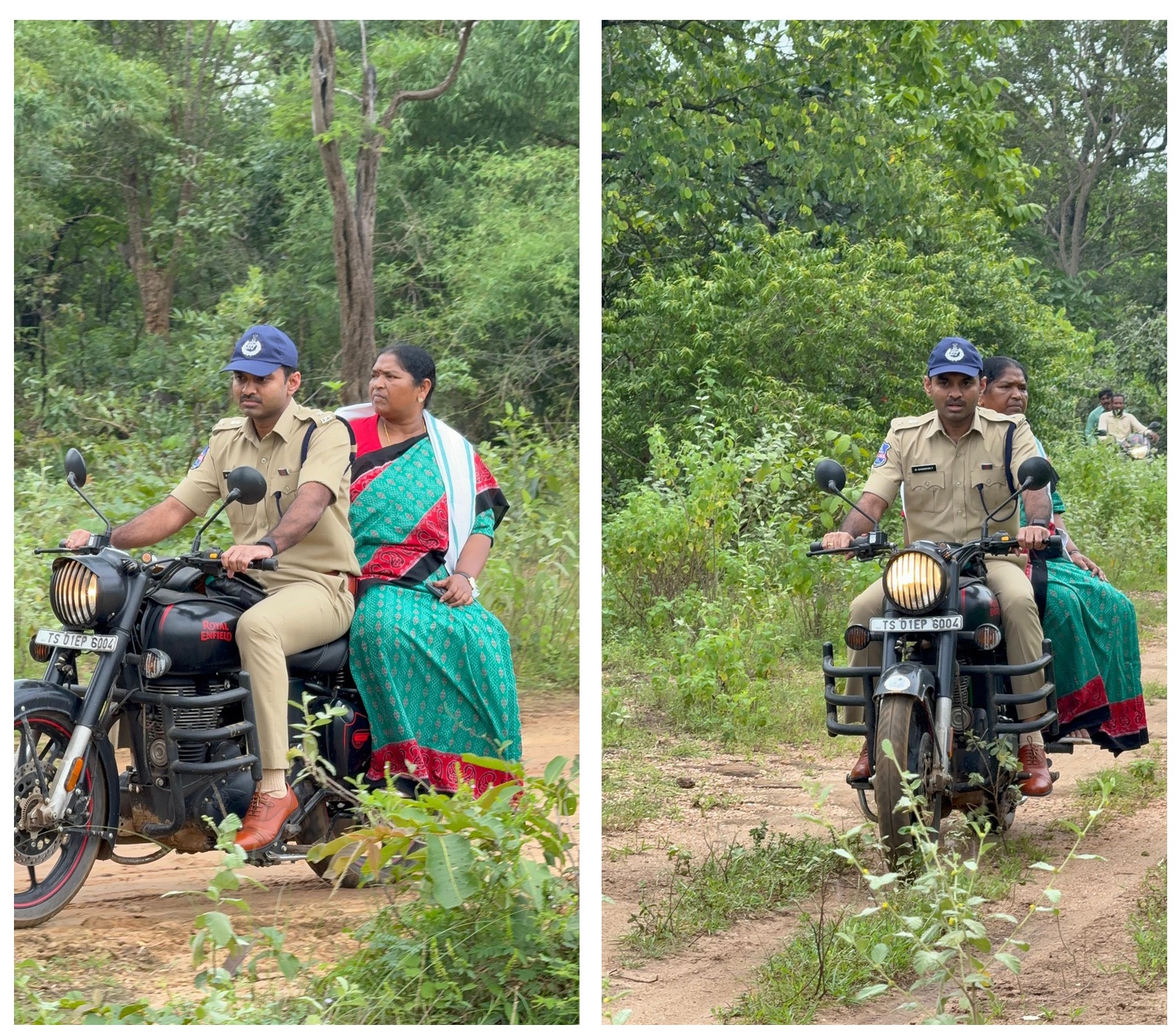
In the heart of Telangana’s lush forests, a significant event unfolds as Minister Seethakka takes proactive steps to ensure the success of one of India’s most revered tribal festivals. Recently, she embarked on a hands-on inspection tour, riding a bike alongside Mulugu Superintendent of Police (SP) Shabarish to assess road conditions around Medaram. This move highlights her commitment to grassroots-level oversight for the upcoming Medaram Maha Jatara, also known as Sammakka Saralamma Jatara. As the Minister for Panchayat Raj, Rural Development, and Women & Child Welfare, Seethakka personally reviewed arrangements in Mulugu district, emphasizing the need for seamless coordination to handle the massive influx of devotees.
Mulugu district, nestled in Telangana’s tribal belt, serves as the backdrop for this biennial extravaganza, which draws millions from across India and beyond. With lakhs of pilgrims expected, Seethakka directed officials to map out alternative routes, designate emergency pathways, and prioritize devotee convenience over VIP movements. Her instructions underscore a comprehensive action plan that integrates vehicle management, parking facilities, and inter-departmental collaboration. This article delves into the details of her visit, the festival’s rich heritage, and the broader implications for Telangana’s cultural and developmental landscape. By focusing on these elements, we explore how such initiatives not only preserve traditions but also boost local economies and infrastructure in Mulugu.
The Rich History and Cultural Significance of Medaram Sammakka Saralamma Jatara
Medaram Maha Jatara stands as a beacon of tribal resilience and devotion in Telangana. This festival commemorates the legendary battle fought by Sammakka and her daughter Saralamma against the tyrannical Kakatiya rulers in the 13th century. According to folklore, the duo led a fierce revolt against an unjust tax imposed on the Koya tribe, symbolizing the fight for justice and tribal rights. Sammakka, a tribal queen, and Saralamma sacrificed their lives in the struggle, and their spirits are believed to return every two years to bless the devotees at Medaram village in Mulugu district.
Historians trace the origins of this jatara back several centuries, making it one of the oldest tribal festivals in India. Unlike mainstream Hindu festivals, it blends animistic beliefs with reverence for nature and ancestors, attracting primarily the Koya and other indigenous communities. Devotees offer jaggery, known locally as “bangaram,” to the deities, a tradition that underscores the festival’s agrarian roots. The event transforms the dense forests of Mulugu into a vibrant sea of humanity, with rituals including processions, tribal dances, and the symbolic return of the goddesses from the wilderness.
What sets Medaram Jatara apart is its scale—it ranks as the second-largest fair in India after the Kumbh Mela, drawing over 10 million visitors in recent editions. The 2024 jatara, for instance, witnessed unprecedented crowds, highlighting its growing national and international appeal. Participants come from neighboring states like Andhra Pradesh, Maharashtra, and Chhattisgarh, turning it into a melting pot of cultures. The festival’s significance extends beyond spirituality; it fosters social harmony among tribes and promotes eco-tourism in Telangana’s Godavari Valley region. Environmentalists praise how the jatara encourages sustainable practices, such as using biodegradable offerings, amid the pristine Eturunagaram Wildlife Sanctuary that surrounds Medaram.
In recent years, the Telangana government has elevated the jatara to a state festival status, recognizing its role in preserving indigenous heritage. This designation, granted in 1996, has led to increased funding for infrastructure, ensuring that the event aligns with modern safety standards while honoring ancient customs. For locals in Mulugu, the jatara represents economic empowerment, as it boosts handicraft sales, temporary employment, and hospitality services. Artisans showcase traditional Koya weaves and bamboo crafts, while food stalls offer regional delicacies like bamboo chicken and mahua flower brews. The festival also serves as a platform for addressing tribal issues, with community leaders discussing land rights and education during gatherings.
As preparations ramp up for the 2026 edition, scheduled from January 28 to 31, the focus sharpens on blending tradition with innovation. Drones for crowd monitoring and eco-friendly waste management systems exemplify how the jatara evolves without losing its soul. This historical tapestry not only enriches Telangana’s cultural fabric but also positions Mulugu as a global hub for tribal tourism, inviting explorers to witness a living legend.
Profile of Minister Seethakka: From Revolutionary Roots to State Leadership
Dansari Anasuya, popularly known as Seethakka, embodies a remarkable journey from the fringes of society to the corridors of power in Telangana. Born into a modest tribal family in Mulugu district, she joined the Maoist movement in her youth, driven by a passion for social justice and tribal upliftment. After years in the underground, she surrendered in the early 2000s, channeling her energy into mainstream politics and legal advocacy.
Seethakka pursued higher education relentlessly, earning degrees in arts, law (LLB and LLM), and even a PhD, all while practicing as an advocate for marginalized communities. Her entry into politics came via the Telugu Desam Party, but she found her true calling with the Indian National Congress. Elected as MLA from Mulugu in 2018 and re-elected in 2023, she achieved a hat-trick, solidifying her status as a tribal icon. In the Revanth Reddy-led government, she holds key portfolios: Panchayat Raj and Rural Development, Rural Water Supply, and Women and Child Welfare.
Her tribal background gives her a unique edge in addressing issues like forest rights, women’s empowerment, and rural infrastructure in Mulugu. Seethakka’s hands-on approach—often seen interacting directly with villagers—has earned her widespread admiration. She advocates for education among tribal girls, drawing from her own experiences at the Mulugu Government Girls Residential School. Critics and supporters alike note her transformation from a Naxalite to a minister as a testament to Telangana’s inclusive politics.
In her role, Seethakka pushes for sustainable development, such as improving water supply in remote areas and enhancing panchayat governance. Her involvement in Medaram Jatara preparations reflects this ethos, as she ensures that tribal festivals receive the attention they deserve. By bridging her revolutionary past with current responsibilities, Seethakka inspires a new generation of leaders in Telangana, proving that change begins at the grassroots.
Minister Seethakka’s On-Site Inspection: A Bike Ride for Better Oversight
Minister Seethakka demonstrated her commitment to practical governance when she hopped on a bike with Mulugu SP Shabarish to inspect road conditions in and around Medaram. This unconventional mode of transport allowed her to navigate the rugged terrain firsthand, identifying potential bottlenecks ahead of the Medaram Maha Jatara.
The duo traversed key routes leading to the festival site, assessing potholes, signage, and accessibility for emergency vehicles. Seethakka’s choice of a bike symbolized accessibility and empathy, resonating with the local tribal communities who often rely on two-wheelers for daily commutes. During the ride, she engaged with villagers, gathering feedback on past traffic issues and suggestions for improvements.
This inspection forms part of a broader review of jatara arrangements, where Seethakka emphasized proactive planning. With millions expected, she highlighted the need for robust infrastructure to prevent mishaps. Her directives included upgrading roads to withstand heavy footfall and monsoon impacts, common in Mulugu’s forested landscape.
SP Shabarish complemented her efforts by outlining police strategies, such as deploying additional forces and setting up checkpoints. Together, they mapped out zones for parking and crowd dispersal, ensuring that the inspection translated into actionable insights. This collaborative approach not only boosts morale among officials but also reassures devotees that their safety ranks paramount.
Seethakka’s bike ride has gone viral on social media, portraying her as a dynamic leader unafraid to get her hands dirty. It sets a precedent for other ministers, encouraging on-ground involvement in festival preparations across Telangana.
Key Directives for Efficient Traffic and Crowd Management at Medaram Jatara
Anticipating the surge of lakhs of devotees, Minister Seethakka issued clear directives to avert traffic chaos during the Medaram Maha Jatara. She instructed officials to pinpoint alternative routes, diverting heavy vehicles away from main paths to Medaram. This strategy draws from successful models in past editions, where route diversification reduced congestion by up to 40%.
Special emphasis fell on emergency routes, with police tasked to earmark dedicated lanes for ambulances and fire services. Seethakka stressed that VIP movements must not inconvenience common devotees, promoting equality in access. She advocated for real-time monitoring via CCTV cameras—over 500 installed in previous jataras—and drone surveillance to manage crowds dynamically.
Vehicle movement and parking emerged as critical areas. The minister directed the creation of expansive parking zones on the outskirts, connected by shuttle services to the festival grounds. This minimizes on-site clutter and enhances safety, especially in the hilly terrain of Mulugu. Emergency access points must remain unobstructed, with barriers and signage guiding pilgrims effectively.
To handle the biennial influx, Seethakka called for a comprehensive action plan integrating transport, health, and sanitation departments. Past experiences, like the 2024 jatara’s deployment of 14,000 cops, inform these measures, ensuring smooth flow even during peak hours. Her focus on technology, such as mobile apps for route updates, modernizes traffic management, making the jatara more pilgrim-friendly.
These directives not only address immediate needs but also build long-term resilience, positioning Medaram as a model for festival logistics in India.
The Crucial Role of Inter-Departmental Coordination in Festival Success
Seethakka underscored that flawless execution of Medaram Jatara hinges on seamless coordination among departments. She directed all stakeholders—from panchayat raj to police and health—to operate under a unified action plan, eliminating silos that could derail preparations.
This collaborative framework ensures that rural development teams handle infrastructure like temporary shelters, while water supply officials guarantee clean drinking water for millions. Women and child welfare, under Seethakka’s purview, focuses on safe zones for families, including nursing areas and lost-child centers.
Regular review meetings, as seen in recent master plan discussions, foster accountability. By pooling resources, departments can address multifaceted challenges, such as waste management and medical emergencies, more effectively.
In Mulugu’s context, where tribal sensitivities matter, coordination preserves cultural integrity. Seethakka’s leadership ensures that modern upgrades align with traditions, enhancing the jatara’s appeal without alienating locals.
Economic and Social Impact on Mulugu District and Telangana
The Medaram Jatara injects vitality into Mulugu’s economy, a district known for its sparse population and rich forests. Formed in 2019, Mulugu spans nine mandals and relies on agriculture and tourism. The festival generates temporary jobs in hospitality, transport, and vending, benefiting tribal households.
Socially, it promotes unity, bridging urban-rural divides and empowering women through participation in rituals. Telangana’s government leverages this for broader development, with funds improving roads and healthcare.
Future Plans: Elevating Medaram Jatara to Global Prominence
Looking ahead, the Telangana government envisions global recognition for Medaram Jatara. A Rs 236 crore master plan includes temple modernization, sanitation upgrades, and crowd management enhancements. An immediate Rs 150 crore sanction accelerates preparations for 2026.
Seethakka’s involvement ensures tribal sentiments guide these changes, with eco-friendly initiatives like solar lighting. International promotion via tourism campaigns could attract global visitors, boosting Telangana’s cultural exports.
A 100-day action plan targets key works, setting the stage for a landmark event.
Conclusion: A Testament to Telangana’s Vibrant Heritage
Minister Seethakka’s proactive inspection exemplifies dedicated leadership, ensuring the Medaram Maha Jatara thrives as a symbol of devotion and progress. As Mulugu gears up, this festival continues to unite communities, drive growth, and honor timeless traditions in Telangana.