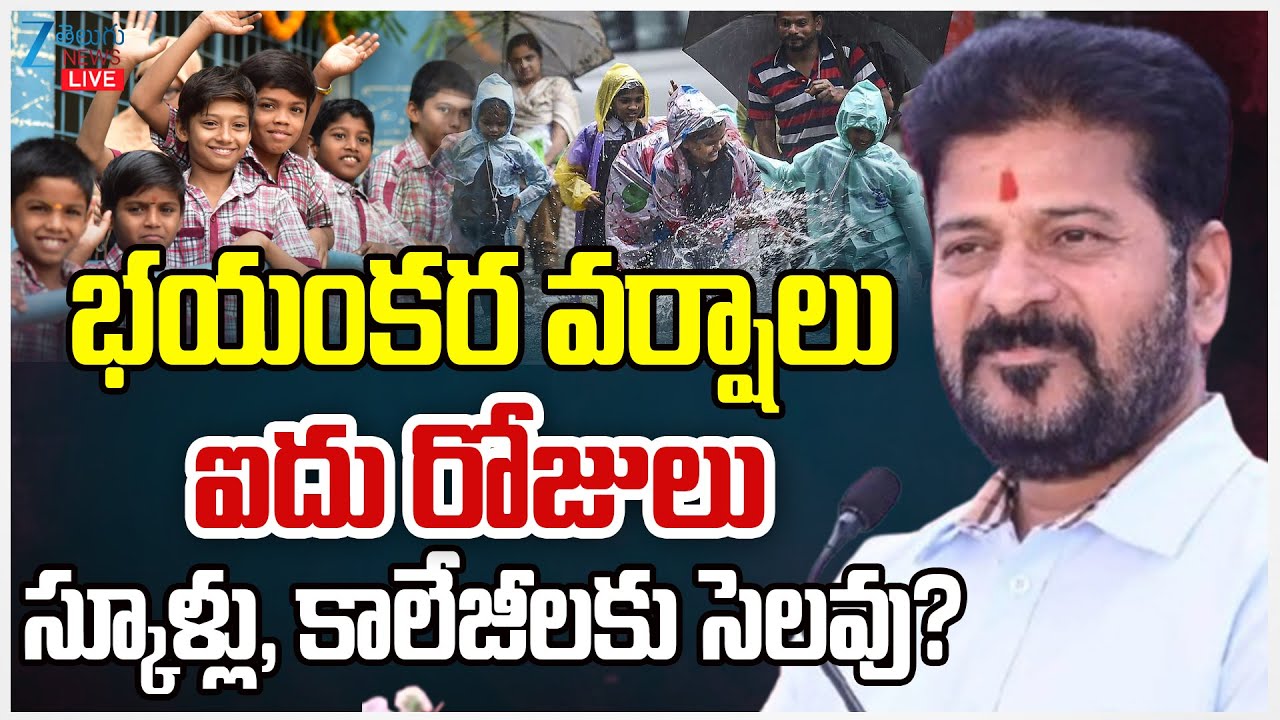
Telangana faces a relentless onslaught from heavy rains today 13th August 2025 this monsoon season, prompting swift action from authorities to safeguard residents. As downpours intensify across the state, the government declares school holidays in five key districts, ensuring the safety of students and staff. Chief Minister Revanth Reddy leads the charge, issuing directives that place the entire administration on high alert. This article delves into the current crisis, exploring its impacts, responses, and broader implications for the region. From Hyderabad’s bustling streets to rural heartlands, heavy rains disrupt daily life while highlighting the need for robust disaster management.
Telangana Weather Update: IMD Issues Red Alert for Heavy Rainfall
The Indian Meteorological Department (IMD) actively warns of heavy to extremely heavy rainfall in several Telangana districts, setting the stage for potential flooding and disruptions. Forecasters predict persistent showers through August 17, with isolated areas experiencing intense downpours that could exceed 20 centimeters in a single day. A red alert specifically targets Hanumakonda, Jangaon, Mahabubabad, Warangal, and Yadadri Bhuvanagiri districts, where the risk of flash floods looms large. These warnings stem from a low-pressure system over the Bay of Bengal, which draws moisture-laden winds inland, amplifying the monsoon activity.
Residents in these areas brace for thunderstorms, lightning, and gusty winds reaching up to 50 km/h. The IMD’s bulletin emphasizes vigilance, urging people to avoid low-lying zones and water bodies. In Hyderabad, the capital city, orange alerts signal very heavy rains, potentially causing waterlogging in low-lying neighborhoods like Ameerpet and Maitrivanam. This weather pattern aligns with broader monsoon trends in South India, where climate variability exacerbates seasonal extremes.
Experts attribute this surge to global warming, which intensifies atmospheric moisture and leads to erratic precipitation. Telangana, with its semi-arid climate, often swings between droughts and deluges, making such events increasingly common. Historical data from the IMD shows that August typically brings the heaviest rains, but 2025’s intensity surpasses averages, raising concerns about long-term environmental shifts.
School Holidays in Telangana Due to Heavy Rains: Five Districts Affected
Education authorities in Telangana prioritize student safety by declaring full-day holidays for all government and private schools in five districts on August 13 and 14. Hanumakonda, Jangaon, Mahabubabad, Warangal, and Yadadri Bhuvanagiri stand at the epicenter of this decision, where relentless rains threaten road access and building integrity. Officials cite the IMD’s red alert as the primary trigger, aiming to prevent accidents during commutes and ensure families remain indoors.
In these districts, schools serve diverse communities, from urban centers in Warangal to rural pockets in Mahabubabad. The closure affects thousands of students, disrupting academic schedules but underscoring the government’s proactive stance. Parents welcome the move, recalling past incidents where heavy rains turned school routes into treacherous streams. For instance, in Yadadri Bhuvanagiri, known for its hilly terrain, landslides pose additional risks, making travel hazardous.
Meanwhile, schools within the Greater Hyderabad Municipal Corporation (GHMC) limits operate on a half-day schedule for the same dates. This partial closure allows morning classes while freeing afternoons for potential evacuations or family preparations. The directive extends to both public and private institutions, reflecting a unified approach to crisis management. Education department officials monitor the situation closely, ready to extend holidays if rains persist.
This isn’t the first time Telangana declares rain-induced school holidays. Similar measures occurred in previous years, but 2025’s event highlights improved coordination. Schools now integrate online learning modules to minimize academic loss, with teachers assigning virtual tasks via platforms like WhatsApp and Google Classroom. However, rural areas face connectivity challenges, prompting calls for better digital infrastructure.
CM Revanth Reddy’s Directives: High Alert and Emergency Preparedness
Chief Minister A. Revanth Reddy takes decisive action, conducting a video conference with district collectors from Hyderabad’s Command Control Center to review preparedness. He instructs in-charge ministers and officials to remain vigilant, canceling leaves for all government employees across departments for the next three days. This move ensures round-the-clock monitoring, with teams deployed to vulnerable spots.
Revanth Reddy emphasizes helicopter readiness for airlifting in case of sudden floods, drawing from lessons of past disasters. He directs the Hyderabad Disaster Response and Asset Protection Agency (HYDRAA) to stay on 24-hour alert, focusing on urban flooding in the capital. Additionally, he urges IT companies to implement work-from-home policies, allowing employees to avoid risky commutes amid heavy rains. This directive supports Hyderabad’s thriving tech sector, home to giants like Microsoft and Google, by prioritizing employee safety.
The CM’s hands-on approach includes surprise visits to flood-hit areas like Ameerpet, Buddha Nagar, and Maitrivanam, where he assesses damage and promises permanent solutions. Residents in these localities report waterlogging that disrupts power and transportation, and Revanth Reddy assures them of enhanced drainage systems. His administration sets up toll-free helplines for public grievances, fostering transparency and quick response.
Revanth Reddy’s leadership contrasts with previous regimes, emphasizing technology in disaster management. Drones map flood-prone zones, while AI-driven alerts notify residents via SMS. This integrated strategy aims to minimize casualties and economic losses, setting a benchmark for other states.
Impacts of Heavy Rains on Telangana’s Economy and Agriculture
Heavy rains in Telangana deliver a double-edged sword: they replenish reservoirs but devastate crops and infrastructure. Farmers in districts like Warangal and Mahabubabad watch helplessly as floods inundate paddy fields, threatening harvests worth crores. Cotton and maize plantations suffer waterlogging, leading to root rot and yield reductions. Agricultural experts estimate losses could reach 20-30% in affected areas, exacerbating rural poverty.
The state’s economy, heavily reliant on agriculture, faces ripple effects. Supply chains disrupt as roads flood, delaying produce transport to markets in Hyderabad. Small businesses in Jangaon and Yadadri Bhuvanagiri shutter operations, with shop owners reporting inventory damage from seepage. Tourism takes a hit too, with sites like the Yadadri temple seeing fewer visitors due to travel advisories.
Urban impacts center on Hyderabad, where traffic snarls from waterlogged underpasses cost hours in productivity. The IT sector, contributing over 10% to Telangana’s GDP, adapts through work-from-home, but smaller firms struggle with power outages. Infrastructure strain includes overflowing nalas (drains), prompting urgent desilting drives by municipal teams.
On a positive note, rains boost groundwater levels, aiding future irrigation. Reservoirs like Sriram Sagar and Nagarjuna Sagar near capacity, promising better water supply for the dry season. However, without sustainable farming practices, such as elevated beds and flood-resistant seeds, recurring losses persist.
Historical Context: Floods and Monsoon Challenges in Telangana
Telangana’s tryst with heavy rains dates back decades, with major floods in 1908 and 2000 etching painful memories. The 2019 deluge displaced thousands in Warangal, highlighting inadequate drainage. In 2020, Hyderabad’s flash floods claimed lives, spurring the creation of HYDRAA.
Comparing 2025 to past events, this year’s rains arrive earlier and fiercer, linked to El Niño transitions. Districts like Mahabubabad, prone to Godavari basin overflows, repeat history with submerged villages. Government responses evolve: from reactive relief to proactive alerts, thanks to satellite imagery and community networks.
Lessons from neighboring Andhra Pradesh, where cyclones amplify rains, inform Telangana’s strategies. Investments in embankments and early warning systems reduce vulnerabilities, but urban sprawl in Hyderabad exacerbates risks by encroaching on lakes.
Safety Measures and Tips for Residents During Heavy Rains
Authorities urge residents to adopt safety protocols amid the downpour. Stay indoors during peak rains, avoiding electrical wires and flooded roads. Stock essentials like water, food, and medicines for at least three days. Use apps like IMD’s for real-time updates, and heed evacuation orders promptly.
For drivers, avoid underpasses and opt for elevated routes. Families with children should secure homes against leaks and monitor for landslides in hilly areas like Yadadri Bhuvanagiri. Emergency kits including flashlights, batteries, and first-aid supplies prove invaluable.
Community involvement shines: neighborhood groups in Hanumakonda organize sandbag distributions, while NGOs provide relief in Mahabubabad. Schools educate on rain safety through drills, fostering resilience from a young age.