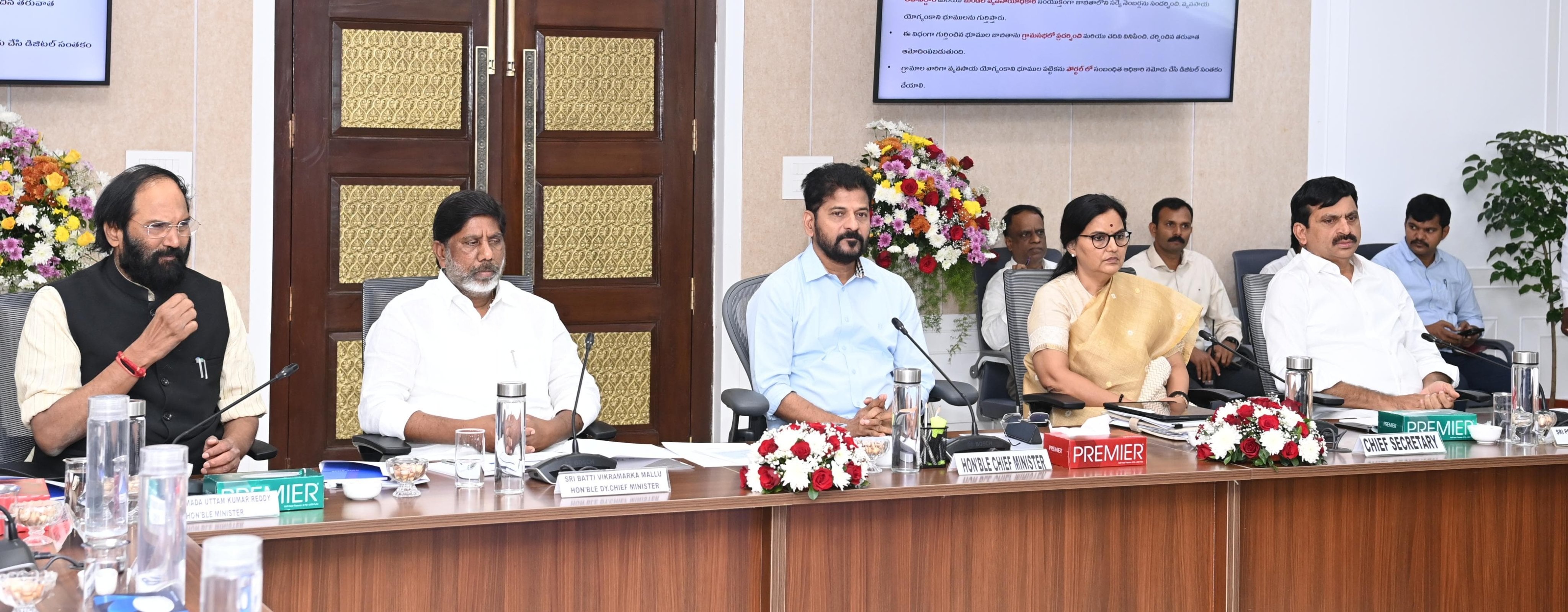
Chief Minister A. Revanth Reddy has made it clear that his government is steadfastly focused on two primary objectives: the welfare of the poor and the comprehensive development of the state. Addressing a conference with district collectors at the Secretariat, he emphasized the pivotal role these officials play in building trust and ensuring that governance remains people-centric.
Let’s delve into the key highlights of the Chief Minister’s address, which underlines his administration’s commitment to transparency, accountability, and effective welfare delivery.
The Role of District Collectors in Governance
CM Revanth Reddy described district collectors as the government’s frontline representatives, emphasizing their critical role in shaping public perception and implementing welfare schemes. He lauded their efforts in completing the recent socio-economic, educational, employment, and political caste census, which serves as a cornerstone for future planning and resource allocation.
The Chief Minister stressed that the efficiency of district collectors directly reflects the government’s performance. He urged them to continuously refine their work methods, step out of their offices, and engage with communities through field visits. These efforts, he said, are essential to addressing issues at the grassroots level effectively.
Field Visits and Strengthened Accountability
To ensure the welfare schemes reach the intended beneficiaries, CM Reddy announced his plan to conduct surprise inspections during district visits starting after January 26. He issued a stern warning against administrative negligence, promising stringent action where necessary.
Additionally, he directed women IAS and IPS officers to visit girls’ hostels monthly and spend nights there to better understand and resolve the challenges faced by students. This move aims to strengthen the government’s commitment to the welfare of young women and students.
Celebrating Republic Day with New Schemes
As India prepares to celebrate 75 years of the Constitution on Republic Day, the Chief Minister revealed plans to launch four significant welfare schemes:
- Bharosa (Farmer Support): Increasing financial aid to ₹12,000 per acre, reinforcing the government’s commitment to empowering farmers.
- Athmeya Bharosa (Empathetic Support for the Poor): Providing annual cash assistance of ₹12,000 to landless agricultural laborers.
- New Ration Cards: Ensuring eligible beneficiaries receive their due entitlements.
- Housing for the Homeless: Constructing and allotting houses to support the homeless poor.
The responsibility for implementing these transformative schemes rests with district collectors, who are tasked with conducting gram sabhas (village meetings) and ward meetings to finalize beneficiary lists.
Transparency and Accountability in Welfare Programs
CM Revanth Reddy highlighted irregularities in previous administrations’ welfare programs, such as the Raithu Bandhu scheme, where assistance was extended for non-agricultural lands. To prevent such issues, he directed collectors to ensure that only eligible farmers benefit under the Raithu Bharosa scheme. Field inspections and the appointment of nodal officers for each district and mandal will aid in identifying ineligible beneficiaries.
The Chief Minister clarified that all agricultural lands—whether cultivated or not—would be covered under the scheme, excluding non-agricultural plots such as real estate. This approach ensures the scheme’s resources are allocated to deserving individuals.
Indiramma Athmeya Bharosa: Supporting Landless Laborers
The government’s commitment to uplifting marginalized communities is evident in the launch of the Indiramma Athmeya Bharosa scheme. This initiative offers annual financial aid of ₹12,000 to landless laborers working at least 20 days under the MGNREGS program.
The CM announced that the Indiramma app has already identified 18.32 lakh eligible beneficiaries, with priority given to the most disadvantaged. In the first phase, 3,500 houses per constituency will be allotted to those in need.
Key Directives for District Collectors
To ensure seamless implementation of these schemes, the Chief Minister outlined clear directives for district collectors:
- Publish Beneficiary Lists: Finalize and publicize the lists for all welfare schemes in gram sabhas and ward meetings.
- Conduct Field Inspections: Verify beneficiary details under the Raithu Bharosa scheme through on-ground inspections.
- Prepare for Scheme Rollouts: Complete preparatory work by January 15 under the supervision of district in-charge ministers.
- Coordinate with Nodal Officers: Work closely with appointed nodal officers and field-level officials to eliminate discrepancies and enhance efficiency.
Building a Welfare-Centric Administration
The welfare of the underprivileged and the state’s holistic development remain at the heart of CM Revanth Reddy’s vision. By prioritizing accountability, transparency, and field-level engagement, his government aims to ensure that no citizen is left behind.
Through these comprehensive measures and transformative schemes, the Chief Minister’s administration is laying a strong foundation for inclusive growth and development. The focus on empowering district collectors and ensuring direct engagement with communities underscores the government’s unwavering commitment to its two guiding principles: welfare of the poor and state development.