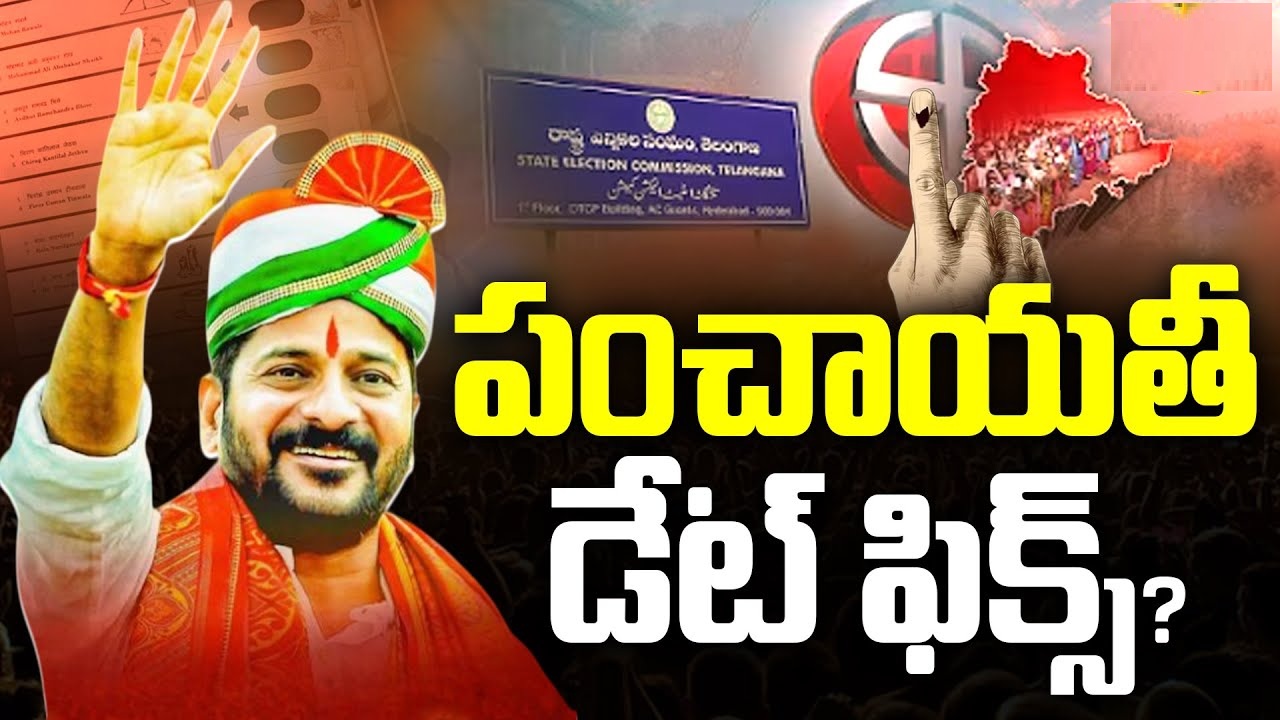
The stage is set for one of the most politically charged local body elections in Telangana’s history, with gram panchayat elections in telangana, voter list preparation racing against a September 30 High Court deadline. As the Telangana State Election Commission (TSEC) fast-tracks electoral roll publication and political parties gear up for a massive democratic exercise, the state finds itself caught between legal mandates, social justice demands, and a looming financial crisis worth ₹3,000 crore in Central Finance Commission grants.
TSEC’s Electoral Roll Schedule: A Race Against Time
The Telangana State Election Commission has initiated what many describe as the most compressed electoral preparation timeline in recent memory. On August 26, 2025, State Election Commissioner I. Rani Kumudini issued critical notifications directing all District Panchayat Officers to prepare and publish ward-wise photo electoral rolls for gram panchayat elections in telangana, voter list by September 2.
The meticulously planned schedule leaves no room for delays. Draft photo electoral rolls will be displayed at Gram Panchayat and Mandal Praja Parishad offices on August 28, using Assembly constituency photo electoral rolls with July 1, 2025, as the qualifying date. This compressed timeline reflects the urgency created by the High Court’s September 30 deadline for completing the entire election process.
District-level political party consultations are scheduled for August 29, followed by mandal-level meetings on August 30. The three-day objection window from August 28-30 provides minimal time for stakeholders to review and challenge the draft gram panchayat elections in telangana, voter list arrangements. District Panchayat Officers must dispose of all objections by August 31, leading to the final publication on September 2.
This accelerated process represents a significant departure from the usual election preparation timeline, which typically allows several weeks between draft publication and finalization. The compressed schedule has raised concerns among political parties about adequate time for verification and objections, particularly given that these elections will determine representation for 12,769 gram panchayats across Telangana.
High Court’s September 30 Deadline: Legal Pressure Mounts
The Telangana High Court’s directive has created unprecedented pressure on both the state government and the Election Commission. Justice T. Madhavi Devi’s June 25 order mandating completion of gram panchayat elections by September 30, 2025, came after hearing multiple writ petitions challenging the government’s 17-month delay in conducting elections.
The petitioners, primarily former sarpanches, argued that appointing special officers to manage panchayats after elected bodies’ terms expired in January 2024 violated constitutional provisions. The Court found merit in their argument that the delay contravened both the Constitution and the Telangana Panchayat Raj Act, 2018, which mandate elections before term expiry or within six months in exceptional circumstances.
The Court’s eight-page judgment allocated specific timeframes: 30 days for completing reservation procedures and 60 days for conducting elections. This judicial intervention reflects growing impatience with administrative delays that have left rural local bodies without elected representation for over 19 months.
The consequences of missing this deadline extend beyond legal contempt. Officials directly involved in the electoral process fear personal liability, while the state risks further criticism for constitutional non-compliance. The Court’s firm stance has effectively eliminated the government’s room for maneuvering on election timing, regardless of pending political or legal issues.
The Reservation Battlefield: 42% BC Quota Controversy
At the heart of Telangana’s election delays lies the contentious issue of 42% reservation for Backward Classes in local bodies. This promise, central to the Congress party’s Kamareddy Declaration before the 2023 Assembly elections, has become both a political opportunity and a legal minefield.
The demand for enhanced reservations stems from Telangana’s comprehensive caste survey, which revealed that Backward Classes constitute over 56% of the state’s population. Based on this empirical data, the BC Commission headed by Busani Venkateshwara Rao recommended increasing BC reservations from the current 23% to 42%, a move that would provide political representation proportionate to population.
BJP Rajya Sabha MP and National BC Welfare Association President R. Krishnaiah has emerged as the most vocal advocate for immediate implementation. Citing Article 243D(6) of the Constitution, Krishnaiah argues that states possess inherent authority to determine local body reservations. His constitutional argument carries significant weight, particularly given his cross-party support base and influence within BC communities.
The Congress government passed two bills in March 2025 to implement the 42% quota in education, employment, and local bodies. However, these bills have been pending with President Droupadi Murmu for over five months, creating the current impasse. The government subsequently approved an ordinance in July to amend the Panchayat Raj Act, 2018, but this too awaits presidential assent after being forwarded by Governor Jishnu Dev Varma.
The legal challenge lies in exceeding the Supreme Court’s established 50% ceiling on total reservations. With 15% for Scheduled Castes, 10% for Scheduled Tribes, and 10% for Economically Weaker Sections, the proposed 42% BC quota would push total reservations to 77%. This requires constitutional protection similar to Tamil Nadu’s 69% reservation, which enjoys immunity through inclusion in the Constitution’s Ninth Schedule.
Financial Stakes: ₹3,000 Crore Central Grants in Jeopardy
The financial implications of delayed elections extend far beyond political considerations. Telangana faces the potential loss of nearly ₹3,000 crore in Central Finance Commission grants meant for local bodies during the current financial year. This represents one of the largest financial penalties any state has faced for election delays.
The Centre has already withheld ₹1,550 crore in grants to rural local bodies for 2024-25, with another ₹1,450 crore for the current year remaining unreleased. The Fifteenth Finance Commission’s conditional grant structure requires elected panchayat bodies to be in place for fund release, creating an automatic penalty mechanism for election delays.
These grants, allocated in the ratio of 85% for Gram Panchayats, 10% for Mandal Praja Parishads, and 5% for Zilla Praja Parishads, form the financial backbone of rural development. The funds support critical infrastructure including sanitation, drinking water supply, and basic services under the Constitution’s Eleventh Schedule.
The financial crisis has created a cascade effect throughout the rural administrative system. Most Panchayat Raj bodies currently operate without functional funds, severely affecting even basic services like streetlight maintenance and infrastructure repairs. Former sarpanches report using personal resources for development works on government assurances of reimbursement, creating individual financial distress.
Even if elections are completed by September 30, releasing the withheld ₹1,550 crore from 2024-25 remains at the Centre’s discretion. However, panchayat raj officials express cautious optimism, pointing to historical precedents where the Centre cleared withheld funds once elections were conducted.
Political Responses: Congress Strategy and Opposition Pressure
The Congress government finds itself navigating multiple political pressures while maintaining coalition unity on the reservation issue. Chief Minister A. Revanth Reddy has consistently emphasized the government’s commitment to the 42% quota while exploring legal alternatives to ensure timely elections.
TPCC President B. Mahesh Kumar Goud has announced that candidate selection will prioritize grassroots workers, with selections based on survey reports and feedback from key party leaders regarding winning prospects. The party has indicated it will ensure women receive their quota of seats while implementing a mix of young and senior leaders across constituencies.
AICC Telangana in-charge Meenakshi Natarajan has positioned the 42% reservation implementation as a “major victory” for Telangana Congress, linking it directly to Rahul Gandhi’s “Jitni abadi, utna haq” (reservations proportionate to population) promise. Her participation in the Janahitha padayatra and coordination of the Delhi protest at Jantar Mantar demonstrates the party’s national commitment to the issue.
The Political Affairs Committee’s August 23 meeting revealed internal debates about proceeding with elections. Some leaders advocated for delaying polls until 42% reservations are finalized, while others supported adhering to the High Court timeline. The compromise solution involves appointing a five-member ministerial committee led by Deputy CM Mallu Bhatti Vikramarka to consult legal experts and submit recommendations by August 28.
The opposition BJP finds itself in a delicate position, with MP R. Krishnaiah’s support for the Congress position creating internal tensions. His public praise for CM Revanth Reddy’s ordinance decision has put the saffron party in an uncomfortable position, given Krishnaiah’s significant influence within BC communities.
BRS faces its own challenges, with MLC K. Kavitha’s support for the 42% quota drawing criticism from within her party. Her attempts to claim credit for the reservation movement while acknowledging Congress implementation have created confusion about the party’s stance.
Legal and Legislative Options: Constitutional Pathways
The Congress government has identified multiple legal pathways to implement the 42% reservation, each carrying distinct advantages and risks. The primary option involves seeking Supreme Court intervention to establish clear timelines for presidential decisions on state legislation.
CM Revanth Reddy has decided to implead in existing petitions before the Supreme Court regarding timeframes for governors and the President to clear bills, rather than filing separate cases. This strategy aims to expedite legal resolution while avoiding additional delays from new case listings.
The ministerial committee headed by Deputy CM Bhatti Vikramarka will consult with senior advocate and Congress MP Abhishek Manu Singhvi, along with retired Supreme Court Justice B. Sudershan Reddy. Their legal opinion will determine whether the government can proceed with enhanced reservations despite pending presidential assent.
Alternative legal strategies include issuing a Government Order (GO) to implement the 42% quota and defending it vigorously if challenged in court. Advocates argue that the state’s caste survey data, dedicated BC commission, and empirical evidence provide strong constitutional backing for such an order.
The political route involves allocating 42% of party tickets to BC candidates in local body elections, ensuring community representation even without formal reservation. This approach would fulfill the party’s political commitment while avoiding legal complications, though it lacks the permanence of statutory reservations.
BC Associations’ Demands: Community Mobilization
BC welfare associations across Telangana have organized unprecedented mobilization demanding immediate implementation of the 42% quota. The movement, led by R. Krishnaiah and supported by 18 BC welfare organizations, has adopted both constitutional arguments and direct action strategies.
The associations’ position rests on strong legal foundations, citing Article 243D(6) of the Constitution, which empowers states to decide local body reservation percentages. They argue that Telangana’s caste survey data and dedicated BC commission provide empirical justification for exceeding the 50% ceiling.
Krishnaiah’s August 24 Satyagraha Deeksha at Dharna Chowk drew thousands of representatives from BC associations, trade unions, women’s groups, students, advocates, and youth organizations. The protest marked the beginning of statewide agitation with escalating intensity if demands remain unfulfilled.
The community’s mobilization extends beyond traditional political boundaries, with leaders from various parties expressing support. Legislative Council Opposition Leader Serikonda Madhusudhanachari assured that opposition parties would stand with BC society until justice is achieved. Even BJP MP Etela Rajender committed his party’s support for legal implementation of the quota.uniindia
The associations have warned against temporary measures like committees and ordinances without statutory backing, demanding permanent constitutional protection. They cite procedural lapses in the government’s handling, noting that SEEEPC survey reports were neither tabled in the Assembly nor debated in detail.
The Path Forward: Balancing Competing Pressures
As Telangana approaches the critical August 28 deadline for the ministerial committee’s recommendations, the state faces a complex matrix of legal, political, and financial pressures. The cabinet meeting on August 29 will likely determine whether elections proceed with existing reservations or face further delays pending quota resolution.
The government’s options have narrowed considerably due to the High Court’s inflexible September 30 deadline. Missing this target would expose officials to contempt proceedings while ensuring the loss of ₹3,000 crore in Central grants. The political cost of disappointing BC communities, which constitute over half the electorate, adds another layer of complexity.
Legal experts suggest that Tamil Nadu’s precedent of constitutional protection through the Ninth Schedule provides the most sustainable long-term solution. However, achieving this requires central government cooperation, which has been notably absent in the five months since the bills were submitted.
The compromise solution of providing 42% party tickets to BC candidates while maintaining legal challenges offers political cover without constitutional violations. This approach would demonstrate commitment to community empowerment while preserving options for future legal victories.
The success of any chosen path will ultimately depend on community acceptance and political sustainability. BC associations have made clear their expectations, while the Congress government faces electoral consequences for either delaying elections or diluting reservations.
Conclusion: Telangana’s Democratic Crossroads
The convergence of electoral timelines, reservation demands, and financial pressures has created an unprecedented challenge for Telangana’s democratic governance. The state’s handling of gram panchayat elections in telangana, voter list preparation while navigating constitutional complexities will establish important precedents for federal democracy and social justice implementation.
The September 30 deadline represents more than a judicial mandate; it symbolizes the balance between constitutional compliance, social equity, and administrative efficiency. The outcome will influence not only Telangana’s political future but also set national precedents for reservation implementation beyond Supreme Court ceilings.
As electoral preparations accelerate and political negotiations intensify, the ultimate test lies in ensuring that democratic processes strengthen rather than compromise social justice goals. The next few weeks will determine whether Telangana can successfully navigate this complex transition while maintaining its commitment to inclusive governance and constitutional principles.
The stakes extend beyond immediate electoral outcomes to encompass the long-term credibility of democratic institutions and the state’s ability to deliver on transformative social policies. Success requires not just legal solutions but political wisdom, community cooperation, and institutional resilience in the face of competing constitutional and social imperatives.
Frequently Asked Questions (FAQs)
Q1: What happens if Telangana misses the September 30 gram panchayat election deadline?
A: Missing the High Court deadline would result in contempt of court proceedings against responsible officials and potential personal liability. More critically, the state would lose ₹3,000 crore in Central Finance Commission grants for local bodies, including ₹1,550 crore already withheld for 2024-25 and ₹1,450 crore pending for the current year. The financial impact would severely affect rural development and basic services across 12,769 gram panchayats.
Q2: Why is the 42% BC reservation controversial in Telangana’s local body elections?
A: The controversy stems from the Supreme Court’s established 50% ceiling on total reservations. Telangana’s proposed 42% BC quota, combined with existing 15% SC, 10% ST, and 10% EWS reservations, would total 77% – significantly exceeding constitutional limits. While the state’s caste survey shows BCs constitute 56% of the population, implementing the quota requires either Supreme Court approval or constitutional amendment similar to Tamil Nadu’s 69% reservation protected under the Ninth Schedule.
Q3: How will the compressed electoral roll timeline from August 28 to September 2 affect voter registration?
A: The accelerated schedule provides only five days between draft publication (August 28) and final rolls (September 2), with a three-day objection window. This compressed timeline raises concerns about adequate verification and challenge opportunities for the gram panchayat elections in telangana, voter list. Political parties have minimal time for district consultations (August 29) and mandal meetings (August 30), while objection disposal must conclude by August 31. The urgency reflects the September 30 election deadline but may compromise thorough electoral roll verification.