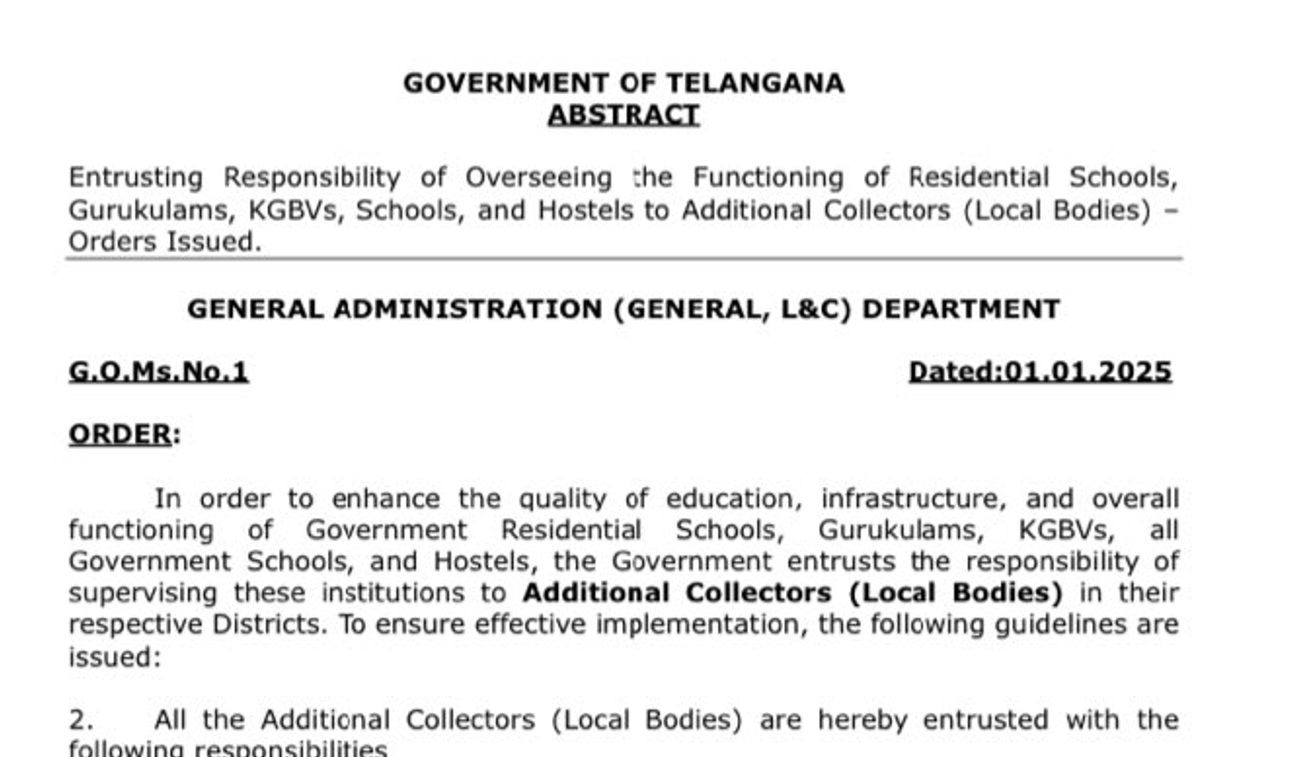
The Government of Telangana has introduced groundbreaking measures to elevate the quality of education, infrastructure, and overall functioning of its Residential Schools, Gurukulams, KGBVs (Kasturba Gandhi Balika Vidyalayas), and hostels. By entrusting oversight responsibilities to Additional Collectors (Local Bodies), the state aims to ensure accountability and excellence in educational institutions across districts. Below, we delve into the essential guidelines and their implications.
New Oversight Responsibilities for Additional Collectors
To bolster the effectiveness of educational institutions, the government has assigned Additional Collectors (Local Bodies) the responsibility of supervising Residential Schools, Gurukulams, KGBVs, and hostels. These officials will spearhead efforts to enhance educational quality and ensure compliance with state guidelines. The following responsibilities highlight their expanded role:
1. Comprehensive Monitoring of Institutions
Additional Collectors are tasked with regularly monitoring all government-run Residential Schools, Gurukulams, KGBVs, and hostels. Their goal is to ensure these institutions adhere to established guidelines and provide students with a safe and conducive learning environment.
2. Focus on Infrastructure and Facilities
Officials will oversee the infrastructure, sanitation, and dining arrangements to ensure they meet the requisite standards. Particular emphasis will be placed on maintaining clean and hygienic facilities for students and staff.
3. Upholding Academic Standards
Ensuring high academic standards is a key priority. The Additional Collectors will work closely with educators to align academic activities with guidelines issued by the concerned departments, thereby fostering better learning outcomes.
4. Procurement of Provisions
The Additional Collectors will now serve as Chairpersons of the District Purchase Committee. This committee is responsible for procuring essential food items for Residential Schools, KGBVs, and hostels, ensuring transparency and efficiency in the procurement process.
5. Compliance with Diet Standards
To maintain nutritional consistency, strict adherence to the prescribed common diet menu is mandatory. Additional Collectors will monitor the quality, quantity, and timely delivery of meals, conducting inspections and addressing discrepancies promptly.
Engagement and Accountability Initiatives
6. Fortnightly Night Stays
To gain firsthand insights into ground-level challenges, Additional Collectors are required to stay overnight at hostels or residential schools at least once every fortnight. During these stays, they will engage with students, teachers, and staff to address concerns and guide institutional heads. Observations from these stays must be documented and included in monthly progress reports.
7. Surprise Inspections
Periodic and unannounced inspections will help evaluate various aspects such as infrastructure, safety, health, sanitation, and academic performance. These inspections are crucial for identifying issues and implementing corrective measures promptly.
8. Special Attention to Underserved Areas
Institutions located in remote and tribal regions will receive special focus. Enhanced monitoring and welfare measures will ensure these areas achieve parity with urban counterparts in terms of education quality and infrastructure.
9. Grievance Redressal Mechanism
A robust grievance redressal system will be implemented to address concerns from students, parents, and staff. Additional Collectors will ensure timely resolution of issues, fostering trust and satisfaction among stakeholders.
10. Effective Budget Utilization
Supervising the judicious utilization of funds allocated to these institutions is another critical responsibility. Transparency and efficiency in financial management will be emphasized to maximize the impact of resources.
Collaborative Efforts and Reporting
11. Coordination with Relevant Departments
To streamline operations, Additional Collectors will liaise with the School Education Department, SCD (Scheduled Castes Development) Department, ST/BC (Scheduled Tribes/Backward Classes) Welfare Departments, and Minority Welfare Department. This collaborative approach aims to ensure seamless functioning across all institutions.
12. Monthly Progress Reports
The Additional Collectors must submit detailed monthly progress reports to the District Collector and relevant departments. These reports will provide insights into academic achievements, infrastructure improvements, and other key metrics.
13. Monthly Review Meetings
District Collectors will convene monthly review meetings involving Additional Collectors, district officials, and heads of institutions. These structured meetings will evaluate progress, address grievances, and review compliance with established standards. Decisions and actionable points from these meetings will be documented and communicated to relevant departments.
Implementation and Support
To ensure the success of these measures, all relevant departments—including the School Education Department, SCD, ST/BC Welfare Departments, Minority Welfare Department, and Panchayat Raj & Rural Development (PR&RD) Department—are directed to support the Additional Collectors. This coordinated effort underscores the government’s commitment to delivering quality education and welfare to all students.
Conclusion
The Telangana government’s proactive approach to improving Residential Schools, Gurukulams, KGBVs, and hostels reflects its dedication to fostering educational excellence. By empowering Additional Collectors with oversight responsibilities, the state is setting a benchmark for accountability and innovation in education. These measures promise to transform the educational landscape, ensuring that every student has access to quality learning and holistic development.