BRS Government Accused of Phone Tapping: Hyderabad Commissioner Reports to High Court
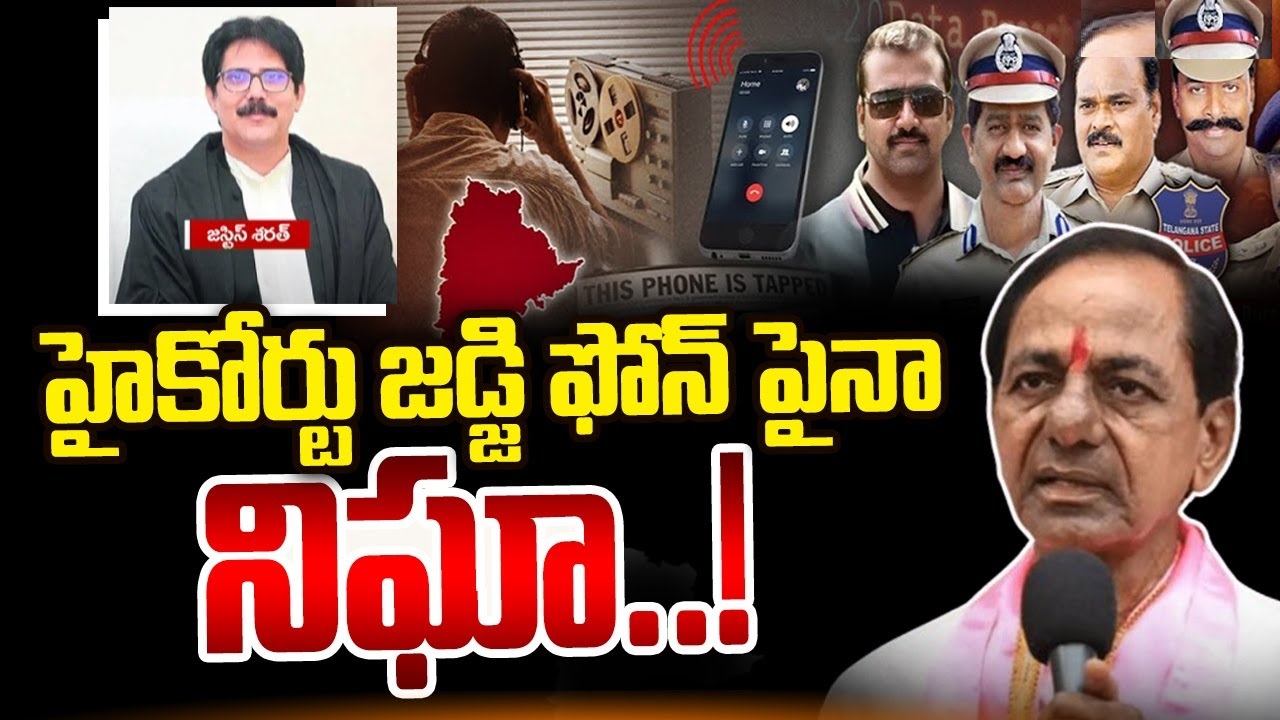
The Telangana High Court recently received a startling revelation regarding the previous BRS government’s alleged phone tapping activities. BRS Govt Tracked Phones of High Court Judge and Wife, Hyderabad CP Reveals, During a hearing on the matter, Hyderabad Police Commissioner Kothakota Srinivas Reddy disclosed that the phones of a High Court judge and his wife were tracked by the BRS administration.
Detailed Affidavit Submitted to High Court
In an affidavit submitted to a bench comprising Chief Justice Alok Aradhe and Justice T Vinod Kumar, Commissioner Reddy detailed that the accused police officers had accessed the call data records (CDR) and Internet Protocol Detail Records (IPDR) of Justice K Sarath and his wife. These records were obtained for a period spanning one year.
“Our investigators sought and received permission from the Hyderabad chief metropolitan magistrate to collect these details from telecom service providers,” Reddy stated in his affidavit. This submission was made during the resumed hearing of the suo motu writ petition concerning the phone tapping incident.
Unauthorized Requests for CDR and IPDR
The affidavit revealed that Special Intelligence Branch (SIB) personnel, accused in the case, had used their official emails to request CDR and IPDR details from the nodal officer of Reliance Jio Infocomm Ltd in Hyderabad. These requests, dated September 9, 2023, aimed to acquire records for the period between September 10, 2022, and September 9, 2023, while the IPDR details were sought from August 8, 2023, to September 7, 2023.
High-Profile Individuals Targeted
In addition to Justice Sarath and his wife, the affidavit mentioned several other high-profile individuals whose CDR and IPDR were allegedly obtained. This list included politicians, bureaucrats, law enforcement officers, and media personnel. Notably, it featured then-opposition leader A Revanth Reddy (now Chief Minister), his brothers Anumula Kondal Reddy and Anumula Tirupati Reddy, and several MLAs.
Violation of Legal Protocols
The phone tapping activities, as described by Commissioner Reddy, were carried out in violation of established laws. “The mobile numbers were intercepted, and CDR and IPDR data were collected without any justifiable reason such as a public emergency or public safety concern,” Reddy explained. He further noted that authorization for phone tapping should come from either the Union or state home secretary. However, the BRS government had delegated this task to SIB chief T Prabhakar Rao, who is the primary accused in the case.
Court’s Response and Further Actions
The High Court bench has directed the Union home secretary to file a counter-affidavit within two weeks. The next hearing on this case is scheduled for July 23.
Background of the Case
The phone tapping controversy has garnered significant attention, highlighting the misuse of power by the previous BRS administration. The unauthorized surveillance of a sitting High Court judge and other prominent figures has raised concerns about privacy violations and the abuse of intelligence resources.
Legal and Political Implications
This case underscores the importance of adhering to legal protocols in surveillance activities. The involvement of high-ranking officials and the misuse of intelligence branches for political gains could have far-reaching implications for governance and public trust in law enforcement agencies.
Ensuring Accountability and Transparency
The ongoing investigation and the High Court’s scrutiny aim to ensure accountability and transparency in handling such sensitive matters. It is crucial for the legal system to address these violations effectively to maintain the integrity of judicial and governmental processes.
The revelations of phone tapping by the previous BRS government highlight the need for stringent oversight and adherence to legal norms in intelligence operations. As the case progresses, it will serve as a critical test of the judicial system’s ability to uphold the rule of law and protect citizens’ rights against unwarranted surveillance.