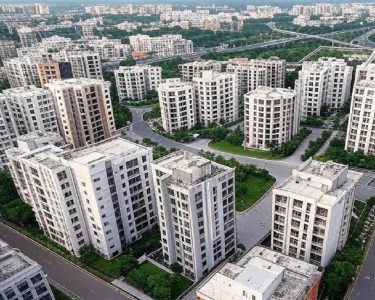

The Telangana government recently announced a significant administrative move to expand urban areas by merging various Gram Panchayats near the Outer Ring Road (ORR) with nearby municipalities. This decision comes as part of a strategic vision to enhance urban infrastructure, streamline governance, and foster planned development. Below, we explore the key details, objectives, and implications of this ordinance.
Key Recommendations from the Cabinet Sub-Committee
The Cabinet Sub-Committee convened on August 22, 2024, with public representatives and stakeholders to discuss the integration of rural and urban regions for efficient governance. Following extensive deliberations, the committee recommended merging 61 Gram Panchayats into municipalities within Rangareddy, Medchal-Malkajgiri, and Sangareddy districts. This move primarily focuses on Gram Panchayats:
- Located inside the ORR,
- Overlapping with the ORR boundaries, and
- Situated close to the ORR, displaying urban-like demographic and developmental characteristics.
Ring Road Map with Survey numbers
https://www.google.com/maps/d/u/0/edit?mid=1H8koPoFU3d8x1EoZaxwEOydQJpn2ptc&usp=sharing
The Urban Expansion Plan
The government decided to expand urban administrative areas up to and beyond the ORR, following the committee’s recommendations. The plan includes merging identified Gram Panchayats with their respective municipalities to create an integrated urban framework. This proactive step aims to address the challenges of urbanization, such as unplanned growth and lack of uniform development policies.
Municipalities and Wards Added to the Urban Framework
The merged Gram Panchayats have been distributed into municipalities, with specific wards allocated to each. Below are the major changes:
- Medchal Municipality
- Includes Pudur and Railapur Gram Panchayats.
- Total wards: 23.
- Dharmaguda Municipality
- Includes Keesara, Yadgarpally, Ankireddypally, and others.
- Total wards: 18.
- Nagaram Municipality
- Includes Bogaram, Godumakunta, Rampally Dayara, and others.
- Total wards: 20.
- Pocharam Municipality
- Includes Venkatapur, Korrremul, and Chowdariguda.
- Total wards: 18.
- Ghatkesar Municipality
- Includes Ankushapur, Edulabad, and Marpallyguda.
- Total wards: 18.
Additional municipalities such as Gundlapochampally (15 wards) and Thumkunta (16 wards) are also part of this urban integration initiative.
District-Wise Urban Upgradation
Several municipalities across different districts have been enhanced by including additional Gram Panchayats. Notable changes include:
- Pedda Amberpet Municipality (Rangareddy District)
- New inclusions: Bacharam, Gowrelly, and Quthbullapur.
- Total wards: 24.
- Tellapur Municipality (Sangareddy District)
- New inclusions: Kardanur, Pocharam, and Paati.
- Total wards: 17.
- Ameenpur Municipality (Sangareddy District)
- New inclusions: Dayara, Sulthanpur, and Ilapur.
- Total wards: 24.
- Shamshabad Municipality (Rangareddy District)
- New inclusions: Peddagolkonda, Bahadurpally, and Hamidullangar.
- Total wards: 25.
Immediate Action and Legal Framework
Due to the urgency of implementing this ordinance, the Telangana Legislature was not in session, prompting the Governor to exercise powers under Article 213 of the Constitution. The ordinance has been enacted to ensure immediate integration and administrative action.
Benefits of Merging Rural and Urban Governance
This bold initiative brings several benefits to the state:
- Improved Infrastructure: Consolidating rural areas with urban municipalities ensures uniform development, better connectivity, and access to urban facilities like sewage systems and roads.
- Streamlined Governance: Administrative boundaries are redefined to reduce duplication of efforts and improve efficiency.
- Boost to Urban Economy: The inclusion of peri-urban areas fosters industrial and economic growth by attracting investments and creating jobs.
Challenges Ahead
Despite its advantages, integrating rural and urban regions poses challenges such as aligning development priorities, managing transitions in governance, and addressing residents’ concerns. The government must ensure equitable resource distribution, transparent communication, and active stakeholder engagement to overcome these hurdles.
Conclusion
The Telangana government’s decision to expand urban boundaries by merging Gram Panchayats is a forward-looking initiative aimed at meeting the demands of rapid urbanization. By fostering integrated development and ensuring efficient governance, this move sets the stage for Telangana’s continued growth as a model state for planned urbanization. The focus now shifts to effective implementation and addressing the concerns of affected communities.