
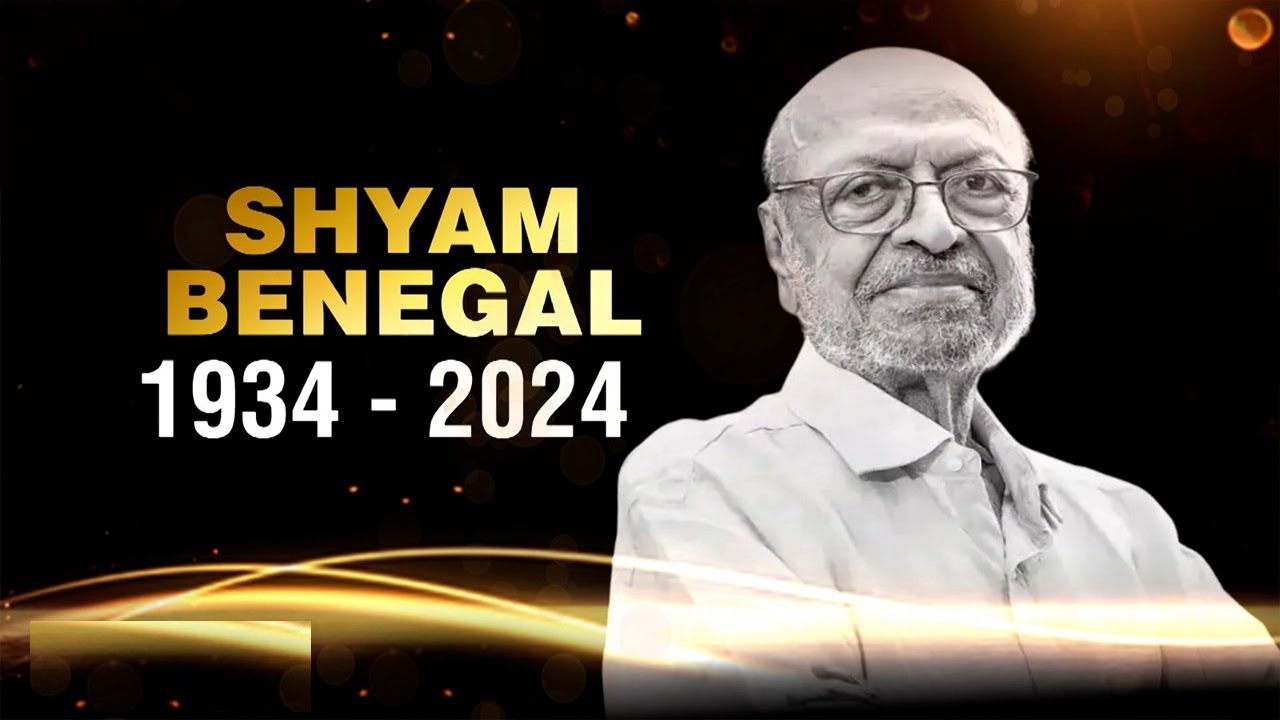
The world of Indian cinema has lost a true luminary. Shyam Benegal, the visionary filmmaker who revolutionized parallel cinema in India, has passed away at the age of 90. For decades, Benegal’s name has been synonymous with thought-provoking, socially conscious filmmaking that challenged norms and pushed boundaries.
But what made Shyam Benegal’s work so distinctive and impactful? 🎬 How did a boy from Hyderabad grow to become one of India’s most celebrated directors? From his groundbreaking debut “Ankur” to his forays into television with “Bharat Ek Khoj,” Benegal’s journey is a testament to the power of storytelling and its ability to shape society.
As we reflect on Benegal’s incredible legacy, we’ll explore the unique filmmaking style that set him apart, delve into his most notable works, and examine the profound influence he had on Indian cinema and television. Join us as we pay tribute to a master storyteller and discover how his vision continues to inspire filmmakers and audiences alike.
Shyam Benegal’s Life and Legacy
Early years and education
Shyam Benegal, born on December 14, 1934, in Hyderabad, India, grew up in a culturally rich environment. His early exposure to literature and arts sparked his passion for storytelling. Benegal pursued his education at Osmania University, where he graduated with a degree in Economics. During his college years, he actively participated in theater productions, honing his creative skills.
Entry into filmmaking
Benegal’s journey into filmmaking began in the advertising industry, where he directed numerous commercials. This experience allowed him to develop his visual storytelling techniques. In 1973, he made his directorial debut with the groundbreaking film “Ankur,” which marked the beginning of his illustrious career in Indian cinema.
Major works and contributions to Indian cinema
Shyam Benegal’s filmography is a testament to his unique vision and storytelling prowess. His works often explored social issues and challenged conventional narratives. Here’s a list of some of his most impactful films:
- Ankur (1974)
- Nishant (1975)
- Manthan (1976)
- Bhumika (1977)
- Junoon (1978)
Benegal’s contributions to Indian cinema extended beyond his films. He played a crucial role in shaping the parallel cinema movement, which focused on realistic storytelling and social commentary.
Awards and accolades
Throughout his career, Shyam Benegal received numerous awards and accolades for his outstanding contributions to cinema. Here’s a table highlighting some of his major recognitions:
| Award | Year | Film/Contribution |
|---|---|---|
| Padma Bhushan | 1991 | Contribution to Indian Cinema |
| Dadasaheb Phalke Award | 2005 | Lifetime Achievement |
| National Film Award for Best Feature Film | Multiple Years | Various Films |
| Filmfare Lifetime Achievement Award | 2012 | Overall Contribution |
Benegal’s legacy continues to inspire generations of filmmakers, cementing his status as one of India’s most influential directors.
Benegal’s Distinctive Filmmaking Style
Focus on social issues
Shyam Benegal’s films were renowned for their unflinching exploration of social issues, setting him apart from mainstream Bollywood cinema. His work often delved into:
- Caste discrimination
- Gender inequality
- Economic disparity
- Political corruption
Benegal’s approach to these topics was both critical and empathetic, shedding light on the complexities of Indian society.
Realistic portrayal of characters
Benegal’s characters were far from the larger-than-life heroes of commercial cinema. Instead, he focused on:
- Multidimensional personalities
- Flawed yet relatable protagonists
- Authentic representations of diverse social groups
This realism brought a new depth to Indian cinema, allowing audiences to see themselves reflected on screen.
Innovative storytelling techniques
Benegal’s storytelling was characterized by:
- Non-linear narratives
- Use of symbolism and metaphor
- Blending of documentary and fiction elements
These techniques challenged viewers and elevated the artistic quality of his films.
Influence on parallel cinema movement
Benegal was a key figure in India’s parallel cinema movement, which offered an alternative to mainstream Bollywood. His impact included:
| Aspect | Contribution |
|---|---|
| Themes | Introduced socially relevant topics |
| Style | Pioneered realistic filmmaking |
| Industry | Inspired a new generation of filmmakers |
| Audience | Cultivated appreciation for thought-provoking cinema |
Benegal’s distinctive style not only shaped his own body of work but also influenced the broader landscape of Indian cinema, encouraging filmmakers to explore diverse narratives and unconventional storytelling methods.
Notable Films and Their Impact
Notable Films and Their Impact
A. Ankur (1974)
Shyam Benegal’s debut feature film, “Ankur,” marked the beginning of a new era in Indian cinema. This groundbreaking work:
- Introduced a realistic portrayal of rural India
- Launched the career of actress Shabana Azmi
- Addressed themes of caste discrimination and social injustice
B. Nishant (1975)
“Nishant” continued Benegal’s exploration of social issues:
- Focused on feudal oppression and exploitation
- Featured an ensemble cast including Naseeruddin Shah and Smita Patil
- Won the National Film Award for Best Feature Film in Hindi
C. Manthan (1976)
“Manthan” stands out for its unique production and subject matter:
- Funded by 500,000 farmers who contributed ₹2 each
- Depicted the White Revolution in India’s dairy industry
- Won the National Film Award for Best Feature Film
| Film | Year | Key Themes |
|---|---|---|
| Ankur | 1974 | Rural India, Caste discrimination |
| Nishant | 1975 | Feudal oppression, Social injustice |
| Manthan | 1976 | Cooperative movement, Rural development |
D. Bhumika (1977)
“Bhumika” showcased Benegal’s ability to craft complex female characters:
- Based on the life of actress Hansa Wadkar
- Starred Smita Patil in a career-defining role
- Explored themes of identity and personal freedom
E. Mandi (1983)
“Mandi” demonstrated Benegal’s versatility as a filmmaker:
- Blended satire and social commentary
- Featured an all-star cast including Shabana Azmi and Naseeruddin Shah
- Addressed issues of prostitution and political corruption
These films not only established Benegal as a master storyteller but also paved the way for the parallel cinema movement in India. Their impact on Indian cinema and society continues to be felt today, inspiring new generations of filmmakers to tackle important social issues through their art.
Benegal’s Contribution to Indian Television
A. Bharat Ek Khoj series
Shyam Benegal’s contribution to Indian television reached its pinnacle with the groundbreaking historical drama series “Bharat Ek Khoj” (The Discovery of India). Based on Jawaharlal Nehru’s book, this 53-episode series aired from 1988 to 1989, presenting a sweeping narrative of Indian history and culture.
Key aspects of the series:
- Ambitious scale: Covered 5,000 years of Indian history
- Star-studded cast: Featured renowned actors like Om Puri and Roshan Seth
- Educational value: Blended entertainment with historical accuracy
B. Yatra documentary series
Following the success of “Bharat Ek Khoj,” Benegal created “Yatra,” a travelogue series that explored the diverse landscapes and cultures of India. This series showcased:
- Authentic portrayal of Indian diversity
- Focus on lesser-known regions and communities
- Innovative storytelling techniques
C. Impact on Indian television industry
Benegal’s television work revolutionized the medium in India:
| Aspect | Impact |
|---|---|
| Quality | Raised production standards |
| Content | Introduced thought-provoking themes |
| Audience | Attracted educated, urban viewers |
| Format | Pioneered long-form storytelling |
His contributions paved the way for future high-quality television productions and inspired a generation of filmmakers to explore the medium’s potential.
Tributes and Reactions to Benegal’s Passing
A. Statements from film industry colleagues
The passing of Shyam Benegal has prompted an outpouring of tributes from his colleagues in the Indian film industry. Many renowned actors, directors, and producers have shared their thoughts on Benegal’s immense contribution to cinema.
| Personality | Statement |
|---|---|
| Shabana Azmi | “Shyam babu was not just a mentor, but a visionary who shaped my career.” |
| Naseeruddin Shah | “Indian cinema has lost its conscience keeper. Benegal’s films will continue to inspire generations.” |
| Amitabh Bachchan | “A giant of Indian cinema has left us. His storytelling was unparalleled.” |
B. Government officials’ condolences
Several government officials have expressed their condolences, recognizing Benegal’s significant impact on Indian culture:
- The Prime Minister tweeted: “Shyam Benegal’s passing is a huge loss to our cultural world. His films were a perfect blend of art and social commentary.”
- The Minister of Information and Broadcasting released a statement praising Benegal’s contribution to meaningful cinema.
- The Chief Minister of Maharashtra announced a state funeral to honor the legendary filmmaker.
C. International recognition and tributes
Benegal’s influence extended far beyond India’s borders, as evidenced by the international tributes pouring in:
- The Cannes Film Festival will be organizing a special screening of Benegal’s classics.
- The British Film Institute has announced a retrospective of his work.
- Filmmakers from around the world, including Martin Scorsese and Ang Lee, have shared their admiration for Benegal’s storytelling prowess.
These tributes underscore Benegal’s global impact and the respect he commanded in the international film community. His legacy as a pioneer of parallel cinema and a master storyteller will continue to inspire filmmakers worldwide.
Benegal’s Enduring Influence on Indian Cinema
Inspiration for new generation of filmmakers
Shyam Benegal’s groundbreaking approach to filmmaking continues to inspire a new generation of Indian directors. His unique storytelling techniques and commitment to social realism have left an indelible mark on the industry. Many emerging filmmakers cite Benegal’s works as a source of inspiration, particularly his ability to blend artistic vision with socially relevant themes.
- Key aspects of Benegal’s influence:
- Realistic portrayal of Indian society
- Focus on marginalized communities
- Innovative narrative structures
- Blend of commercial appeal and artistic integrity
Notable Films
Shyam Benegal’s filmography is rich with critically acclaimed and socially impactful movies. Here’s a list of some of his most significant works:
- Ankur (1974)
- Nishant (1975)
- Manthan (1976)
- Bhumika (1977)
- Junoon (1978)
These films, often referred to as Benegal’s “middle cinema,” bridged the gap between commercial and art house cinema in India.
Television Projects
Benegal’s contribution to Indian television was equally noteworthy. His most famous TV series include:
- Bharat Ek Khoj (1988)
- Yatra (1986)
- Amaravati Ki Kathayen (1994)
| Film/TV Show | Year | Notable Aspects |
|---|---|---|
| Ankur | 1974 | Debut film, rural exploitation theme |
| Bharat Ek Khoj | 1988 | Epic historical series based on Nehru’s “Discovery of India” |
| Manthan | 1976 | Crowd-funded by 500,000 farmers |
Streaming Availability
For those interested in exploring Benegal’s work, several of his movies are available on streaming platforms:
- “Ankur” on Amazon Prime Video
- “Bhumika” on Netflix
- “Manthan” on YouTube (with subtitles)
Benegal’s films continue to be relevant and are often screened at film festivals and retrospectives, showcasing their timeless appeal and artistic merit.
Continued relevance of his works
Despite the passage of time, Benegal’s films remain highly relevant in contemporary India. His exploration of social issues, gender dynamics, and political complexities continues to resonate with modern audiences. Streaming platforms have introduced his works to a new generation, sparking discussions and reinterpretations.
| Benegal’s Film | Contemporary Relevance |
|---|---|
| Ankur | Rural power dynamics |
| Manthan | Cooperative movements |
| Nishant | Gender and caste issues |
Legacy in Indian film schools and institutions
Benegal’s contributions to Indian cinema are firmly embedded in film education curricula across the country. His films are studied as exemplars of socially conscious filmmaking and technical innovation. Many film institutions have established scholarships and programs in his name, ensuring that his legacy continues to shape the future of Indian cinema.
Conclusion
Shyam Benegal’s passing marks the end of an era in Indian cinema. His unique storytelling style, which blended social realism with artistic vision, revolutionized the film industry and inspired generations of filmmakers. From his groundbreaking works in parallel cinema to his contributions to Indian television, Benegal’s impact on the cultural landscape of India is immeasurable.
As we reflect on Benegal’s illustrious career and the outpouring of tributes from across the globe, it becomes clear that his legacy will continue to shape Indian cinema for years to come. His films serve as a testament to the power of storytelling and its ability to challenge societal norms, provoke thought, and inspire change. For aspiring filmmakers and cinema enthusiasts alike, Benegal’s body of work remains a rich source of inspiration and a reminder of the transformative potential of the medium.