

As parents across India woke up to unexpected school closure announcements on September 1, 2025, the reason wasn’t a typical festival holiday but a serious weather emergency that has gripped multiple states. School Holiday on September 1, 2025 became a reality for millions of students in Himachal Pradesh, Punjab, and Jammu & Kashmir as unprecedented rainfall, devastating floods, and dangerous landslides forced government authorities to prioritize student safety over academic schedules.
After a decade of covering education policies and disaster management across India, I can confidently say that the coordinated response we’re witnessing represents one of the most comprehensive school closure decisions in recent memory. What started as localized weather warnings has transformed into a multi-state emergency affecting over 1,000 villages and lakhs of people, making this September 1st school holiday not just necessary, but literally life-saving.
This article promises to give you the complete picture of why schools remain closed, which states are affected, when classes will resume, and everything you need to know about September 2025’s unique holiday calendar that combines emergency closures with traditional festival celebrations.

September 2025 School Holiday Calendar – Weather-Related and Festival Holidays Across India
School Holiday in Himachal Pradesh: Shimla, Solan, Kullu, Bilaspur, Una
The picturesque hills of Himachal Pradesh, typically a haven for tourists and residents alike, have turned treacherous as the India Meteorological Department (IMD) issued its most severe weather warnings in years. Deputy Commissioner Anupam Kashyap of Shimla district invoked the Disaster Management Act, 2005, ordering the immediate closure of all educational institutions on September 1, 2025.
The scale of the IMD’s warning cannot be overstated. Their official press release on August 31, 2025, painted a dire picture: “Very heavy to extremely heavy rainfall very likely at isolated places over Una, Bilaspur, Shimla, Solan & Sirmaur districts” with a Red Alert status. This wasn’t just another monsoon shower – it was a potentially catastrophic weather event requiring unprecedented precautions.
What struck me most during my research was the comprehensive nature of the closure order. Unlike typical school holidays that affect only educational institutions, Himachal Pradesh’s directive extended to Anganwadi centers, colleges, ITIs, polytechnics, coaching centers, and nursing institutes. This broad approach reflects the government’s understanding that when nature unleashes its fury in the form of landslides and flash floods, no learning institution is safe.
The affected districts read like a roll call of Himachal’s most vulnerable regions: Shimla, Solan, Kullu, Bilaspur, Una, Sirmaur, Chamba, Hamirpur, Kangra, Kinnaur, Lahaul-Spiti, and Mandi. Each of these areas faced specific threats – from extremely heavy rainfall in the lower hills to dangerous landslide conditions in the high-altitude regions
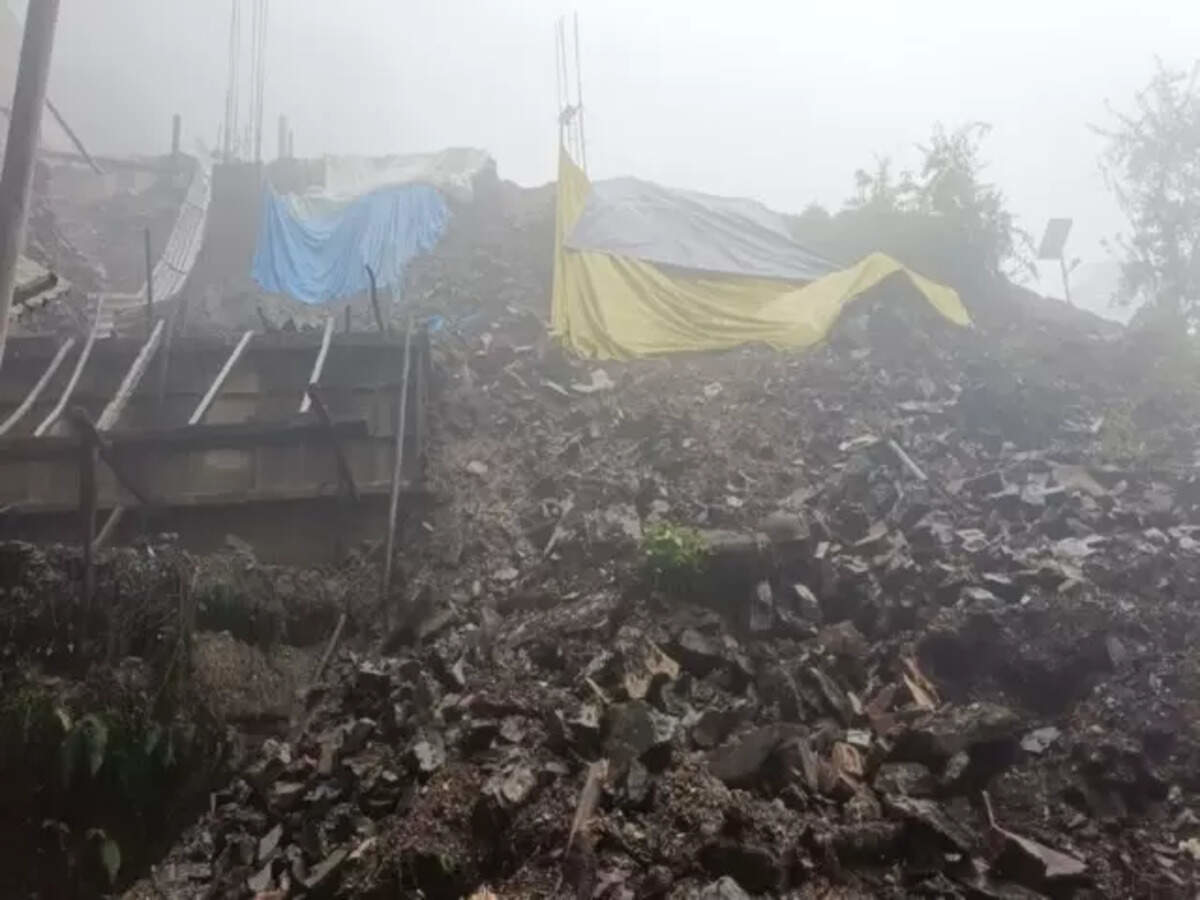
Landslide caused by heavy rainfall disrupts roads and construction in a foggy hilly area of Himachal Pradesh
What makes this closure particularly significant is its timing. September marks the beginning of the academic second term when schools typically gear up after monsoon breaks. However, the IMD’s forecast of isolated thunderstorms with lightning, coupled with continuing heavy rainfall through September 3rd, left authorities with no choice but to extend protective measures.
Punjab Schools Closed Till September 3, 2025: Flood Crisis Deepens
If Himachal Pradesh faced the wrath of mountain rains, Punjab confronted something far more devastating – one of the worst flood disasters in decades. Chief Minister Bhagwant Mann’s decision to extend school closures till September 3, 2025, wasn’t just about protecting students; it was about acknowledging that entire districts had become uninhabitable.
Education Minister Harjot Singh Bains didn’t mince words in his official announcement: “In accordance with the directives of Chief Minister of Punjab, Bhagwant Singh Mann, keeping in view the flood situation in Punjab, holidays have been declared in all government/aided/recognised and private schools in the state until September 3, 2025”. His subsequent message on social media platform X carried an urgent plea: “Parents and students are requested to prioritise safety and comply with the instructions issued by the administration”.
The numbers behind Punjab’s crisis tell a stark story. According to CM Mann’s letter to Prime Minister Narendra Modi, approximately three lakh acres of farmland, primarily paddy fields, remain submerged under floodwater. This represents not just agricultural devastation but a complete disruption of rural life that makes school attendance physically impossible in many areas.

Duration of School Closures Across Indian States (Late August – Early September 2025)
The worst-affected districts create a map of misery: Pathankot, Gurdaspur, Fazilka, Amritsar, Hoshiarpur, Ferozepur, Kapurthala, and Tarn Taran. In these regions, the swollen Sutlej, Beas, and Ravi rivers, combined with seasonal rivulets, have created flood conditions not seen in decades.
What particularly concerns me as someone who has covered educational disruptions extensively is the timing of these floods. Paddy crops were “almost at the harvesting stage” when disaster struck, as CM Mann noted in his correspondence with the Prime Minister. This means farming families – who form the backbone of Punjab’s rural education system – are now dealing with complete livelihood destruction while trying to keep their children safe.
The government’s ₹60,000 crore compensation demand to the Center reflects the scale of devastation. When a state government is forced to argue that existing disaster relief norms of ₹6,800 per acre represent “a cruel joke with farmers,” you understand why school closures become secondary to basic survival.
Jammu Schools Shut on September 1, 2025: Landslide Emergency
The Jammu division faced a different but equally dangerous crisis as continuous heavy rainfall triggered multiple landslides across hilly terrain. Dr. Naseem Javaid Chowdhary, Director School Education Jammu, issued what has become a model order for disaster-related school closures.
His directive was crystal clear: “In continuation to earlier orders and keeping in view the incessant rains and landslides in hilly areas, it is hereby ordered that all government and private schools across Jammu Division shall continue to remain closed on 01-09-2025 (Monday)”.
The situation in Jammu represents a perfect storm of monsoon challenges. Since mid-August, the region has been battered by cloudbursts, flash floods, and slope failures that have claimed over 130 lives, predominantly pilgrims, with more than 120 injured and 33 people still missing across Kishtwar, Kathua, Reasi, and Ramban districts.
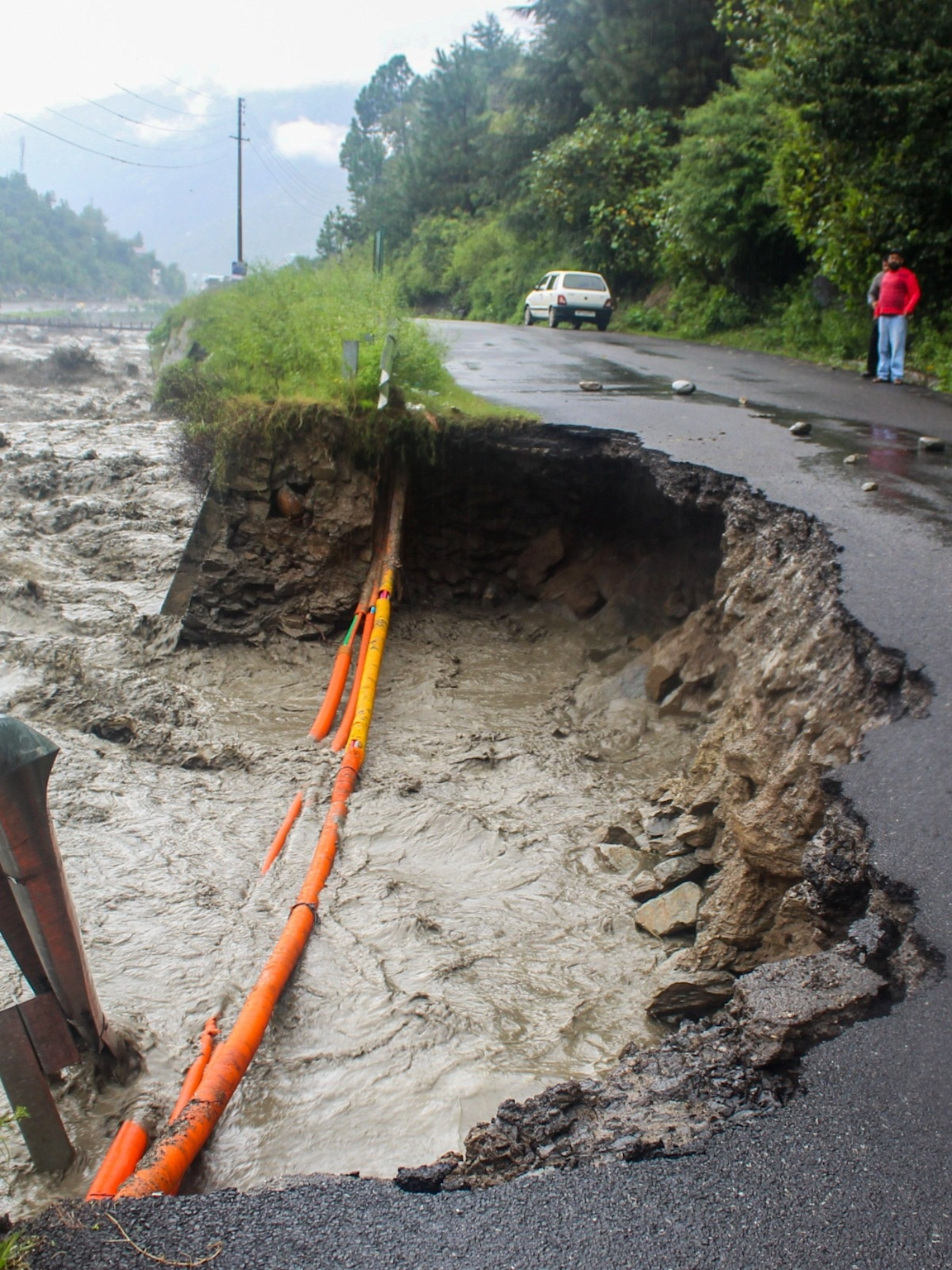
Severe flood and landslide damage causing road collapse in a hilly region, illustrating weather-related hazards in Himachal Pradesh or Jammu & Kashmir
What makes the Jammu situation particularly treacherous is the impact on transportation infrastructure. As the official order noted, there has been “damage to road infrastructure, including blocked and eroded roads, making travel unsafe”. When you combine this with “severe waterlogging and accumulation of mud in school premises,” the decision to keep schools closed becomes not just prudent but mandatory.
The human cost of these weather events cannot be ignored. The death toll from August weather incidents had climbed to 122, with additional fatalities in Reasi and Ramban from continued cloudbursts and floods. These aren’t just statistics – they represent families torn apart by natural disasters that make normal school operations impossible.
Looking ahead, the IMD’s forecast offered little hope for immediate relief. Predictions included “light to moderate rain on August 31 and September 1, with heavy downpours expected in several districts by September 2”. Some areas faced warnings of “very heavy to extremely heavy” rainfall, making the September 1st closure not just appropriate but potentially life-saving.
Humanitarian Relief & Government Actions: Army and Air Force Response
While state governments grappled with closure decisions, the Indian Armed Forces launched one of the most comprehensive disaster relief operations in recent memory. The scale and coordination of these efforts provide crucial context for understanding why School Holiday on September 1, 2025 became necessary across multiple states.
Lieutenant General Manoj Kumar Katiyar, Army Commander of Western Command, personally visited flood-affected areas in Jammu and Punjab to review Humanitarian Assistance and Disaster Relief (HADR) operations. His assessment revealed the deployment of 47 columns, including Army Aviation and Indian Air Force helicopter-based columns, along with formation engineers, medical, and communication resources.
The aviation response alone demonstrates the crisis severity. Twenty aircraft were deployed, including three Advanced Light Helicopters, ten reconnaissance and observation helicopters, six Mi-17s, and one Chinook, all pressed into service for evacuation and essential supply delivery. When military assets of this magnitude are required for civilian rescue, you understand why schools couldn’t possibly remain open.

Indian Air Force Chinook helicopter engaged in flood relief operations, transporting evacuees and rescue personnel during the 2025 Punjab floods
The Indian Air Force’s specific contributions highlight the human drama behind these statistics. On a single day, the IAF evacuated 11 civilians and delivered 2,150 kg of essential relief supplies while retrieving the mortal remains of a missing employee from the Madhopur barrage. These operations continued round-the-clock despite “challenging weather conditions” that made even military-grade helicopter operations dangerous.
One rescue operation that particularly moved me involved the Indian Army’s Kharga Corps Sappers rescuing a woman and her 15-day-old child from a partially submerged building in Dhangai village, Gurdaspur district. The mother had undergone a caesarian section just two weeks prior and was stranded for four days. The rescue required navigating 18 kilometers of inundated terrain, including three kilometers through strong water current by boat.
Such operations underscore why civilian institutions like schools had to remain closed. If military-trained personnel with specialized equipment found conditions challenging, how could we expect students and teachers to navigate the same environment safely?
The coordination between various agencies also impressed me. As Lt. Gen. Katiyar noted, there was “high level of preparedness, swift deployment of columns, and round-the-clock efforts in evacuating stranded civilians, providing medical aid, essential supplies, and restoring connectivity”. This multi-agency response involving the Army, NDRF, BSF, Punjab Police, and district authorities created a comprehensive safety net that made school closures part of a larger protective strategy
Impact of Floods & Rains: Agricultural and Social Devastation
The true measure of why schools had to close on September 1, 2025, becomes clear when examining the broader impact of this weather crisis on communities and livelihoods. Having covered numerous natural disasters over the past decade, I can say that the combination of agricultural destruction, infrastructure damage, and social disruption created conditions incompatible with normal educational operations.
Punjab’s agricultural sector bore the brunt of devastation. CM Bhagwant Mann’s assessment to PM Modi revealed that “about three lakh acres of farmland, primarily paddy fields, remain submerged under floodwater, leading to devastating crop losses just weeks before harvest”. This timing couldn’t have been worse – families were counting on harvest income to fund their children’s education for the coming year.
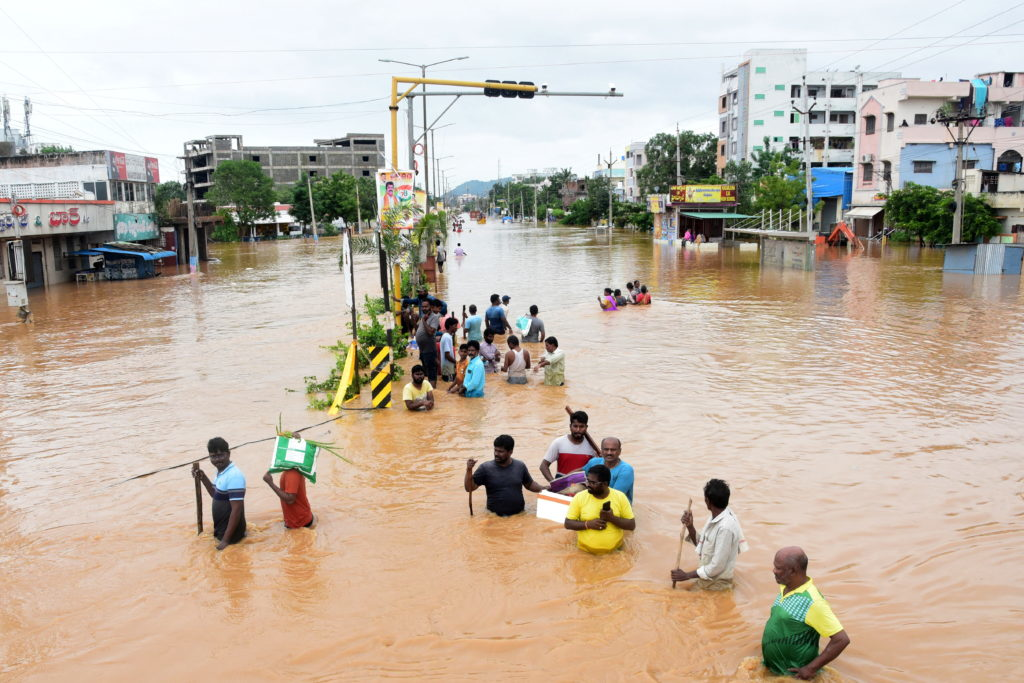
Severe urban flooding with residents wading through waist-deep muddy water during monsoon floods causing disruptions including school closures
The livestock losses add another dimension to the crisis. As Mann noted, “there has been widespread loss of livestock, which is severely impacting rural households whose livelihoods are heavily dependent on dairy and animal husbandry”. When families lose both crops and cattle, sending children to school becomes secondary to basic survival.
The compensation debate reveals the inadequacy of existing disaster response mechanisms. Current SDRF norms provide only ₹17,000 per hectare (₹6,800 per acre) for crop losses above 33%. Punjab already supplements this to ₹15,000 per acre, but Mann argued for ₹50,000 per acre given the massive scale of destruction. These aren’t just numbers – they represent the difference between families being able to afford school fees, uniforms, and supplies for the upcoming academic year.
Infrastructure damage compounded the educational challenges. The Disaster Management plan for Himachal Pradesh, operating under the Disaster Management Act 2005, specifically identifies “damage to vulnerable structures” and “localized landslides/mudslides” as expected impacts of heavy rainfall. Many schools fell into the category of “vulnerable structures” requiring thorough safety inspections before reopening.
Road connectivity became a major factor in closure decisions. As the Jammu education directorate noted, “damage to road infrastructure, including blocked and eroded roads, making travel unsafe” made school attendance physically impossible in many areas. Even if schools remained structurally sound, students couldn’t reach them safely.
The social impact extends beyond immediate physical dangers. In flood-affected areas of Punjab, entire villages became cut off from essential services. The Indian Army had to establish relief shelters and conduct air-drops of food packets to inundated areas. When communities require military-coordinated food delivery, maintaining regular school schedules becomes unrealistic.
Complete School Holiday List for September 2025: Festivals Meet Emergency
September 2025 presents a unique holiday calendar where emergency weather-related closures intersect with traditional festival celebrations. As someone who has tracked academic calendars across India for years, I can say this month offers an unprecedented combination of safety-mandated and culturally-significant school holidays.
Emergency-Related Closures:
- September 1 (Monday): Jammu division closure due to heavy rains and landslides
- September 2-3: Punjab schools remain closed due to flood conditions, with reopening scheduled for September 4
Festival and Cultural Holidays:
- September 5 (Friday): Dual celebration of Teachers’ Day and Milad-un-Nabi (Id-e-Milad)
- September 7 (Sunday): Regular weekly holiday, coinciding with Anant Chaturdashi/Ganesh Visarjan in western states
Regional Festival Celebrations:
- September 12 (Friday): Friday following Eid-e-Milad, observed as a restricted holiday in Jammu and Kashmi
- September 17 (Wednesday): Onam celebrations in Kerala and Vishwakarma Puja in eastern and northern states
Autumn Festival Season:
- September 21 (Sunday): Bathukamma festival begins in Telangana, coinciding with regular Sunday holiday
- September 22 (Monday): Mahalaya marks the beginning of Durga Puja and Navratri celebrations
- September 23 (Tuesday): Maharaja Hari Singh’s birthday in Jammu and Kashmir
Durga Puja Celebrations:
- September 29 (Monday): Maha Saptami, the seventh day of Durga Puja
- September 30 (Tuesday): Maha Ashtami, the eighth day of Durga Puja
What makes September 2025 particularly interesting is how emergency closures blend seamlessly into planned festival holidays. Students in Punjab who missed classes due to floods will transition directly into Teachers’ Day celebrations, followed by traditional autumn festivals. This creates extended learning disruptions that schools will need to address through revised academic calendars and compensatory classes.
State-Specific Variations:
Different states observe varying combinations of these holidays based on local traditions and administrative decisions. Kerala schools enjoy the longest planned closure with Onam celebrations extending from September 4-7. Meanwhile, eastern states like West Bengal, Assam, and Odisha prepare for extended Durga Puja holidays that may continue into early October.
The overlap between emergency and planned closures creates both challenges and opportunities for educational planning. Schools must balance safety requirements with festival celebrations while ensuring students don’t fall behind academically. Recovery plans will need to account for both flood damage and traditional holiday schedules.
What Parents & Students Should Know: Safety and Academic Planning
As we navigate this unprecedented combination of weather emergencies and traditional holidays, parents and students need practical guidance for the weeks ahead. Drawing from a decade of covering education crises, I can offer specific recommendations for different scenarios families might face.
Immediate Safety Priorities:
In flood-affected areas of Punjab, Himachal Pradesh, and Jammu & Kashmir, safety must remain the absolute priority. Don’t attempt to visit schools even if they appear accessible – floodwaters can hide dangerous currents, damaged infrastructure, and contaminated conditions. Wait for official reopening announcements from education departments.
For students in Classes 9-12 in affected areas, many schools are exploring online learning alternatives. The Jammu education directorate specifically advised schools to “explore the feasibility of conducting online classes, particularly for Classes 9 to 12, wherever suitable infrastructure and internet connectivity are available”. Parents should stay in touch with school administrators about digital learning options.
Academic Calendar Adjustments:
Schools will inevitably need to revise their academic calendars to compensate for lost instructional time. Based on similar situations I’ve covered, expect schools to implement several strategies:
- Extended school hours once classes resume to cover missed curriculum
- Compressed holiday schedules during traditionally longer breaks like Diwali
- Weekend classes for examination-bound students
- Accelerated syllabi focusing on essential learning outcomes
The education departments have already indicated this approach. As stated in official orders, schools must “ensure thorough cleaning, sanitation, and safety inspections of school premises prior to reopening”. This process takes time but ensures safe learning environments.
Financial Considerations:
Families in flood-affected areas may face significant financial stress due to crop losses and property damage. CM Bhagwant Mann’s push for ₹50,000 per acre compensation reflects the scale of economic impact. Parents should:
- Document flood damage to property and income sources for compensation claims
- Communicate with schools about potential fee payment delays due to disaster-related income loss
- Explore government relief schemes for educational expenses in disaster-affected areas
- Connect with local administration about available support for school supplies and uniforms
Health and Hygiene Protocols:
Post-flood school reopening will require enhanced health measures. Schools in affected areas must address risks from contaminated water, damaged sanitation facilities, and potential disease outbreaks. Parents should prepare for:
- Stricter hygiene requirements including hand sanitization and clean water bottles
- Health screenings before school entry to monitor for water-borne illnesses
- Modified lunch programs to ensure food safety in areas with compromised water supplies
- Increased vaccination vigilance for diseases common after flooding events
The September festival season also requires careful planning. With Durga Puja, Navratri, and other celebrations coinciding with flood recovery, families must balance cultural participation with ongoing safety concerns. Large gatherings may pose risks in areas still dealing with infrastructure damage and emergency services being stretched thin.
Communication Strategies:
Stay connected with official information sources rather than relying on social media rumors. The education departments have established clear communication channels – the Jammu directorate specifically mentions “wide publicity through print and electronic media”. Official websites, verified social media accounts of education ministers, and district collector announcements provide reliable updates.
For families displaced by flooding, maintaining contact with schools becomes crucial for academic continuity. Many schools are developing systems to track displaced students and provide support for temporary relocations. Don’t hesitate to inform school authorities about changed living situations due to disaster impacts.
Conclusion: September 2025’s Unprecedented Educational Landscape
As September 2025 unfolds, we’re witnessing a month that perfectly encapsulates the complex challenges facing Indian education in an era of climate uncertainty. School Holiday on September 1, 2025 wasn’t just about giving students a day off – it represented a coordinated governmental response to life-threatening weather conditions that put human safety above academic schedules.
The convergence of emergency closures in Punjab, Himachal Pradesh, and Jammu & Kashmir with traditional festivals like Durga Puja, Onam, and Teachers’ Day creates a unique educational landscape. Students in flood-affected areas will experience extended breaks not by choice, but by necessity, while their counterparts in unaffected regions enjoy planned cultural celebrations.
What impresses me most after covering this story is the level of coordination between state governments, disaster management authorities, and educational institutions. From CM Bhagwant Mann’s direct communication with PM Modi about compensation needs to Dr. Naseem Javaid Chowdhary’s clear safety directives in Jammu, we’ve seen leadership prioritizing student welfare over administrative convenience.
The humanitarian response by the Indian Army, Air Force, and various relief agencies demonstrates how educational disruptions fit into larger community protection efforts. When military helicopters are evacuating civilians and dropping emergency supplies, school closures become part of a comprehensive safety strategy rather than isolated administrative decisions.
Looking ahead, the real test will be how quickly and effectively schools can resume operations while accommodating the complex needs of disaster-affected communities. The academic calendar adjustments, financial support for affected families, and infrastructure repairs will determine whether these emergency closures become temporary disruptions or longer-term educational setbacks.
Take Action: Stay informed through official channels, prioritize safety over convenience, and support your local schools as they navigate recovery efforts. Whether you’re in a flood-affected area or planning festival celebrations, remember that education’s greatest lesson this September is the importance of community resilience in face of natural challenges.
For the most current updates on school reopenings and holiday schedules, bookmark your state education department’s official website and follow verified social media accounts of education ministers and district collectors.
Frequently Asked Questions (FAQs)
1. Why are schools closed on September 1, 2025, in Himachal, Punjab, and Jammu?
Schools remained closed on September 1, 2025, in these states due to severe weather emergencies, not regular holidays. Himachal Pradesh faced extremely heavy rainfall and landslide warnings that prompted authorities to invoke the Disaster Management Act 2005. Punjab was dealing with one of the worst flood disasters in decades, with three lakh acres of farmland submerged and entire villages cut off. Jammu & Kashmir experienced continuous heavy rainfall causing multiple landslides and infrastructure damage that made school attendance dangerous. These closures prioritized student and staff safety over regular academic schedules.
2. Will schools reopen immediately after September 1 in Jammu & Himachal?
No, the reopening timeline varies by state and depends on ongoing weather conditions and safety assessments. Jammu’s education directorate stated that “the situation is being closely monitored and further decisions regarding reopening of schools will be taken after reviewing the weather conditions”. Schools must undergo “thorough cleaning, sanitation, and safety inspections of school premises prior to reopening”. Punjab has already extended closures through September 3, while Himachal Pradesh decisions continue on a district-by-district basis depending on local conditions. Parents should monitor official education department announcements rather than assuming automatic reopening dates.
3. What are the official school holiday dates in September 2025?
September 2025 combines emergency weather-related closures with traditional festival holidays. Key dates include: September 1 (Jammu division closure due to weather), September 5 (Teachers’ Day + Milad-un-Nabi), September 17 (Onam in Kerala + Vishwakarma Puja in eastern states), September 22 (Durga Puja and Navratri beginning), and September 29-30 (Durga Puja Saptami and Ashtami). However, holiday schedules vary significantly by state and individual school policies. Weather-related closures in Punjab, Himachal Pradesh, and Jammu may extend beyond initial announcements depending on flood recovery and infrastructure repairs. Parents should check directly with their schools and state education departments for the most accurate, updated holiday calendars specific to their region.