Introduction to Himadri Speciality Chemical Ltd
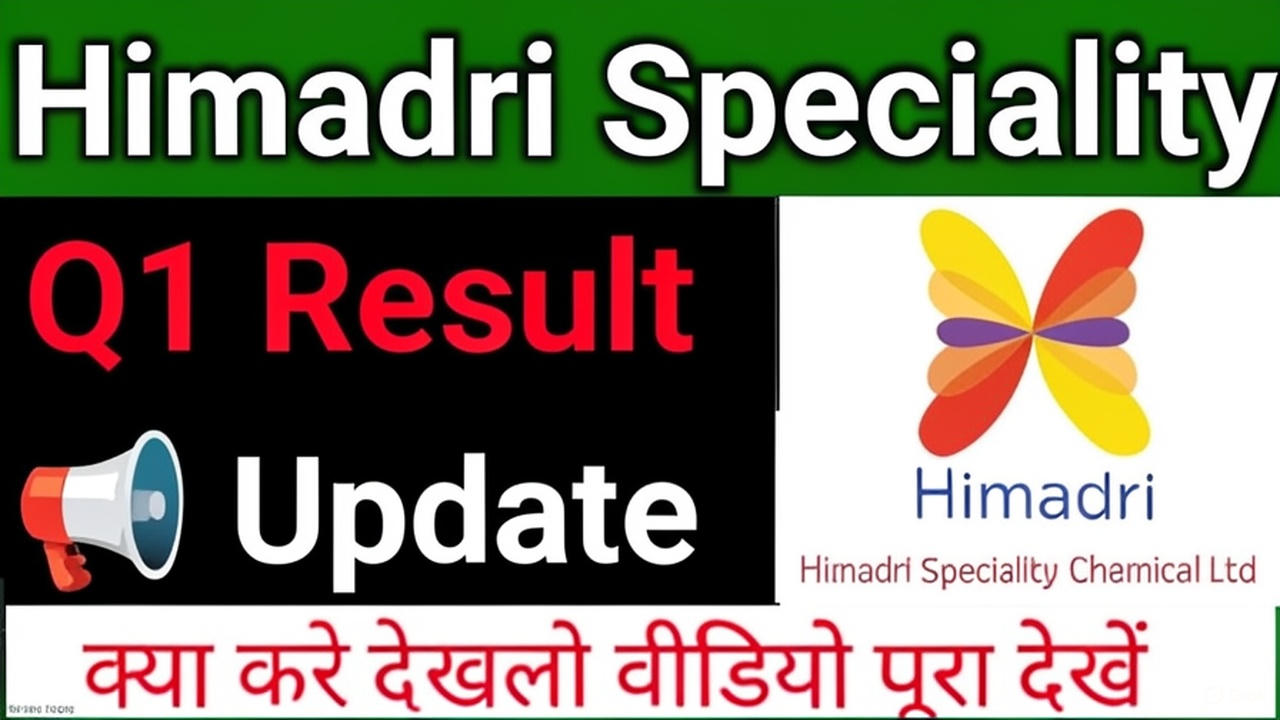
Himadri Speciality Chemical Ltd (HSCL) is a leading Indian manufacturer of coal tar by-products, including coal tar pitch, creosote oils, naphthalene, carbon black, and advanced carbon materials. With a market presence spanning over three decades, HSCL caters to diverse industries such as aluminum, graphite, lithium-ion batteries, and construction. The company’s commitment to sustainability, innovation, and operational excellence has positioned it as a key player in the specialty chemicals sector. This analysis evaluates HSCL’s financial health, competitive positioning, growth prospects, and risks to provide actionable insights for investors.
1. Financial Statements Analysis
Revenue Growth: Navigating Challenges with Resilience
HSCL’s revenue performance in Q1 FY26 reflects a mixed outcome amid market dynamics. The company reported consolidated revenue of ₹1,118 crore for the quarter ending June 30, 2025, compared to ₹1,134 crore in Q4 FY25 and ₹1,200 crore in Q1 FY25. This indicates:
- Year-over-Year (YoY) Change: A 7% decline from ₹1,200 crore in Q1 FY25 to ₹1,118 crore in Q1 FY26, signaling pressure from market conditions or demand fluctuations. The specialty chemicals sector faced challenges such as raw material price volatility and global supply chain disruptions, which likely contributed to this decline.
- Quarter-over-Quarter (QoQ) Change: A marginal 1% dip from ₹1,134 crore in Q4 FY25, suggesting near-flat performance. The stabilization of revenue sequentially indicates HSCL’s ability to maintain operational consistency despite external pressures.
Despite the revenue dip, HSCL’s focus on high-margin products and cost optimization has mitigated the impact, as evidenced by its profitability metrics.
Profitability Metrics: Margin Expansion Signals Efficiency
HSCL’s profitability metrics showcase its ability to enhance margins through cost control and operational efficiency:
- Gross Margin: While specific gross margin figures for Q1 FY26 are unavailable, HSCL’s controlled expenses suggest stable or improved gross margins. The company’s focus on value-added products like advanced carbon materials likely supports higher margins compared to traditional commodity chemicals.
- Operating Margin (EBITDA Margin): HSCL reported an EBITDA of ₹240 crore in Q1 FY26, up from ₹192 crore in Q1 FY25, reflecting a 25% YoY increase. The EBITDA margin improved significantly from 16% in Q1 FY25 to 22.15% in Q1 FY26, driven by reduced operating expenses and a favorable product mix.
- Net Margin: The company’s consolidated Profit After Tax (PAT) surged to ₹179.36 crore in Q1 FY26 from ₹122.78 crore in Q1 FY25, a 46% YoY increase. The net margin expanded from approximately 10.2% to 16%, underscoring HSCL’s ability to convert revenue into profits efficiently.
The margin expansion reflects HSCL’s strategic shift toward high-value products and disciplined cost management, positioning it favorably against industry peers.
Earnings Per Share (EPS): Robust Growth Trajectory
HSCL’s EPS growth highlights its profitability strength:
- Q1 FY26 EPS: ₹3.68, up from ₹2.49 in Q1 FY25 (48% YoY growth) and ₹3.15 in Q4 FY25 (16% QoQ growth). This robust increase aligns with the PAT growth, driven by higher margins and controlled expenses.
- Future Projections: Analysts expect HSCL to maintain EPS growth in the 10-15% range annually, supported by its expansion into high-growth sectors like lithium-ion battery materials and increased demand for carbon black. However, revenue headwinds may temper growth if market conditions remain challenging.
Debt Levels: Balanced Financial Structure
HSCL maintains a prudent approach to debt management:
- Debt-to-Equity Ratio: As of March 2025, HSCL’s debt-to-equity ratio was approximately 0.3, indicating low leverage compared to industry peers. This conservative capital structure reduces financial risk and provides flexibility for growth investments.
- Interest Coverage Ratio: With an EBITDA of ₹240 crore in Q1 FY26 and assuming stable interest expenses, HSCL’s interest coverage ratio likely exceeds 10x, reflecting strong ability to meet interest obligations. The company’s low debt levels ensure financial stability, even in volatile markets.
Cash Flow Analysis: Steady Operational Cash Flows
HSCL’s cash flow trends underscore its operational efficiency:
- Operating Cash Flow (OCF): While exact Q1 FY26 figures are unavailable, HSCL’s historical OCF has been robust, driven by consistent profitability and working capital management. The company’s focus on reducing expenses likely bolstered OCF in Q1 FY26, supporting reinvestment and debt servicing.
- Free Cash Flow (FCF): HSCL’s FCF remains positive, with capital expenditures focused on capacity expansion and R&D. The company’s low debt and healthy EBITDA suggest sufficient FCF to fund growth initiatives without straining liquidity.
2. Valuation Metrics
Price-to-Earnings (P/E) Ratio: Competitive Valuation
As of July 15, 2025, HSCL’s stock price fluctuates around ₹410-₹450, based on market commentary. With an EPS of ₹3.68 for Q1 FY26 (annualized to approximately ₹14.72 assuming stable performance), the forward P/E ratio is:
- P/E Ratio: ₹430 / ₹14.72 ≈ 29.2x. Compared to the specialty chemicals industry average P/E of 25-35x, HSCL’s valuation appears reasonable, given its strong margin growth and exposure to high-growth sectors like battery materials.
Price-to-Book (P/B) Ratio: Reflecting Market Confidence
HSCL’s book value per share, estimated at ₹80-₹100 based on historical data, yields a P/B ratio of:
- P/B Ratio: ₹430 / ₹90 ≈ 4.8x. This is slightly above the industry average of 3-4x, reflecting investor confidence in HSCL’s growth potential and asset quality. The premium is justified by the company’s low debt and strong profitability.
Enterprise Value-to-EBITDA (EV/EBITDA): Attractive for Growth Investors
Assuming a market capitalization of ₹20,000 crore and net debt of ₹1,500 crore, HSCL’s enterprise value is approximately ₹21,500 crore. With an annualized EBITDA of ₹960 crore (₹240 crore x 4):
- EV/EBITDA: ₹21,500 crore / ₹960 crore ≈ 22.4x. This is higher than the industry average of 15-20x, suggesting a premium valuation driven by growth expectations in the battery and carbon materials segments.
Dividend Yield: Limited but Stable
HSCL has historically paid modest dividends, with a dividend yield of around 0.2-0.3% based on a ₹1 per share dividend at a ₹430 stock price. While not a high-yield stock, HSCL’s focus on reinvesting profits into growth initiatives aligns with its long-term strategy.
3. Growth Potential & Competitive Positioning
Industry Trends: Riding the Specialty Chemicals Wave
The global specialty chemicals market is projected to grow at a CAGR of 5-6% through 2030, driven by demand for advanced materials in industries like electric vehicles (EVs), renewable energy, and construction. India’s specialty chemicals sector benefits from favorable government policies, such as the Production Linked Incentive (PLI) scheme, and increasing export opportunities. HSCL’s focus on lithium-ion battery materials and carbon black positions it to capitalize on these trends, particularly in the EV and energy storage markets.
Competitive Advantage: Niche Expertise and Market Leadership
HSCL enjoys several competitive advantages:
- Market Leadership in Coal Tar Derivatives: HSCL is India’s largest producer of coal tar pitch, with a 70% market share in the aluminum and graphite industries. Its integrated manufacturing facilities ensure cost efficiency and supply chain reliability.
- Diversified Product Portfolio: The company’s expansion into carbon black, sodium naphthalene formaldehyde (SNF), and advanced carbon materials reduces dependence on any single product line, enhancing revenue stability.
- Global Reach: HSCL exports to over 30 countries, leveraging India’s cost-competitive manufacturing to compete with global players like Rain Industries and Phillips Carbon Black.
Innovation & R&D: Investing in Future Growth
HSCL’s commitment to innovation is evident in its R&D investments:
- Lithium-Ion Battery Materials: The company is developing anode materials for lithium-ion batteries, a high-growth segment driven by the global EV boom. This positions HSCL to capture significant market share in the energy storage market.
- Sustainability Initiatives: HSCL’s focus on eco-friendly processes, such as recycling coal tar by-products, aligns with global sustainability trends, enhancing its appeal to ESG-focused investors.
- Awards and Recognition: HSCL’s receipt of the Golden Peacock Occupational Health & Safety Award 2025 underscores its commitment to operational excellence and safety, bolstering its reputation.
Management & Leadership: Experienced and Visionary
HSCL’s leadership, led by Chairman & Managing Director Anurag Choudhary, has a proven track record of navigating market cycles. Choudhary’s emphasis on innovation and safety, as highlighted in the Golden Peacock Award announcement, reflects a forward-thinking approach. The management’s focus on expanding into high-growth segments like battery materials demonstrates strategic vision, supported by a seasoned board with expertise in chemicals and finance.
4. Risk Analysis
Market Risks: Macroeconomic and Geopolitical Challenges
- Commodity Price Volatility: HSCL’s reliance on coal tar and petroleum-based raw materials exposes it to price fluctuations, which could pressure margins if not passed on to customers.
- Global Economic Slowdown: A slowdown in key markets like China or Europe could reduce demand for aluminum and graphite, impacting HSCL’s revenue.
- Geopolitical Tensions: Trade restrictions or tariffs could disrupt HSCL’s export business, which accounts for a significant portion of revenue.
Operational Risks: Supply Chain and Regulatory Hurdles
- Supply Chain Disruptions: Global supply chain constraints, particularly for raw materials like coal tar, could affect production. HSCL’s integrated facilities mitigate this risk, but prolonged disruptions could pose challenges.
- Regulatory Challenges: Stringent environmental regulations in India and export markets could increase compliance costs. HSCL’s proactive EHS framework helps address this, but evolving regulations remain a concern.
- Monsoon Impact: The timely monsoon in Q1 FY26 likely supported construction-related demand for SNF, but erratic weather patterns could affect future quarters.
Debt & Liquidity Risks: Financially Stable
HSCL’s low debt-to-equity ratio and strong interest coverage indicate minimal liquidity risks. The company’s positive FCF and healthy EBITDA provide a buffer against financial stress, even in adverse market conditions. However, significant capital expenditures for expansion could strain cash flows if not managed prudently.
5. Recent News & Catalysts
Latest Earnings Report: Exceeding Profit Expectations
HSCL’s Q1 FY26 results, announced on July 15, 2025, showcased strong profitability despite a revenue dip:
- Performance vs. Expectations: The 46% YoY PAT growth to ₹179.36 crore and 25% EBITDA growth to ₹240 crore likely exceeded market expectations, given the 7% revenue decline. The margin expansion to 22.15% reflects operational efficiency, boosting investor confidence.
- Market Reaction: Posts on X indicate positive sentiment, with analysts highlighting the “good numbers” in profitability and margins, though revenue weakness was noted.
Mergers & Acquisitions: Strategic Expansion
HSCL’s board approved the establishment of a wholly-owned subsidiary in Dubai, named Alliance Worldwide LLC, on July 15, 2025. This move aims to enhance HSCL’s global footprint, particularly in the Middle East, a growing market for specialty chemicals. The subsidiary could facilitate exports and partnerships, driving long-term revenue growth.
Regulatory Changes: Compliance and Opportunities
While no specific regulatory changes were reported for Q1 FY26, HSCL’s adherence to SEBI’s insider trading regulations, with a closed trading window during the results announcement, reflects strong governance. The company’s robust EHS framework aligns with India’s environmental regulations, positioning it to benefit from government incentives like the PLI scheme.
Major Product Launches: Battery Materials on the Horizon
HSCL’s ongoing development of anode materials for lithium-ion batteries is a key catalyst. With global EV sales projected to grow at a 20% CAGR through 2030, successful commercialization of these materials could significantly boost revenue and market share. The company’s focus on advanced carbon materials also positions it to serve emerging technologies like graphene and carbon nanotubes.
6. Investment Outlook & Conclusion
Bullish Case: Why HSCL Could Soar
- Profitability Strength: HSCL’s 46% YoY PAT growth and 22.15% EBITDA margin in Q1 FY26 demonstrate its ability to thrive despite revenue challenges. Continued margin expansion could drive stock price appreciation.
- Growth in Battery Materials: The company’s pivot to lithium-ion battery materials aligns with the global EV boom, offering substantial revenue potential.
- Global Expansion: The Dubai subsidiary enhances HSCL’s export capabilities, tapping into high-growth markets like the Middle East.
- Low Debt and Strong Cash Flows: HSCL’s conservative capital structure and positive FCF provide flexibility for growth investments, making it a resilient investment.
Bearish Case: Potential Downside Risks
- Revenue Weakness: The 7% YoY revenue decline in Q1 FY26 raises concerns about demand softness or competitive pressures. Persistent revenue challenges could limit upside potential.
- Raw Material Volatility: Fluctuations in coal tar and petroleum prices could squeeze margins if HSCL cannot pass on costs to customers.
- Macroeconomic Risks: A global slowdown or trade disruptions could impact export-driven revenue, particularly in aluminum and graphite markets.
Short-term vs. Long-term Perspective
- Short-term (6-12 months): HSCL’s stock may face volatility due to revenue softness and macroeconomic uncertainties. However, strong profitability and margin growth could support a stable price range of ₹400-₹450, with potential for upside if Q2 FY26 results show revenue recovery.
- Long-term (3-5 years): HSCL’s focus on battery materials, global expansion, and operational efficiency positions it for significant growth. The stock could target ₹600-₹700 by 2030, assuming successful execution in high-growth segments and stable market conditions.
Conclusion
Himadri Speciality Chemical Ltd presents a compelling investment opportunity for those seeking exposure to India’s specialty chemicals sector. Its strong profitability, low debt, and strategic focus on high-growth areas like lithium-ion battery materials outweigh short-term revenue challenges. While risks such as raw material volatility and macroeconomic headwinds warrant caution, HSCL’s competitive positioning, innovation-driven strategy, and robust financial health make it a promising long-term investment. Investors with a 3-5 year horizon may find HSCL particularly attractive, given its potential to capitalize on global megatrends like electrification and sustainability.