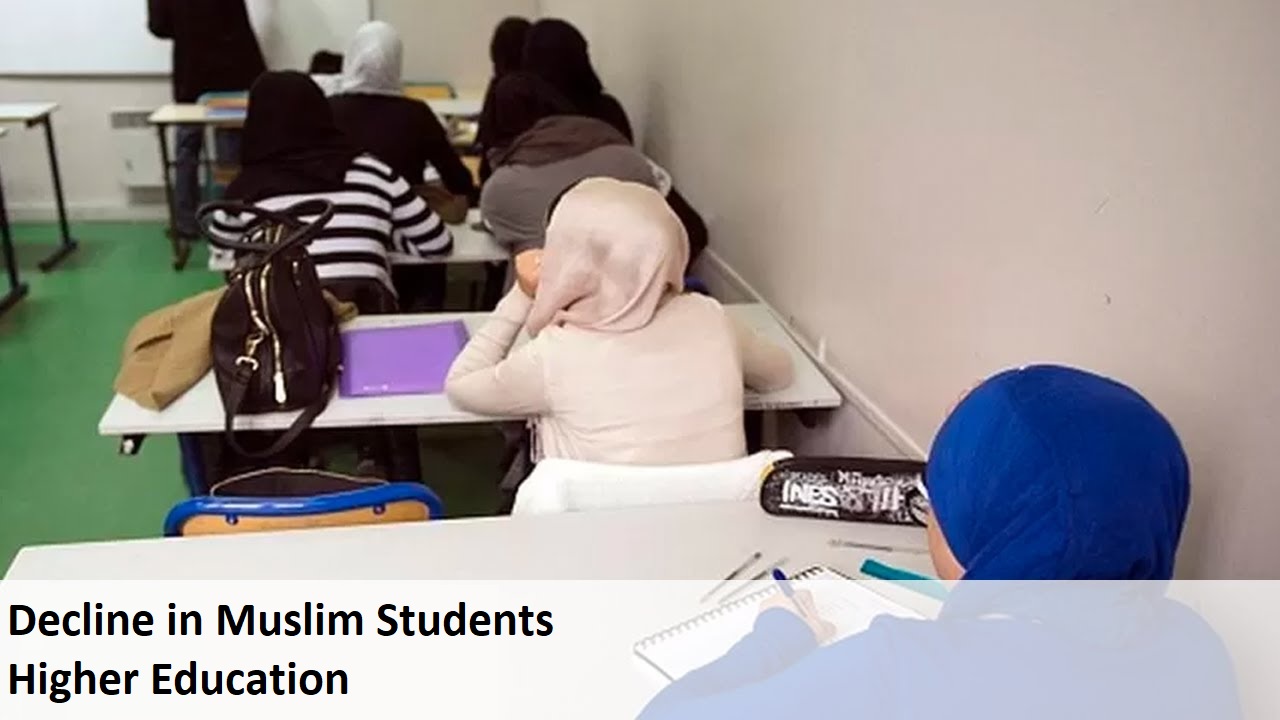
In 2020-21, a notable decline of 1,79,147 Muslim students pursuing higher education in India has been reported, Decline in Muslim Students Higher Education marking an 8.5% decrease from the previous academic year. This analysis delves into the intricacies of this decline, drawing insights from the report titled “The State of Muslim Education in India,” prepared by Arun C. Mehta, former Professor of the National Institute of Educational Planning and Administration.
Enrolment Statistics
The report reveals a drop from 21 lakh Muslim students enrolled in higher education in 2019-20 to 19.21 lakh in 2020-21. The percentage of Muslim students relative to the total enrolment saw a slight decrease from 4.87% in 2016-17 to 4.64% in 2020-21.
Decline in Muslim Students Higher Education Analysis
A concerning trend emerges as the enrolment percentage of Muslim students in Class 11 and 12 is lower than in previous classes. This trend initiates from Class 6 and reaches its lowest point in Class 11 and 12. The report emphasizes the need for targeted strategies to address this decline.
Regional Disparities
States like Bihar and Madhya Pradesh exhibit lower Gross Enrolment Ratios for Muslim students, indicating a substantial number of children out of the education system. Addressing this issue is crucial for fostering inclusivity.
Dropout Rates
The report uncovers a dropout rate of 18.64% for Muslim students at the secondary level, surpassing the national average of 12.6%. Regional variations highlight West Bengal with the highest dropout rate (23.22%) and Jammu and Kashmir with the lowest (5.1%).
Recommendations for Bridging the Gap
Financial Assistance
Many Muslim students face financial constraints hindering their pursuit of higher education. The report advocates for increased financial aid, scholarships, and grants targeted specifically at Muslim students to alleviate the financial burden.
Inclusive Policies
Implementing inclusive policies is crucial to bridge the educational gap and ensure equal opportunities. The report suggests identifying and enrolling out-of-school children in age-appropriate classes, with a focus on states like Bihar and Madhya Pradesh.
Frequently Asked Questions
Q1: What led to the decline in Muslim students’ enrolment in higher education?
The decline is multifaceted, encompassing financial constraints, regional disparities, and a concerning trend of decreasing enrolment percentage in higher classes.
Q2: How do regional variations impact Muslim students’ education?
States like Bihar and Madhya Pradesh exhibit lower enrolment ratios, emphasizing the need for targeted strategies to address the issue of children out of the education system.
Q3: What measures can be taken to support Muslim students in higher education?
Financial assistance through increased scholarships, grants, and inclusive policies is crucial to provide equal opportunities and bridge the educational gap.
Q4: How does the dropout rate vary among different states?
West Bengal records the highest dropout rate (23.22%), while Jammu and Kashmir has the lowest (5.1%), indicating regional disparities in educational outcomes.
In conclusion, addressing the decline in Muslim students’ higher education enrolment in India requires a comprehensive approach, including financial aid, targeted strategies, and inclusive policies to ensure equal educational opportunities for all.