The global economic landscape is ever-evolving, with geopolitical events and trade policies shaping markets worldwide. Recently, a significant development has emerged from the United States, stirring discussions in financial circles and raising concerns for countries like India and China. U.S. Senator Richard Blumenthal has proposed a staggering 500% tariff on nations engaging in oil trade with Russia, a move that could disrupt global trade dynamics and impact economies heavily reliant on discounted Russian crude oil. This article delves into the implications of this proposal, exploring its potential effects on India, China, global oil markets, and stock market investors. By examining the geopolitical and economic factors at play, we aim to provide a comprehensive understanding of this critical issue and its far-reaching consequences.
Understanding the U.S. Tariff Proposal
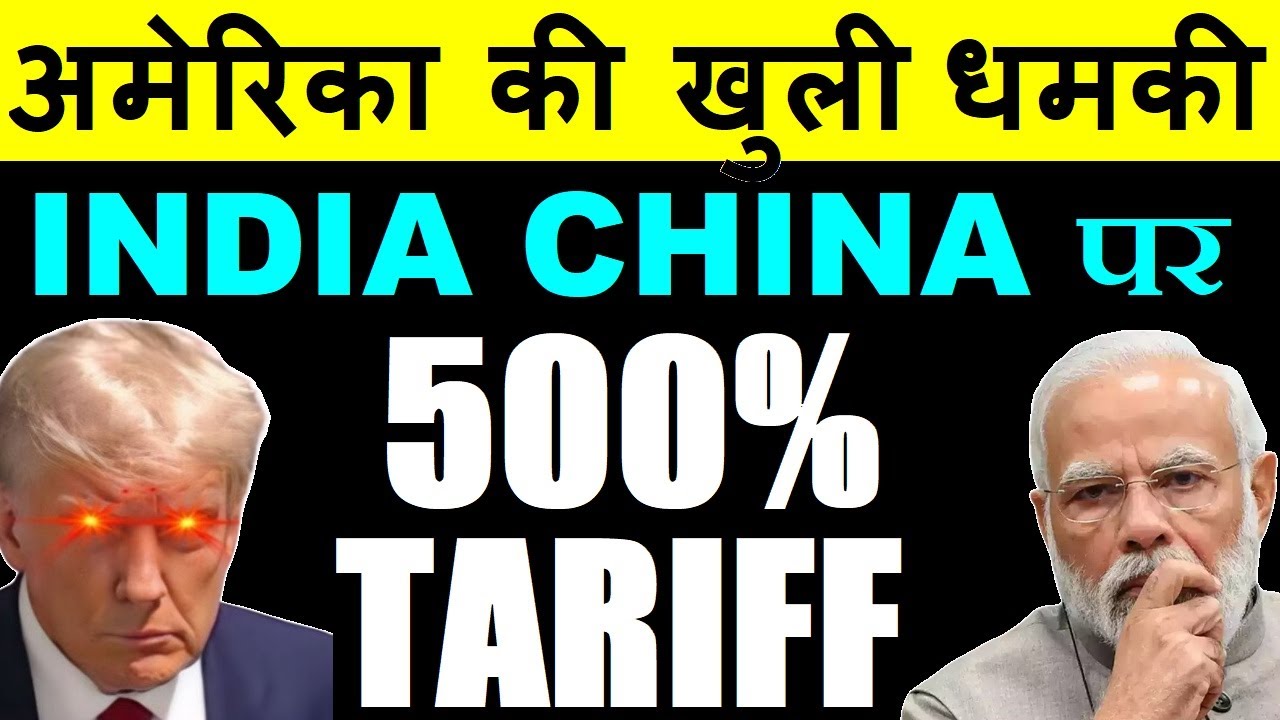
The proposed 500% tariff, introduced by Senator Richard Blumenthal, targets countries that purchase oil, gasoline, petrochemicals, and other flammable products from Russia. While not directly linked to former President Donald Trump, the proposal aligns with his frequent emphasis on tariffs as a tool for economic leverage. The tariff aims to penalize nations, particularly India and China, which collectively account for approximately 70% of Russia’s oil exports. This bold move is part of a broader strategy to curb Russia’s ability to fund its ongoing conflict with Ukraine by limiting its oil revenue, a critical component of its economy.
The announcement comes at a time when global trade relations are already strained, with the Russia-Ukraine war showing no signs of resolution. Despite promises from political figures like Trump to mediate and end the conflict, Russia remains in a dominant position, largely due to its robust oil exports. By targeting Russia’s trade partners, the U.S. seeks to exert indirect pressure on Moscow, but this strategy could have significant repercussions for countries like India and China, which rely on affordable Russian crude to fuel their economies.
Why Target India and China?
India and China are among the top buyers of Russian crude oil, benefiting from discounted prices that have bolstered their energy security. Russia, as one of the world’s leading oil producers, accounts for over 10% of global crude oil production. This substantial output allows Russia to sustain its economy despite multiple sanctions imposed by Western nations. For India, access to cost-effective oil is crucial for maintaining economic stability, controlling inflation, and supporting industrial growth. Similarly, China’s massive energy demands make Russian oil an attractive option.
The U.S. tariff proposal aims to disrupt this dynamic by making it economically unfeasible for India and China to continue purchasing Russian oil. A 500% tariff would drastically increase the cost of imported goods from these countries to the U.S., potentially rendering their exports uncompetitive. For instance, a product priced at $100 could escalate to $600, severely impacting its marketability. This economic pressure is designed to force India and China to reconsider their trade ties with Russia, aligning with U.S. interests in isolating Moscow economically.
Geopolitical Context: Russia-Ukraine Conflict and U.S. Strategy
The Russia-Ukraine war, now in its third year, remains a pivotal factor driving global economic policies. The conflict has not only disrupted energy markets but also heightened geopolitical tensions. The U.S. and its allies have imposed numerous sanctions on Russia, targeting its financial systems, technology exports, and energy sector. However, these measures have had limited success, as Russia continues to generate significant revenue through oil sales to non-Western nations.
The proposed tariff is a strategic escalation in this economic warfare. By targeting Russia’s trade partners, the U.S. aims to choke off the financial resources that enable Russia to sustain its military efforts. This approach also reflects a broader U.S. tactic of using trade policies to exert geopolitical influence. For example, similar pressure tactics were employed when Indian Prime Minister Narendra Modi visited the U.S., with tariff-related announcements made to create leverage in trade negotiations.
Moreover, the tariff proposal coincides with upcoming U.S.-India trade talks scheduled for June 5-6, 2025. These discussions are expected to address critical issues, including energy trade and bilateral economic cooperation. The tariff threat serves as a preemptive move to strengthen the U.S. negotiating position, signaling that non-compliance with U.S. objectives could lead to severe economic consequences.
Economic Implications for India
India’s reliance on Russian crude oil has grown significantly in recent years, driven by attractive discounts and the need to diversify energy sources. Approximately 40% of India’s oil imports come from Russia, making it a critical partner in the country’s energy strategy. A 500% tariff on Indian exports to the U.S. could disrupt this arrangement, forcing India to seek alternative suppliers at potentially higher costs. This shift could lead to increased energy prices, impacting industries, transportation, and consumer goods.
The Indian stock market, already sensitive to global uncertainties, could face heightened volatility. Sectors such as oil and gas, petrochemicals, and manufacturing, which rely heavily on affordable energy, may experience downward pressure. Additionally, foreign institutional investors (FIIs) and foreign direct investment (FDI) could be affected as global investors reassess India’s economic stability in light of these trade tensions.
However, India has demonstrated resilience in navigating such challenges. For instance, when previous U.S. sanctions targeted vessels transporting Russian oil, India and Russia utilized loopholes, such as trading below a $60 per barrel price cap, to circumvent restrictions. This adaptability suggests that India may explore diplomatic or trade strategies to mitigate the impact of the proposed tariff. Nonetheless, the uncertainty surrounding these developments could keep investors on edge.
China’s Position in the Tariff Dispute
China, as the world’s second-largest economy, faces similar challenges. Its substantial purchases of Russian oil have strengthened economic ties with Moscow, providing a lifeline for Russia’s economy. A 500% tariff on Chinese exports to the U.S. would have far-reaching consequences, given the significant trade volume between the two nations. Sectors such as electronics, textiles, and machinery could face increased costs, potentially disrupting global supply chains.
China’s response to the tariff threat will likely involve a combination of diplomatic negotiations and strategic countermeasures. Beijing has historically resisted external pressure, and its close relationship with Russia could complicate U.S. efforts to enforce the tariff. Additionally, China’s domestic market and growing trade partnerships with other nations may provide a buffer against U.S. economic sanctions.
Stock Market Reactions and Investor Sentiment
The proposed tariff has introduced a new layer of uncertainty into global financial markets. Stock market investors, particularly in India and China, are closely monitoring these developments. The threat of tariffs could lead to short-term market corrections, especially in energy-sensitive sectors. However, historical trends suggest that markets often adapt to such geopolitical noise over time. Investors have become accustomed to tariff-related rhetoric, and the actual implementation of a 500% tariff may face significant hurdles, including legislative approval and international backlash.
For retail and institutional investors, the key is to remain informed and agile. Diversifying portfolios to include sectors less exposed to trade disruptions, such as technology or consumer goods, could mitigate risks. Additionally, monitoring upcoming U.S.-India trade talks and any developments in the Russia-Ukraine conflict will be crucial for anticipating market movements.
Navigating Geopolitical Challenges: India’s Strategic Options
India faces a complex balancing act in responding to the U.S. tariff threat. On one hand, maintaining access to affordable Russian oil is critical for economic stability. On the other, preserving trade relations with the U.S., a major export market, is equally important. India’s diplomatic approach will likely focus on negotiating exemptions or alternative trade concessions to avoid the tariff’s full impact.
One potential strategy is to leverage India’s growing geopolitical influence. As a key player in the Global South and a member of groups like BRICS, India can rally support from other nations to counterbalance U.S. pressure. Additionally, exploring new energy partnerships with countries in the Middle East or Africa could reduce reliance on Russian oil over time.
The Role of Crude Oil in Global Economics
Crude oil remains a cornerstone of the global economy, influencing everything from inflation to industrial output. Russia’s ability to supply over 10% of the world’s crude oil gives it significant leverage, even in the face of sanctions. For countries like India and China, access to discounted oil is a strategic advantage, enabling them to manage energy costs and support economic growth.
The U.S. tariff proposal seeks to disrupt this dynamic, but its success is uncertain. Russia’s oil exports are not easily replaceable, and alternative suppliers may not offer the same discounts. Furthermore, the global oil market is interconnected, and disruptions in one region can lead to price spikes worldwide, affecting even U.S. consumers.
What’s Next for Global Trade and Markets?
The coming weeks will be critical for assessing the tariff proposal’s trajectory. The U.S.-India trade talks on June 5-6, 2025, will provide insights into how both nations plan to navigate this issue. A successful resolution could stabilize markets, while prolonged tensions may lead to increased volatility. Additionally, any progress in the Russia-Ukraine conflict, whether through diplomacy or escalation, will influence the tariff’s relevance.
Investors should stay vigilant, keeping an eye on key indicators such as oil prices, currency fluctuations, and sector-specific performance. For India, maintaining a delicate balance between energy security and international trade relations will be paramount. Similarly, China’s response will shape the broader geopolitical landscape.
Conclusion: Preparing for an Uncertain Future
The proposed 500% tariff on countries trading oil with Russia underscores the intricate interplay between geopolitics and economics. For India and China, the stakes are high, as the tariff could disrupt their energy strategies and export markets. While the immediate impact on stock markets may be limited, the uncertainty surrounding these developments warrants caution.
Investors and policymakers alike must navigate this complex landscape with foresight and adaptability. By staying informed about trade negotiations, geopolitical shifts, and market trends, stakeholders can better position themselves for success. As the global economy continues to evolve, understanding these dynamics will be crucial for thriving in an increasingly interconnected world.