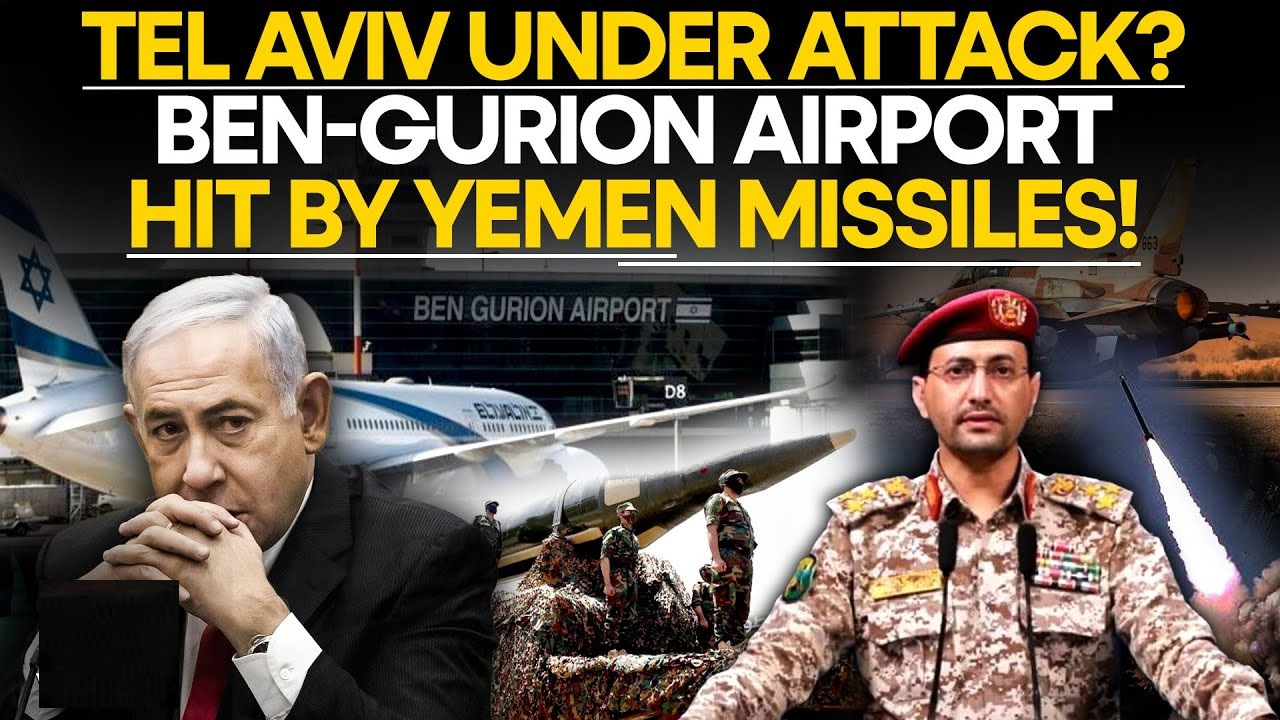
On a tense Sunday, a ballistic missile launched by Yemen’s Iran-backed Houthi rebels struck near Israel’s Ben Gurion International Airport, wounding eight people and prompting a stern warning from the Israeli government. Prime Minister Benjamin Netanyahu’s administration vowed a “sevenfold retaliation” in response to the attack, which temporarily disrupted operations at the nation’s largest airport. This unprecedented strike, claimed by the Houthis as a show of solidarity with Palestinians, has escalated tensions in an already volatile region, raising concerns about aviation safety, regional security, and the potential for broader conflict.
This article delves into the details of the Houthi missile attack, Israel’s response, the broader context of Houthi aggression, and the implications for international aviation and Middle Eastern geopolitics. With a focus on clarity and depth, we aim to provide a comprehensive understanding of this critical event and its far-reaching consequences.
The Houthi Missile Attack on Ben Gurion Airport
A Bold Strike on Israel’s Aviation Hub
The missile, launched from Houthi-controlled territory in Yemen, targeted Ben Gurion Airport, Israel’s primary gateway for international travel. Despite multiple interception attempts by the Israel Defence Forces (IDF), the ballistic missile evaded Israel’s advanced air defense systems and struck a grove adjacent to an access road within the airport’s perimeter. While the missile avoided direct damage to terminal infrastructure, the attack injured eight individuals, as reported by Magen David Adom, Israel’s national emergency service.
The strike forced a temporary suspension of all takeoffs and landings at Ben Gurion Airport. Within an hour, the Israel Airports Authority announced the reopening of airspace, allowing flight operations to resume. However, the incident sent shockwaves through the aviation industry, with airlines and passengers grappling with heightened safety concerns.
Houthi Claims and Warnings
The Houthi rebels, backed by Iran, swiftly claimed responsibility for the attack. Mohammed al-Bukhaiti, a senior Houthi official, appeared on Qatar’s Al-Araby TV, asserting that the strike demonstrated the group’s capability to hit sensitive targets in Israel. He emphasized that the Houthis have “no red lines” in their campaign against Israel, framing the attack as an act of solidarity with Palestinians amid the ongoing Gaza conflict.
Nasser al-Din Omar, the Houthi’s media head, issued a chilling warning to airlines operating in Israel. He stated that such operations endanger the safety of their aircraft, urging carriers to reconsider their routes. The Palestinian group Hamas also praised the attack, lauding the Houthis for their “precision” in targeting Israel’s critical infrastructure.
Israel’s Response: A Sevenfold Retaliation
A Stern Warning from Israeli Leadership
In the wake of the attack, Israel’s Defence Minister, Israel Katz, issued a concise but powerful statement: “Whoever harms us, we will strike them sevenfold.” This rhetoric underscores Israel’s commitment to a robust response, signaling that the Houthi attack will not go unanswered. While Israel has not yet launched retaliatory strikes against Yemen, the government’s tone suggests a calculated approach to addressing the threat.
Prime Minister Benjamin Netanyahu, leading a coalition government, faces mounting pressure to respond decisively. The attack on Ben Gurion Airport, a symbol of Israel’s connectivity to the world, has heightened domestic and international scrutiny of the nation’s security measures.
Investigating the Breach
The Israeli Air Force’s aerial defense units are actively investigating why the Houthi missile breached Israel’s multilayered air defense systems. The failure to intercept the projectile, which struck near one of Israel’s most sensitive zones, has raised questions about the effectiveness of current defenses against evolving missile technologies. The IDF’s probe aims to identify vulnerabilities and implement countermeasures to prevent future breaches.
The Broader Context: Houthi Aggression and Regional Tensions
Who Are the Houthi Rebels?
The Houthi movement, formally known as Ansar Allah, is a Shia Islamist group that controls significant portions of Yemen, including the capital, Sana’a. Backed by Iran, the Houthis have emerged as a formidable force in the Middle East, leveraging their strategic position along the Red Sea to influence regional dynamics. Since the onset of the Gaza war in 2023, the Houthis have intensified their attacks on Israel and international shipping, framing their actions as support for the Palestinian cause.
The group’s arsenal includes ballistic missiles, drones, and other advanced weaponry, much of which is supplied or facilitated by Iran. Their ability to strike targets thousands of miles away, as demonstrated by the Ben Gurion attack, highlights their growing military capabilities and the challenges they pose to regional security.
A Pattern of Attacks
The Ben Gurion strike is not an isolated incident but part of a broader campaign of Houthi aggression. Over the past two years, the rebels have launched numerous missiles and drones targeting Israel, as well as commercial shipping in the Red Sea and Gulf of Aden. On Saturday, the Houthis claimed responsibility for a third missile attack on Israel within two days, signaling an escalation in their operations.
Most Houthi projectiles have been intercepted by Israel’s air defenses, which include systems like the Arrow missile defense system and David’s Sling. However, the Ben Gurion incident marks a rare and alarming success for the Houthis, underscoring the need for enhanced defensive measures.
The Role of Iran
Iran’s support for the Houthis is a critical factor in the group’s ability to sustain its campaign. Tehran provides financial, logistical, and military assistance, including the transfer of missile technology and training. The Ben Gurion attack reflects Iran’s broader strategy of using proxy groups to challenge Israel and its allies, creating a multi-front threat that stretches from Yemen to Lebanon and Syria.
The Iran-Houthi axis has drawn the attention of the United States and its allies, who view the group’s actions as a threat to global trade and regional stability. The Red Sea, a vital artery for international shipping, has become a flashpoint, with Houthi attacks disrupting maritime traffic and prompting military responses.
Impact on International Aviation
Flight Disruptions and Safety Concerns
The missile strike had immediate repercussions for international aviation. An Air India flight, AI139, en route from Delhi to Tel Aviv, was diverted to Abu Dhabi after the attack occurred approximately an hour before its scheduled landing. The Boeing 787, carrying passengers and crew, was redirected while flying through Jordanian airspace, as confirmed by Flightradar24.com data. The flight was later rerouted back to Delhi, and the scheduled return flight from Tel Aviv to Delhi was canceled.
The incident has raised serious concerns about the safety of civilian aviation in Israel. Airlines operating to and from Ben Gurion Airport now face heightened risks, prompting some to reassess their schedules and routes. The Houthi’s explicit warning to airlines further complicates the situation, as carriers weigh the potential dangers against operational demands.
Economic and Reputational Fallout
Ben Gurion Airport is not only Israel’s primary aviation hub but also a critical economic asset. The temporary closure and subsequent disruptions have ripple effects on tourism, business travel, and cargo operations. Israel’s reputation as a safe destination for travelers may also take a hit, particularly if Houthi attacks persist or escalate.
Airlines, already grappling with rising fuel costs and geopolitical uncertainties, now face additional challenges in maintaining service to Israel. The aviation industry will likely push for enhanced security measures and international cooperation to mitigate the risks posed by Houthi missile threats.
U.S. Military Response and Global Implications
U.S. Strikes on Houthi Targets
The United States has taken a leading role in countering Houthi aggression, particularly in response to attacks on Red Sea shipping. Since March 15, the U.S. military has conducted near-daily airstrikes on Houthi targets in Yemen, targeting missile launch sites, weapons depots, and command centers. The campaign, which began under former President Joe Biden and intensified under President Donald Trump, has struck over 1,000 targets in an effort to degrade the group’s capabilities.
Despite these efforts, the Houthis have shown resilience, continuing their attacks on Israel and international shipping. The U.S. faces a complex challenge: balancing the need to protect global trade routes with the risk of escalating tensions in an already volatile region.
A Global Call for Action
The Ben Gurion attack has underscored the need for a coordinated international response to the Houthi threat. The disruption of civilian aviation and the targeting of critical infrastructure demand urgent attention from global powers. The United Nations, NATO, and regional organizations like the Gulf Cooperation Council (GCC) may play a role in addressing the crisis, potentially through diplomatic initiatives or expanded military cooperation.
The attack also highlights the broader challenge of countering Iran’s proxy network. As Tehran continues to empower groups like the Houthis, Hezbollah, and others, the international community must develop strategies to disrupt these alliances without triggering a wider conflict.
What Lies Ahead: Israel’s Next Steps
A Delicate Balancing Act
Israel faces a complex decision in responding to the Houthi attack. A “sevenfold retaliation,” as promised, could involve airstrikes on Houthi targets in Yemen, potentially targeting missile production facilities or leadership strongholds. However, such actions carry significant risks, including the possibility of escalating the conflict and drawing Iran more directly into the fray.
Alternatively, Israel may opt for a more restrained approach, focusing on bolstering its air defenses and coordinating with allies like the United States. The IDF’s ongoing investigation into the missile interception failure will likely inform future strategies, with an emphasis on adapting to the Houthis’ evolving tactics.
Strengthening Regional Alliances
The attack may also prompt Israel to deepen its security cooperation with regional partners. The Abraham Accords, which normalized relations between Israel and several Arab states, provide a framework for collaboration on countering shared threats like the Houthis. Countries like the United Arab Emirates and Saudi Arabia, both of which have faced Houthi attacks, could play a key role in a unified response.
The Humanitarian Dimension
The broader context of the Gaza war and Yemen’s humanitarian crisis cannot be ignored. The Houthis’ actions, while framed as support for Palestinians, contribute to regional instability and exacerbate suffering in Yemen, where millions face starvation and displacement. Any Israeli or U.S. response must consider the humanitarian implications, avoiding actions that could worsen the crisis.
Conclusion: Navigating a Volatile Landscape
The Houthi missile strike on Ben Gurion Airport marks a dangerous escalation in the Middle East, with implications for aviation safety, regional security, and global trade. Israel’s vow of a “sevenfold retaliation” signals a resolute stance, but the path forward requires careful calibration to avoid a broader conflict. The international community, led by the United States, must work collaboratively to counter the Houthi threat while addressing the root causes of regional instability.
As airlines reassess their operations and Israel strengthens its defenses, the world watches closely. The Ben Gurion attack is a stark reminder of the fragility of peace in the Middle East and the urgent need for diplomacy, innovation, and resilience in the face of emerging threats.