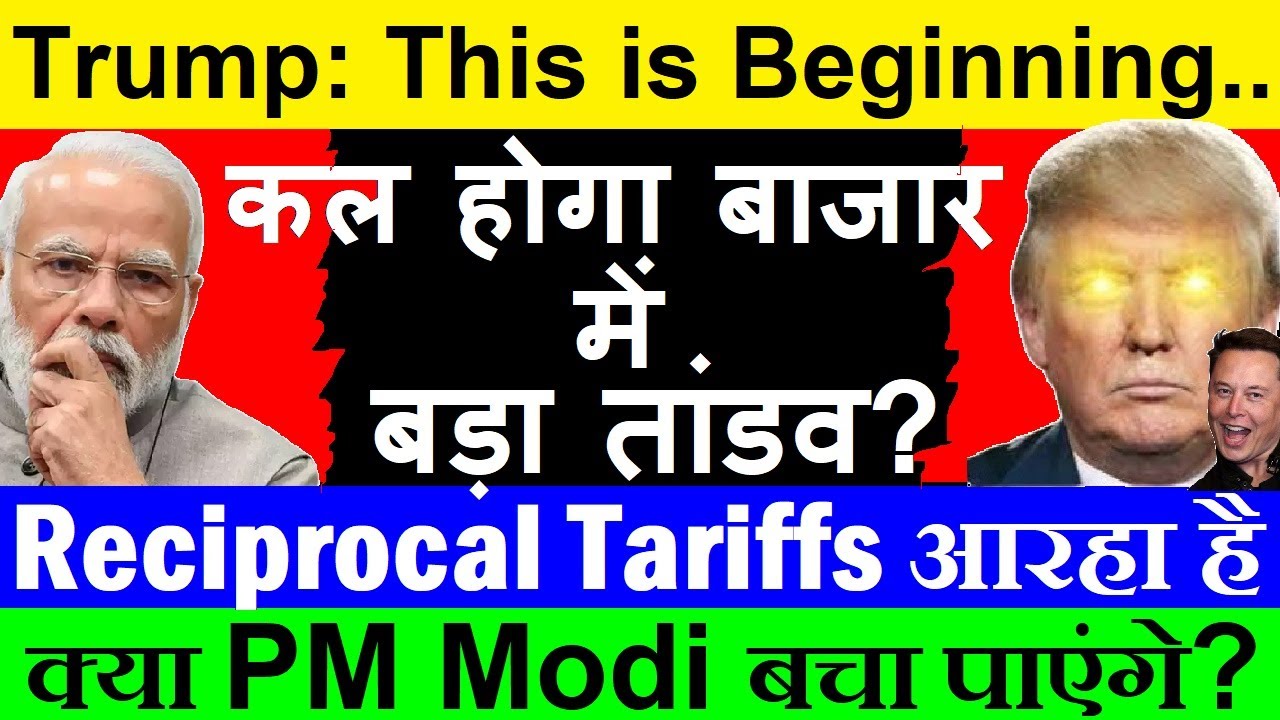
Will the Stock Market Face Turmoil? Understanding Reciprocal Tariffs and Their Impact
Introduction: The Stock Market Faces Uncertainty
The global stock market is experiencing heightened volatility, primarily due to significant policy shifts by the United States. A major concern looming over the financial world is the potential impact of reciprocal tariffs imposed by former U.S. President Donald Trump. As India and other nations brace for economic shifts, investors and market analysts closely monitor developments that could shape future trade relations and financial stability.
Stock Market Trends and Recent Decline
On February 11, the Indian stock market witnessed a sharp decline, continuing its downward trend from previous sessions. Market experts attribute this drop to a bearish sentiment prevailing due to global trade uncertainties. Despite the market already showing signs of weakness, the additional 1-1.5% drop in key indices indicated increased pressure from external economic factors.
Why Are Markets Falling?
- The imposition of higher import tariffs by the U.S. on steel and aluminum has created ripples across global markets.
- The announcement of a 25% tariff on all steel and aluminum imports into the U.S. directly affects Indian exports.
- The absence of any country-specific exemptions has intensified fears of economic slowdown in major exporting nations, including India.
Trump’s Tariff Decision and Its Impact on India
Former U.S. President Donald Trump had long emphasized his “America First” policy, advocating for economic measures to protect U.S. industries. As part of this strategy, he imposed a flat 25% tariff on steel and aluminum imports, affecting several major trade partners, including India.
Key Takeaways from the U.S. Tariff Policy:
- No Exceptions: The tariffs apply to all nations, including major exporters like Canada, China, Mexico, South Korea, and India.
- Steel Industry at Risk: India exports $4 billion worth of steel to the U.S. annually, making it vulnerable to declining demand.
- Production Costs Rising: Higher import duties make steel more expensive, reducing competitiveness in global markets.
- Global Trade Disruptions: The move could lead to increased price volatility and declining trade volumes worldwide.
Reciprocal Tariffs: The Next Big Concern
Trump’s recent statements suggest that the reciprocal tariff policy will be formally announced within two days. This policy ensures that countries imposing high tariffs on U.S. goods will face equally high tariffs on their exports to the U.S.. India, which historically imposes higher tariffs on American imports, is among the most vulnerable nations.
Understanding Reciprocal Tariffs:
- Balancing Trade Duties: The U.S. aims to match the tariffs imposed by other countries on American goods.
- India’s High Tariff Rates: India charges 9% average tariffs on U.S. goods, whereas the U.S. charges only 2-3% on Indian imports.
- Key Sectors Affected: Industries such as automobiles, pharmaceuticals, textiles, electronics, and industrial machinery may see major shifts in trade policies.
Potential Consequences for Indian Markets
1. Declining Exports and Lower GDP Growth
The steel and aluminum sectors are not the only ones facing repercussions. Several key industries, including gems & jewelry, textiles, and industrial machinery, could also suffer due to reciprocal tariff measures.
2. Rising Costs for Indian Importers
If the U.S. enforces higher tariffs on Indian goods, import costs for American products like pharmaceuticals, agricultural commodities, and electronics could increase. This would directly affect domestic businesses dependent on U.S. imports.
3. Potential Trade Negotiations
To counteract the impact of reciprocal tariffs, India may consider lowering duties on 30 American products, as suggested by market analysts. Reducing tariffs could help maintain stable trade relations with the U.S. and prevent excessive trade barriers.
Modi-Trump Meeting: A Crucial Turning Point
With trade tensions escalating, an upcoming meeting between Indian Prime Minister Narendra Modi and former U.S. President Donald Trump is expected to play a critical role in shaping future economic policies. Indian officials are expected to:
- Advocate for tariff reductions on key export items.
- Negotiate exemptions for certain Indian industries.
- Strengthen diplomatic and economic ties with the U.S.
Global Market Implications and Investor Strategy
1. Market Volatility Likely to Continue
Given the uncertainty surrounding reciprocal tariffs, investors should brace for continued market volatility in the near term. Sectoral indices such as metals, banking, and FMCG are particularly susceptible to economic shifts.
2. Focus on Domestic Growth Stocks
With international trade becoming increasingly unpredictable, domestic market-driven stocks in sectors like infrastructure, renewable energy, and IT services may offer stable investment opportunities.
3. Hedging Against Risk
Investors can consider diversifying their portfolios through gold, government bonds, and global market-linked funds to hedge against stock market risks.
Conclusion: A Critical Two-Day Window
The next 48 hours are crucial for global trade and financial markets. If Trump follows through with his reciprocal tariff strategy, it could significantly alter the U.S.-India trade relationship, affecting multiple industries. Investors and businesses must stay updated on policy developments to navigate potential market shifts effectively. Will India be able to negotiate better terms, or will it face the full brunt of Trump’s tariff war? Only time will tell.