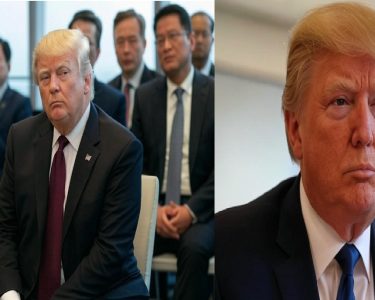
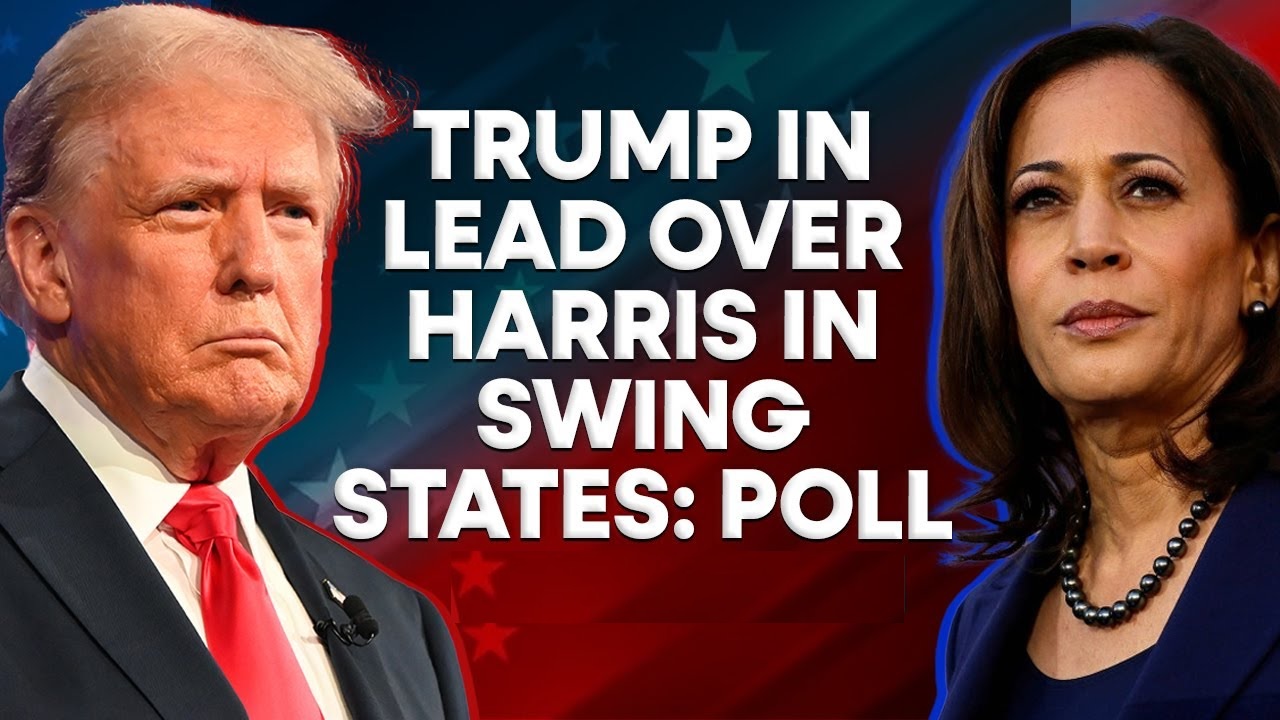
The much-anticipated U.S. presidential election is here, as Americans head to the polls to decide between Donald Trump and Kamala Harris. If Harris wins, she will make history as the first woman of South Asian descent to become President of the United States. Should Trump prevail, he will be the first to reclaim the presidency after a gap since Grover Cleveland in 1892. This high-stakes election comes amidst global tension, drawing worldwide attention to who will lead the most powerful nation on earth.
Key Swing States and Polling Dynamics
The outcome of this election hinges on several swing states, including Pennsylvania, Wisconsin, Michigan, Georgia, Arizona, Nevada, and North Carolina. These states will play a crucial role in determining the winner. According to surveys from RealClearPolitics (RCP), Trump has a lead in these pivotal states. If this trend holds through election day, Trump could secure another term. RCP’s surveys have historically been regarded as reliable due to their consistent analysis of public opinion, focusing on issues that matter most to voters: the economy, immigration, women’s rights, and America’s international reputation.
The Challenge Facing Kamala Harris
Kamala Harris has faced hurdles in this campaign, particularly distancing herself from President Biden’s policies. Recent reports indicate low job creation under the Biden administration, which has been a point of contention for many voters. The high costs related to foreign conflicts, including U.S. support in the Ukraine war, have not been well received by Americans. A staggering 74% of U.S. citizens feel that the current administration’s foreign policies have taken the country in the wrong direction. This sentiment adds to Harris’s uphill battle.
Kamala’s Political Strategy and Background
In her 2016 Senate race, Harris identified as an Asian-American, drawing substantial support and funding from the Indian-American tech and business communities in California. Her diverse heritage was initially an advantage, allowing her to break barriers as the first Asian-American woman elected to the Senate. However, Harris has since promoted herself as a Black American woman, which has stirred controversy, as her upbringing primarily involved her Indian mother, rather than Black American communities. Critics suggest this shift was a strategic move to gain support from the Black demographic, which comprises 13.6% of the U.S. population. In the 2020 primary, Harris attempted to position herself as the Democratic candidate but failed to gain traction, eventually stepping aside. Ultimately, Biden selected her as his running mate, making her the first Asian-American woman to hold the Vice President role, which generated enthusiasm among many American women.
Trump’s Path to Victory: Foreign Policy Impact
In some states, factors beyond the major party candidates could influence the election’s outcome. For instance, in Michigan, the Democratic stance on Israel and the loss of 40,000 Palestinian lives has alienated Arab Americans, a key voting bloc. While Arab American voters traditionally lean Democratic, dissatisfaction with U.S. policy has led some to consider voting for Jill Stein, the Green Party candidate. This shift could benefit Trump, particularly in battlegrounds like Pennsylvania, where the Arab-Israeli conflict is also a factor. Harris’s decision to bypass potential Vice Presidential candidate Josh Shapiro due to concerns about backlash from Arab Americans has left her in a vulnerable position in these critical states.
Can Trump Achieve a Historic Comeback?
Trump aims to follow in the footsteps of Grover Cleveland by reclaiming the presidency after a break. Cleveland achieved this in 1884 and 1892, and Trump’s supporters hope he will repeat this rare feat. Current polls suggest Trump has a narrow lead, with 1.8% more support than Harris. His momentum in swing states like Arizona, Georgia, Michigan, Nevada, North Carolina, Pennsylvania, and Wisconsin is reportedly strong, with percentages favoring him by margins that may secure his win. In Arizona, he holds 51.9% support, 51.4% in Nevada, and 50.4% in North Carolina.
The Presence of Third-Party Candidates
While the primary focus is on Trump and Harris, third-party candidates are also vying for the presidency. Chase Oliver from the Libertarian Party, Jill Stein from the Green Party, and Robert F. Kennedy Jr. as an independent could each draw votes that may impact the two main candidates’ outcomes. With a close race, any votes for these candidates could significantly alter the final result.
The Electoral College: The Key to Winning the Presidency
In the United States, the President is elected through the Electoral College, not directly by popular vote. Although citizens cast their votes for Trump, Harris, or other candidates, the actual decision is made by electors. There are 538 Electoral College seats, and a candidate needs 270 to win. Each state is allocated electors based on population, with California receiving the most at 54 and smaller states like Wyoming receiving three. On election day, each state’s electoral votes go to the candidate who wins the most popular votes in that state, except in Maine and Nebraska, where electoral votes are split proportionally.
What If There’s a Tie?
In a rare case where both candidates receive 269 electoral votes each, the decision moves to Congress. The House of Representatives would elect the President, while the Senate would choose the Vice President, adding another layer of complexity to this intense election.
When Will Results Be Announced?
The U.S. has no unified voting system, meaning that while November 5 is the official election day, early and mail-in voting began a month in advance in many states. Each state also has its own rules for vote counting, so while trends may emerge on election night, final results could take days. In the 2020 election, results were announced four days after voting, and in 2000, it took over a month.
Inauguration in January
The Electoral College representatives will meet on December 17 to finalize the vote, and their decision will be counted in Congress on January 6, 2025. The new President is scheduled to take the oath of office on January 20, 2025.
As the world watches, Americans will decide whether Donald Trump or Kamala Harris will take the reins in what promises to be a pivotal and history-making election.