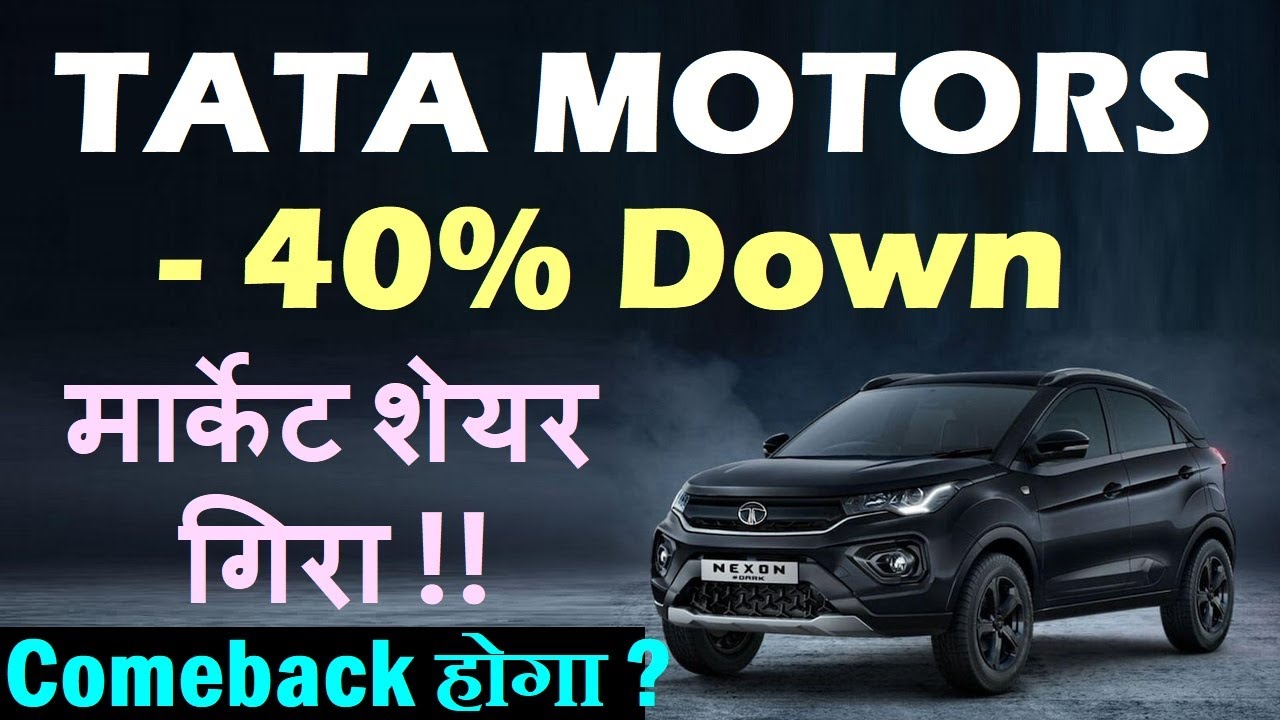
Tata Motors, a titan in India’s automotive industry, has faced significant challenges recently, with its stock plummeting over 40% from its peak. Investors who bought shares at four-digit prices are now grappling with substantial losses. This article dives deep into the reasons behind Tata Motors’ decline, examines its performance across key business segments—Electric Vehicles (EV), Jaguar Land Rover (JLR), and Passenger Vehicles (PV)—and evaluates the potential for a comeback. By analyzing market trends, competition, and strategic moves, we aim to provide a comprehensive outlook on whether Tata Motors can reclaim its position in the automotive sector.
Understanding Tata Motors’ Business Segments
Tata Motors operates in three primary segments: Electric Vehicles (EV), Jaguar Land Rover (JLR), and Passenger and Commercial Vehicles (PV and CV). Each segment plays a critical role in the company’s overall performance, but recent data shows underperformance across all three. Let’s break down these segments and their contributions to Tata Motors’ current challenges.
Electric Vehicles: Losing the Early-Mover Advantage
Tata Motors was a pioneer in India’s EV market, capitalizing on the lack of competition to capture a commanding 85% market share at its peak. Models like the Nexon EV and Tigor EV gained traction due to their early entry and government support for electric mobility. However, the landscape has shifted dramatically. By the end of Financial Year 2025 (March 31, 2025), Tata Motors’ EV market share dropped to 53%, a significant decline from 70% in FY24.
Why the Decline?
- Rising Competition: New players like JSW MG Motor India and Mahindra have aggressively entered the EV space. JSW MG Motor, for instance, has doubled its market share from 10-15% to 28%, driven by popular models like the MG ZS EV. Mahindra, with its XUV400, now holds a 20% share, further eroding Tata’s dominance.
- Market Saturation and Pricing Pressures: EVs remain expensive, and inflation has pushed vehicle prices higher. A car that cost ₹10 lakh a few years ago now retails for ₹12-13 lakh, making affordability a concern for budget-conscious buyers.
- Anticipated Threats: While Tesla has yet to enter India, its potential arrival looms large, particularly for Tata’s premium JLR brand. Local competitors are already challenging Tata’s EV leadership, and Tesla’s entry could intensify the pressure.
Despite its early success, Tata Motors struggles to maintain its EV market share as competitors innovate and capture consumer interest. To regain momentum, Tata must introduce compelling new EV models and address pricing challenges.
Jaguar Land Rover: A Controversial Rebranding Misstep
Jaguar Land Rover (JLR), Tata Motors’ luxury arm, has historically been its largest revenue driver. Acquired in 2008, JLR’s premium vehicles, including Jaguar’s sleek sedans and Land Rover’s rugged SUVs, have bolstered Tata’s global presence. However, a recent rebranding effort has backfired, contributing significantly to the company’s woes.
The Rebranding Fallout
In an attempt to modernize Jaguar’s image, Tata Motors introduced a new logo and restructured the brand to focus heavily on electric vehicles. This move, however, alienated its core customer base. Sales figures paint a grim picture: in April 2024, Jaguar sold 1,961 vehicles in Europe, but by April 2025, sales plummeted to fewer than 50 units—a staggering 97% drop. The controversial rebranding, coupled with a pause in production to transition to EVs, has severely impacted JLR’s performance.
Why Did the Rebranding Fail?
- Customer Disconnect: The new branding, including a minimalist logo and EV-focused lineup, failed to resonate with Jaguar’s traditional buyers, who value the brand’s heritage and luxury appeal.
- EV Transition Challenges: The shift to electric models requires significant investment and time, leaving JLR with limited offerings during the transition. This gap allowed competitors like BMW, Mercedes-Benz, and Tesla to capture market share.
- Market Timing: The rebranding coincided with a period of economic uncertainty, with inflation and high interest rates dampening demand for luxury vehicles.
JLR’s struggles highlight the risks of bold strategic shifts without adequate market research. For Tata Motors to recover, JLR must balance its EV ambitions with the expectations of its loyal customer base.
Passenger and Commercial Vehicles: Facing Stiff Competition
Tata Motors’ Passenger Vehicle (PV) and Commercial Vehicle (CV) segments have also underperformed. Sales data for Q1 FY25 shows a 10% year-on-year decline in PV sales and a 6% drop in CV sales. This downturn reflects broader challenges in the automotive industry, including rising vehicle prices and reduced consumer spending.
Key Challenges in PV and CV
- Dominance of Competitors: Maruti Suzuki and Hyundai continue to dominate the PV market with affordable, fuel-efficient models. Tata’s popular vehicles, like the Harrier and Safari, have lost ground due to intense competition and a lack of innovative updates.
- Economic Factors: Inflation has driven up vehicle prices, while high interest rates on auto loans have deterred buyers. For example, a ₹10 lakh car now costs ₹12-13 lakh, pushing buyers toward cheaper alternatives or delaying purchases.
- Discounting Signals Weak Demand: Tata Motors resorted to offering steep discounts—up to 30% on some models—to boost sales. While discounts can clear inventory, they signal weak demand and erode brand value. This strategy, evident before Diwali 2024, foreshadowed Tata’s declining sales and stock price.
The PV and CV segments face structural challenges that require Tata Motors to innovate and differentiate its offerings to compete with market leaders.
Why Did Tata Motors’ Stock Plummet?
The 40%+ drop in Tata Motors’ stock price is not the result of speculative trading or operator manipulation, as might be the case with penny stocks. Instead, it stems from fundamental business challenges across its key segments. Here’s a closer look at the reasons behind the decline:
- Eroding Market Share in EVs: Tata’s once-dominant position in the EV market has weakened as competitors like JSW MG Motor and Mahindra gain traction. The company’s failure to sustain its early-mover advantage has dented investor confidence.
- JLR’s Sales Collapse: The disastrous rebranding and EV transition at JLR have significantly reduced revenue, as the luxury segment accounts for a substantial portion of Tata Motors’ earnings.
- Weak PV and CV Performance: Declining sales in both passenger and commercial vehicles, coupled with heavy discounting, indicate a lack of consumer demand and competitive pressure from Maruti and Hyundai.
- Macroeconomic Headwinds: Inflation, rising vehicle prices, and high interest rates have reduced affordability, impacting sales across the automotive industry. While these factors affect all players, Tata Motors’ reliance on discounts suggests it is struggling more than its peers.
These factors have created a perfect storm for Tata Motors, leading to a sharp correction in its stock price. Investors who bought at ₹1,000+ levels are now facing significant losses, raising the critical question: Can Tata Motors stage a comeback?
Can Tata Motors Stage a Comeback?
The potential for Tata Motors to recover hinges on its ability to address the challenges in its EV, JLR, and PV/CV segments. While the current outlook is challenging, there are opportunities for the company to regain its footing. Let’s explore the factors that could drive a comeback and the hurdles Tata must overcome.
Opportunities for Recovery
- Innovation in EVs: Tata Motors must launch new, competitively priced EV models to counter the growing threat from JSW MG Motor and Mahindra. Expanding its EV portfolio with advanced features, longer ranges, and affordable pricing could help recapture market share. For example, introducing a compact EV to compete with MG’s Comet EV could appeal to urban buyers.
- Reviving JLR’s Appeal: JLR needs to balance its EV transition with offerings that retain its luxury heritage. Reintroducing popular internal combustion engine (ICE) models or hybrid options alongside EVs could stabilize sales. Additionally, a revised marketing strategy that emphasizes Jaguar’s legacy could reconnect with customers.
- Strengthening PV and CV Offerings: Tata Motors should focus on refreshing its PV lineup with modern designs, advanced technology, and competitive pricing. In the CV segment, targeting niche markets like electric buses or last-mile delivery vehicles could tap into growing demand for sustainable transport solutions.
- Leveraging Government Support: India’s push for electric mobility, backed by incentives like the FAME scheme, provides an opportunity for Tata to capitalize on subsidies and infrastructure development. Collaborations with battery manufacturers or charging network providers could strengthen its EV ecosystem.
- Capitalizing on Rate Cuts: Recent interest rate reductions could make auto loans more affordable, potentially boosting demand for Tata’s vehicles. The company must align its pricing and financing options to attract budget-conscious buyers.
Challenges to Overcome
- Intense Competition: The automotive industry is fiercely competitive, with global giants like Tesla and domestic leaders like Maruti and Hyundai vying for market share. Tata Motors must differentiate its products to stand out.
- Economic Uncertainty: Persistent inflation and fluctuating interest rates could continue to suppress demand, particularly in the PV and CV segments. Tata must navigate these macroeconomic challenges carefully.
- JLR’s Brand Recovery: Reversing the damage from Jaguar’s rebranding will require significant investment in marketing and product development. A misstep could further erode JLR’s market position.
- Execution Risks: Launching new models or rebranding efforts carries inherent risks. Tata’s recent failure with Jaguar’s rebranding underscores the importance of market research and customer feedback.
Lessons from the Past: What Drives a Comeback?
To understand Tata Motors’ potential for recovery, it’s worth examining historical examples of automotive companies that successfully turned around their fortunes. Take Eicher Motors, the maker of Royal Enfield motorcycles. In the early 2000s, Eicher faced declining sales and an outdated product lineup. However, the introduction of the Royal Enfield Classic 350 sparked a resurgence, capitalizing on the brand’s heritage and appealing to a new generation of riders. The result was a meteoric rise in Eicher’s stock price, driven by strong demand and a loyal customer base.
Tata Motors could draw inspiration from this example. A game-changing product—whether an innovative EV, a refreshed JLR model, or a standout PV—could reignite consumer interest and drive sales. However, unlike Eicher’s success with a single iconic product, Tata must address challenges across multiple segments, making its path to recovery more complex.
Strategic Recommendations for Tata Motors
To stage a comeback, Tata Motors must adopt a multi-pronged strategy that addresses its current weaknesses and capitalizes on emerging opportunities. Here are actionable recommendations:
- Invest in EV Innovation: Develop a diverse EV portfolio, including affordable models for mass-market buyers and premium options to compete with Tesla. Partnerships with battery technology firms could reduce costs and improve range.
- Realign JLR’s Strategy: Conduct market research to understand customer preferences and reintroduce ICE or hybrid models alongside EVs. A targeted marketing campaign highlighting JLR’s luxury heritage could restore brand appeal.
- Enhance PV and CV Competitiveness: Refresh the PV lineup with modern designs, advanced safety features, and competitive pricing. In the CV segment, focus on electric and hybrid vehicles for commercial applications, aligning with India’s sustainability goals.
- Optimize Pricing and Financing: Offer flexible financing options and competitive pricing to attract buyers in a price-sensitive market. Collaborate with banks to provide low-interest loans, especially for EVs.
- Leverage Digital Marketing: Invest in SEO-driven content, social media campaigns, and influencer partnerships to rebuild brand trust and engage younger audiences. Highlight Tata’s commitment to sustainability and innovation to differentiate from competitors.
The Road Ahead for Tata Motors
Tata Motors stands at a crossroads. Its pioneering efforts in EVs, acquisition of JLR, and strong presence in the PV and CV markets have made it a household name in India and beyond. However, recent missteps, intense competition, and macroeconomic challenges have taken a toll. The 40% stock decline reflects genuine business struggles, but it also presents an opportunity for Tata to reinvent itself.
The key to a comeback lies in innovation, customer-centric strategies, and flawless execution. If Tata Motors can launch compelling new products, restore JLR’s brand equity, and navigate economic headwinds, it has the potential to reclaim its position as a leader in the automotive industry. However, failure to address these challenges could lead to further market share erosion and prolonged stock underperformance.
Conclusion: Will Tata Motors Bounce Back?
Tata Motors’ journey from a dominant EV player to a struggling auto giant underscores the volatility of the automotive industry. While the company faces significant hurdles, its history of resilience and innovation suggests that a comeback is possible. By focusing on product innovation, strategic rebranding, and competitive pricing, Tata can address the root causes of its decline and rebuild investor confidence.
Investors and enthusiasts alike are watching closely to see if Tata Motors can deliver a game-changing product or strategy that sparks a turnaround. The road ahead is challenging, but with the right moves, Tata Motors could once again drive India’s automotive future. What do you think—can Tata Motors stage a comeback? Share your thoughts in the comments below, and stay tuned for updates on this evolving story.