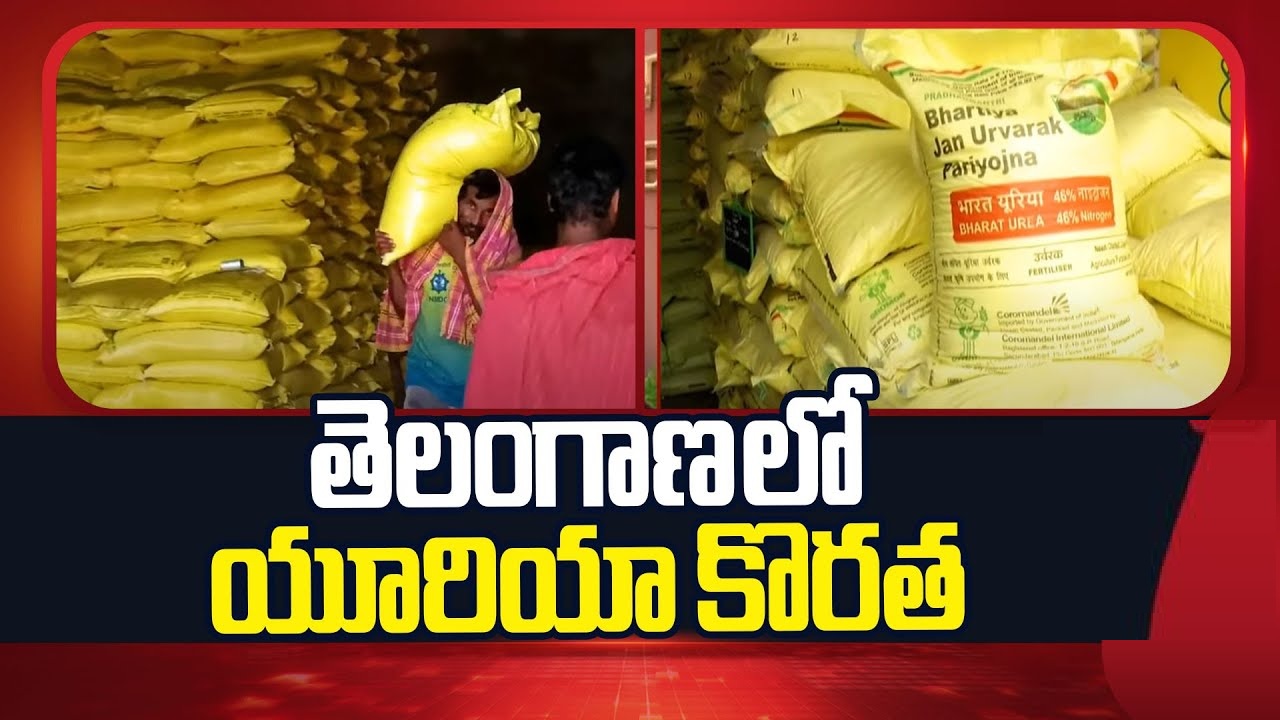
In the heart of India’s agricultural landscape, Telangana farmers face a pressing challenge: a severe urea shortage that threatens crop yields and livelihoods. As the Kharif season unfolds in 2025, this crisis has sparked heated debates, protests, and political finger-pointing. But what really causes this shortage? How does it impact local farmers, and what steps does the Telangana government take to address it? In this comprehensive guide, we dive deep into the urea shortage in Telangana, exploring global influences, domestic production hurdles, political dynamics, and innovative solutions. Whether you’re a farmer in Hyderabad, Warangal, or Nizamabad seeking clarity, or an agriculture enthusiast tracking fertilizer trends in India, this article uncovers the facts to help you understand and navigate the issue.
Understanding Urea’s Role in Telangana Agriculture
Urea stands as a cornerstone of modern farming, providing essential nitrogen that boosts plant growth and enhances crop productivity. In Telangana, where agriculture employs over 60% of the population and contributes significantly to the state’s economy, urea demand soars during planting seasons like Kharif. Farmers rely on this affordable fertilizer to cultivate paddy, cotton, maize, and other staples that feed millions and drive exports.
Telangana’s fertile lands, irrigated by projects like the Godavari and Krishna river systems, have transformed the region into a key rice bowl. However, the state’s dependence on urea—often subsidized to keep costs low—exposes vulnerabilities when supplies falter. In 2025, the urea shortage in Telangana echoes broader national and global fertilizer challenges, but it hits hardest here due to the state’s intensive farming practices. Experts estimate that inadequate urea can reduce yields by up to 30%, leading to financial losses and food security risks.
To grasp the current crisis, consider urea’s journey from production to fields. India imports a large portion of its urea, supplementing domestic output from plants like those operated by the National Fertilizers Limited (NFL) and Ramagundam Fertilizer Corporation Ltd. (RFCL). Disruptions anywhere along this chain ripple through to farmers, amplifying the urgency for transparent information and effective interventions.
Global Geopolitics Fueling Urea Import Disruptions in India
Global events often dictate local realities, and the urea shortage in Telangana exemplifies this interconnectedness. In 2025, international conflicts and logistical bottlenecks severely hamper urea imports, creating a domino effect on Indian agriculture.
The ongoing Russia-Ukraine war disrupts key supply chains, as Russia ranks among the world’s top urea exporters. Sanctions and blockades limit shipments, driving up prices and delaying deliveries. Similarly, tensions between Iran and Israel add instability in the Middle East, affecting fertilizer trade routes. Compounding these issues, attacks on shipping in the Red Sea—linked to Houthi rebels—force vessels to reroute around Africa, increasing transit times and costs.
For Telangana specifically, the central government allocated 3.94 lakh metric tonnes (LMT) of imported urea for the April to August 2025 period. Yet, due to these global disruptions, only a fraction arrives on time. Out of the promised 3.96 LMT, suppliers deliver just 2.10 LMT, leaving a gaping shortfall. This isn’t isolated; farmers across India, from Punjab to Tamil Nadu, grapple with similar delays.
Imagine a farmer in Karimnagar district, preparing fields for paddy sowing, only to find empty fertilizer depots. These import hiccups not only strain supplies but also inflate black market prices, where urea bags sell at premiums of 50-100%. To mitigate this, experts advocate diversifying import sources, perhaps turning to stable suppliers like China or the United States, though geopolitical risks persist.
Domestic Production Challenges: The RFCL Shutdown and Its Ripple Effects
While imports grab headlines, domestic production issues form the core of Telangana’s urea woes. The central government primarily assigns urea from the Ramagundam Fertilizer Corporation Ltd. (RFCL) to the state, leveraging its proximity in Peddapalli district. However, operational setbacks at RFCL exacerbate the crisis.
In 2025, RFCL allocates 1.69 LMT to Telangana, but delivers only 1.06 LMT by August. A major shutdown lasting 78 days since May—due to technical glitches, maintenance needs, and possibly supply chain interruptions—results in a 62,000 metric tonne deficit. This underproduction isn’t new; RFCL, a joint venture between NFL and Engineers India Ltd., has faced efficiency challenges since its commissioning in 2021.
Telangana’s agriculture ministry highlights how these domestic failures compound global problems, creating a nationwide shortage. Even states governed by the Bharatiya Janata Party (BJP), such as Madhya Pradesh and Uttar Pradesh, witness farmer protests over urea scarcity. In Madhya Pradesh, reports indicate queues stretching for kilometers, while Uttar Pradesh farmers stage dharnas demanding supplies.
Why does this matter for Telangana? The state’s allocation for Kharif 2025 totals 9.80 LMT from the center, with 8.30 LMT earmarked by August. Yet, actual supplies reach only 5.72 LMT, yielding a 2.58 LMT shortfall. This gap forces farmers to delay planting or use suboptimal alternatives, risking lower harvests amid rising input costs.
Addressing domestic production requires investment in plant modernization and capacity expansion. Initiatives like the Atmanirbhar Bharat campaign aim to boost self-reliance, but progress lags. Telangana officials push for more allocations from efficient plants like those in Gujarat or Odisha to bridge the immediate void.
Political Narratives and Misinformation Surrounding Telangana Urea Shortage
Politics often muddies the waters in agricultural crises, and the urea shortage in Telangana is no exception. Opposition parties seize the opportunity to criticize the state government, fueling panic and division among farmers.
The Bharat Rashtra Samithi (BRS), formerly the ruling party, orchestrates dramatic protests to highlight the issue. They organize events where farmers line up with slippers symbolizing frustration, stage skits mimicking birthday celebrations with fake urea bags, and flood social media with claims blaming Chief Minister Revanth Reddy’s administration. These tactics, while attention-grabbing, distract from constructive solutions and heighten farmer anxiety.
Meanwhile, BJP leaders in Telangana point fingers at the state government, conveniently overlooking similar struggles in BJP-ruled states. This selective narrative ignores the central government’s role in imports and allocations, shifting blame downward.
As Agriculture Minister Thummala Nageswara Rao asserts in his open letter, these actions politicize a genuine crisis without aiding farmers. Instead of fostering unity, they deepen distress. Farmers in districts like Khammam or Medak, already stressed by erratic monsoons, deserve facts over fiction.
To counter misinformation, the Telangana government launches awareness campaigns via Rythu Bandhu portals and village meetings. Educating farmers on verified supply updates and alternatives empowers them to make informed decisions, reducing the impact of political theater.
Telangana Government’s Proactive Measures Against Urea Crisis
Amid the chaos, the Telangana government under Chief Minister Revanth Reddy takes decisive action to secure urea supplies. Anticipating import vulnerabilities, state officials lobby the center relentlessly for adjustments.
From early 2025, the agriculture department sends seven formal letters to the Union Ministry of Chemicals and Fertilizers, urging a shift from import-dependent allocations to domestic sources. Chief Minister Reddy personally discusses the matter with the Union Minister, emphasizing Telangana’s needs. Additionally, Telangana MPs stage protests in Delhi and meet key officials to amplify the state’s voice.
These efforts yield results: The center commits to an extra 50,000 MT, with 35,000 MT arriving recently. This infusion eases immediate pressures, allowing distribution to priority areas like paddy-growing zones.
Beyond advocacy, the state explores on-ground strategies. They streamline distribution through Primary Agricultural Cooperative Societies (PACS), ensuring equitable access. Mobile apps track stock levels in real-time, helping farmers locate available urea without endless queues.
Looking ahead, Telangana invests in farmer training programs on efficient urea usage, promoting techniques like soil testing to optimize application. These initiatives not only address the current shortage but build resilience for future seasons.
Impact of Urea Shortage on Telangana Farmers and Economy
The urea crisis extends far beyond empty shelves; it strikes at the core of Telangana’s rural economy. Farmers, many smallholders with less than two hectares, face dire consequences.
Delayed urea application stunts crop growth, potentially slashing paddy yields by 20-40% in rain-fed areas. In Nalgonda district, for instance, cotton farmers report wilting plants due to nitrogen deficiency, leading to estimated losses of ₹5,000-10,000 per acre. This financial strain pushes some into debt, exacerbating rural poverty.
Economically, Telangana’s GDP, with agriculture contributing around 15%, suffers. Reduced harvests could inflate food prices, affecting urban consumers in Hyderabad and beyond. Export-oriented crops like chilies and turmeric face quality dips, harming India’s global trade position.
Socially, the shortage breeds frustration, fueling migrations to cities or shifts to non-farm jobs. Women farmers, who often handle fertilizer application, bear additional burdens. Health impacts arise too, as over-reliance on alternatives might degrade soil, leading to long-term fertility issues.
Yet, resilient Telangana farmers adapt. Some turn to organic manures or bio-fertilizers, though scaling these remains challenging. Community groups in Adilabad share resources, demonstrating grassroots solidarity amid adversity.
Exploring Alternatives: Nano Urea and Balanced Fertilization in Telangana
Innovation offers hope in tackling urea dependency. Nano urea, a liquid formulation developed by IFFCO, emerges as a game-changer for Telangana farmers.
This eco-friendly alternative delivers nitrogen more efficiently, with one 500ml bottle equating to a 45kg urea bag. It reduces leaching, cuts costs by up to 50%, and improves soil health by minimizing chemical residues. In pilot programs in Mahabubnagar, nano urea boosts yields while lowering water usage—a boon in drought-prone areas.
The government promotes nano urea through subsidies and demos, aiming for widespread adoption. However, challenges like awareness gaps and initial skepticism persist. Training sessions address these, teaching farmers application methods via drones or sprayers.
Another strategy involves balancing fertilizers. Urea’s low price (₹266 per bag) contrasts sharply with complex fertilizers like DAP (₹1,350+) or NPK blends (₹1,500+). This disparity encourages overuse of urea, depleting soils of phosphorus and potassium.
Telangana advocates price rationalization to encourage diversified usage. By narrowing the gap, farmers can adopt integrated nutrient management, blending urea with organics for sustainable farming. Long-term, this reduces import reliance and enhances productivity.
Long-Term Solutions: Boosting Domestic Urea Production in India
To prevent recurring shortages, India must strengthen domestic urea production. Telangana’s demands align with national goals, pushing for expanded capacities.
Key proposals include reviving closed plants like those in Sindri or Gorakhpur, and investing in green urea technologies using renewable energy. RFCL’s upgrades could add 1-2 LMT annually, directly benefiting Telangana.
Policy reforms, such as the New Urea Policy 2025, aim to incentivize efficiency. Public-private partnerships attract investments, while R&D focuses on drought-resistant crops needing less nitrogen.
For Telangana, local initiatives like establishing mini-urea units in industrial hubs could decentralize production. Collaborations with research bodies like ICRISAT in Hyderabad develop tailored solutions, integrating AI for demand forecasting.
Global diplomacy plays a role too—securing stable trade pacts ensures buffer stocks. By 2030, these efforts could make India urea self-sufficient, shielding farmers from external shocks.
Appeal to Telangana Farmers: Unity Amid Adversity
Farmers of Telangana, your perseverance fuels the nation’s growth. The current urea shortage stems not from state neglect but from central inefficiencies and global turmoil. Under Chief Minister Revanth Reddy’s leadership, your government fights tirelessly for fair allocations.
Resist misleading narratives from BRS agitations or BJP blame-shifting. Instead, engage with local agriculture officers for updates and alternatives. Together, we ensure no farmer lacks essential inputs.
Thummala Nageswara Rao, as your Agriculture Minister, commits to transparency and action. We will secure every due urea bag, fostering a prosperous Telangana.
Comparative Analysis: Urea Shortages in Other Indian States
Telangana isn’t alone; urea crises plague multiple states in 2025. In BJP-ruled Uttar Pradesh, allocations of 20.65 LMT yield only partial supplies, sparking protests in Lucknow. Madhya Pradesh reports 7.95 LMT shortfalls, with farmers blocking highways.
Contrastingly, Punjab manages better through robust cooperatives, receiving 7.85 LMT on time. Tamil Nadu, facing similar import issues, supplements with state subsidies for alternatives.
This comparison underscores that the problem is systemic, not regional. Telangana’s proactive lobbying sets an example, potentially inspiring interstate collaborations for joint demands from the center.
Environmental Implications of Urea Overuse and Shortages
Urea’s environmental footprint demands attention. Excessive application pollutes groundwater with nitrates, harming ecosystems in Telangana’s Krishna basin. Shortages, ironically, force reflection on sustainable practices.
Promoting precision farming—using sensors for targeted application—cuts waste. Organic farming hubs in Suryapet demonstrate viability, yielding comparable outputs with less environmental harm.
Climate change amplifies risks; erratic rains in 2025 heighten urea’s importance yet expose supply vulnerabilities. Telangana’s Green Revolution 2.0 initiative integrates climate-smart agriculture, blending tech with tradition for eco-resilient farming.
Economic Forecast: Navigating Urea Costs and Subsidies in Telangana
Urea subsidies, totaling ₹1.5 lakh crore nationally in 2025, keep farmer costs low but strain budgets. Telangana disburses ₹2,000 crore annually, but shortages erode benefits.
Black market premiums add 20-30% to costs, squeezing margins. Forecasts predict stabilization by Rabi season if imports resume, but long-term price volatility looms.
Diversification into high-value crops like horticulture reduces urea needs, boosting incomes. Government schemes like PM-KISAN provide cushions, ensuring economic stability.
Community Stories: Voices from Telangana’s Fields
Meet Ramaiah, a farmer from Warangal: “The shortage delayed my sowing by two weeks. Nano urea helped, but we need reliable supplies.” Such stories humanize the crisis, highlighting resilience.
In group discussions in Bhadradri Kothagudem, farmers share tips on composting, fostering community-driven solutions. These narratives inspire policy, ensuring farmer-centric approaches.
Future Outlook: Telangana’s Path to Fertilizer Security
By 2030, Telangana envisions urea independence through tech and policy. Investments in biotech fertilizers and AI-driven distribution promise efficiency.
International partnerships, like with Australia for potash, complement urea strategies. Education campaigns empower the next generation, making agriculture sustainable and profitable.
In conclusion, the urea shortage in Telangana 2025 tests resolve but sparks innovation. With informed actions and unity, farmers overcome this hurdle, securing bountiful harvests ahead.