The Telangana State Public Service Commission (TSPSC) Group 1 examination has long been a gateway for aspirants seeking prestigious government positions in Telangana. However, recent allegations of irregularities, favoritism, and systemic flaws in the TSPSC Group 1 results have sparked widespread controversy. This article delves into the claims made by Padi Kaushik Reddy, highlighting discrepancies in exam center outcomes, questionable ranking patterns, and demands for a thorough investigation. By examining the evidence and its implications, we aim to provide a comprehensive, SEO-optimized analysis that sheds light on this critical issue affecting thousands of aspirants.
Understanding the TSPSC Group 1 Exam and Its Significance
The TSPSC Group 1 exam is a highly competitive recruitment process for top-tier government posts in Telangana, including roles like Deputy Collector, Deputy Superintendent of Police, and Commercial Tax Officer. With thousands of candidates vying for limited positions, the exam demands rigorous preparation and transparency in evaluation. However, allegations of misconduct have raised concerns about the fairness of the process, prompting calls for accountability.
Why TSPSC Group 1 Matters to Aspirants
- Career Opportunities: Securing a Group 1 position guarantees a stable, prestigious career in public service.
- High Competition: Over 20,000 candidates appear annually, making transparency critical.
- Public Trust: Fair recruitment processes uphold confidence in governance.
The recent controversy surrounding the TSPSC Group 1 results threatens to undermine this trust, with allegations pointing to systemic issues that favor specific candidates and exam centers.
Allegations of Irregularities in TSPSC Group 1 Results
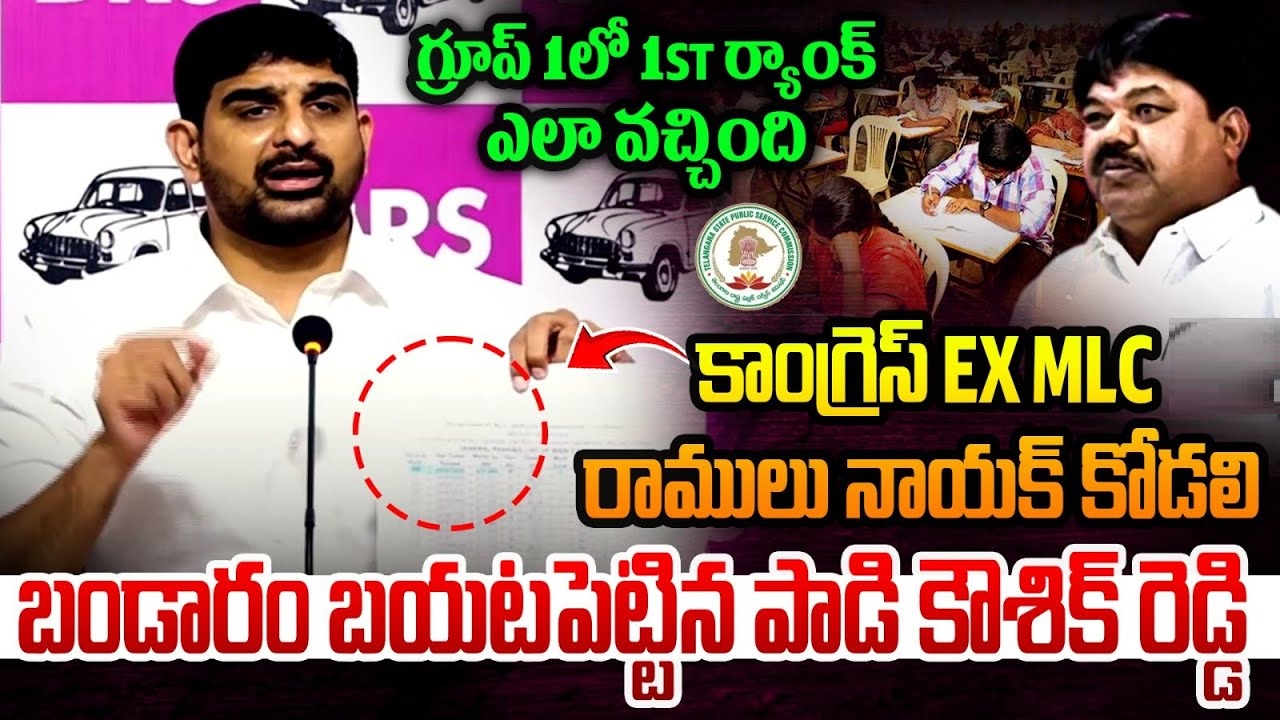
Padi Kaushik Reddy, in a widely circulated video, has raised serious concerns about the TSPSC Group 1 exam results. His claims focus on discrepancies in selection rates across exam centers, questionable ranking outcomes, and alleged favoritism toward politically connected candidates. Below, we break down the key allegations and their implications.
Discrepancies in Exam Center Outcomes
One of the most striking claims involves the inconsistent success rates across TSPSC exam centers. According to Reddy:
- Center 4: Out of 459 candidates, not a single one was selected.
- Center 2: Of 537 candidates, only one candidate secured a position.
- Center 31: 338 candidates appeared, but none were selected.
- Center 39: 172 candidates, zero selections.
- Center 41 & 42: 266 candidates, no selections.
- Center 45: 536 candidates, only one selected.
In stark contrast, Center 19 at Koti Women’s College saw exceptional results:
- Center 19: Out of 1,497 candidates, 74 secured positions—a success rate far higher than other centers.
This disproportionate outcome has fueled suspicions of foul play, with Center 19 emerging as a focal point of the controversy.
Alleged Favoritism in Rankings
Reddy alleges that a candidate linked to a prominent Congress party leader secured an unusually high rank. Specifically:
- The daughter-in-law of former Congress MLC Ramulu Naik reportedly achieved a rank of 206 overall and Rank 1 in the ST category at Center 19.
- This candidate was among the 74 successful candidates from Center 19, raising questions about the fairness of the evaluation process.
The high success rate at a single center, coupled with the selection of a politically connected candidate, has led to accusations of favoritism and manipulation.
Urdu Medium Candidates: An Unlikely Success Rate
Another alarming discrepancy involves candidates who opted for the Urdu medium. According to Reddy:
- Urdu Medium: Out of nine candidates, seven were selected—an astonishing 78% success rate.
- Telugu Medium: Of approximately 7,800 candidates, only 60 were selected, a success rate of less than 1%.
- Top 100 Ranks: Three Urdu medium candidates made it to the top 100, compared to only four Telugu medium candidates out of thousands.
The Urdu medium’s disproportionate success rate is particularly suspicious given the limited availability of study materials and resources for Urdu-medium candidates. This raises questions about whether external factors influenced the results.
Evidence of Systemic Flaws in TSPSC Evaluation
Beyond the exam center discrepancies, Reddy highlights several instances of evaluation errors and inconsistencies that point to deeper systemic issues within the TSPSC.
Marking Irregularities: The Case of Poojitha Reddy
One of the most compelling pieces of evidence involves a candidate named Poojitha Reddy:
- Initial Marks: Poojitha was officially awarded 483 marks in the TSPSC Group 1 exam.
- Recounting Outcome: After requesting a recount, her marks were revised downward to 423—a reduction of 60 marks.
A 60-mark discrepancy is significant, as it can drastically alter a candidate’s rank and selection prospects. This case underscores potential errors in the evaluation process and raises concerns about the accuracy of TSPSC’s marking system.
Inconsistent Reporting of Highest Marks
Reddy also points to discrepancies in the TSPSC’s reporting of highest marks in the Telangana Movement and State Formation paper:
- Press Note: TSPSC officially stated that the highest score in this paper was 100 marks.
- Website Data: The TSPSC website later reported a candidate scoring 122 marks in the same paper.
When the candidate questioned this discrepancy, they were allegedly pressured to remain silent. According to Reddy, the candidate, a government employee, was warned that pursuing the matter could jeopardize their job. Subsequently:
- The candidate’s total marks were reduced from 330 to 188 without a formal revaluation or recounting process.
- The TSPSC website was updated to reflect the lower score, raising suspicions of deliberate manipulation.
This incident suggests a lack of transparency and accountability in how TSPSC handles candidate queries and corrects errors.
The Broader Implications of TSPSC Irregularities
The allegations surrounding the TSPSC Group 1 exam have far-reaching consequences for candidates, the public, and the state’s governance.
Impact on Aspirants
- Erosion of Trust: Irregularities undermine candidates’ confidence in the fairness of the recruitment process.
- Career Setbacks: Errors in marking and selection can alter candidates’ futures, denying deserving individuals opportunities.
- Mental and Financial Strain: Preparing for competitive exams requires significant time, effort, and resources. Unfair practices exacerbate the stress faced by aspirants.
Public Perception of Governance
The TSPSC controversy reflects poorly on Telangana’s governance, particularly the state’s commitment to merit-based recruitment. If politically connected candidates are favored, it risks perpetuating a culture of nepotism and eroding public trust in institutions.
Call for Accountability
Reddy’s allegations have sparked demands for a thorough investigation into the TSPSC Group 1 exam process. Key demands include:
- Judicial Inquiry: A comprehensive probe to examine the allegations of favoritism and evaluation errors.
- CBI Investigation: Involvement of the Central Bureau of Investigation to ensure an impartial inquiry.
- Action Against Responsible Parties: Legal action against TSPSC officials or other individuals found guilty of misconduct.
Why the TSPSC Controversy Demands Immediate Action
The scale of the alleged irregularities—disproportionate success rates, marking errors, and potential political interference—points to a systemic failure within the TSPSC. Addressing these issues is critical for several reasons:
Restoring Fairness in Recruitment
A transparent and merit-based recruitment process is essential for ensuring that the most qualified candidates secure government positions. Any deviation from this principle undermines the integrity of public service.
Protecting Aspirants’ Rights
Candidates invest years preparing for exams like TSPSC Group 1. They deserve a system that evaluates their performance accurately and fairly, free from external influences.
Upholding Democratic Values
Fair recruitment processes are a cornerstone of democratic governance. Allegations of favoritism and manipulation threaten the principles of equality and meritocracy.
Steps to Address TSPSC Group 1 Irregularities
To resolve the controversy and prevent future issues, the following steps are recommended:
1. Conduct an Independent Investigation
- Appoint a judicial committee or involve the CBI to investigate the allegations.
- Examine exam center data, evaluation processes, and candidate selection criteria.
2. Enhance Transparency in Evaluation
- Publish detailed score breakdowns for all candidates.
- Implement digital evaluation systems to minimize human error.
- Allow candidates to access their answer sheets for verification.
3. Strengthen Oversight Mechanisms
- Establish an independent oversight body to monitor TSPSC’s recruitment processes.
- Conduct regular audits of exam centers and evaluation procedures.
4. Address Political Interference
- Enforce strict guidelines to prevent political influence in recruitment.
- Penalize individuals or parties found guilty of manipulating the process.
5. Support Affected Candidates
- Offer re-evaluation opportunities for candidates impacted by marking errors.
- Provide compensation or additional attempts for those unfairly disadvantaged.
The Role of Public Awareness and Advocacy
Public awareness is crucial for holding authorities accountable and driving systemic change. Aspirants, activists, and concerned citizens can play a pivotal role by:
- Raising Awareness: Sharing information about the TSPSC controversy on social media and other platforms.
- Demanding Accountability: Organizing protests or petitions to pressure the government for action.
- Supporting Legal Action: Backing candidates who pursue legal recourse against irregularities.
By amplifying these issues, the public can ensure that the TSPSC controversy receives the attention it deserves.
Conclusion: A Call for Justice in TSPSC Group 1 Recruitment
The allegations surrounding the TSPSC Group 1 exam highlight serious flaws in Telangana’s recruitment system. From disproportionate success rates at specific exam centers to marking errors and potential political interference, the evidence suggests a need for urgent reform. Aspirants deserve a fair, transparent, and merit-based process that rewards their hard work and dedication.
By conducting a thorough investigation, enhancing transparency, and addressing systemic issues, the TSPSC can restore public trust and uphold the principles of fairness and equality. Until these steps are taken, the controversy will continue to cast a shadow over Telangana’s governance and the dreams of thousands of aspirants.