Telangana Skill University to Offer 17 Courses and Train 20,000 Youth Annually
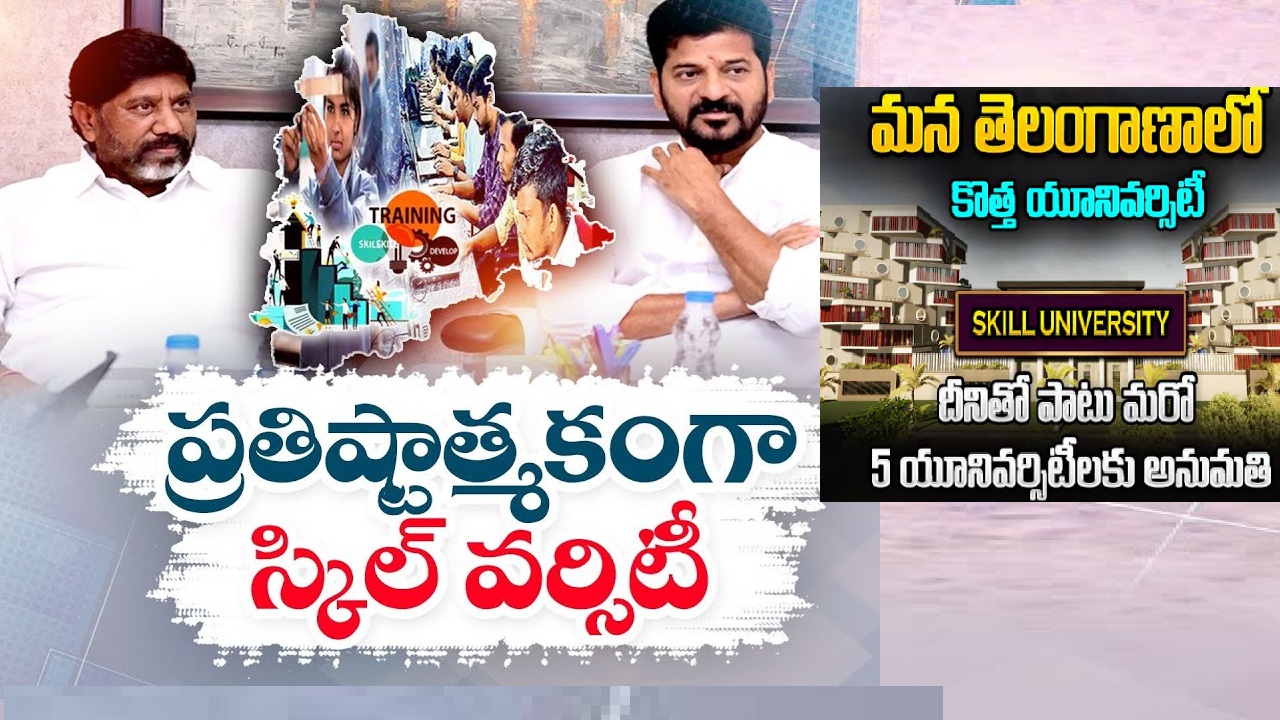
The Telangana government has unveiled plans for a new Telangana Skill University in Hyderabad, set to offer 17 diverse courses and train 20,000 students each year. This ambitious project, structured as a public-private partnership, aims to align educational offerings with industry demands, thereby boosting employment opportunities for the youth.
Establishment and Legislative Backing
The proposed Telangana Skill University will be headquartered in Hyderabad, with its main campus also located in the city. The establishment of this university is a significant initiative, reflected in the state government’s decision to table a bill during the upcoming Budget session of the Assembly, commencing on July 23.
Government’s Commitment to Skill Development
Chief Minister A. Revanth Reddy, along with Deputy Chief Minister Mallu Bhatti Vikramarka, has emphasized the government’s commitment to the project. In a recent meeting, Reddy highlighted the goal of equipping students with industry-relevant skills to enhance their employability. The government is prepared to invest substantial resources to ensure the university’s success.
Learning from Existing Models
The Telangana Industry Department has drawn inspiration from skill universities in Delhi and Haryana to draft the blueprint for Telangana Skill University. Principal Secretary of Industries, Jayesh Ranjan, presented a detailed PowerPoint on the proposed courses, their durations, necessary infrastructure, funding requirements, and potential partnerships with private companies.
Self-Sustaining, Non-Profit Model
The university will operate on a non-profit, self-sustaining model. It plans to offer a range of educational programs, including three-to-four-year degree courses, one-year diploma programs, and short-term certificate courses lasting three to four months. These courses have been tailored to meet the growing needs of Telangana’s burgeoning industries.
Diverse Course Offerings
Seventeen priority sectors have been identified for the university’s curriculum, including pharmaceuticals, construction, banking and financial services, e-commerce and logistics, retail, animation, visual effects, gaming, and comics. Initially, courses will be launched in six sectors with the highest employment potential. Each course will have sponsorship from leading companies in the respective fields, formalized through Memorandums of Understanding (MoUs).
Phased Admissions and Campus Expansion
In its first year, Telangana Skill University will admit 2,000 students, with plans to scale up to 20,000 students in subsequent years. The main campus will be situated at the Engineering Staff College in Hyderabad, with additional satellite campuses at district headquarters to extend the university’s reach.
Industry Collaboration and Job Placement
The university’s strategy includes close collaboration with industry leaders to ensure the courses remain relevant and that students are well-prepared for the job market. This proactive approach aims to secure employment for graduates upon completion of their studies.
Support for Broader Educational Reforms
In addition to the university initiative, Chief Minister Reddy discussed broader educational reforms with educationalists and retired IAS officers. These discussions included strengthening the school education system, converting Anganwadi centers into play schools, and introducing semi-residential schools for students from fourth grade onwards. The government also plans to provide free transportation for students attending these schools.
Addressing Recruitment and Funding in Higher Education
The educationalists raised concerns about the lack of faculty recruitment in universities over the past decade and the need for development grants. In response, the Chief Minister announced plans to establish education and agriculture commissions to address these issues and ensure the continuous improvement of higher education institutions.
Conclusion
Telangana Skill University represents a significant step forward in the state’s efforts to enhance education and employment opportunities. By focusing on industry-aligned skills and fostering public-private partnerships, the university is poised to become a model for skill development in India. This initiative, combined with broader educational reforms, underscores the Telangana government’s commitment to nurturing a skilled and employable workforce.