Introduction
The National Sample Survey Office (NSSO) recently published a report that sheds light on smartphone usage, debt levels, educational attainment, and health expenditures across Telangana. This report reveals a striking contrast between high smartphone penetration and the financial challenges faced by many residents, especially when compared to the national average.
Widespread Smartphone Usage in Telangana
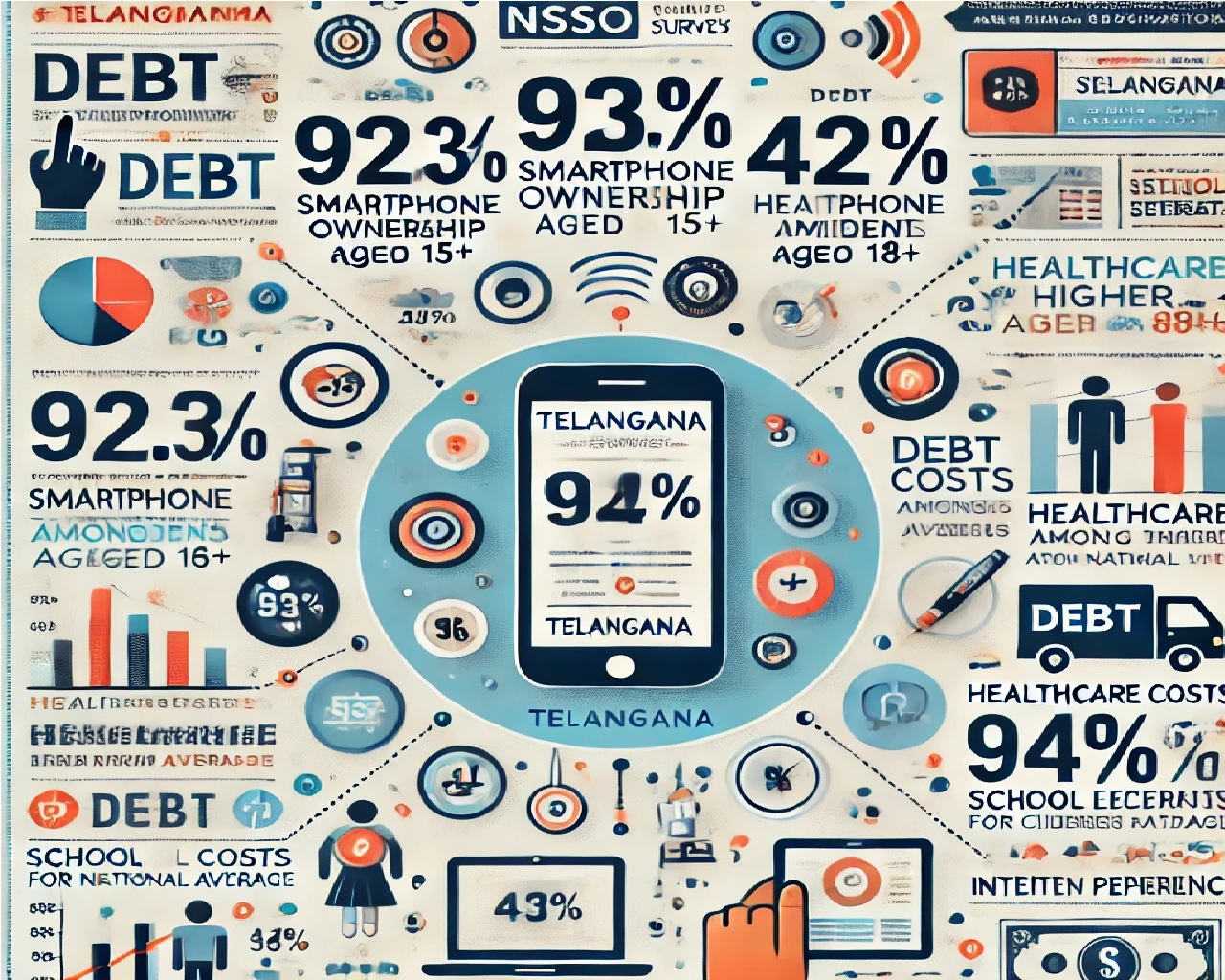
The survey finds that nearly every resident aged 15 and above in Telangana owns a smartphone. Specifically, 92.3% of individuals in this age group have access to smartphones, which they actively use. This statistic is slightly higher in urban areas (94.5%) compared to rural regions (90.7%).
Debt Levels Exceed National Average
Despite high smartphone adoption, the survey reveals concerning levels of debt among Telangana residents. About 42.4% of individuals aged 18 and older are reported to be in debt, a figure significantly higher than the national average. This financial strain is especially prominent in rural areas, where more people rely on loans to meet urgent needs but often struggle to repay due to limited income sources.
Health Expenses Add Financial Burden
Health expenditures are another area of financial stress. The survey reports that one in four families has had at least one member hospitalized in the past year. Medical costs in Telangana surpass the national average, with each rural household spending an average of ₹5,088 on hospital visits, while urban households spend around ₹5,648. This figure contrasts with the national average hospital expenditure of ₹4,496 per family.
For outpatient medical services, rural families spend an average of ₹642, and urban families, ₹655. These figures indicate that healthcare costs pose a substantial burden on the majority of households in Telangana.
Literacy and Banking Access in Telangana
The survey also highlights high literacy levels among Telangana’s youth. In the 15-24 age group, 99.2% of males and 98.3% of females possess basic reading, writing, and arithmetic skills. These rates are slightly higher than the national averages of 97.8% for males and 95.9% for females. Additionally, 97.5% of individuals aged 18 and above have either personal or joint bank accounts, with the figure slightly higher in rural (98%) compared to urban areas (96.9%).
School Enrollment Rates and Education
The report shows a strong commitment to primary education in Telangana. Among children aged 6-10, 94% are enrolled in school, with a slightly higher rate in rural areas (94.9%) compared to urban areas (93.4%). The enrollment of girls (94.5%) marginally surpasses that of boys (94.1%).
For those between 21-35 years, approximately 66.3% of youth have pursued science and technology courses, reflecting a strong inclination toward technical education. Women in rural areas are more likely to be enrolled in these courses, while men dominate the enrollment in urban settings.
Internet Skills and Usage
Internet usage is widespread, yet digital literacy remains limited. While 72.8% of Telangana residents rely on the internet for information, only 64.8% have internet proficiency. Rural areas see fewer proficient users (54.8%) compared to urban areas (78.9%). Additionally, skills related to electronic messaging and online banking are relatively low, with only 39.4% of the population able to perform these tasks. Women, in particular, are less likely to possess these skills.
Household Access to Communication and Technology
According to the survey, 93% of households in Telangana have mobile phones, although only 13.7% own computers or laptops. Despite high mobile penetration, Telangana’s computer access rates are lower than the national average, highlighting a gap in digital infrastructure that may impact long-term technological advancement in rural and urban areas alike.
Conclusion
The NSSO survey underscores the complex social and economic landscape of Telangana. While technology adoption, particularly smartphones, is nearly universal, high levels of debt, healthcare costs, and limited internet literacy highlight challenges that must be addressed. The findings suggest the need for targeted policies to improve financial literacy, expand digital skills training, and alleviate healthcare expenses to create a more balanced and resilient society.