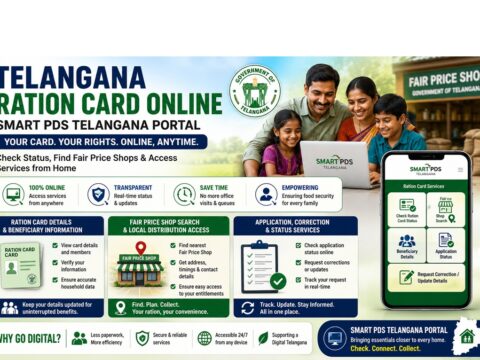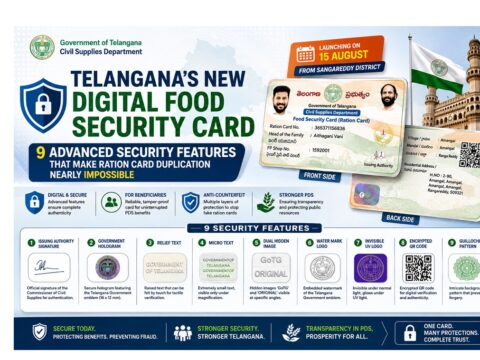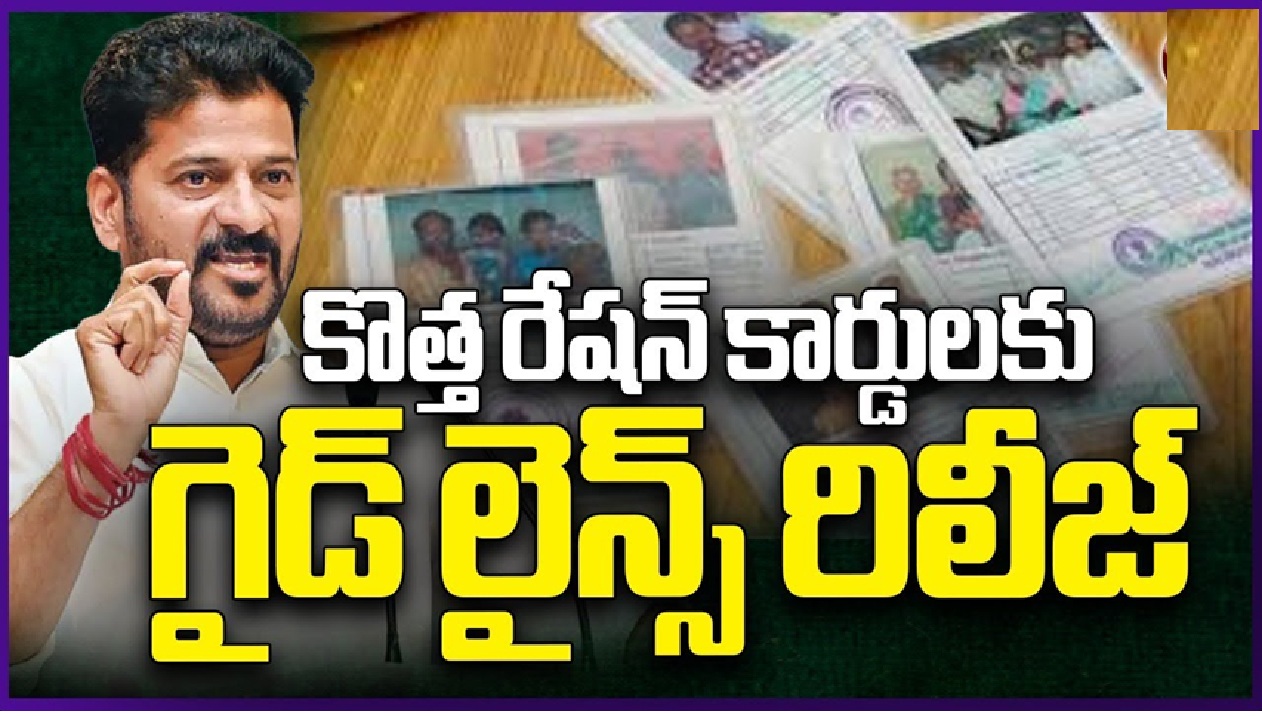
The Telangana government has taken a significant step toward resolving long-standing grievances related to the issuance of new food security (ration) cards. This initiative ensures food security for eligible families, adhering to transparent and streamlined guidelines. Below is a detailed breakdown of the policies and procedures for issuing these ration cards, based on the directives issued by the Civil Supplies Department.
Understanding the Importance of Food Security (Ration) Cards
Food security cards play a pivotal role in ensuring essential provisions reach eligible families at subsidized rates. These cards act as both identity proof and an access point for various government schemes aimed at reducing hunger and promoting well-being across the state.
Key Government Directives Behind the Initiative
- Background of Policy Formation
- The Telangana government formed a Cabinet Subcommittee to review existing grievances and recommend necessary reforms.
- On January 4, 2025, the Council of Ministers approved these recommendations, paving the way for effective implementation.
- Previous References
- The initiative draws from directives issued in earlier government memos, including:
- Memo No. 653 (October 10, 2014): Guidelines for rural and urban ration card distribution.
- Memo No. 900 (November 28, 2014): Policy enhancements for streamlined issuance.
- Subsequent evaluations carried out in 2024.
- The initiative draws from directives issued in earlier government memos, including:
Eligibility Criteria for New Ration Cards
To ensure fairness and inclusivity, the government has laid out specific eligibility criteria:
- Families without an existing ration card, as identified through the caste census (Socio-Economic Caste Census, SECC).
- Households demonstrating economic vulnerability and meeting prescribed income thresholds.
- Avoidance of duplication, ensuring only one food security card per eligible individual.
Step-by-Step Process for Issuance of Ration Cards
- Data Compilation and Survey
- Lists of families lacking ration cards, derived from SECC data, are shared with District Collectors and Field Officers for verification.
- Mandal-Level Review and Responsibility Assignment
- Mandal Parishad Development Officers (MPDOs) or Municipal Commissioners oversee the local-level processing and ensure smooth operation.
- District Oversight and Monitoring
- Additional District Collectors (Revenue) act as supervisors to maintain transparency throughout the process.
- Community Involvement through Gram Sabha
- Draft beneficiary lists are displayed in Gram Sabhas or Ward Meetings for public review and discussion.
- Any objections or discrepancies are addressed during these meetings to maintain accountability.
- Approval and Digital Documentation
- Approved beneficiary lists are uploaded via mandal or municipal login systems and forwarded to the District Collector or Commissioner for final validation.
- Final Verification by Commissioner
- After thorough scrutiny by the Commissioner, the final list is approved, paving the way for ration card issuance.
- Issuance of New Ration Cards
- Eligible families receive their new ration cards based on the final approved list.
- Eliminating Duplication
- Strict measures are enforced to ensure no individual holds more than one ration card.
Advantages of the New Ration Card Policy
- Enhanced Food Security: Greater access to essential commodities for underprivileged families.
- Transparent Processes: Community involvement through Gram Sabhas ensures fair beneficiary selection.
- Digital Integration: The use of technology speeds up application review and minimizes errors.
- Focus on Inclusivity: Special attention to long-pending grievances guarantees that no eligible family is overlooked.
How to Check Your Eligibility for a Ration Card
Eligible citizens can visit their nearest Mandal office or Municipal office to verify their inclusion in the approved beneficiary list. Additionally, information is accessible online through government portals, enabling a hassle-free application process and Role of DIstrict Collectors.
Introduction to Aadhaar Seeding and Ration Card Updates
Aadhaar seeding plays a crucial role in ensuring transparency and efficiency in government schemes. By linking Aadhaar to ration cards, Telangana aims to eliminate duplicate beneficiaries, streamline the distribution of essential commodities, and make services more accessible.
This article summarizes the instructions issued by the state government and highlights the steps necessary to implement these updates effectively.
Key Government Directives
The government has issued several orders and circulars as part of this initiative. Below are the primary references and their significance:
- Memo No. 653/2014: Guidelines for linking Aadhaar to ration cards for enhanced transparency.
- Memo No. 900/2014: Additional protocols for Aadhaar seeding in government schemes.
- G.O. Rt. No. 1071/2024: Updates to ration card eligibility criteria and implementation procedures.
- Memo No. 1784/2025: Detailed instructions to district collectors and GHMC officials on Aadhaar seeding processes.
These directives provide a framework for implementing Aadhaar seeding across Telangana’s districts and urban areas.
Procedure for Aadhaar Seeding with Ration Cards
The following steps outline the process for effective Aadhaar seeding and ration card updates:
- Verification of Beneficiaries
District-level teams will verify the details of ration cardholders and ensure their Aadhaar numbers are accurately linked. - Coordination with Local Bodies
Urban local bodies (ULBs) and GHMC officials are instructed to conduct surveys to identify and resolve discrepancies. - Role of District Collectors and DCSOs
District collectors and District Civil Supplies Officers (DCSOs) will oversee the implementation of Aadhaar seeding at the district level. - Addressing Discrepancies
Special measures will be taken to address issues such as duplicate Aadhaar numbers, incomplete data, and changes in beneficiary status. - Grievance Redressal Mechanism
A dedicated grievance redressal cell will be established at the district level to handle complaints related to Aadhaar seeding and ration card updates.
Responsibilities of Key Stakeholders
The following stakeholders play an essential role in ensuring the success of Aadhaar seeding and ration card updates:
- District Collectors and GHMC Officials
They will coordinate efforts between various departments and ensure timely implementation. - Village and Mandal Officials
These officials will assist in identifying discrepancies and verifying Aadhaar-ration card linkages. - Public Representatives
Their role includes raising awareness about the importance of Aadhaar seeding and addressing community concerns.
Implementation Timeline
- The Aadhaar seeding process commenced on January 4, 2025.
- Districts are expected to complete the majority of the work by January 26, 2025.
Strict adherence to deadlines is mandatory to ensure that the benefits reach eligible citizens without delays.
Expected Outcomes
By implementing Aadhaar seeding and updating ration cards, the Telangana government aims to:
- Eliminate duplicate beneficiaries.
- Ensure that only eligible citizens receive benefits.
- Enhance transparency and accountability in the public distribution system.
Conclusion
The Telangana government’s proactive approach in streamlining food security card issuance is a commendable effort toward fostering social equity. By addressing grievances, promoting transparency, and leveraging community participation, the state aims to ensure that no family is left behind in its pursuit of food security.
This initiative not only strengthens public trust but also aligns with broader goals of poverty alleviation and sustainable development, setting a benchmark for governance excellence.
The Telangana government has issued critical instructions concerning Aadhaar seeding and updates to ration cards. This guide outlines the latest directives, processes, and important points for stakeholders, including district collectors, GHMC (Greater Hyderabad Municipal Corporation) officials, and public representatives.