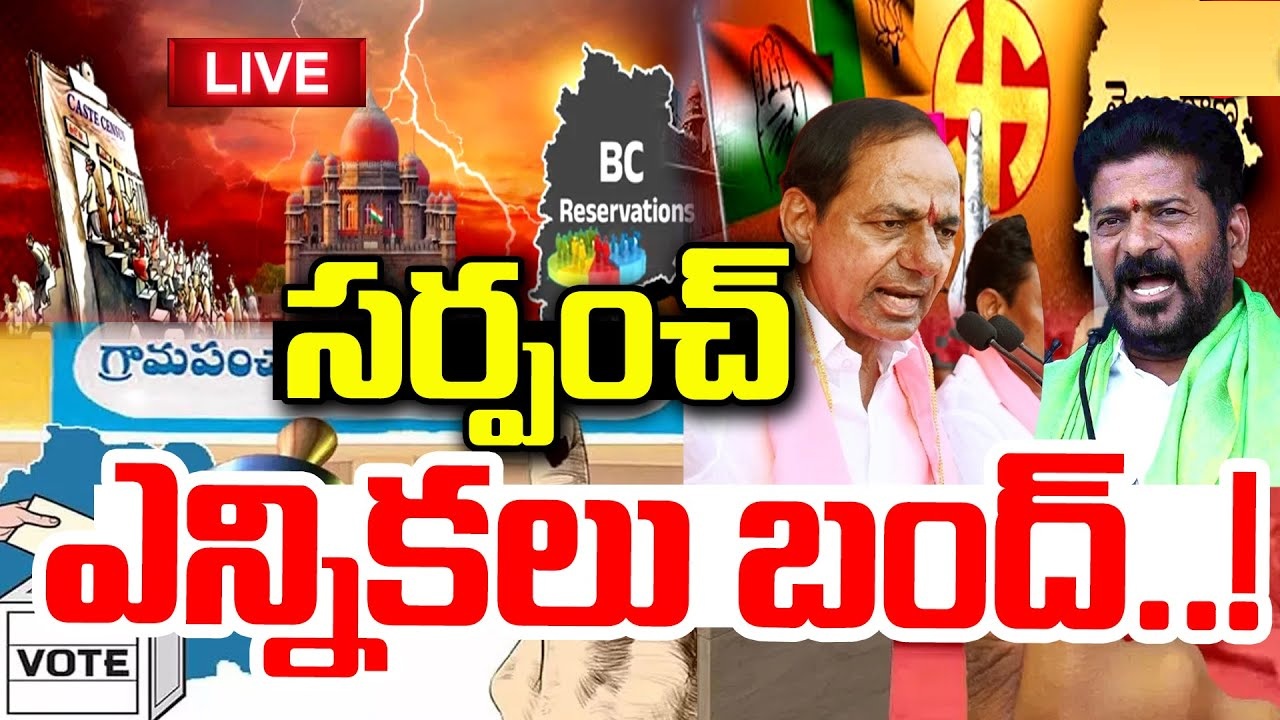
The Telangana High Court has delivered a landmark interim order that could reshape the political landscape of India’s youngest state, staying the implementation of Government Order MS No. 9 that granted an unprecedented 42% reservation to Backward Classes (BCs) in local body elections. This judicial intervention comes amid intense legal scrutiny over the state government’s decision to push total reservations to 67%, significantly breaching the Supreme Court’s established 50% ceiling for affirmative action policies.
The constitutional confrontation unfolding in Hyderabad represents far more than a regional legal dispute—it embodies the fundamental tension between social justice aspirations and constitutional limitations that has defined India’s reservation discourse for decades. As the matter proceeds through the judicial system, the implications extend beyond Telangana’s borders, potentially influencing reservation policies across the nation and setting critical precedents for backward class representation in democratic governance.
Legal Framework and Constitutional Foundations
The Supreme Court’s 50% Reservation Ceiling
The constitutional basis for reservation limits traces back to the landmark Indra Sawhney v. Union of India case of 1992, where a nine-judge Constitution bench established the foundational principle that total reservations should not exceed 50% of available positions. This judgment, commonly known as the Mandal Commission case, emerged from challenges to the implementation of 27% reservations for Other Backward Classes (OBCs) in central government employment and educational institutions.
The Supreme Court’s reasoning centered on maintaining a balance between affirmative action and merit-based selection, ensuring that reservation policies do not completely overwhelm general category opportunities. The court articulated that while Articles 15(4) and 16(4) of the Constitution permit special provisions for socially and educationally backward classes, these provisions must operate within reasonable limits to preserve the essence of equality guaranteed under Article 14.
K. Krishna Murthy v. Union of India: The Local Bodies Precedent
The specific application of reservation principles to local governance was crystallized in the K. Krishna Murthy v. Union of India case of 2010, which established the “triple test” for implementing OBC reservations in panchayats and municipalities. This Supreme Court ruling mandated three essential conditions: first, the establishment of a dedicated commission to conduct rigorous empirical inquiry into the nature of backwardness; second, the specification of reservation proportions based on local body-wise data; and third, ensuring that total reservations for SCs, STs, and OBCs do not exceed 50%.
The Krishna Murthy judgment recognized that barriers to political participation differ from those affecting education and employment, requiring specialized assessment methodologies. However, it maintained the 50% ceiling as an inviolable constitutional principle, emphasizing that any deviation would require extraordinary circumstances and compelling justification.
The Constitution of India cover showcasing the national emblem and intricate gold designs symbolizing India’s legal foundation
Constitutional Articles 243D and 243T: Enabling Provisions
Articles 243D(6) and 243T(6) of the Constitution provide the foundational authority for backward class reservations in panchayats and municipalities respectively. These provisions, inserted through the 73rd and 74th Constitutional Amendments, empower state legislatures to make reservations for backward classes in local governance institutions, subject to constitutional limitations and judicial interpretation.
The Telangana government’s reliance on these enabling provisions forms the core of its legal strategy, arguing that the Constitution grants states discretionary power to determine appropriate reservation levels for local bodies. However, legal experts contend that this discretion operates within the constraints established by Supreme Court precedents, particularly the 50% ceiling principle.
The Telangana Government’s Reservation Enhancement Strategy
Socio-Economic Caste Survey and Empirical Foundation
The Telangana government’s decision to enhance BC reservations to 42% emerged from an extensive Socio-Economic, Educational, Employment, Political and Caste (SEEEP) Survey conducted across the state in 2024. This comprehensive household-level enumeration revealed that Backward Classes constitute 56.33% of Telangana’s population, significantly higher than their current political representation in local governance institutions.
The survey’s findings provided the empirical foundation for the government’s argument that existing reservation levels inadequately reflect the demographic reality of the state. Chief Minister A. Revanth Reddy consistently emphasized that the 42% quota represents a scientific approach to ensuring proportional representation, addressing historical underrepresentation of BC communities in political decision-making processes.
The Busani Venkateshwara Rao Commission
In November 2024, the state government constituted a dedicated commission headed by retired IAS officer Busani Venkateshwara Rao to analyze the caste survey data and recommend appropriate reservation proportions. The commission’s mandate included conducting “contemporaneous rigorous empirical enquiry into the nature and implications of backwardness” specifically related to local body representation.
The commission submitted its report in March 2025, recommending at least 42% reservation for BCs in political representation, particularly in local bodies. This recommendation formed the basis for subsequent legislative action and the eventual government order that triggered the current legal challenge.
Two fists symbolize social unity under India’s constitutional reservation system
Legislative Process and Constitutional Amendments
The Telangana Legislature passed two crucial bills in August 2025: the Telangana Municipalities (Third Amendment) Bill, 2025 and the Telangana Panchayat Raj (Third Amendment) Bill, 2025. These bills sought to amend existing legislation to remove the 50% reservation ceiling for local bodies, specifically enabling the 42% BC quota implementation.
However, these bills remain pending with the President of India for constitutional assent, creating a legal vacuum that the government attempted to fill through the controversial Government Order MS No. 9. This procedural gap became a central argument for petitioners challenging the reservation enhancement, contending that the government acted ultra vires without proper legislative authorization.
The High Court Proceedings: Legal Arguments and Judicial Scrutiny
Petitioners’ Constitutional Challenge
The legal challenge against the 42% BC reservation was spearheaded by prominent advocates including B. Mayur Reddy, a Senior Counsel and NALSAR alumnus who was designated as Senior Advocate by the Telangana High Court in 2023. Representing petitioners B. Madhav Reddy and Goreti Venkatesh, the legal team constructed a multi-pronged constitutional argument challenging the government’s order.
The petitioners’ primary contention centered on the violation of established Supreme Court precedents, particularly the Krishna Murthy judgment and the Indra Sawhney ceiling principle. Senior Counsel K. Vivek Reddy emphasized that the triple test mandated by the Supreme Court had not been properly satisfied, arguing that the one-man commission report lacked the rigor and transparency required for such significant policy changes.
The legal challenge highlighted that with existing SC and ST reservations of 15% and 10% respectively, the total reservations would reach 67%, creating a substantial breach of constitutional limitations. The petitioners argued that such deviation required extraordinary justification and exceptional circumstances that had not been demonstrated by the state government.
Government’s Defense Strategy
The state government’s legal defense was led by Abhishek Manu Singhvi, a Senior Supreme Court advocate and Rajya Sabha member from Telangana, working alongside Advocate General A. Sudarshan Reddy. Chief Minister Revanth Reddy personally called upon Singhvi to represent the state, emphasizing the political significance of the case and the government’s determination to uphold the reservation enhancement.
Singhvi’s defense strategy focused on presenting the 42% quota as a scientifically-based welfare measure grounded in comprehensive empirical data. The government argued that the caste survey and commission report satisfied the Krishna Murthy triple test requirements, providing the necessary empirical foundation for the reservation enhancement.
The defense also emphasized the unanimous passage of the BC reservation bills in the state legislature, arguing that democratic mandate and legislative sanction provided additional legitimacy to the government’s action. The government contended that Articles 243D(6) and 243T(6) granted sufficient constitutional authority for the reservation enhancement, particularly given the exceptional circumstances of BC underrepresentation in Telangana.
Illustration of key types of political elections in India including central, state, and local levels with a focus on mobile verified voting
Judicial Analysis and Interim Order
The Division Bench comprising Chief Justice Aparesh Kumar Singh and Justice GM Mohiuddin conducted extensive hearings over two days, examining the complex constitutional and legal issues involved. The court’s questioning focused on the procedural adequacy of the government’s decision-making process and the constitutional validity of exceeding the established reservation ceiling.
During the proceedings, the High Court specifically questioned whether the government had demonstrated “sufficient application of mind” in data collection and analysis before issuing the order. The bench also examined the status of the pending bills and the legal implications of implementing the quota without proper legislative authorization.
The court’s interim stay order, issued on October 9, 2025, effectively suspended the implementation of Government Order MS No. 9 while directing the state government to file a counter-affidavit within four weeks. The petitioners were granted two weeks thereafter to file their rejoinder, with the next hearing scheduled six weeks later.
Constitutional Implications and Legal Precedents
The 50% Ceiling Debate: Flexibility versus Rigidity
The Telangana case has reignited fundamental debates about the flexibility of the 50% reservation ceiling established in Indra Sawhney. While the Supreme Court has generally maintained this limit as a constitutional principle, there have been instances where courts have grappled with its application in specific contexts.
The Economically Weaker Sections (EWS) reservation of 10%, upheld by the Supreme Court in 2022, created additional complexity by operating outside the traditional 50% ceiling for SC/ST/OBC reservations. This precedent has emboldened some states to argue for greater flexibility in reservation policies, though the EWS quota was implemented through constitutional amendment rather than ordinary legislation.
Legal scholars have increasingly questioned whether the 50% ceiling remains appropriate in contemporary India, given changing demographic realities and evolving understanding of social justice requirements. However, attempts by states like Maharashtra, Bihar, and Rajasthan to exceed this limit have generally been struck down by courts, reinforcing the principle’s continued validity.
Federal Structure and State Autonomy
The Telangana controversy also highlights tensions between federal structure and state autonomy in reservation policy-making. While the Constitution grants states significant authority over local governance through Articles 243D and 243T, this power operates within the constraints of Supreme Court interpretation and constitutional principles.
The debate reflects broader questions about the balance between national constitutional standards and regional demographic realities. States with significantly different caste compositions may argue for differentiated approaches to reservation, while constitutional uniformity demands consistent application of fundamental principles across the nation.
A judicial gavel resting on a sound block representing court authority and legal decisions
Democratic Legitimacy versus Constitutional Constraints
The unanimous passage of BC reservation bills in the Telangana Legislature raises important questions about the relationship between democratic mandate and constitutional limitations. While electoral promises and legislative approval provide political legitimacy to policy decisions, they cannot override constitutional constraints or judicial interpretation of fundamental principles.
This tension between democratic will and constitutional law represents a classic dilemma in constitutional democracies, where popular demands must be balanced against structural safeguards and minority protection. The Telangana case exemplifies how courts must navigate between respecting democratic processes and enforcing constitutional boundaries.
Political Context and Electoral Implications
Congress Party’s Electoral Commitments
The 42% BC reservation represents a core electoral promise of the Congress party, articulated through the Kamareddy BC Declaration during the 2023 assembly elections. Chief Minister Revanth Reddy positioned this policy as fundamental to the party’s social justice agenda and commitment to backward class empowerment.
The Congress government’s aggressive pursuit of the reservation enhancement reflects both ideological conviction and political necessity. With significant BC populations across Telangana constituencies, the party views enhanced reservation as crucial for maintaining electoral support and fulfilling campaign commitments.
The timing of the government order, issued just before the court-mandated deadline for local body elections, demonstrates the political urgency surrounding the issue. The Congress leadership clearly viewed the implementation of enhanced BC reservations as non-negotiable, even at the risk of legal challenge and judicial intervention.
Opposition Response and Political Dynamics
The opposition Bharat Rashtra Samithi (BRS) and Bharatiya Janata Party (BJP) have presented nuanced responses to the reservation enhancement, generally supporting increased BC representation while raising concerns about legal sustainability. BRS leader Ponguleti Srinivasa Reddy specifically cited failures of similar attempts in Bihar and Madhya Pradesh, warning about potential legal hurdles.
This political dynamic reflects the complexity of reservation politics in contemporary India, where parties must balance support for affirmative action with concerns about constitutional validity and implementation feasibility. Opposition parties face the challenge of critiquing government action without appearing to oppose backward class interests.
Impact on Local Body Elections
The High Court’s interim stay has created significant uncertainty for the scheduled local body elections, originally planned for October-November 2025 across 31 districts. The State Election Commission had prepared for elections to 565 ZPTCs, 5,749 MPTCs, and 12,733 Gram Panchayats, involving over 1.67 crore voters.
The electoral implications extend beyond mere scheduling delays, potentially affecting candidate selection, party strategies, and voter expectations. Political parties had already begun preparations based on the enhanced reservation matrix, requiring significant recalibration if the court ultimately invalidates the 42% quota.
Social Justice Implications and Community Impact
Backward Classes and Political Representation
The core social justice argument for enhanced BC reservation rests on addressing historical underrepresentation in political decision-making processes. Despite constituting over 56% of Telangana’s population according to the state’s caste survey, BC communities have allegedly remained marginalized in local governance structures.
Advocates for the reservation enhancement argue that political representation directly impacts policy formulation, resource allocation, and development priorities at the grassroots level. Enhanced BC participation in local governance could potentially lead to more targeted welfare programs, improved development outcomes, and greater social inclusion.
The multi-dimensional nature of backwardness identified by the state’s commission encompasses not only economic factors but also social, educational, and political marginalization. This comprehensive understanding of disadvantage provides the theoretical foundation for the government’s argument that exceptional measures are necessary to address systemic inequities.
Inter-Community Relations and Social Cohesion
However, critics argue that drastically enhanced reservations could potentially create inter-community tensions and undermine social cohesion. The reduction in general category opportunities from 50% to 33% represents a significant shift that could generate resentment among non-reserved communities.
The challenge lies in balancing legitimate demands for backward class representation with the need to maintain social harmony and prevent zero-sum competition between different community groups. Sustainable reservation policies must consider long-term implications for social integration and national unity.
Cartoon illustration of a person holding a ‘Reservation’ flag symbolizing reservation policies in India
Quality of Governance and Administrative Efficiency
Questions have also been raised about the potential impact of enhanced reservations on governance quality and administrative efficiency in local bodies. While reservation policies aim to ensure representational equity, critics argue that they may compromise merit-based selection and institutional effectiveness.
Proponents counter that diversity in leadership brings varied perspectives and better understanding of community needs, potentially improving governance outcomes. The debate reflects broader tensions between equity and efficiency that characterize affirmative action policies worldwide.
Comparative Analysis: Pan-Indian Reservation Trends
State-Level Variations and Policy Experiments
Telangana’s reservation enhancement attempt reflects a broader trend among Indian states seeking to exceed the traditional 50% ceiling. Tamil Nadu has maintained 69% reservation since 1993, Rajasthan and Chhattisgarh have implemented over 60% reservations, and several other states have attempted similar expansions.
These state-level experiments demonstrate the persistent tension between demographic realities and constitutional constraints across India’s diverse federal structure. States with significant SC/ST/OBC populations consistently argue that the 50% ceiling inadequately reflects their social composition and historical disadvantage patterns.
However, judicial responses have been generally unfavorable to such expansions, with courts consistently emphasizing the constitutional nature of the 50% ceiling and the need for extraordinary justification for any deviation. The Telangana case represents the latest test of this judicial stance.
Success Stories and Failure Cases
The Maharashtra Maratha reservation case of 2021 provides a particularly relevant precedent, where the Supreme Court struck down 16% Maratha reservations that pushed the state’s total quota to 68%. The court emphasized the lack of compelling reasons for exceeding the constitutional ceiling and the absence of proper empirical justification.
Conversely, the EWS reservation of 10% was upheld by the Supreme Court despite operating outside the traditional framework, though this was implemented through constitutional amendment rather than ordinary legislation. This precedent suggests that constitutional processes may provide more sustainable pathways for reservation expansion.
Future Legal and Political Trajectory
Supreme Court Appeal Prospects
Regardless of the Telangana High Court’s final decision, the case is likely to reach the Supreme Court given its constitutional significance and national implications. The apex court’s handling of the matter could establish definitive precedents for reservation policies across Indian states.
A Supreme Court review might also provide an opportunity to clarify the scope and flexibility of the 50% ceiling in contemporary contexts. Legal experts suggest that the court may need to balance constitutional principles with evolving social justice requirements and demographic realities.
Legislative and Constitutional Reform Options
If the judicial route proves unsuccessful, the Telangana government and other states may pursue constitutional amendment as a more sustainable pathway for reservation enhancement. This would require broader political consensus and parliamentary approval, potentially leading to national-level debates about reservation policy reform.
Alternative approaches might include more nuanced classification systems, time-bound reservation policies, or innovative mechanisms for ensuring backward class representation without exceeding traditional ceilings. The challenge lies in developing solutions that satisfy both constitutional requirements and social justice aspirations.
Model for Other States
The Telangana case will likely influence reservation policy debates in other states with similar demographic profiles and political pressures. The judicial outcome will either encourage or discourage other states from attempting similar reservation enhancements, shaping the national trajectory of affirmative action policies.
The case also highlights the importance of rigorous empirical research, proper procedural compliance, and constitutional awareness in policy formulation. Future reservation policies will likely need to satisfy increasingly stringent judicial scrutiny and constitutional requirements.
Conclusion: Constitutional Democracy at the Crossroads
The Telangana High Court’s interim stay on 42% BC reservations represents more than a regional legal dispute—it embodies fundamental tensions within Indian constitutional democracy between social justice aspirations and constitutional constraints. As the case proceeds through the judicial system, it will likely establish crucial precedents for reservation policies, federal-state relations, and the balance between democratic mandate and constitutional law.
The outcome will significantly impact not only Telangana’s political landscape but also the broader trajectory of affirmative action policies across India. Whether the courts ultimately validate or invalidate the reservation enhancement, the case has already sparked important debates about the adequacy of existing constitutional frameworks for addressing contemporary social justice challenges.
The constitutional crisis emerging from this case underscores the need for thoughtful dialogue between legal experts, political leaders, and social justice advocates about sustainable pathways for ensuring equitable representation while maintaining constitutional integrity. As India continues to grapple with the legacy of historical disadvantage and the demands of inclusive democracy, the Telangana reservation controversy provides a critical lens for examining these enduring tensions.
The ultimate resolution of this case will not only determine the fate of BC reservations in Telangana but also influence the evolution of reservation policies nationwide, potentially reshaping the landscape of social justice and constitutional interpretation in contemporary India. The stakes extend far beyond local body elections to encompass fundamental questions about democracy, equality, and constitutional governance in the world’s largest democracy.