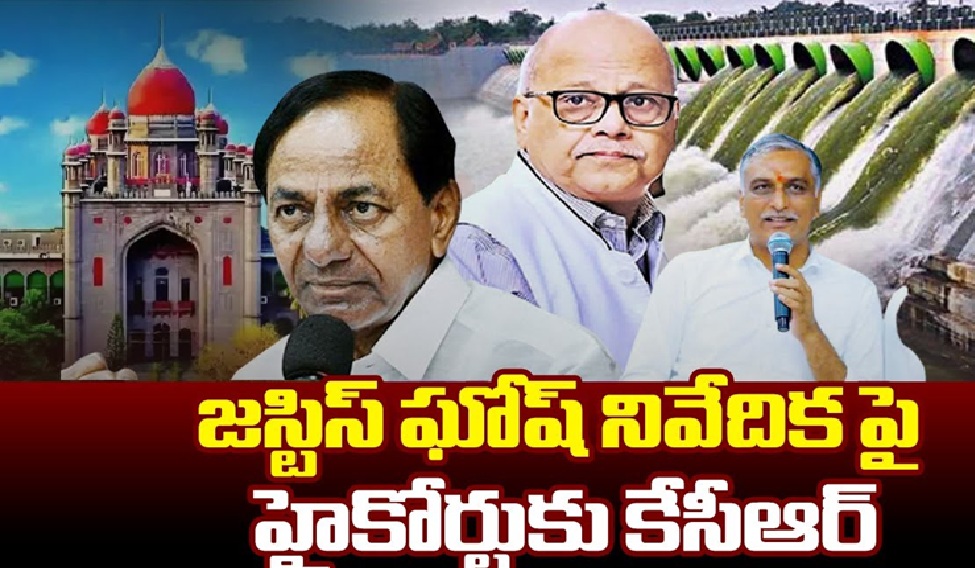
The Telangana High Court has firmly rejected requests for interim orders to halt the implementation of the Justice PC Ghose Commission’s report on the Kaleshwaram Lift Irrigation Project. This decision marks a significant moment in the ongoing scrutiny of one of India’s largest irrigation initiatives, highlighting tensions between former leaders and the current administration. As debates rage in political circles, the court emphasized that no further actions would occur until the state assembly discusses the findings. This ruling not only upholds the government’s plan to table the report but also underscores the importance of legislative oversight in matters of public interest. In this comprehensive article, we explore the background, key arguments, and broader implications of this high-profile case, shedding light on how it affects Telangana’s water management, governance, and political landscape.
Understanding the Kaleshwaram Lift Irrigation Project: India’s Ambitious Water Engineering Marvel
Engineers and policymakers hail the Kaleshwaram Lift Irrigation Project as a groundbreaking feat in water resource management. Located in Telangana, this massive initiative aims to harness the Godavari River’s waters to irrigate over 18 lakh acres of farmland, provide drinking water to millions, and support industrial needs across the state. Launched during the tenure of former Chief Minister K Chandrashekar Rao (KCR), the project involves lifting water through a series of pumps, barrages, and canals, making it one of the world’s largest lift irrigation schemes.
Construction began in 2016, with an estimated cost exceeding Rs 80,000 crore, though critics argue that overruns pushed it closer to Rs 1 lakh crore. Proponents praise it for transforming arid regions into fertile lands, boosting agricultural productivity, and addressing chronic water shortages in northern Telangana districts like Jayashankar Bhupalpally and Peddapalli. However, controversies have plagued the project from the start. Allegations of design flaws, environmental violations, and financial irregularities surfaced, particularly after structural issues emerged at key sites like the Medigadda barrage, where piers sank in 2023, raising questions about engineering integrity and oversight.
Environmentalists criticize the project for disrupting ecosystems, displacing communities, and straining interstate water-sharing agreements with Maharashtra and Andhra Pradesh. Despite these challenges, the Kaleshwaram project symbolizes Telangana’s push for self-reliance in water resources post its formation as a separate state in 2014. The Godavari River, often called the “Dakshin Ganga,” plays a central role, with the project’s pumps lifting water up to 500 meters in stages—an engineering marvel that draws comparisons to global icons like China’s Three Gorges Dam.
As Telangana grapples with climate change impacts, such as erratic monsoons and droughts, initiatives like Kaleshwaram become crucial. Yet, the recent legal developments reveal deeper governance issues, prompting calls for transparency and accountability in mega-infrastructure projects.
Formation of the Justice PC Ghose Commission: Scrutinizing Alleged Irregularities in Kaleshwaram
In response to mounting concerns, the Telangana government under Chief Minister A Revanth Reddy established the Justice PC Ghose Commission in March 2024. Justice Pinaki Chandra Ghose, a retired Supreme Court judge known for his integrity in high-profile inquiries, led this one-man commission. The government’s order (GO) dated March 14, 2024, tasked the panel with investigating technical, financial, and administrative lapses in the Kaleshwaram project’s execution.
The commission’s mandate drew from the Commissions of Inquiry Act, 1952, which empowers states to probe matters of public importance. Key areas of focus included the sinking of piers at Medigadda, Laxmi, and Annaram barrages, potential corruption in contracts, and deviations from approved designs. Over several months, the commission gathered evidence from engineers, contractors, and officials, holding hearings that attracted widespread media attention.
Justice Ghose submitted his interim report on July 31, 2024, highlighting systemic failures without directly accusing individuals of personal graft. The report recommended corrective measures, including structural audits and accountability protocols. This submission set the stage for political fireworks, as former leaders KCR and T Harish Rao, who oversaw the project during the Bharat Rashtra Samithi (BRS) regime, challenged the commission’s process and findings.
The establishment of such commissions reflects a broader trend in Indian governance, where judicial inquiries bridge the gap between executive actions and public accountability. Similar panels have investigated scams like the 2G spectrum allocation and the Commonwealth Games, often leading to policy reforms. In Telangana’s context, the Ghose Commission underscores the shift in power dynamics after the Congress party’s victory in the 2023 assembly elections, signaling a crackdown on perceived legacies of the previous administration.
Petitions by KCR and Harish Rao: Challenging the Commission’s Validity and Process
Former Chief Minister K Chandrashekar Rao and his nephew, ex-Irrigation Minister T Harish Rao, swiftly moved the Telangana High Court with separate writ petitions. They contested the government’s GO forming the commission and sought to quash the report, arguing procedural lapses under the Commissions of Inquiry Act.
KCR, a towering figure in Telangana politics who led the state from 2014 to 2023, claimed the commission violated natural justice principles by not issuing proper notices under Sections 8B and 8C of the Act. These sections require inquiries to notify individuals if adverse findings might affect them, allowing opportunities to defend themselves. Harish Rao echoed these concerns, alleging that the report’s premature disclosure through a PowerPoint presentation damaged their reputations.
The petitioners demanded interim stays to prevent the report from being tabled in the assembly, fearing biased discussions that could prejudice ongoing legal matters. Their legal team, including senior advocates Aryama Sundaram and Dama Seshadri Naidu, portrayed the moves as politically motivated attempts to tarnish the BRS’s achievements. They referenced landmark Supreme Court cases like Kiran Bedi vs. Committee of Inquiry and LK Advani vs. CBI, arguing that inquiries must adhere strictly to due process.
This legal challenge highlights the intersection of politics and judiciary in India, where former leaders often use courts to counter investigations by successors. KCR’s petition, in particular, revives debates on executive accountability, as he positions himself as a defender of Telangana’s development legacy against what he calls “vendetta politics.”
Telangana High Court’s Ruling: Denying Interim Relief and Directing Procedural Compliance
A division bench of the Telangana High Court, comprising Chief Justice Alok Aradhe (earlier referred to as Justice Apresh Kumar Singh in reports, but updated records confirm the bench) and Justice GM Mohiuddin, heard the petitions on August 23, 2024. The court decisively rejected the pleas for interim orders to stay the report’s implementation, reasoning that no immediate actions stemmed from it.
The bench noted the government’s affidavit, submitted by Advocate General A Sudarshan Reddy, assuring that discussions in the assembly would precede any follow-up measures. “Since no actions are forthcoming without legislative debate, a stay becomes unnecessary,” the court observed. It affirmed the legality of tabling the report in the assembly, aligning with democratic norms where elected bodies scrutinize executive decisions.
However, the court issued stern directives: the government must not disclose report contents publicly before assembly presentation. If uploaded on any website, officials should remove it immediately. The state chief secretary and irrigation secretary received orders to file counter-affidavits within four weeks, with petitioners allowed a week to respond. The hearing adjourned to October 7, 2024, keeping the door open for substantive arguments.
This ruling balances judicial restraint with oversight, avoiding interference in legislative processes while ensuring fairness. It draws from constitutional principles under Article 212, which limits court intervention in assembly proceedings, yet allows scrutiny of procedural violations.
Government’s Defense: No Personal Corruption Charges and Emphasis on Public Accountability
Advocate General A Sudarshan Reddy and senior counsel S Niranjan Reddy robustly defended the government, clarifying that the commission followed due process. They pointed out that petitioners received notices and opportunities to respond after witness examinations, countering claims of bias.
“The report contains no allegations of personal corruption against KCR or Harish Rao,” the lawyers stressed. Instead, it critiques administrative decisions during their tenure, which fall within the purview of public scrutiny. Referencing cases like Vijay Bhaskar Reddy vs. State, they argued that notices adequately detailed the issues, distinguishing this inquiry from precedents cited by petitioners.
The government highlighted the report’s preparation for cabinet review, not public dissemination, and its approval for assembly tabling on August 8, 2024. By committing to post-discussion actions, the administration positioned the process as transparent and accountable, essential for restoring public trust in the Kaleshwaram project.
This stance reflects a strategic approach: using the inquiry to address public grievances without escalating to criminal probes prematurely. It also aligns with the Congress government’s agenda to audit BRS-era projects, promising reforms in irrigation and infrastructure.
Petitioners’ Arguments: Risks to Reputation and Violations of Natural Justice
Senior advocates for KCR and Harish Rao painted a picture of potential irreparable harm. They warned that assembly debates would amplify media coverage, damaging the petitioners’ reputations through unsubstantiated claims. “Public discussions without full context politicize the issue, leading to trial by media,” they contended.
Central to their case was the alleged non-compliance with Sections 8B and 8C, claiming the commission issued combined notices instead of separate ones for adverse findings. They deemed the report invalid, urging the court to intervene before legislative involvement, as assembly immunity under Article 212 could bar future judicial review.
The advocates accused the government of orchestrating reputational attacks, noting the PowerPoint leak as evidence of malice. By framing the inquiry as flawed, the petitioners sought to discredit the commission, protecting their political legacies amid Telangana’s evolving electoral dynamics.
Broader Implications for Telangana Politics and Governance
This High Court decision reverberates beyond the courtroom, influencing Telangana’s political narrative. For the Congress government, it validates their investigative zeal, potentially paving the way for reforms in water projects. Critics, however, see it as a tool for settling scores, eroding bipartisanship in development issues.
The case spotlights challenges in mega-projects: balancing ambition with sustainability. Kaleshwaram’s woes—structural failures, cost escalations—serve as cautionary tales for initiatives like Andhra Pradesh’s Polavaram or Maharashtra’s linking projects. It prompts questions on federalism, as interstate river disputes intensify.
Legally, the ruling reinforces the Commissions of Inquiry Act’s role in accountability, while cautioning against premature disclosures. Politically, it bolsters KCR’s opposition stance, rallying BRS supporters ahead of future elections.
As Telangana advances, transparent governance remains key. The assembly debate could foster constructive dialogue, leading to enhanced project management and equitable water distribution.
Future Outlook: Assembly Debates, Potential Reforms, and Legal Horizons
With the case adjourned, attention shifts to the assembly session. Debates may reveal detailed findings, sparking calls for audits or recoveries. If adverse, petitioners could appeal to the Supreme Court, prolonging the saga.
Reforms might include independent oversight for infrastructure, environmental safeguards, and anti-corruption measures. For residents, this means hope for reliable irrigation, crucial in a state where agriculture employs 60% of the workforce.
In conclusion, the Telangana High Court’s rejection of interim stays upholds democratic processes, ensuring the Kaleshwaram inquiry proceeds judiciously. As stakeholders await resolutions, this episode underscores the need for integrity in public projects, shaping Telangana’s future in water security and governance.