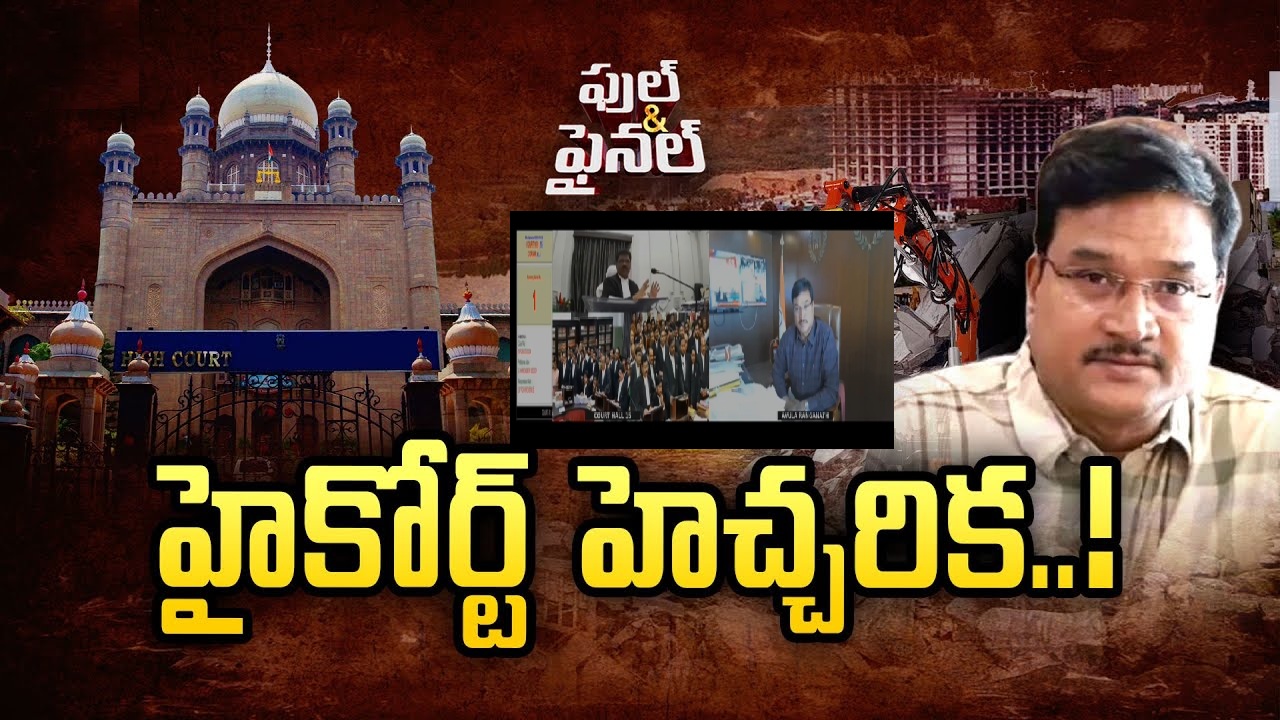
The Telangana High Court recently raised concerns over the actions of HYDRAA and the Ameenpur Tahsildar in demolishing properties without adhering to proper legal procedures. Justice K Lakshman of the High Court did not hold back in expressing disapproval, pointing out that HYDRAA’s approach has gone far beyond its mandate. He made it clear that the agency’s operations, particularly in the Ameenpur region, were unsettling the public, and their methods were in direct violation of the legal frameworks outlined by G.O Ms 99.
HYDRAA’s Controversial Actions Raise Concerns
HYDRAA, originally intended to manage various municipal functions such as disaster management and traffic control, has been criticized for focusing heavily on demolitions. The Judge emphasized that while demolishing illegal structures is important, HYDRAA’s operations have been marked by procedural violations. The court noted that following G.O Ms 99 in its entirety would help build public trust, something the agency currently lacks due to its aggressive actions.
Justice Lakshman’s remarks highlighted that although the High Court supports necessary demolitions, the issue arises from the blatant disregard for legal guidelines. He questioned why demolitions were carried out on weekends and public holidays, despite previous court rulings that explicitly prevent such actions.
Ignoring Legal Judgments and Procedural Missteps
The judge’s frustrations were clear when he directly questioned HYDRAA Commissioner AV Ranganath and the Ameenpur Tahsildar about their awareness of the law regarding demolitions. He was particularly concerned that demolitions had occurred on a Sunday, ignoring the judgments of both the Telangana High Court and the Supreme Court, which prohibit such actions without due process.
The court observed a disconnect between the various government departments involved in the approval and demolition process. It was noted that while departments such as the Stamps and Registration department issue permits and collect fees, HYDRAA and local authorities proceed to demolish buildings without following legal steps, creating confusion and unrest among property buyers.
Injustice to Property Owners
One of the key concerns raised during the proceedings was the impact of these demolitions on innocent property owners. Justice Lakshman pointed out the unfairness of demolishing properties that had received all the necessary permissions from various authorities. He posed a crucial question: “What happens to the rights of the bona fide purchasers?”
The judge further reprimanded HYDRAA for failing to consider the fundamental rights of citizens who had legally purchased properties. By acting with such haste and negligence, the authorities appeared to be selectively applying the law, which disproportionately affected innocent buyers. The judge noted that Ranganath’s public statements about upholding the right to life and liberty under Article 21 of the Indian Constitution rang hollow in light of these actions.
Procedural Violations and Vindictive Actions
The court proceedings revealed several instances where officials violated legal procedures. A key case in point was the demolition of a property on September 22, which was initiated just hours after the notice was served. The judge observed that the Tahsildar had issued a demolition order on a Friday evening and carried out the demolition early Sunday morning, despite the fact that the order provided for a 48-hour notice period. This act of haste was condemned by the court as “vindictive action.”
HYDRAA’s involvement in the case raised additional questions. Commissioner Ranganath’s defense that HYDRAA merely supplied men and machinery at the request of the Tahsildar did not sit well with the judge. Justice Lakshman questioned the ethics of blindly providing resources for demolitions without verifying the legality of the orders. He raised a hypothetical scenario, asking if HYDRAA would do the same if it were asked to demolish the Telangana High Court itself without legal approval.
Demolition on Sundays: A Questionable Practice
One of the most troubling aspects of the case was the practice of conducting demolitions on Sundays, which is both procedurally and ethically questionable. The court pointed out that demolitions on weekends, particularly without due process, often catch property owners off guard, leaving them with no opportunity to defend their rights. The judge warned both HYDRAA and the Tahsildar against committing illegal acts in the name of serving political or executive bosses, as such actions would inevitably lead to legal repercussions.
HYDRAA’s Lack of Plan for Musi Encroachments
The court also questioned HYDRAA’s inactivity on addressing encroachments along the Musi River. Despite repeated requests for a plan of action, Commissioner Ranganath failed to present any concrete measures. This raised concerns about HYDRAA’s priorities, as the agency appeared more focused on conducting demolitions than addressing other pressing urban challenges like encroachments and disaster management.
Legal Actions and Future Directions
During the proceedings, the Government Pleader for Revenue, Muralidhar Reddy, admitted that the petitioners’ representations were not included in the files, leading to the legal violations. The court directed HYDRAA and the Ameenpur Tahsildar to submit detailed counter-affidavits to explain their actions.
In a significant move, the court also ordered a status quo on the demolitions, instructing both parties to cease all actions until further orders. The next hearing for the case is scheduled for October 15, where the court will further examine the legality of HYDRAA’s operations and its implications on the public.
Conclusion: Upholding Law Over Political Pressure
The Telangana High Court’s critical stance on HYDRAA’s methods underscores the importance of following legal protocols, especially when the rights of citizens are at stake. The case has highlighted the need for transparency and accountability in government actions, particularly when they affect the public. Moving forward, it is essential that agencies like HYDRAA adhere strictly to legal guidelines to avoid causing unnecessary suffering and legal complications for property owners.