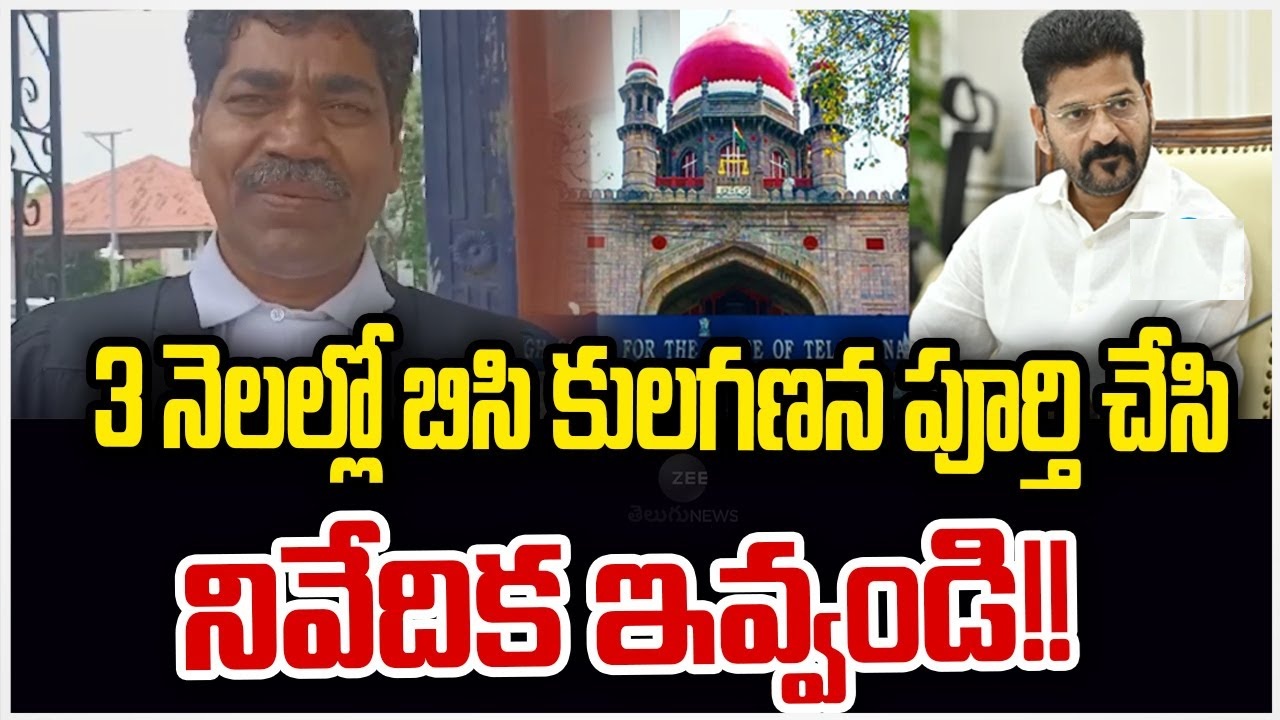
In a surprising development for the Revanth Sarkar, the Telangana government is facing a potential delay in local elections due to a High Court order. The upcoming elections, which were set to take place shortly after the Legislative Assembly and Lok Sabha elections, may be postponed by several months. This delay comes after the High Court intervened and issued an order to conduct an enumeration of Backward Classes (BCs) within the state. The government had been preparing for these elections, but this legal development has thrown a wrench in the process.
High Court Orders BC Enumeration: Impact on Local Elections
The Telangana High Court has mandated that the state government carry out an enumeration of BCs within the next three months. This is a crucial move as it directly impacts the reservation process for BCs in local government bodies. The court has further directed that once this enumeration is complete, the government must implement BC reservations in these local institutions. Consequently, this directive has pushed the timeline for the elections further back, and it’s unlikely that the local bodies’ elections will take place before the enumeration is finalized.
This petition for BC enumeration was filed by Jajula Srinivas Goud, the President of the Telangana BC Welfare Association. In his plea, Goud requested that local elections be halted until the BC census was completed, arguing that the BC community would otherwise be underrepresented in local governance. The High Court agreed with this perspective and instructed the state government to refrain from conducting elections until the enumeration is done and the reservation quotas for BCs are in place.
Legal Proceedings: Three-Month Extension Granted
The High Court bench, headed by Chief Justice Alok Aradhe and Justice J. Srinivas Rao, conducted a hearing on the matter, where the Telangana Advocate General, A. Sudarshan Reddy, presented the state’s position. He argued that the BC enumeration would take approximately two to three months to complete. The government informed the court that this census was a necessary step for ensuring fair representation of BCs in local elections, as mandated by law.
After hearing these arguments, the court granted the state a three-month window to complete the BC enumeration and postponed further hearings on the matter. As a result, the local body elections, which were expected to occur soon, will likely be delayed until this process is finished.
Potential Delays in Zilla Parishad and Mandal Parishad Elections
The court’s ruling could push back key elections in Telangana, including those for Zilla Parishads (ZP) and Mandal Parishad Territorial Constituencies (MPTC). These elections are critical for local governance and involve the election of members who represent various regions within the state. Given the court’s directive, it’s now unlikely that these elections will take place in the next few months.
Jajula Srinivas Goud, the petitioner, argued that the elections should not proceed until the BC enumeration is completed and the resulting data is used to allocate proper reservations for the community. The court accepted this argument and directed the government to act accordingly.
Revanth Sarkar’s Election Plans Disrupted
For Revanth Reddy, the leader of the Telangana Congress and head of the Revanth Sarkar, this development comes as a significant political setback. The government was gearing up for the local body elections in the wake of its performance in the Lok Sabha elections. With the preparations in full swing, the unexpected intervention from the judiciary has forced the government to reconsider its timeline.
Reddy and his administration had hoped to leverage their momentum from the national elections to secure a strong showing in the local polls. However, the delay could lead to a loss of political capital, especially since local elections are often influenced by recent political trends and the energy surrounding national-level elections. The court’s decision to postpone the elections by several months might also lead to a change in strategy for the Revanth Sarkar as it adjusts to this new timeline.
Government’s Next Steps: BC Enumeration and Legal Challenges
The Telangana government is now focused on complying with the court’s orders and completing the BC enumeration as quickly as possible. The administration has already indicated that it will take two to three months to finalize the process, after which the data will be used to establish BC reservations in local government institutions.
In the meantime, the government faces the challenge of navigating the legal implications of the High Court’s order. If the administration attempts to proceed with the elections without completing the BC enumeration, it could face additional legal hurdles and potential backlash from the BC community. This could further complicate the election process and delay it even more.
However, the Revanth Sarkar has to strike a delicate balance between complying with the court’s orders and maintaining its political momentum. Any missteps could result in both legal troubles and political ramifications, especially in a state as politically charged as Telangana.
Conclusion: Telangana’s Political Landscape in Flux
The postponement of the local body elections in Telangana represents a significant moment in the state’s political landscape. While the Revanth Sarkar had been preparing for these elections with confidence, the High Court’s order has forced a reassessment of its plans. With the BC enumeration now a priority, the elections are likely to be delayed by at least three months, if not more.
For now, Telangana’s political future remains uncertain. The outcome of the BC enumeration and its impact on local reservations will shape the course of the elections when they eventually take place. In the meantime, the Revanth Sarkar will need to recalibrate its strategy to maintain its momentum in the face of this unexpected delay.