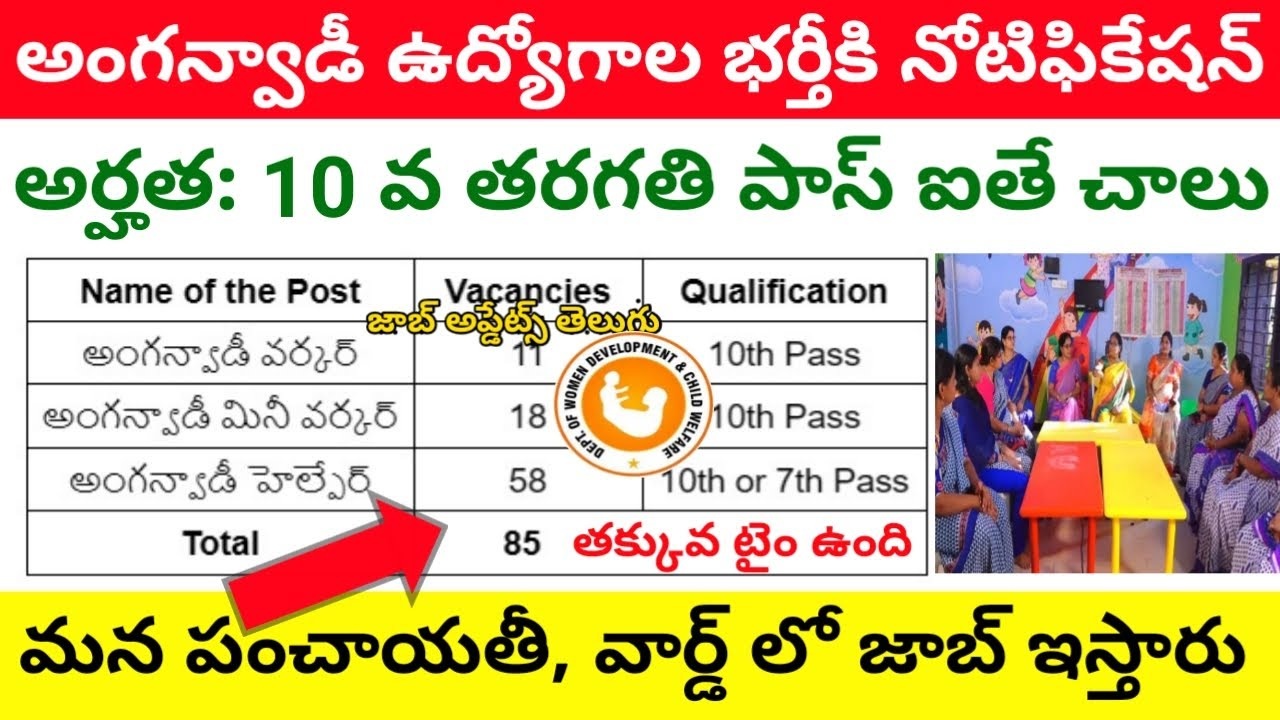
The Telangana government has recently unveiled plans to release a substantial notification for job openings, targeting women across the state. This decision aims to fill approximately 9,000 vacant positions in Anganwadi centers, including roles for teachers and assistants. This strategic move will address the current shortfall in staff and improve the services provided by these centers.
Why Anganwadi Teachers Can Now Earn 2 Lakhs
The state government is preparing a comprehensive action plan to expedite the recruitment process. Once the necessary approvals are obtained, job advertisements will be issued under the supervision of district collectors. Telangana boasts 35,700 Anganwadi centers, each requiring a teacher and an assistant. Many of these positions are vacant due to resignations or promotions to supervisory roles, prompting the need for immediate replacements.
Eligibility Criteria for Anganwadi Jobs
The new recruitment guidelines mandate that candidates for teacher and helper positions must have at least an intermediate pass. Previously, a minimum qualification of passing the 10th grade was sufficient for Anganwadi teacher roles. Additionally, applicants must be between 18 and 35 years old. Those over 65 years will not be eligible for these positions. The government plans to promote 50% of the current helpers to fill the vacancies and also apply the same promotion rate for supervisory roles, requiring a minimum of five years of service.
Addressing Educational Requirements for Current Assistants
Some current assistants lack the minimum educational qualifications. The government, through the Women and Child Welfare Department, intends to handle these cases based on the guidelines provided.
Transforming Anganwadi Centers into Educational Hubs
Chief Minister Revanth Reddy has emphasized the need for revolutionary changes in the education system. He proposes transforming Anganwadi centers to function similarly to preschools, offering education up to the third grade. Each center will have a dedicated teacher to ensure quality education. During a recent meeting with education experts and retired IAS officers, the Chief Minister discussed plans to strengthen the state’s public education system, including budget increases and the introduction of semi-residential schools for grades 4 to 12.
Comprehensive Educational Reforms
Chief Minister Revanth Reddy, along with Deputy Chief Minister Bhatti Vikramarka, both alumni of government schools, has pledged to enhance the public education budget. The government plans to establish semi-residential schools that will offer free transportation for students. These schools will operate parallel to the existing Gurukul schools. Additionally, commissions for education and agriculture will be set up to address sector-specific issues. The aim is to elevate government schools to the standards of corporate schools, ensuring quality education from primary schools to universities.
Infrastructure and Staffing Enhancements
The government has already released notifications for over 11,000 teaching positions and improved infrastructure in schools through the Amma Adarsha Patashala Committees. Input from education experts will be incorporated into future plans, and search committees are in place to expedite the appointment of vice-chancellors and other staff in universities. The Chief Minister highlighted the government’s commitment to providing quality education, skills training, and employment opportunities through improved facilities and resources in Anganwadi centers and schools.
Addressing Concerns Raised by Education Experts
During the meeting, education experts and retired officials voiced concerns about the lack of teaching skills among Anganwadi workers and the inadequate facilities in many centers. They also pointed out several issues within government schools. The Chief Minister acknowledged these concerns and assured that measures would be taken to address them. He highlighted the importance of increasing the education department’s budget, which has dropped from 11% to 6.4% since the formation of Telangana. Both the Chief Minister and Deputy Chief Minister committed to budget increases to strengthen the educational system.
Long-Term Educational Strategies
The government is exploring long-term loans from the World Bank and the Asian Development Bank to fund educational improvements at low-interest rates, a strategy already pursued by several states. This funding will support comprehensive educational reforms, ensuring sustainable development and high-quality education across the state.
The Telangana government’s ambitious plans to fill 9,000 Anganwadi positions and revamp the education system represent a significant step towards empowering women and enhancing educational outcomes for children. These initiatives will not only address immediate staffing shortages but also lay the foundation for a more robust and inclusive educational framework in the state.