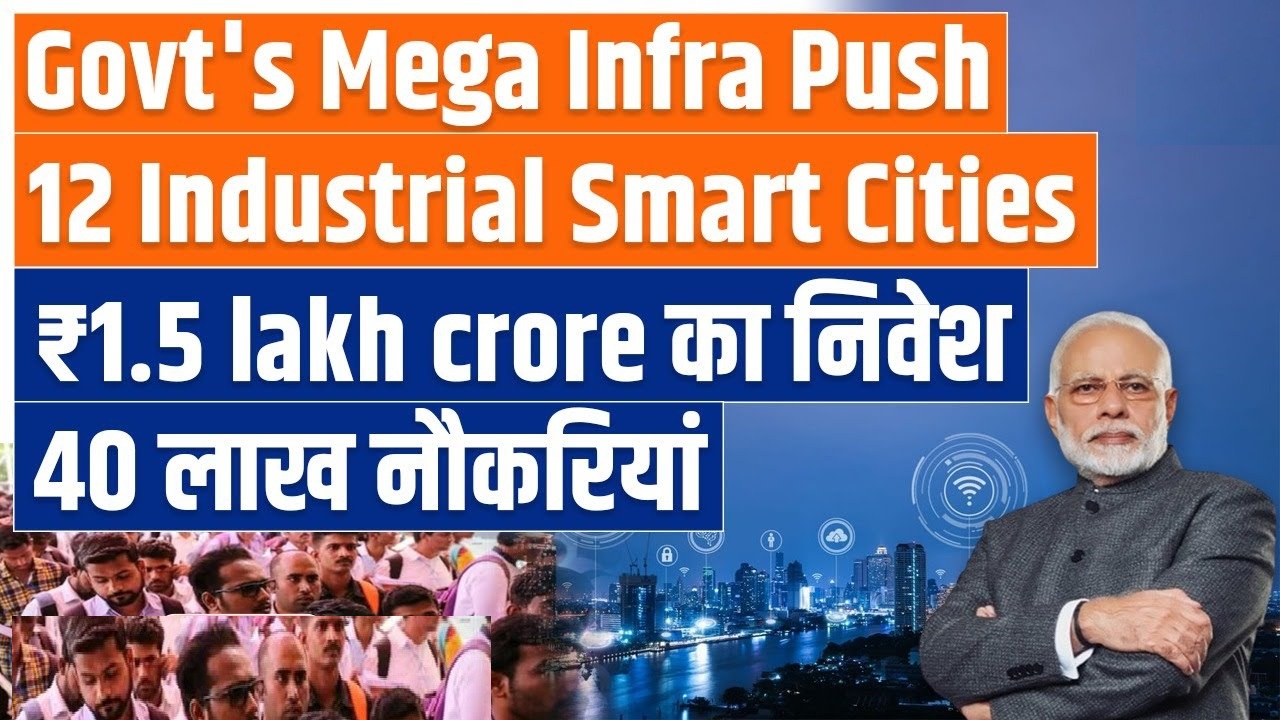
The Smart Cities Mission (SCM) is one of India’s most ambitious urban transformation initiatives, designed to enhance the quality of life in 100 selected cities through advanced infrastructure, digital connectivity, and efficient urban planning. As of 2024, significant progress has been made, but delays and challenges remain. This article outlines the key aspects of the mission, the reasons behind delays, measures taken to address them, and notable outcomes.
Status of Smart Cities Project Completion
Progress Overview
As of November 15, 2024, under the Smart Cities Mission:
- A total of 8,066 projects worth ₹1,64,669 crore have been sanctioned.
- Among these, 7,352 projects, accounting for ₹1,47,366 crore (91% of the total), have been completed.
- 13 cities have successfully completed all their planned projects, while:
- 48 cities have achieved over 90% completion.
- 23 cities have surpassed 75% completion.
- The remaining 714 projects, valued at ₹17,303 crore, are under implementation.
Reasons for Delays
The delays in completing Smart Cities projects stem from various factors:
- Legal and Land Acquisition Issues: Securing clearances and acquiring land in urban areas has been time-consuming.
- Departmental Coordination: Delays in obtaining approvals from multiple government departments have slowed progress.
- Resource Challenges: Limited availability of skilled vendors and materials in smaller cities has created bottlenecks.
- Geographical Constraints: Construction in hilly terrains and remote areas has added to the delays.
Government Measures to Address Delays
To overcome these challenges, the Ministry of Housing and Urban Affairs (MoHUA) has implemented several measures:
- Improved Administrative Oversight:
- Establishment of a multi-level review system at the state and national levels.
- Regular monitoring by High-Powered Steering Committees (HPSCs) at the state level and an Apex Committee at the national level.
- Enhanced Coordination:
- Frequent video conferences, field visits, and review meetings with stakeholders.
- Engagement with State and Union Territory governments for better implementation.
- Financial and Private Sector Support:
- Easing financial disbursement processes.
- Promoting Public-Private Partnerships (PPPs) to attract private investment and expedite projects.
- Extended Deadlines:
- Based on requests from various states, the mission timeline has been extended to March 31, 2025, allowing cities to meet revised targets.
Funds Allocation and Utilization
Under the SCM, the Central Government has allocated ₹48,000 crore for 100 cities. As of November 2024:
- ₹47,225 crore has been released to states and union territories.
- ₹44,626 crore (94% of the released funds) has been utilized effectively.
The year-wise and city-specific breakdowns of fund allocation and utilization highlight significant progress in financial planning and execution.
Achievements of the Smart Cities Mission
Despite delays, the mission has achieved remarkable milestones in transforming urban infrastructure. Key accomplishments include:
1. Public Safety and Security
- Installation of over 84,000 CCTV cameras across 100 cities, enhancing crime monitoring.
- Development of 1,884 emergency call boxes, over 3,000 public address systems, and traffic enforcement systems like automatic number plate recognition and red-light violation detection.
2. Transportation Improvements
- Construction and enhancement of 1,740 km of smart roads and 713 km of cycle tracks.
- Implementation of the Intelligent Transport Management System (ITMS) for better traffic operations and air quality monitoring.
3. Water Supply Management
- Laying of 17,026 km of water supply pipelines, monitored via the Supervisory Control and Data Acquisition (SCADA) system.
- Reduction in non-revenue water through efficient management.
4. Solid Waste Management
- Deployment of Radio Frequency Identification (RFID)-enabled vehicles for route optimization and waste collection in 66 cities.
- Introduction of Automatic Vehicle Location (AVL) technology to improve operational efficiency.
5. Education and Health
- Development of 9,433 smart classrooms across 2,398 government schools.
- Establishment of 172 e-health centers and 152 health ATMs for accessible medical services.
6. Affordable Housing and Economic Hubs
- Construction of over 49,000 dwelling units and community housing projects like night shelters and hostels.
- Development of 23 incubation centers and 55 market redevelopment projects to boost employment opportunities.
Future Outlook
With the extended timeline until March 2025, the Smart Cities Mission is poised to achieve its ambitious goals. By addressing delays, improving administrative coordination, and leveraging technology, the government aims to create urban centers that are inclusive, sustainable, and economically vibrant.
The progress of the Smart Cities Mission demonstrates India’s commitment to modernizing its urban landscape, ensuring a higher quality of life for its citizens while setting a benchmark for future urban development projects.