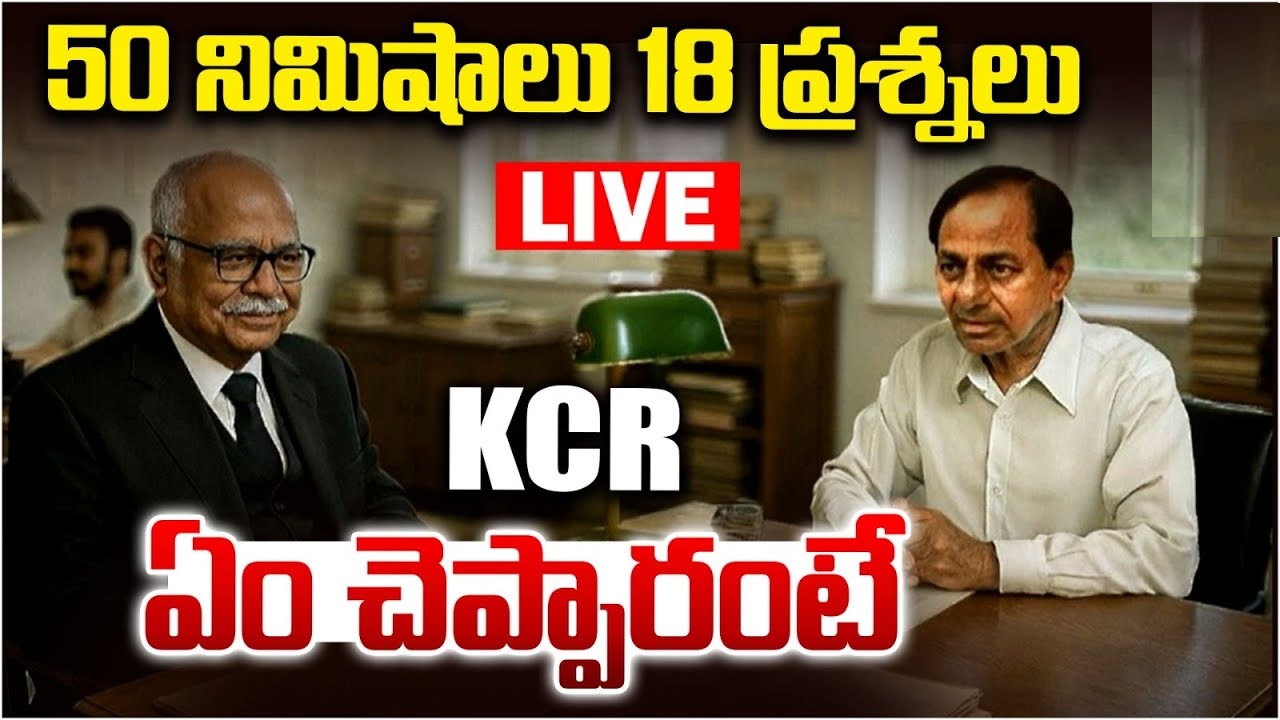
Telangana’s political landscape has been a hotbed of controversy, with allegations of unfulfilled promises, political vendettas, and high-profile investigations dominating public discourse. At the heart of this storm is the ongoing scrutiny of former Chief Minister K. Chandrashekar Rao (KCR) and the Bharat Rashtra Samithi (BRS) party, alongside accusations against the current Congress-led government under Chief Minister Revanth Reddy. This article delves into the complexities of Telangana’s political saga, exploring the investigations, unkept pledges, and the broader implications for governance and public trust. By examining the key issues, we aim to provide a comprehensive, engaging, and SEO-optimized analysis that sheds light on the state’s political dynamics.
The Political Context of Telangana’s Governance Challenges
Telangana’s political narrative has been shaped by a series of high-stakes promises, ambitious projects, and intense rivalries. The BRS, under KCR’s leadership, spearheaded the state’s formation and governed for nearly a decade, touting achievements like the Kaleshwaram Project and agricultural advancements. However, the transition to a Congress-led government has brought renewed scrutiny of BRS’s tenure, with allegations of mismanagement and corruption taking center stage. Meanwhile, the Congress faces its own challenges, accused of failing to deliver on election promises and resorting to politically motivated investigations to deflect attention.
This article explores the interplay of these dynamics, focusing on the investigations into KCR, the unfulfilled promises of the Congress government, and the broader implications for Telangana’s future. By addressing these issues with clarity and depth, we aim to provide readers with a nuanced understanding of the state’s political landscape.
The Investigations into KCR: Political Vendetta or Pursuit of Accountability?
The Kaleshwaram Project Controversy
One of the central issues dominating Telangana’s political discourse is the investigation into the Kaleshwaram Lift Irrigation Project, a flagship initiative of the BRS government. Costing an estimated ₹94,000 crore, the project was hailed as a game-changer for Telangana’s agriculture, transforming the state into a leading producer of paddy and surpassing states like Punjab and Haryana. However, recent structural issues, particularly at the Medigadda Barrage, have raised questions about the project’s integrity.
Critics, including the Congress government, allege that the project is marred by corruption, with some claiming that financial irregularities could amount to ₹1 lakh crore. The collapse of pillars at Medigadda has been cited as evidence of substandard construction, prompting the government to establish an inquiry commission. BRS leaders, including Working President K.T. Rama Rao (KTR), have dismissed these allegations as politically motivated, arguing that the project’s overall success cannot be undermined by isolated issues. They point out that only a small component of the sprawling Kaleshwaram system is under scrutiny, and the project continues to irrigate vast tracts of land, contributing to Telangana’s agricultural boom.
Are Investigations a Smokescreen for Political Rivalries?
KTR has repeatedly described the investigations into KCR and BRS as a “political witch-hunt” orchestrated by the Congress to distract from its own governance failures. He argues that the probes, including those related to power projects and financial mismanagement, are designed to tarnish KCR’s legacy as the architect of Telangana’s statehood and development. The BRS contends that the Congress is using these inquiries to shift focus from its inability to fulfill election promises, such as financial aid for women, farmers, and the unemployed.
The Congress, however, insists that the investigations are necessary to ensure accountability. They argue that structural failures in projects like Kaleshwaram and other incidents, such as the collapse of the SLBC tunnel, which resulted in eight deaths, warrant thorough scrutiny. Critics of the BRS question why the party appears defensive about inquiries if it has nothing to hide, suggesting that the resistance to probes may indicate deeper issues.
Unfulfilled Promises: The Congress Government’s Struggle to Deliver
The 420 Promises: A Litany of Broken Pledges
During the 2023 election campaign, the Congress party, led by Revanth Reddy, made ambitious promises to win over Telangana’s voters. These included ₹2,500 monthly financial assistance for women, ₹15,000 per acre for farmers under the Rythu Bandhu scheme, ₹3,000 monthly aid for the unemployed, increased pensions for the poor, and a 42% reservation for backward classes. However, nearly a year into its tenure, the Congress government has faced criticism for failing to deliver on these commitments.
KTR has been vocal in highlighting these shortcomings, questioning when the promised funds will reach the 68 lakh women, farmers, unemployed youth, and impoverished citizens eagerly awaiting relief. The BRS argues that the Congress’s inability to implement these schemes reflects a lack of administrative competence and financial planning. For instance, the government’s delay in allocating portfolios to newly appointed cabinet ministers, requiring multiple trips to Delhi for approvals, has been cited as evidence of indecision and dependence on the party’s high command.
Cabinet Expansion and Governance Woes
The Congress government’s cabinet expansion has been another point of contention. After months of delays and repeated visits to Delhi, the government finally appointed three new ministers, only to face criticism for its handling of portfolio assignments. KTR has mocked this process, likening Chief Minister Revanth Reddy to a “puppet” controlled by the Congress high command. The BRS argues that this lack of autonomy undermines Telangana’s ability to address pressing issues, from economic development to social welfare.
The Congress, in response, has accused the BRS of deflecting attention from its own failures. They point to incidents like the collapse of the Sunkishala retaining wall and the flooding of the Vattem pump house as examples of mismanagement under the BRS regime. By focusing on these issues, the Congress aims to portray itself as a government committed to correcting past wrongs and ensuring accountability.
Telangana’s Agricultural Success: KCR’s Legacy Under Scrutiny
From Drought-Prone to Agricultural Powerhouse
One of KCR’s most significant achievements is transforming Telangana from a drought-prone region into an agricultural powerhouse. Before the state’s formation in 2014, Telangana struggled with water scarcity and limited agricultural output. Under KCR’s leadership, initiatives like the Kaleshwaram Project and Mission Kakatiya revitalized irrigation systems, enabling the state to surpass Punjab and Haryana in paddy production.
The BRS takes pride in this transformation, arguing that KCR’s vision and expertise in irrigation were instrumental in achieving these results. KTR has emphasized that the Kaleshwaram Project, despite its controversies, irrigates millions of acres and has made Telangana a leader in agricultural productivity. He challenges critics to deny these accomplishments, asserting that KCR’s legacy is etched in the state’s history as the leader who delivered Telangana and made it prosperous.
Countering Allegations of Corruption
The Congress’s allegations of corruption in the Kaleshwaram Project have been met with fierce rebuttals from the BRS. KTR argues that the claim of ₹1 lakh crore in financial irregularities is absurd, given that the project’s total cost is ₹94,000 crore. He accuses the Congress of spreading misinformation to discredit KCR’s achievements. The BRS also points out that similar infrastructure failures, such as the Morbi bridge collapse in Gujarat, have not faced the same level of scrutiny, suggesting a selective targeting of Telangana’s projects.
To counter these allegations, BRS leaders like Harish Rao have presented detailed power-point presentations to highlight the project’s successes and address concerns about structural issues. They argue that isolated incidents, such as cracks in two pillars at Medigadda, do not negate the project’s overall impact. The BRS remains confident that public perception will eventually align with the truth, as the benefits of Kaleshwaram become increasingly evident.
The Broader Implications: Governance, Trust, and Political Accountability
The Role of Political Narratives in Shaping Public Perception
The ongoing investigations and political sparring in Telangana highlight a broader challenge: the role of narratives in shaping public perception. The Congress’s focus on probes into KCR’s tenure risks being seen as a distraction from its own governance challenges. Conversely, the BRS’s defense of its legacy may come across as dismissive of legitimate concerns about transparency and accountability.
Both parties are engaged in a battle to control the narrative, with the Congress portraying itself as a reformist government and the BRS positioning itself as the victim of political vendettas. The public, however, is left grappling with unanswered questions about unfulfilled promises, infrastructure failures, and the true cost of political rivalries.
Restoring Public Trust Through Action
For the Congress government, restoring public trust will require tangible progress on its election promises. Delivering on schemes like financial aid for women and farmers, increasing pensions, and implementing reservations will be critical to maintaining credibility. Similarly, addressing infrastructure failures transparently and ensuring that investigations are conducted impartially will be essential to counter accusations of political bias.
For the BRS, the challenge lies in defending its legacy while acknowledging areas for improvement. By engaging constructively with inquiries and providing clear evidence of its achievements, the party can strengthen its position as a credible opposition. Ultimately, both parties must prioritize the interests of Telangana’s citizens over political point-scoring.
The Path Forward: Balancing Development and Accountability
Telangana stands at a crossroads, with its political leaders facing the dual challenge of driving development and ensuring accountability. The investigations into KCR and the BRS highlight the need for transparency in governance, particularly in high-cost projects like Kaleshwaram. At the same time, the Congress government must demonstrate its ability to deliver on promises and govern effectively to maintain public support.
Key Steps for Progress
- Transparent Investigations: The government must ensure that inquiries into past projects are conducted fairly and transparently, with findings made public to build trust.
- Delivering on Promises: The Congress must prioritize implementing its election pledges, providing clear timelines and progress updates to citizens.
- Infrastructure Reforms: Both parties should collaborate to address infrastructure challenges, ensuring that projects like Kaleshwaram are maintained and improved to maximize their benefits.
- Public Engagement: Engaging citizens through regular communication and feedback mechanisms can help bridge the gap between political rhetoric and public expectations.
Conclusion: A Call for Responsible Governance
Telangana’s political landscape is a complex tapestry of ambition, achievement, and accountability. The investigations into KCR and the BRS, coupled with the Congress government’s struggle to deliver on promises, underscore the challenges of governing a dynamic state. While KCR’s legacy as the architect of Telangana’s statehood and agricultural transformation remains significant, the Congress must rise to the occasion by addressing governance gaps and fulfilling its commitments.
As Telangana moves forward, the focus must shift from political vendettas to collaborative efforts that prioritize the state’s development. By fostering transparency, delivering on promises, and engaging with citizens, both the Congress and BRS can contribute to a brighter future for Telangana. This article serves as a call to action for leaders and citizens alike to demand accountable, effective, and inclusive governance that truly serves the people of Telangana.