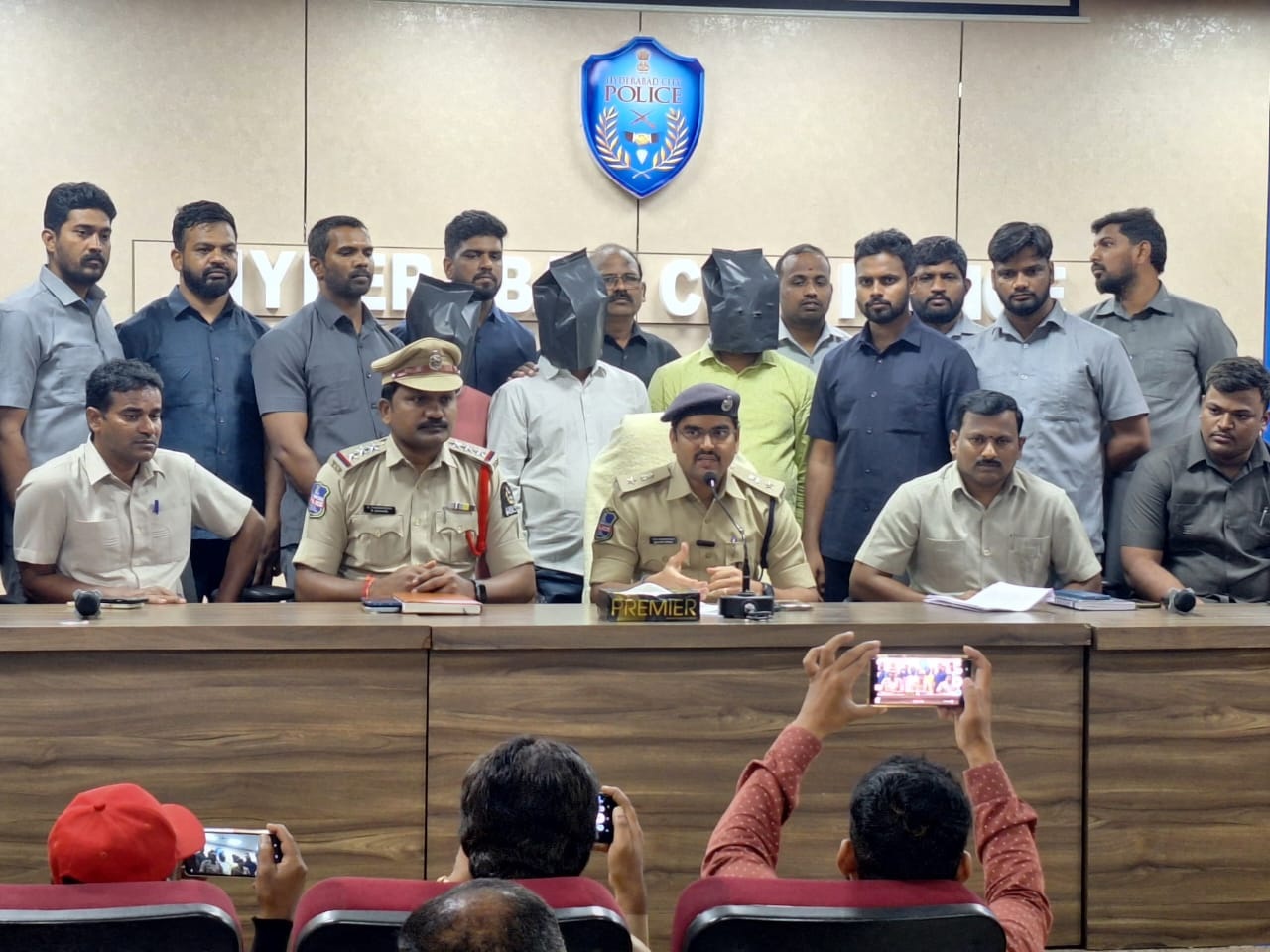
In a major crackdown, the Hyderabad Police’s North Zone Task Force, along with Mahankali police, dismantled a gang involved in the large-scale production of counterfeit identification documents. Since 2015, the group has forged and sold over 50,000 fake voter IDs, 30,000 Aadhaar cards, 1,250 passports, 2,000 birth certificates, and various other fraudulent documents.
The police operation, executed on Thursday, led to the seizure of a range of counterfeit materials, including 557 fake voter ID cards, 40 fake Aadhaar cards, 50 fake birth certificates, and biometric equipment intended for Aadhaar corrections. Authorities also confiscated Rs. 1.5 lakh in cash and numerous forged documents required for passport applications.
The Ringleaders and Their Operation
The core of the racket involved six individuals, with Yelgam Raj Kumar identified as the mastermind. Raj Kumar, the managing director of RS Online Service Centre, led the operation, assisted by his accomplices in manufacturing and distributing fake documents. These documents included voter IDs, Aadhaar cards, PAN cards, and birth certificates, which were sold to individuals across Hyderabad and beyond.
According to the police, the gang used their extensive knowledge of document procedures to create near-perfect forgeries. The documents appeared genuine, and they could even facilitate address changes and other modifications on official records without arousing suspicion. Fake Aadhaar cards were frequently altered with address details using forged signatures and stamps, all while ensuring that the documents could pass government scrutiny.
The Complex Web of Forgery: From Fake Aadhaar Cards to Passports
The fraudulent operation expanded beyond Aadhaar cards and voter IDs, including a significant focus on counterfeit passports. Passport agent Bandi Shankar, one of the gang members, played a key role in helping individuals obtain fake passports. This was achieved by providing them with forged documents such as voter IDs and birth certificates, making it possible for people to apply for passports without meeting the official requirements.
Another accomplice, Giriraj Anil Kumar, a computer operator at the Greater Hyderabad Municipal Corporation (GHMC), was responsible for producing fake voter ID cards that were critical for altering address details on official documents like Aadhaar cards. By using these altered records, the group successfully generated a network of false identities and documents for various clients, including some from outside India.
Authorities Disrupt the Operation
The operation came to a halt when the police, equipped with precise intelligence, launched a joint operation with Mahankali police. They raided the online center in Secunderabad, where the forged documents were being produced. This strategic operation led to the arrest of the six key suspects, who were charged with manufacturing and distributing false identification records.
Following their arrests, the police discovered an extensive stash of fake documents and associated equipment, including computers, printers, and photocopying machines. In total, investigators found evidence that the gang had created at least 15,000 fake voter ID cards, 10,000 fake Aadhaar cards, 50 passports, and 2,000 birth certificates. These fraudulent documents were sold to individuals who sought to bypass official procedures or manipulate their identities for personal gain.
Uncovering the Scale of the Racket
The gang’s operations spanned across a wide variety of documents, catering to different needs. They forged everything from basic identity proofs like Aadhaar and PAN cards to more complex documents, including birth certificates and passports. The criminals worked with a network of agents who helped to distribute these fake records, making it easier for people to acquire them without suspicion.
Police reports revealed that the gang had been active for years, operating with a high degree of sophistication and secrecy. The documents were sold to individuals across India, and some were even used to create fake identities for people from foreign countries, including Nepal.
One of the most concerning aspects of the operation was the ease with which the gang facilitated fraudulent applications for passports. By supplying clients with fake Aadhaar cards and supporting documents, the group helped them bypass the strict verification procedures required for passport applications. As a result, the gang successfully issued fake passports to individuals who would otherwise not have been able to obtain them through legal channels.
The Consequences and Ongoing Investigation
Following the arrests, the police continue to investigate the full extent of the gang’s activities, including the identities of those who purchased the fake documents. Authorities have also intensified efforts to track down additional members of the network and any other individuals involved in distributing or using these counterfeit IDs.
The case highlights the dangers posed by the increasing prevalence of document forgery in India. Counterfeit IDs and passports can be used for a wide range of illegal activities, including identity theft, financial fraud, and even terrorism. The Hyderabad Police’s successful operation has shed light on the complex networks that operate in the shadow of India’s digital and bureaucratic systems.
How Fraudulent Document Rings Impact Society
The consequences of fake documents extend beyond the immediate legal repercussions for those involved. The use of forged IDs undermines the integrity of official processes, creates security vulnerabilities, and facilitates the commission of various crimes. For instance, fake Aadhaar cards and voter IDs can be used to gain access to government benefits, bypass legal checks, and manipulate electoral outcomes.
For the victims who unknowingly buy such documents, the consequences can be severe. They may face legal action, struggle to prove their identity in official matters, or even become targets of other forms of fraud. Additionally, the proliferation of counterfeit documents makes it more difficult for authorities to distinguish between genuine and fake identities, thus complicating efforts to maintain security and accountability.
Conclusion: A Wake-Up Call for Vigilance
The Hyderabad Police’s crackdown on this large-scale forgery operation serves as a stark reminder of the ongoing risks posed by counterfeit documents in India. As more people seek to exploit loopholes in the system, authorities must remain vigilant in their efforts to detect and dismantle such criminal networks. The success of the operation highlights the importance of continued collaboration between law enforcement agencies, as well as the need for stricter controls and verification processes in the issuance of critical documents like Aadhaar cards, voter IDs, and passports.
The case also underscores the need for public awareness about the dangers of using fake documents. While they may seem like a quick fix to certain problems, the long-term consequences of getting involved in such illegal activities can be devastating. As this investigation continues, it is clear that more needs to be done to safeguard the integrity of India’s identity systems and prevent the proliferation of fake documents.