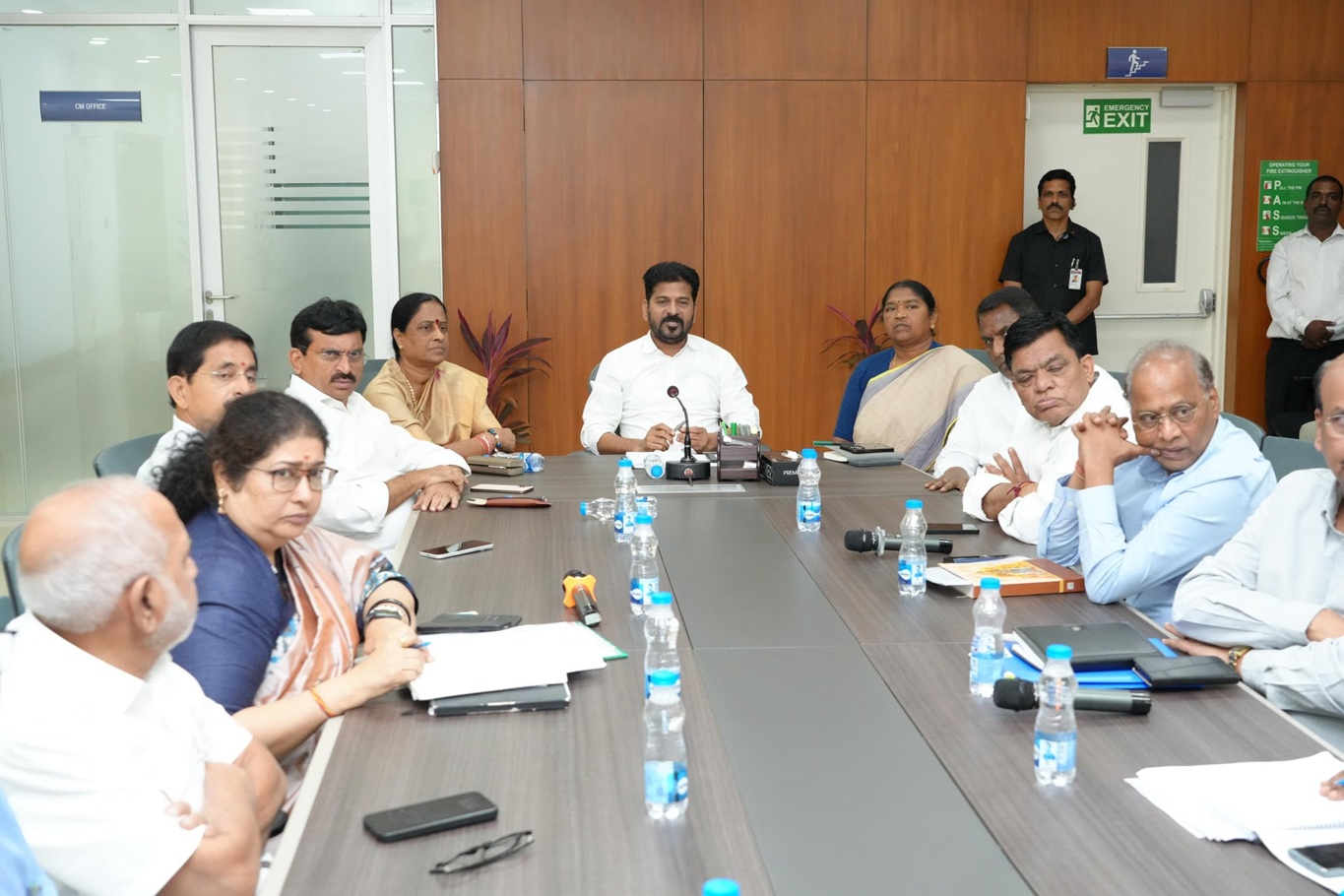
Telangana Chief Minister A. Revanth Reddy’s upcoming visit to the sacred tribal town of Medaram on September 23, 2025, represents a pivotal moment in the state’s commitment to preserving its rich cultural heritage while embracing modern development. This groundbreaking visit, focused on reviewing comprehensive development works for the renowned Sammakka-Saralamma temple, demonstrates the government’s dedication to balancing tradition with progress as preparations intensify for the 2026 Jatara—Asia’s largest tribal festival.
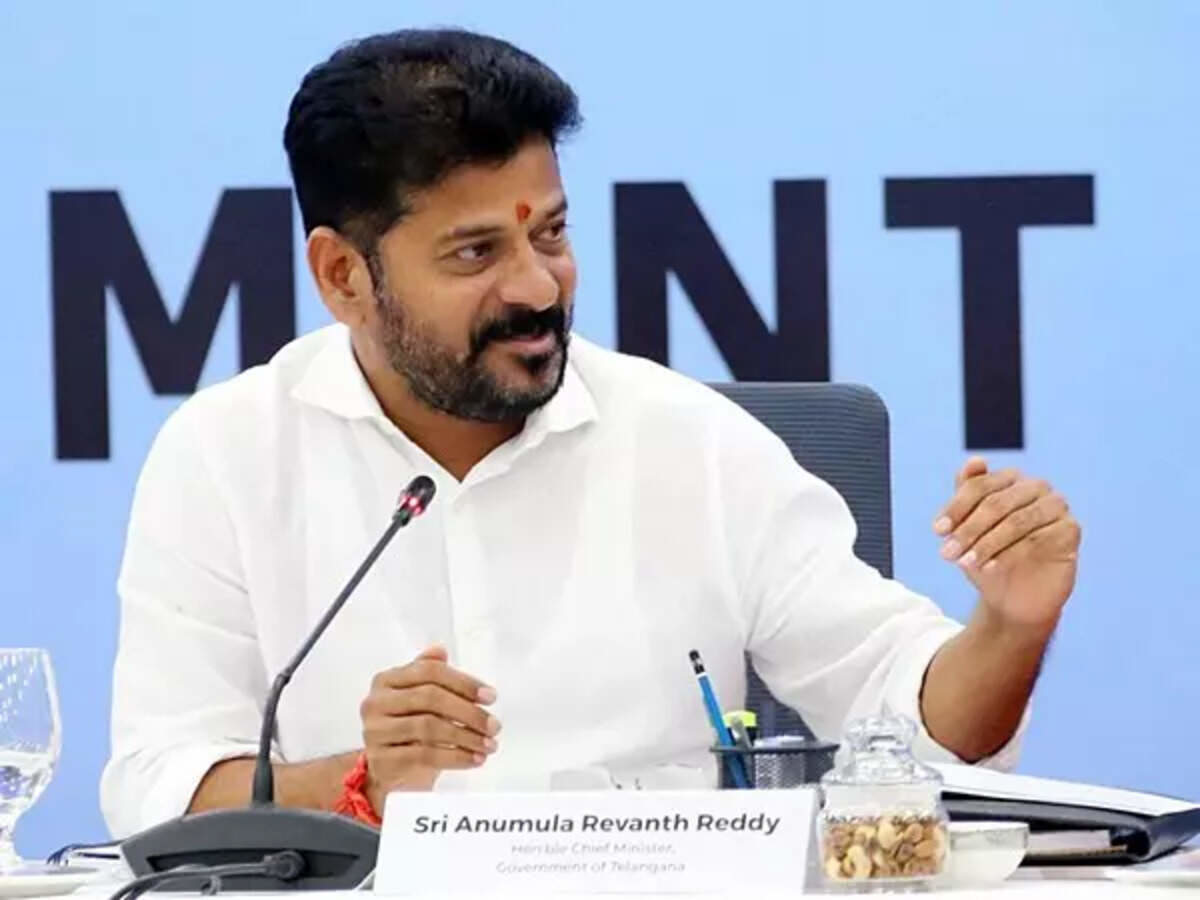
Chief Minister Sri Anumula Revanth Reddy at an official meeting reviewing development plans for Medaram Jatara in Telangana economictimes
The Strategic Significance of CM Revanth Reddy’s Medaram Visit
Ground-Level Assessment and Stakeholder Consultation
CM Revanth Reddy to visit Medaram on Sept 23 marks a crucial step in ensuring that the massive Rs 236 crore development project aligns perfectly with tribal traditions and community needs. The Chief Minister’s decision to personally conduct ground-level reviews demonstrates his hands-on approach to governance, particularly when dealing with sensitive cultural and religious matters that affect Telangana’s tribal communities.
During his visit, the Chief Minister will engage in extensive consultations with the Sammakka-Saralamma temple priests, whose approval is mandatory before finalizing any development designs. This collaborative approach ensures that the sacred Gaddelu (platforms) remain untouched while modern amenities enhance the pilgrimage experience for millions of devotees.
The visit will also include comprehensive discussions with tribal representatives, MPs, MLCs, MLAs, and concerned officials, creating a holistic platform for decision-making that respects both traditional wisdom and contemporary developmental needs. This inclusive methodology reflects the government’s commitment to participatory governance, especially in matters concerning tribal heritage and religious practices.
Technical Committee Formation and Project Oversight
A significant outcome of this visit will be the formation of a Technical Committee specifically tasked with overseeing all Medaram Jatara works. This committee will serve as the cornerstone of project management, ensuring that every aspect of development meets both quality standards and cultural requirements. The establishment of this specialized body underscores the government’s recognition of the Jatara’s complexity and the need for expert oversight throughout the development process.
The Technical Committee will coordinate between various government departments, including Endowments, Tribal Welfare, Public Works, and Tourism, creating a unified approach to the massive undertaking. This inter-departmental collaboration is essential for the seamless execution of the comprehensive master plan that encompasses infrastructure development, cultural preservation, and crowd management strategies.
Comprehensive Development Master Plan: A Rs 236 Crore Investment
Infrastructure Enhancement and Modernization
The master plan for Medaram represents one of the most ambitious tribal heritage preservation projects in India, with a total allocation of Rs 236.2 crore dedicated to transforming the sacred site while maintaining its spiritual essence. The comprehensive development strategy includes Rs 58.2 crore specifically earmarked for enhancing the surroundings near the temple platforms, ensuring that devotees experience improved comfort without compromising the site’s sanctity.
The infrastructure development encompasses multiple critical areas, including the expansion of existing temple premises as requested by the priests, construction of new guest houses with a budget of Rs 50 crore, and significant improvements to the Jampanna Vagu with Rs 39 crore allocated for sanitation, beautification, and visitor safety measures. These enhancements directly address the challenges faced during previous Jataras, where overcrowding and inadequate facilities impacted the devotional experience.
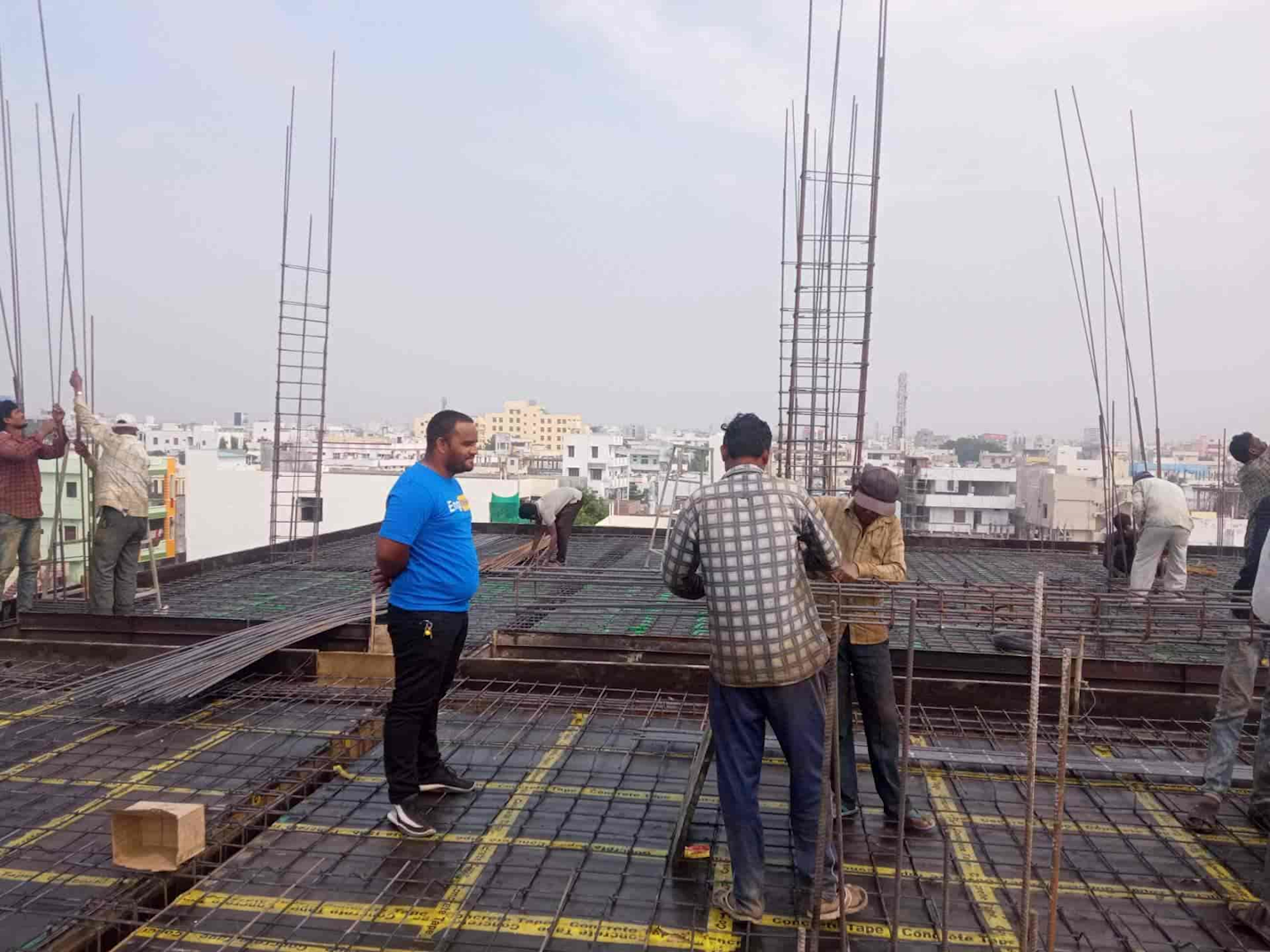
Workers reinforcing steel bars at a construction site representing infrastructure development relevant to Medaram works justdial
Transportation infrastructure receives special attention with comprehensive road improvements, new bus stands, and enhanced connectivity to accommodate the millions of pilgrims expected during the 2026 Jatara. The government’s commitment extends to implementing solar energy projects in neighboring tribal villages, making the entire pilgrimage more efficient and environmentally sustainable while supporting local communities.
Cultural Preservation and Artistic Enhancement
A dedicated budget of Rs 6.8 crore has been allocated for distinctive artwork, with local artisans commissioned to create installations that celebrate tribal legends and cultural motifs. This investment in artistic elements ensures that the development project serves as a platform for preserving and showcasing the rich cultural heritage of the Koya tribe and other tribal communities associated with the Jatara.
The artistic enhancement program will feature welcome arches designed to reflect authentic tribal traditions, incorporating traditional trees and native vegetation throughout the temple premises. This botanical integration not only preserves the regional identity but also maintains the ecological balance that has been integral to the sacred site for centuries.
The master plan specifically mandates that all cultural elements must receive approval from tribal priests and community leaders, ensuring that modernization efforts enhance rather than dilute the authentic tribal character of Medaram. This requirement demonstrates the government’s respect for indigenous knowledge systems and traditional practices that have sustained the Jatara for over a millennium.
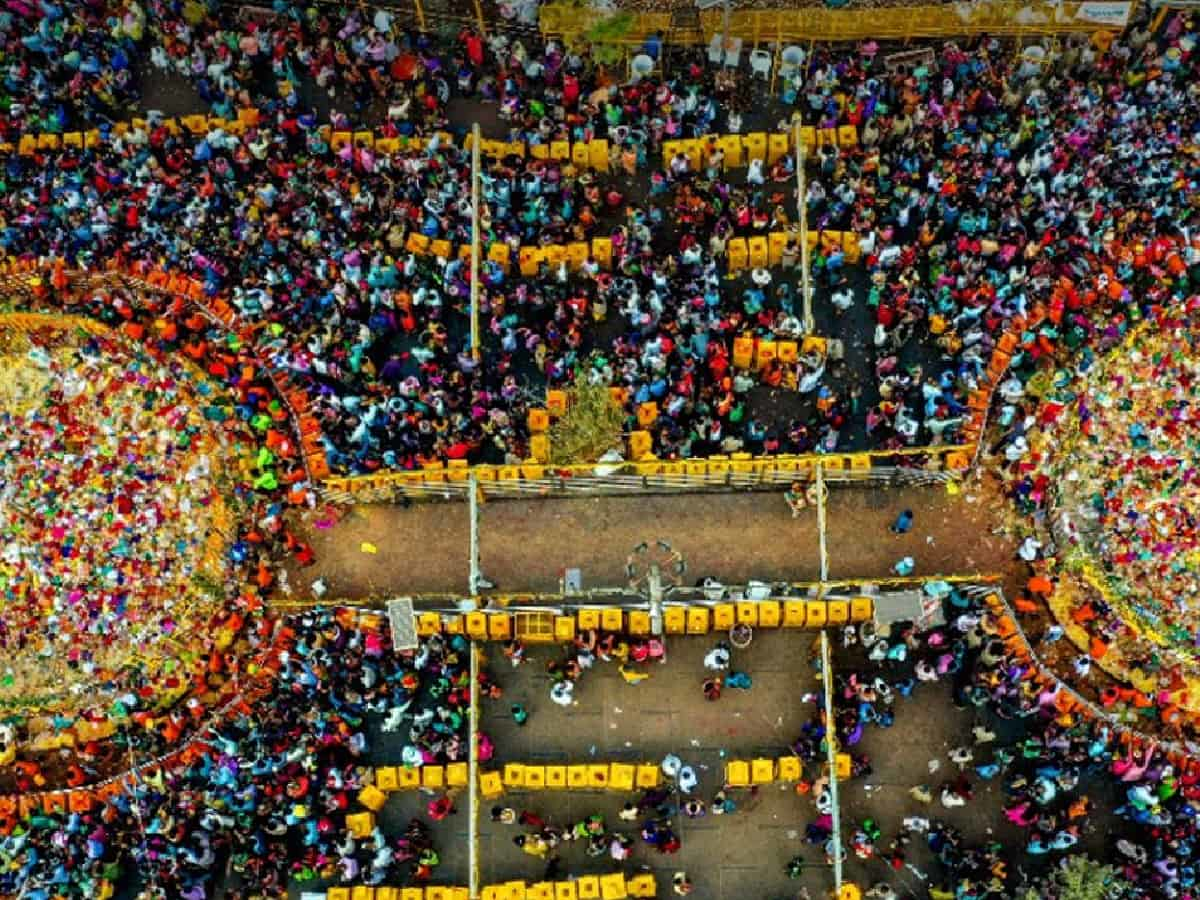
Aerial view of the bustling Sammakka Saralamma Jatara festival showcasing the dense crowd and traditional decorations at Medaram temple siasat
The Sammakka-Saralamma Jatara: Asia’s Largest Tribal Festival
Historical Significance and Cultural Impact
The Sammakka-Saralamma Jatara stands as a testament to the courage and sacrifice of tribal leaders who fought against injustice in the 13th century. The festival commemorates the valiant struggle of Sammakka, a tribal queen, and her daughter Saralamma, who led their people in rebellion against the Kakatiya dynasty’s oppressive taxation policies. Their ultimate sacrifice in protecting tribal lands and rights has elevated them to goddess status, making them eternal symbols of resistance and righteousness.
This biennial festival attracts approximately 10 million devotees from across India, making it the second-largest religious gathering after the Kumbh Mela. The festival’s massive scale reflects its deep cultural significance, drawing participants not only from Telangana but also from Madhya Pradesh, Chhattisgarh, Odisha, Maharashtra, Karnataka, and Jharkhand. The diverse participation highlights the Jatara’s role as a unifying force that transcends regional boundaries while celebrating tribal identity and values.
The rituals performed during the Jatara are entirely conducted by Koya tribe priests according to traditional customs, maintaining the authentic tribal character that has been preserved for centuries. Devotees offer jaggery (locally called Bangaram) equivalent to their weight to the goddesses and take holy baths in Jampanna Vagu, practices that connect them spiritually with the legendary sacrifice of Sammakka and Saralamma.
Economic and Tourism Impact
The Jatara’s economic significance extends far beyond its religious importance, generating substantial revenue for local communities and the state economy. The influx of millions of pilgrims creates opportunities for local businesses, artisans, and service providers, contributing to the economic empowerment of tribal communities in the region. Hotel bookings, transportation services, food vendors, and local craftspeople all benefit significantly from the biennial event, making it a crucial economic driver for the area.
Tourism infrastructure development associated with the Jatara has transformed Medaram from a remote village into an accessible pilgrimage destination. The construction of motorable roads in 1998, when the state government officially recognized the festival, marked the beginning of systematic infrastructure development that continues with the current master plan. Modern amenities including improved sanitation, drinking water facilities, medical camps, and crowd management systems have enhanced the pilgrimage experience while preserving the festival’s traditional essence.
Government’s Commitment to Tribal Welfare
Comprehensive Tribal Development Initiatives
CM Revanth Reddy’s administration has demonstrated unprecedented commitment to tribal welfare through multiple comprehensive schemes totaling Rs 12,600 crore over five years. The landmark “Nallamala Declaration” introduced the Indira Soura Giri Jala Vikasam scheme, covering 44.5 lakh acres of Recognition of Forest Rights (RoFR) lands belonging to 2.10 lakh farmers from Scheduled Tribe communities. This initiative includes land development for agriculture, installation of off-grid solar pump irrigation systems, and horticulture plantation with drip irrigation facilities.
The government’s tribal welfare approach encompasses education, employment, housing, and cultural preservation initiatives that directly impact the lives of Telangana’s 32 lakh tribal population. Special provisions include the establishment of Study Circles for tribal students, teaching primary education in the Gondi language, financial assistance of Rs 1 lakh to ST unemployed youth under the Rajiv Yuva Vikasam scheme, and houses for all Particularly Vulnerable Tribal Group (PVTG) families under the Indiramma Housing Scheme.
Cultural Recognition and Legal Protections
The decision to officially observe the birth and death anniversaries of tribal warrior Komuram Bheem as state functions represents a significant step in acknowledging tribal contributions to Telangana’s history. This recognition, coupled with the commitment to withdraw cases filed against tribal youth during protests, demonstrates the government’s understanding of tribal communities’ unique challenges and their right to peaceful expression.
Regular quarterly meetings between the Chief Minister and tribal organizations ensure continuous dialogue and prompt resolution of community issues. This institutional mechanism for engagement reflects the government’s commitment to inclusive governance and responsive administration that prioritizes tribal welfare and development needs.
Challenges and Future Prospects
Balancing Development with Preservation
The primary challenge facing the Medaram development project lies in successfully balancing modernization with cultural preservation. The government’s approach of seeking priest approval for all designs and maintaining the integrity of sacred Gaddelu demonstrates awareness of this delicate balance. The success of this model could serve as a template for similar heritage preservation projects across India, particularly in tribal regions where cultural sensitivity is paramount.
Crowd management remains a critical challenge, with previous Jataras experiencing traffic congestion extending up to 60 kilometers on the Warangal highway. The current master plan addresses this through improved transportation infrastructure, better parking facilities, and streamlined entry-exit systems that should significantly enhance the pilgrimage experience for millions of devotees.
Long-term Vision and Sustainability
The government’s vision extends beyond immediate infrastructure improvements to establish Medaram as a world-class spiritual and cultural destination. Plans to integrate eco-tourism concepts and tribal welfare programs will create sustainable economic opportunities for local communities while preserving the site’s cultural authenticity. The emphasis on solar energy projects and environmental sustainability ensures that development efforts contribute to long-term ecological balance.deccanchronicle
The potential for UNESCO recognition as an ‘intangible cultural heritage of humanity’ adds international significance to preservation efforts. Achieving this status would not only honor the cultural importance of the Jatara but also attract global attention to Telangana’s tribal heritage, potentially increasing tourism revenue and cultural exchange opportunities.wikipedia
Conclusion
CM Revanth Reddy to visit Medaram on Sept 23 represents more than just a routine administrative review—it symbolizes a government’s commitment to honoring its tribal heritage while embracing progressive development. The comprehensive Rs 236 crore master plan, combined with the Rs 150 crore immediate allocation, demonstrates unprecedented investment in tribal cultural preservation and infrastructure development.
This historic visit will set the foundation for the 2026 Sammakka-Saralamma Jatara to become a truly global celebration of tribal culture and spirituality. The government’s inclusive approach, seeking approval from priests and tribal representatives, ensures that development efforts enhance rather than compromise the festival’s authentic character. Through careful planning, community consultation, and substantial financial investment, Telangana is positioning itself as a leader in culturally sensitive development that respects indigenous traditions while meeting contemporary needs.
The success of this initiative will not only benefit the millions of devotees who participate in the Jatara but also serve as a model for heritage preservation projects worldwide. As preparations intensify for the 2026 festival, the collaborative efforts between government officials, tribal leaders, and local communities promise to create an unprecedented celebration that honors the past while embracing the future.
Call to Action: Stay updated on the Medaram development progress and plan your visit to experience Asia’s largest tribal festival in January 2026. Support local tribal communities by purchasing authentic handicrafts and participating in cultural exchange programs that celebrate Telangana’s rich tribal heritage.
Frequently Asked Questions
Q1: What is the significance of CM Revanth Reddy’s visit to Medaram on September 23?
The visit represents a crucial milestone in the Rs 236 crore Medaram development project, where the Chief Minister will conduct ground-level reviews and consult with tribal priests to ensure that all development work respects traditional practices while providing modern amenities for pilgrims. This hands-on approach demonstrates the government’s commitment to culturally sensitive development.
Q2: How much budget has been allocated for Medaram Jatara preparations?
The government has allocated Rs 236.2 crore as part of the comprehensive master plan, with an immediate sanction of Rs 150 crore for the upcoming 2026 Jatara preparations. The budget covers infrastructure development, cultural preservation, guest houses, road improvements, and artistic enhancements while maintaining the site’s spiritual sanctity.
Q3: What makes the Sammakka-Saralamma Jatara unique among Indian festivals?
The Jatara is Asia’s largest tribal festival and India’s second-largest religious gathering after Kumbh Mela, attracting approximately 10 million devotees biennially. It is unique because it commemorates the 13th-century sacrifice of tribal leaders Sammakka and Saralamma, involves entirely tribal-conducted rituals, and requires no Vedic or Brahmanic influence, making it an authentic celebration of indigenous culture and spirituality.