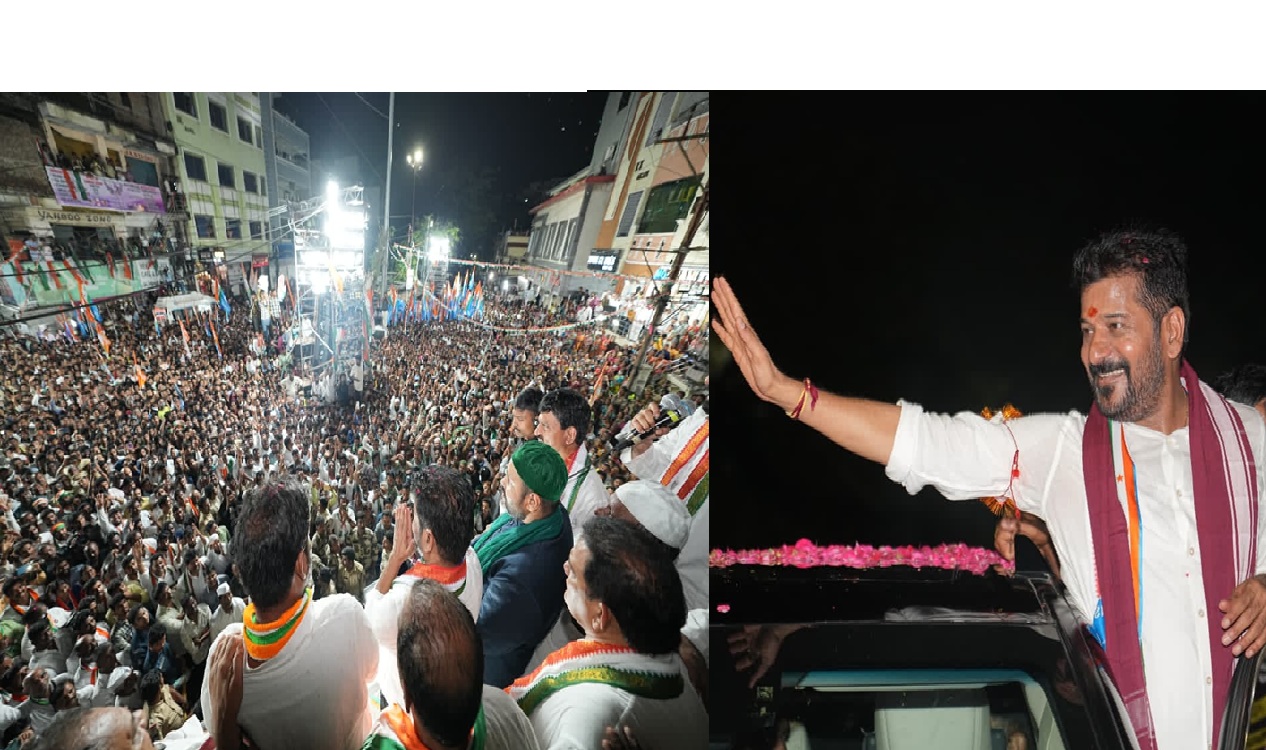
In the electrifying heat of Telangana’s political arena, Chief Minister A. Revanth Reddy unleashed a barrage of sharp criticisms against former Chief Minister K. Chandrashekar Rao (KCR) and his son K.T. Rama Rao (KTR) during a high-stakes roadshow and public rally in Jubilee Hills. As the by-election fervor grips Hyderabad’s upscale constituency, Revanth Reddy didn’t hold back. He demanded swift action from the Central Bureau of Investigation (CBI) on the infamous Kaleshwaram irrigation project scam, questioning why arrests haven’t materialized despite promises from Union Minister G. Kishan Reddy. Accusing a shadowy pact between the Bharatiya Janata Party (BJP) and the Bharat Rashtra Samithi (BRS), Revanth painted a picture of political hypocrisy where daytime barbs turn into nighttime handshakes. This isn’t just rhetoric it’s a calculated strike aimed at exposing alleged corruption, lavish lifestyles, and electoral manipulations that have long plagued Telangana’s governance.
The Jubilee Hills by-election, triggered by the tragic death of sitting MLA Maganti Gopinath, has become a battleground for larger narratives. Revanth Reddy, leading the Congress charge with candidate Naveen Kumar, rallied supporters in Rahmatnagar and at the PJR junction in Shriram Nagar. Flanked by ministers like Komatireddy Venkata Reddy, Ponguleti Srinivasa Reddy, and Mohammed Azharuddin, along with PCC chief Mahesh Kumar Goud and MLCs Mirza Rahmat Baig and Riaz ul Hasan Efendi, he vowed a resounding victory by over 30,000 votes. But beyond the cheers, his speech dissected the rot in BRS’s legacy: from siphoned public funds to opulent farmhouses and unfulfilled promises. As Telangana voters weigh development against dynasty, Revanth’s words echo a call for accountability in a state where irrigation dreams drowned in corruption allegations.
This article delves deep into Revanth Reddy’s fiery address, unpacking the Kaleshwaram controversy, the alleged BJP-BRS nexus, the opulence of BRS leaders, and the sentimental ploys in the by-election. We explore how these revelations could reshape Telangana’s political landscape, drawing on the broader context of irrigation woes, electoral strategies, and the fight against cronyism in Indian politics.
Unraveling the Kaleshwaram Irrigation Project: A Monument of Alleged Corruption
Telangana’s lifeline, the Godavari River, promised bountiful harvests through the ambitious Kaleshwaram Lift Irrigation Project (KLIP). Launched with fanfare under KCR’s regime in 2016, this mega-scheme aimed to harness 2,000 tmcft of water annually, irrigating over 45 lakh acres and generating hydropower. Engineers hailed it as an engineering marvel, with its massive pumps lifting water 500 meters skyward. Yet, what began as a vision for agricultural revival has morphed into a symbol of fiscal recklessness and graft.
Revanth Reddy didn’t mince words: “KCR turned Kaleshwaram into his personal ATM.” He recalled how Prime Minister Narendra Modi and Home Minister Amit Shah had publicly lambasted the project as a cash cow for the BRS supremo. Fast-forward to September 1, 2024, when the Telangana Assembly passed a resolution transferring the probe to the CBI at the behest of Kishan Reddy himself. The Union Minister boasted that arrests would follow within 24 hours. Months later? Crickets. No First Information Report (FIR), no cuffs on KCR or KTR.
“Why the delay, Kishan Reddy?” Revanth thundered. “If you don’t bow to BRS whims, register the FIR by the 11th of this month. Hand it over? Done. Action? Zilch.” He spotlighted the project’s ballooning costs—from ₹38,000 crore to over ₹1 lakh crore—fueled by inflated contracts to BRS cronies. Investigations by the state’s vigilance wing uncovered design flaws, substandard materials, and kickbacks that siphoned billions. The Medigadda barrage, a key component, sank under its own weight in 2023, exposing shoddy construction and raising questions about geological surveys manipulated for profit.
Experts echo Revanth’s outrage. Irrigation analysts point to how KLIP’s pricier lift design over the cheaper Pranahita-Chevella tunnel option funneled funds to select contractors. Farmers in erstwhile districts like Adilabad and Khammam, who anticipated double-cropped fields, now grapple with erratic water supply and mounting debts. Revanth’s government, since assuming power in December 2023, has prioritized audits and repairs, allocating ₹5,000 crore for stabilization. Yet, the CBI handover underscores a federal tug-of-war: Does Delhi shield its Telangana allies, or is it bureaucratic inertia?
In this by-election context, Revanth ties KLIP’s failures to Jubilee Hills’ aspirations. “A vote for Congress means justice for every rupee looted,” he declared, promising enhanced urban irrigation and green cover. As Hyderabad’s tech-savvy voters—home to IT giants and affluent residents—ponder their choice, Kaleshwaram’s ghost looms large, a reminder that unchecked ambition can flood the state with scandals rather than sustenance.
BJP-BRS Secret Pact: Daytime Rivalries, Nighttime Alliances Exposed
Political theater in Telangana thrives on alliances as fluid as the Musi River. Revanth Reddy pulled no punches, branding the BJP and BRS as “frenemies in the dark.” “They hurl insults by day and huddle by night,” he quipped, evoking images of clandestine deals that undermine democratic accountability. This allegation isn’t new—whispers of a tacit understanding have swirled since the 2023 Assembly polls, where BJP’s aggressive anti-BRS campaign mysteriously softened post-elections.
Revanth’s lens focuses on the Formula-E racing scam, another BRS blot. KTR, as Municipal Administration Minister, spearheaded Hyderabad’s 2023 Formula-E bid, a glitzy event that promised global spotlight but allegedly cost ₹50 crore in public money for a no-show. The government sought Governor Jishnu Dev Varma’s sanction for KTR’s arrest two months ago—still pending. “The steering wheel’s in Modi’s hands,” Revanth jabbed, implying central interference. Why the foot-dragging? He hinted at BRS’s historical support for BJP’s contentious moves: backing the Triple Talaq ban, cheering Article 370’s abrogation, and shielding KCR during Lok Sabha grillings.
This nexus, Revanth argues, explains BJP’s lukewarm by-election push. “They’re propping up BRS indirectly—ensuring deposits don’t forfeit by splitting anti-Congress votes.” Data backs the claim: In 2023, BJP and BRS together garnered 40% of Telangana’s votes, fragmenting opposition to Congress’s 39%. Now, with BRS weakened by defections and scams, BJP’s restraint smells of strategy. Kishan Reddy’s Jubilee Hills rhetoric—attacking Congress—ignores BRS’s foibles, fueling Revanth’s narrative of complicity.
Broader implications ripple across India’s federalism. States like Telangana, rich in resources yet dependent on central nods, often navigate this minefield. Revanth’s salvo warns voters: A BJP-BRS reunion could resurrect “decade of loot,” where ₹1 lakh crore vanished into thin air. For Jubilee Hills, a cosmopolitan hub blending heritage with high-rises, this means choosing progress over protection rackets. Revanth pledges 4,000 Indiramma houses annually for the poor, urban renewal via Rythu Bharosa, and tech parks that prioritize locals. “Win here, and we’ll march to Delhi as the lotus blooms in pink,” he roared, blending Congress’s hand symbol with BJP’s flower.
As polls near, analysts predict a 30,000-vote Congress margin, bolstered by urban youth disillusioned with BRS dynasties. Yet, if Revanth’s pact-busting proves true, it could ignite a national debate on coalition cronyism, forcing parties to confront their shadows.
Lavish Farmhouses and Phantom Wealth: BRS Leaders’ Opulent Facades Crumble
From rags to riches—or so the BRS fairy tale goes. Revanth Reddy dismantled this myth with surgical precision, challenging KCR, KTR, and Harish Rao to swear under oath that they own no farmhouses. “They plundered the state for a decade, amassing thousands of crores,” he charged. “Once shoeless, now they cruise in Benzes.”
Spotlight on Gajwel: KCR’s sprawling farmhouse, a 100-acre oasis amid paddy fields, boasts helipads and horse stables—built on land acquired dubiously post-2014. KTR’s Janwada retreat, Harish Rao’s Moyinabad and Shankarpalli estates, and even Kavitha’s Kavita—er, Kavitha’s—properties dot the landscape like badges of bounty. Satellite imagery and revenue records, unearthed by activists, reveal these as extensions of public largesse: Subsidized power, waived loans, and environmental clearances greased by influence.
Revanth’s retort to KTR’s Jubilee Hills gripes was savage: “He ruled as MAUD Minister for a decade—now whines about sewage and stench? Next time he knocks, remind him of the filth he’s left behind.” He proposed a dramatic showdown: “We’ll dispatch 100 buses from Jubilee Hills to ferry folks to these farmhouses. Let them witness the plunder firsthand.”
This exposé taps into Telangana’s agrarian angst. While farmers battle drought and debt—suicide rates hovering at 1,000 annually—BRS elites flaunt villas that could house thousands. The Congress regime contrasts sharply: Revanth’s flagship Rythu Bharosa-Podu injects ₹6,000 crore yearly into 70 lakh farm families, waiving ₹2 lakh crop loans, and expanding Mission Kakatiya for tank restoration. In urban pockets like Jubilee Hills, where green lungs shrink under concrete, Revanth envisions community farms and eco-parks, reclaiming spaces from the elite.
Critics like Transparency International rank India 85th on corruption perceptions; Telangana’s score dips lower amid such scandals. Revanth’s call for oaths isn’t mere theater—it’s a push for asset declarations, echoing national demands post-electoral bonds expose. As voters in this by-election epicenter—blending Film Nagar’s glamour with Banjara Hills’ elite—digest these tales, they confront a stark choice: Sustain the spectacle or seed sustainable growth.
Defending Azharuddin: Why BJP’s Fury Over Minority Empowerment Stings
Cricket legend turned politician Mohammed Azharuddin stirs the pot anew. Revanth Reddy robustly defended his appointment as Minority Welfare Minister, questioning BJP’s visceral backlash. “Azhar conquered international cricket—why the rage over his ministerial role?” he asked, daring Kishan Reddy to justify the exclusion.
Azharuddin’s journey—from captaining India to 47 Tests, navigating match-fixing storms, to Lok Sabha MP in 2009—embodies resilience. His 2023 Assembly win in Jubilee Hills marked a Congress milestone in minority outreach. Revanth highlighted the irony: “Kishan Reddy’s father didn’t seize jagirs; Modi didn’t pilfer Gujarat lands. Yet, they demonize Azhar for uplifting Muslims.”
BRS’s silence on Kishan Reddy’s barbs? Telling, per Revanth. “Both parties are one—BJP’s unease with empowered minorities is Congress’s strength.” He lauded Azhar’s initiatives: Skill centers training 50,000 youth annually, scholarships doubling to ₹2,000 crore, and waqf reforms curbing encroachments. In a state where Muslims comprise 12%—concentrated in Hyderabad—such policies counter narratives of neglect.
This defense dovetails with national fault lines. BJP’s Hindutva push often clashes with inclusive models; Revanth positions Congress as the antidote, promising Jubilee Hills’ minorities priority in housing and jobs. “Elect us, and we’ll build bridges, not walls,” he affirmed. As Azharuddin charms crowds with his easy charisma, his elevation symbolizes Telangana’s plural ethos—challenging dynasties with diversity.
By-Election Sentiments and Shadows: BRS’s Emotional Blackmail Unmasked
The Jubilee Hills contest isn’t just about votes; it’s a referendum on legacy. Revanth skewered BRS’s ploy to field Maganti Sunita, daughter of the late Gopinath, leveraging grief for gain. “Heart attack claims? His wife and daughters stormed KCR’s residence, detained three hours, begging no candidacy,” Revanth revealed. Yet, BRS persists, echoing patterns in Paleru and Narayanpet, where sudden MLAs’ deaths saw families sidelined for party picks.
Why the tears now? Revanth’s punchline: “₹Thousands of crores in assets—Sunita’s share threatens the pot.” Kavitha’s statewide sob-story, cursing “injustices,” goes unchecked by BRS despite her merger murmurs with BJP. “They exiled their own daughter—how dare they embrace Sunita? And peddle lies that Congress shortchanges women?”
This tactic reeks of desperation. BRS, hemorrhaging seats post-2023 drubbing (from 88 to 39), clings to sentiment amid corruption clouds. Congress counters with substance: Revanth’s Mahila Shakti empowers 1.5 crore women via self-help groups, while Indiramma targets 5 lakh houses yearly. In Jubilee Hills, where women voters—balancing careers and households—hold sway, Revanth’s vision resonates: “Four thousand homes a year for the needy, right here.”
As campaigns peak, polls show Congress surging on anti-corruption waves. BRS’s emotional arsenal may tug heartstrings, but Revanth’s data-driven dismembering exposes the strings as puppetry. For Telangana, this by-election tests if tears trump transparency.
Telangana’s Irrigation Woes: From Kaleshwaram to Sustainable Futures
Zooming out, Kaleshwaram isn’t isolated—it’s symptomatic of Telangana’s water wars. Post-bifurcation, the state inherited a parched legacy: 70% rainfed lands, erratic monsoons. KCR’s KLIP aimed to flip this, but overruns and leaks left 60% of commands unirrigated. Revanth’s pivot? A ₹1 lakh crore National Irrigation Mission, blending federal funds with state innovation—solar pumps for 10 lakh farmers, AI-monitored canals.
Jubilee Hills, urban yet rooted, feels the pinch: Encroached lakes, depleting groundwater. Revanth pledges Musi revival, reclaiming 50 lakes for recharge. This holistic approach—merging tech with tradition—positions Congress as stewards of sustainability.
Electoral Dynamics in Hyderabad: Urban Voters Demand Accountability
Hyderabad’s by-elections mirror mega-city moods: Youth crave jobs (Congress’s 30 lakh pledge), women seek safety (Mahila Shakti’s 24/7 patrols), seniors desire pensions (₹1,500 monthly hikes). BRS’s urban decay rap—sewage, potholes—backfires against their decade-long rule. Revanth’s retail therapy: Direct benefit transfers, digitized services via T-Wallet.
With 2.5 lakh voters, Jubilee Hills’ diversity—Telugu, Urdu, techies—amplifies Revanth’s inclusivity pitch. BJP’s tepid foray risks irrelevance, validating the pact theory.
The Road Ahead: Justice, Development, and a Corruption-Free Telangana
Revanth Reddy’s rally wasn’t mere oratory; it’s a manifesto in motion. Demanding FIRs by the 11th, exposing farmhouses, defending Azharuddin, and debunking sentiments—he weaves a tapestry of reform. “Don’t let looters return,” he urged. “Jubilee Hills to Delhi: Congress leads the charge.”
As November 2025 unfolds—wait, the by-election’s shadow lingers—Telangana stands at a crossroads. Will voters reward plunder or progress? Revanth’s vision: A state where irrigation irrigates dreams, not drains, and politics serves people, not palaces. With 30,000-vote bravado, he eyes not just a win, but a watershed.