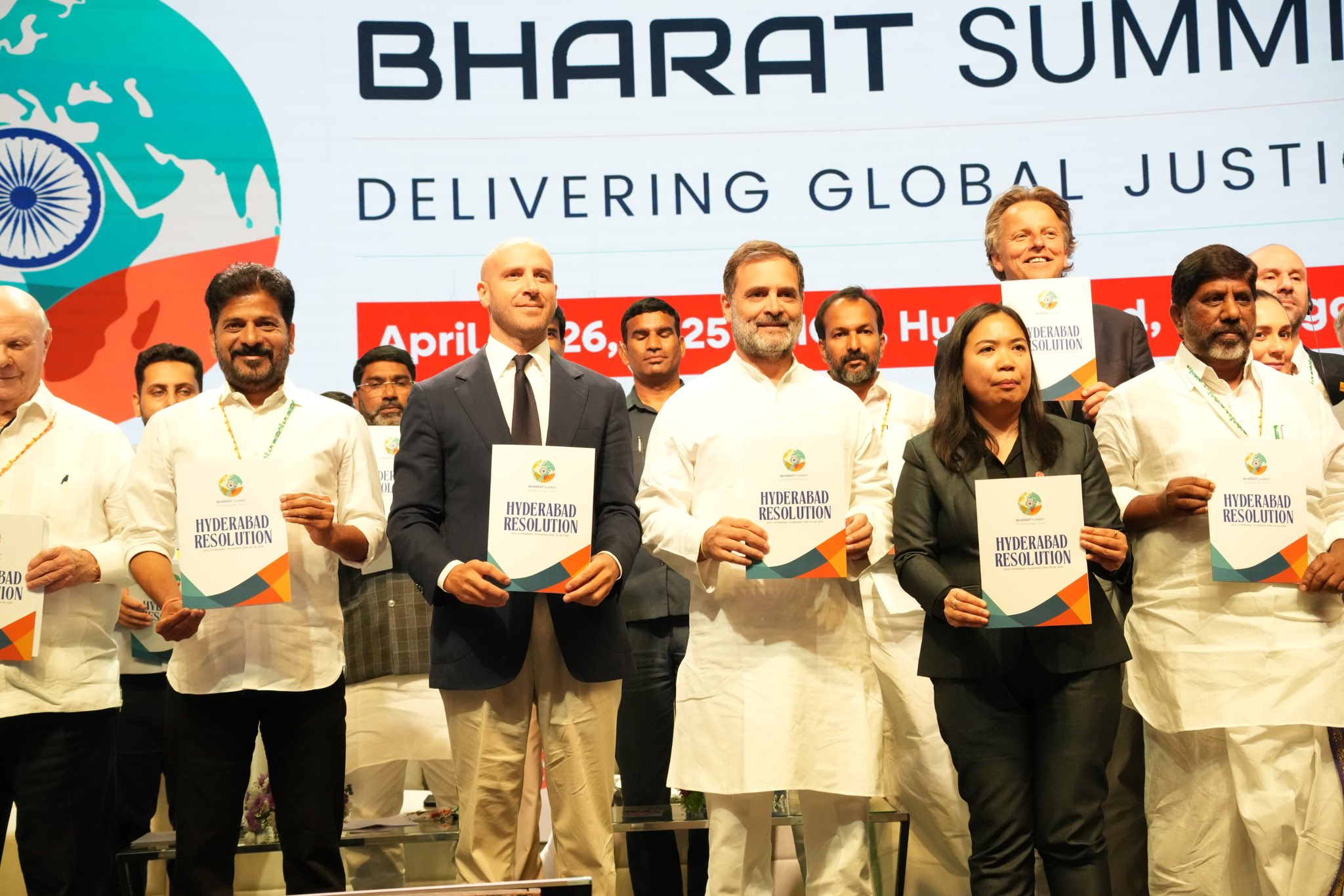
The Hyderabad Resolution, adopted at the Bharat Summit on April 26, 2025, marks a pivotal moment for progressive movements worldwide. It outlines a bold vision for tackling systemic inequalities, environmental crises, and social injustices while fostering global cooperation. This article reimagines the resolution’s key points, offering a comprehensive guide to delivering global justice through actionable strategies. By focusing on equity, sustainability, and democratic reform, we aim to inspire a world where fairness and humanity thrive.
The Urgency of Global Justice: Why It Matters Now
Global justice is no longer an abstract ideal—it’s a pressing necessity. Today’s world grapples with interconnected challenges: economic disparities, climate emergencies, and political oppression. The Hyderabad Resolution, born from the Bharat Summit, emphasizes that justice weaves together these issues with solutions rooted in solidarity, equality, and freedom. Progressive forces, including social-democratic, socialist, and labor movements, unite under this banner to address the polycrisis threatening humanity.
The resolution condemns terrorism in all forms, particularly by state actors, and highlights the rise of far-right autocracies that undermine democracy. It also calls out the failure of multilateral agreements to prioritize gender equality and civil rights, noting how these shortcomings deepen inequalities and fuel climate crises. By standing with silenced progressive movements and rejecting autocratic misuse of law, the resolution sets a clear path forward: a world that is multilateral, just, and sustainable.
Reimagining Governance for Fairness and Accountability
Governance shapes every aspect of society, from economic systems to digital frameworks. The Hyderabad Resolution demands a restructuring of public and political influence to ensure fairness, accountability, and the protection of human rights and dignity. This begins with dismantling exploitative systems and enacting progressive policies that deliver justice across all realms of life.
Progressive forces pledge to engage political systems based on universal principles, legitimate interests, and international law. They commit to honoring historical grievances while placing humanity—not capital—at the center of governance. By linking arms with diverse national and international forces, these movements aim to realize programs that prioritize people over profit. In India and beyond, the resolution recognizes universal values like freedom and democracy as the foundation for global progress.
Economic Equality: A New Paradigm for Shared Prosperity
Economic inequality remains one of the greatest barriers to global justice. The resolution outlines a transformative approach to economic systems, focusing on equity, opportunity, and sustainability. Here’s how progressive forces plan to reshape the economic landscape:
- Drive Equitable Economic Systems: Progressive movements advocate for systems that elevate living standards for all, safeguard the vulnerable, and eradicate generational poverty. This includes ensuring equal opportunities in education, housing, and technology.
- Implement Progressive Taxation: A key strategy involves upholding wealth taxes to fund equitable redistribution. Strengthening welfare systems ensures that no one is left behind, particularly in times of crisis.
- Prioritize Fair Trade and Globalization: The resolution calls for a balanced economic deal that promotes fair trade policies, democratic control over resources, and globalization that benefits all nations—not just the wealthy few.
- Enhance Social Control of Infrastructure: Life-sustaining infrastructures like food, water, energy, and digital systems must be managed effectively through public oversight. This ensures access for all, not just the privileged.
By rejecting structures that enable corporate monopolies, crony capitalism, and wealth sequestration in tax havens, progressive forces aim to rebuild an economy that works for everyone.
Environmental Justice: Safeguarding Our Planet for Future Generations
The climate crisis threatens the very foundation of human existence. The Hyderabad Resolution underscores the need for environmental justice as a core component of global equity. Here’s how it proposes to tackle this urgent issue:
- Protect Ecological Rights as Human Rights: Access to clean air, water, and biodiversity must be recognized as a fundamental human right. This protects climate-vulnerable states, indigenous communities, and climate refugees from further harm.
- Advocate for a Global Green Deal: A just transition for workers and communities is essential. The resolution pushes for economic restructuring that aligns with environmental sustainability, ensuring no one is left behind in the shift to green energy.
- Accelerate Climate Action: By reducing carbon emissions and investing in adaptation measures, nations can support sustainable technologies and transform energy systems. This is critical for the 3 billion people most vulnerable to climate impacts.
The resolution also commits to global consensus on climate change, rejecting divisions that hinder progress. By forging partnerships, progressive forces aim to create a unified front against environmental degradation.
Gender Equality and Social Inclusion: Building a World for All
Gender equality and social inclusion are non-negotiable for a just world. The Hyderabad Resolution outlines a robust plan to address systemic inequalities faced by women, LGBTQ+ individuals, and minorities:
- Promote Transformative Gender Policies: Through representation quotas, leadership initiatives, and gender-responsive budgeting, progressive forces aim to empower women and LGBTQ+ individuals, especially in crisis situations.
- Close Gender Gaps Across Sectors: Equal rights and opportunities must extend to every sector of society, from education to employment. This ensures that systemic barriers no longer hold back marginalized groups.
- Safeguard Against Discrimination and Violence: The resolution calls for strong protections against misogyny, discrimination, and violent attacks on women, LGBTQ+ individuals, and minorities in public, private, and digital spaces.
By honoring these commitments, progressive movements strive to create a society where everyone can thrive, regardless of gender or identity.
Defending Democracy and Social Justice Worldwide
Democracy is under siege in many parts of the world. The Hyderabad Resolution emphasizes the need to protect democratic institutions and uphold social justice. Here’s how progressive forces plan to achieve this:
- Safeguard Democratic Institutions: Independent press, universities, courts, and civic bodies must be protected from conservative and far-right attacks. This ensures they remain bastions of truth and accountability.
- Hold Authoritarian Regimes Accountable: Abuses of power and human rights violations by authoritarian regimes must be addressed through international pressure and legal mechanisms.
- Protect Opposition and Activists: Constitutional protections for opposition parties and activists are crucial to counter populist-autocratic attacks and ensure their voices are heard.
- Combat Digital Disinformation: The rise of digital platforms has fueled xenophobia, violence, and misinformation. Progressive forces advocate for comprehensive reforms, including stringent data protection laws and a code of conduct to regulate fake news.
By countering assaults on democracy and fostering public accountability, the resolution aims to create an environment where justice can flourish.
Fostering Peace and Human Security for All
Peace is the bedrock of a just world. The Hyderabad Resolution prioritizes policies that protect inalienable rights, promote human security, and resolve conflicts through diplomacy. Here’s the plan:
- Promote Human Security Amid Conflicts: Policies must prioritize diplomacy, conflict mediation, and postwar reconstruction to ensure lasting peace.
- Protect Against Violence: Recognizing people’s right to peace means condemning all forms of violence, including territorial aggression and expansionism.
- Support Truth and Reconciliation: Commissions empowered with prosecutorial authority can address historical injustices, fostering healing and reparative mechanisms.
The resolution also affirms that peace requires more than the absence of war—it demands economic and social security, democratic stability, and non-interference in the affairs of sovereign nations.
Reforming Global Institutions for a Balanced World Order
Global institutions must evolve to address today’s challenges. The Hyderabad Resolution calls for a reimagining of multilateral systems to ensure fairness and representation:
- Democratize the UN System: Reforming the UN Security Council and strengthening the UN system under international law is crucial for global equity.
- Balance Global Power: A new framework for international cooperation must restore balance, giving fair representation to the Global South and emerging economies.
- Prepare for Future Challenges: Global governance systems must be equipped to tackle sustainable development, peace, security, innovation, and youth empowerment.
By recognizing the international order as an impediment to economic development, progressive forces aim to create a system that reflects the needs of all nations, not just the powerful few.
A New Era of Solidarity and Cooperation
The Hyderabad Resolution concludes with a powerful call to action: progressive forces must work together to foster a new global order of solidarity and cooperation. This involves confronting injustices, forging a transformative era, and creating a world that honors the rights and aspirations of working people. By uniting parties, unions, civil society organizations, and activists, the resolution envisions a future where justice, equality, and sustainability prevail.
Conclusion: A Future Rooted in Justice and Equality
The Hyderabad Resolution, adopted on April 26, 2025, at the Bharat Summit, offers a roadmap for global justice. It addresses systemic inequalities, environmental crises, and democratic challenges with a clear vision: a world that is multilateral, just, and sustainable. By focusing on economic equity, environmental justice, gender equality, and democratic reform, progressive forces aim to transform institutions and rejuvenate the democratic mainstream. Together, we can build a future where truth, equity, and humanity prevail—a world that ensures fullness of life for all.