In a stunning turn of events, the Anti-Corruption Bureau (ACB) in Telangana has exposed a bribery scandal involving senior police officials in Suryapet. The Deputy Superintendent of Police (DSP) and a Circle Inspector (CI) were caught red-handed after demanding a hefty sum in connection with a medical case. This article delves into the details of the ACB’s raid, the arrests, and the ongoing investigation, shedding light on corruption within law enforcement and its impact on public trust. With keywords strategically woven into the narrative, this comprehensive piece aims to inform readers while boosting search engine visibility for topics like “Suryapet DSP bribery case,” “ACB Telangana raids,” and “police corruption in India.”
ACB Telangana Exposes Bribery in Suryapet: A Deep Dive into the Scandal
On May 12, 2025, the Anti-Corruption Bureau in Telangana launched a high-profile operation that sent shockwaves through Suryapet. The ACB raided the office of the Suryapet DSP, targeting two senior police officials accused of demanding a massive bribe. The operation, which unfolded in the Suryapet Sub-Division, revealed a disturbing misuse of power by those entrusted to uphold the law. This case not only highlights the persistence of corruption in India’s police force but also underscores the ACB’s role in rooting out such malpractices.
The scandal came to light after a victim, unwilling to comply with the extortionate demands, lodged a complaint with the ACB. What followed was a meticulously planned sting operation that led to the arrest of the implicated officers and a thorough investigation into their activities. Let’s break down the events, the individuals involved, and the broader implications of this case.
The Bribery Demand: How the Suryapet DSP and CI Crossed the Line
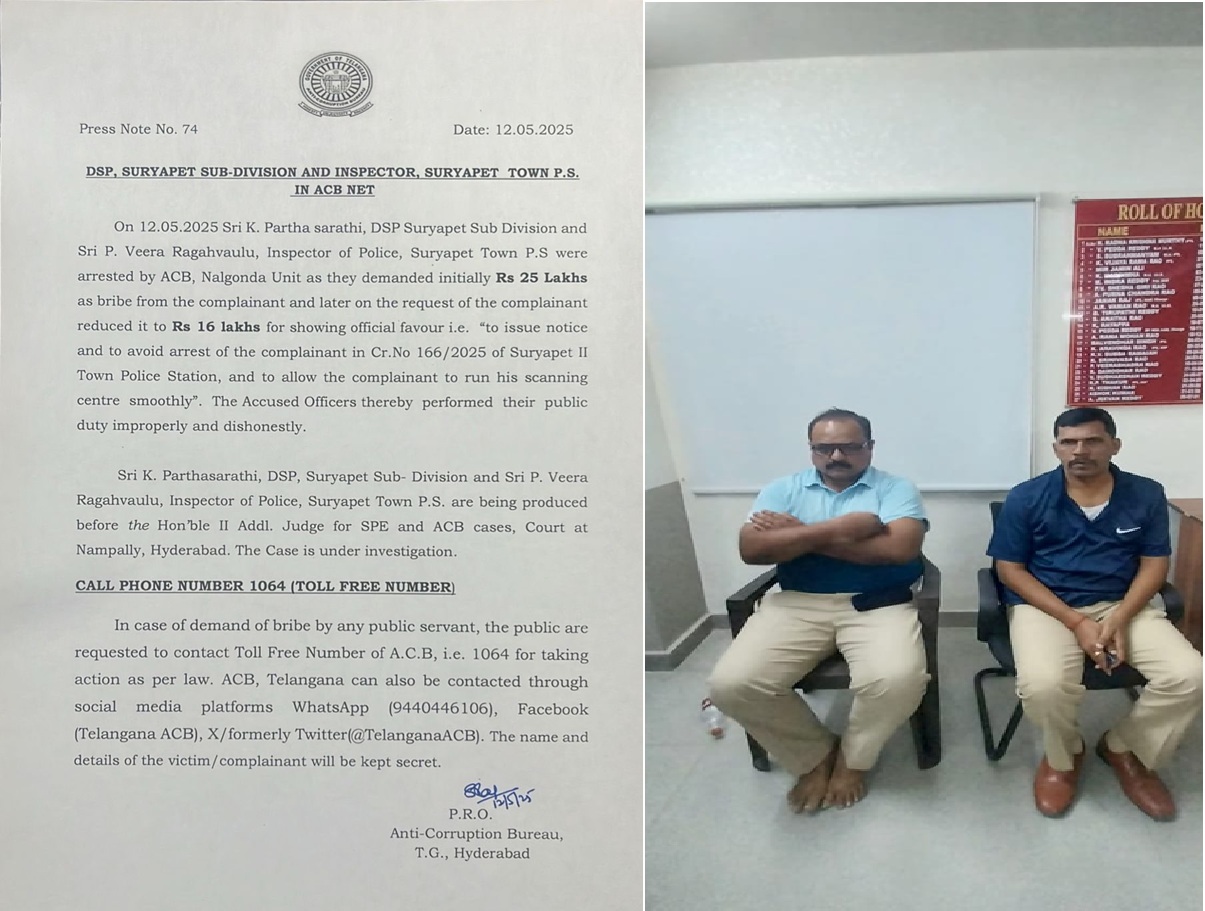
The heart of this scandal lies in a medical-related case that the Suryapet police were handling. DSP Parthasarathi and Circle Inspector Veera Raghavulu, both stationed at Suryapet Town Police Station, allegedly demanded a staggering Rs 25 lakhs from an individual involved in the case. The officers reportedly promised to manipulate the investigation in the individual’s favor in exchange for the payment—a blatant abuse of their authority.
However, after negotiations, the officers agreed to settle for Rs 16 lakhs, a sum they believed would secure their illicit deal while allowing the complainant to escape legal scrutiny in the medical case. This reduction, though significant, did little to mask the gravity of their actions. The complainant, unwilling to be a victim of this extortion, took a bold step by reporting the matter to the ACB Telangana unit in Nalgonda.
The ACB’s investigation confirmed the allegations, revealing undeniable evidence of the officers’ corrupt practices. This discovery set the stage for a dramatic confrontation that would expose the depth of corruption within the Suryapet police force.
The ACB Sting Operation: Catching the Corrupt Officers in the Act
Acting on the complainant’s tip, the ACB devised a sting operation to catch the officers in the act of accepting the bribe. On the morning of May 12, 2025, ACB officials moved swiftly to apprehend DSP Parthasarathi and CI Veera Raghavulu at the Suryapet DSP office. The officers, unaware of the trap, accepted the Rs 16 lakh bribe, sealing their fate.
The ACB team, led by seasoned investigators, ensured that the operation was executed with precision. They documented the transaction, gathering irrefutable evidence that the officers had indeed demanded and accepted the bribe. The arrests were made on the spot, sending a clear message that corruption, even at senior levels of law enforcement, would not be tolerated.
Following their arrest, the ACB issued a press release (Press Note No. 74) detailing the operation. The statement emphasized the officers’ misconduct, noting that they had not only demanded the bribe but also attempted to manipulate the investigation in Cr. No. 166/2025 of Suryapet II Town Police Station. The ACB urged the officers to perform their duties with integrity, a reminder that fell on deaf ears in this instance.
Raids on Officers’ Residences: What the ACB Uncovered
The ACB didn’t stop at the arrests. Determined to uncover the full extent of the officers’ corrupt activities, the bureau conducted thorough searches at the residences of DSP Parthasarathi and CI Veera Raghavulu. These raids aimed to find additional evidence of bribery, such as unreported assets, cash, or documents that might indicate a pattern of corruption.
While the press release did not specify the findings of these searches, such operations typically reveal hidden wealth, forged documents, or other incriminating materials. The ACB’s actions demonstrate their commitment to leaving no stone unturned in their fight against corruption. By targeting the officers’ homes, the bureau sent a strong signal that corrupt officials cannot hide behind their positions of power.
The investigation into the officers’ financial dealings is ongoing, with the ACB likely to scrutinize bank accounts, property records, and other assets to determine if this bribery incident was an isolated act or part of a larger scheme. The outcome of these searches could lead to additional charges, further tarnishing the reputation of the Suryapet police force.
Legal Consequences: DSP and CI Face the Court
Following their arrest, DSP Parthasarathi and CI Veera Raghavulu were produced before the Hon’ble II Additional Judge for SPE and ACB Cases at the Court in Nampally, Hyderabad. The court proceedings mark the beginning of a legal battle that will determine the officers’ fate. Given the overwhelming evidence gathered by the ACB, including the recorded transaction and the complainant’s testimony, the case against the officers appears strong.
The ACB’s press release also noted that the investigation is still underway, suggesting that more details may emerge as the case progresses. The court will likely examine the officers’ conduct in the medical case, the legitimacy of their actions, and any prior instances of misconduct. If convicted, the officers could face severe penalties, including imprisonment, fines, and the loss of their positions.
This legal process serves as a reminder that no one is above the law, not even senior police officials. The ACB’s success in bringing this case to court highlights the importance of accountability in law enforcement and the role of anti-corruption agencies in upholding justice.
Public Outcry and the Call for Accountability
The Suryapet bribery scandal has sparked outrage among the public, with many expressing their frustration over the persistent issue of corruption in India’s police force. Social media platforms have been abuzz with discussions, as citizens demand stricter measures to prevent such abuses of power. The ACB has provided multiple channels for the public to report similar incidents, including a toll-free number (1064) and social media platforms like WhatsApp (94400446106), Facebook (Telangana ACB), and X (@TelanganaACB).
The ACB has also assured the public that the identity and details of complainants will remain confidential, encouraging more victims of corruption to come forward. This commitment to protecting whistleblowers is a crucial step in fostering trust between the public and anti-corruption agencies.
The scandal has also reignited debates about the need for systemic reforms in law enforcement. Many argue that low salaries, lack of oversight, and a culture of impunity contribute to the prevalence of bribery among police officers. Addressing these root causes will require a concerted effort from policymakers, law enforcement agencies, and the public to ensure that incidents like the Suryapet case become a thing of the past.
The Role of the Anti-Corruption Bureau in Telangana
The Anti-Corruption Bureau in Telangana has long been at the forefront of the fight against corruption. Established to investigate and prosecute cases of bribery and misuse of power, the ACB plays a vital role in maintaining transparency and accountability in governance. The Suryapet raid is just one of many operations conducted by the bureau, which has a track record of exposing corrupt officials across various sectors.
In this case, the ACB’s swift action and meticulous planning were instrumental in bringing the guilty officers to justice. The bureau’s press release, signed by P.R.O. T.G. Hyderabad, reflects its commitment to keeping the public informed about its efforts. By publicizing such cases, the ACB not only deters potential wrongdoers but also reassures citizens that corruption will not go unpunished.
The ACB’s toll-free number and social media presence further demonstrate its dedication to accessibility. By providing multiple avenues for reporting corruption, the bureau empowers citizens to take an active role in the fight against malpractices. This collaborative approach is essential for creating a corruption-free society where public servants uphold the law rather than exploit it.
The Broader Impact: How Police Corruption Affects Society
Police corruption, as seen in the Suryapet DSP bribery case, has far-reaching consequences for society. When law enforcement officials engage in bribery, they undermine public trust in the justice system, leaving citizens feeling vulnerable and betrayed. This erosion of trust can lead to a reluctance to report crimes, cooperate with investigations, or seek police assistance, ultimately compromising public safety.
Moreover, corruption within the police force perpetuates a cycle of impunity, where officers feel emboldened to abuse their power without fear of repercussions. This culture of corruption can also deter honest officers from performing their duties effectively, as they may face pressure to conform to unethical practices.
The Suryapet case also highlights the vulnerability of individuals involved in legal disputes, such as the medical case at the center of this scandal. When police officers exploit their authority to extort money, they disproportionately harm those who are already in a precarious position, further exacerbating social inequalities.
Addressing police corruption requires a multi-faceted approach, including stricter oversight, better training, and harsher penalties for offenders. Public awareness campaigns can also play a role in educating citizens about their rights and the mechanisms available to report corruption, such as the ACB’s toll-free number.
Steps to Combat Police Corruption in India
The Suryapet DSP bribery case underscores the urgent need for reforms to combat police corruption in India. While the ACB’s efforts are commendable, systemic changes are necessary to address the root causes of such malpractices. Here are some steps that can help curb corruption within law enforcement:
- Strengthen Oversight Mechanisms: Independent bodies like the ACB should be empowered to conduct regular audits and investigations into police activities. This oversight can help identify and address corrupt practices before they escalate.
- Improve Salaries and Working Conditions: Low salaries and poor working conditions often drive police officers to engage in bribery. By providing competitive pay and better resources, the government can reduce the incentive for corruption.
- Enhance Training Programs: Police training should emphasize ethics, integrity, and the consequences of corruption. Regular workshops and refresher courses can reinforce these values throughout an officer’s career.
- Encourage Whistleblowing: Protecting whistleblowers and providing anonymous reporting channels can encourage more victims of corruption to come forward. The ACB’s assurance of confidentiality in the Suryapet case is a step in the right direction.
- Implement Harsher Penalties: Stronger legal consequences for corrupt officers can serve as a deterrent. Publicizing convictions and punishments can also send a message that corruption will not be tolerated.
- Promote Transparency: Police departments should adopt transparent practices, such as making case details and investigation outcomes publicly available (where appropriate). This transparency can build public trust and reduce opportunities for corruption.
By implementing these measures, India can take significant strides toward eliminating police corruption and restoring faith in law enforcement.
Conclusion: A Call to Action Against Corruption
The Suryapet DSP bribery scandal is a stark reminder of the challenges India faces in its fight against corruption. The actions of DSP Parthasarathi and CI Veera Raghavulu not only betrayed the public’s trust but also highlighted the systemic issues that enable such behavior to persist. However, the Anti-Corruption Bureau’s swift response and ongoing investigation offer hope that justice will be served.
For citizens, this case serves as a call to action. By reporting instances of corruption through the ACB’s toll-free number (1064) or social media platforms, individuals can play a crucial role in holding public servants accountable. The ACB’s commitment to protecting complainants’ identities ensures that victims can come forward without fear of retaliation.
As the investigation into the Suryapet case continues, it is imperative that authorities take steps to prevent similar incidents in the future. By addressing the root causes of corruption and fostering a culture of integrity within law enforcement, India can build a justice system that truly serves its people.
This article, with its in-depth analysis and strategic use of keywords like “Suryapet DSP bribery case,” “ACB Telangana raids,” and “police corruption in India,” aims to provide readers with a comprehensive understanding of the scandal while enhancing its visibility on search engines. Together, we can work toward a corruption-free future where justice prevails.