Telangana’s agriculture sector thrives on innovation and government support, especially in vegetable farming. As farmers face rising demands for fresh produce, the state government launches ambitious initiatives to boost cultivation. This article explores the latest subsidies under the Mission for Integrated Development of Horticulture (MIDH), targeting vegetable growers in Telangana for the 2025-26 financial year.
With a focus on overcoming production shortages, these programs offer direct financial aid, helping farmers expand operations and increase yields. Whether you farm tomatoes in Hyderabad’s outskirts or brinjal in Siddipet, this guide provides everything you need to know about eligibility, application processes, and best practices for successful vegetable cultivation in India.
The Rising Demand for Vegetables in Telangana: Why Expansion Matters
Farmers in Telangana actively drive the state’s economy through diverse crops, but vegetables stand out as essential for both nutrition and income. The region produces around 1.35 lakh acres of vegetables annually, yielding about 14.64 lakh tons. However, experts from the state’s agricultural university estimate that Telangana needs 26 lakh tons to meet local demands fully. This gap highlights a shortfall of approximately 12.68 lakh tons, requiring an additional 1.33 lakh acres under cultivation.
The government recognizes this urgency and commits to adding 10,000 acres each year starting in 2025-26. By promoting vegetable farming, authorities aim to stabilize prices, reduce imports from neighboring states like Andhra Pradesh and Karnataka, and enhance food security. Vegetables not only provide vital nutrients like vitamins and minerals but also offer quick returns for smallholder farmers. In urban areas such as Hyderabad, fresh produce fetches premium prices at markets like Rythu Bazaars.
Climate change adds another layer of challenge. Erratic monsoons and rising temperatures in districts like Medak and Nalgonda demand resilient farming techniques. Subsidies encourage the adoption of hybrid seeds and efficient irrigation, ensuring farmers adapt to these conditions. As a result, vegetable cultivation boosts rural employment, with women often leading in seedling preparation and harvesting. This initiative aligns with national goals under schemes like Pradhan Mantri Krishi Sinchayee Yojana (PMKSY), integrating water management for sustainable growth.
Government Initiatives to Boost Vegetable Production in Telangana
The Telangana government, under the leadership of Agriculture Minister Tummala Nageswara Rao, directs the Horticulture Department to implement large-scale programs. These efforts address vegetable shortages through the Integrated Horticulture Mission, a flagship scheme that provides targeted support. For 2025-26, the state plans to cultivate an extra 10,000 acres, offering subsidies to make expansion feasible for everyday farmers.
Minister Tummala instructs officials to prioritize direct benefit transfers, ensuring funds reach farmers’ bank accounts swiftly. This approach eliminates middlemen and promotes transparency. The scheme draws from successful models in states like Maharashtra, where similar subsidies increased vegetable output by 20% in recent years. In Telangana, the focus lies on hybrid varieties that yield higher and resist pests better.
Beyond subsidies, the government integrates training programs. Farmers learn modern techniques at Centers of Excellence (COEs) in Jeedimetla near Hyderabad and Mulugu in Siddipet district. These facilities produce high-quality seedlings, distributing them at subsidized rates. The initiative also ties into broader agricultural policies, such as the Rythu Bandhu scheme, which provides investment support. By combining these, Telangana aims to make vegetable farming a profitable venture, reducing migration from rural areas and fostering self-sufficiency.
Understanding the Subsidy Scheme: Rs. 9,600 per Acre Breakdown
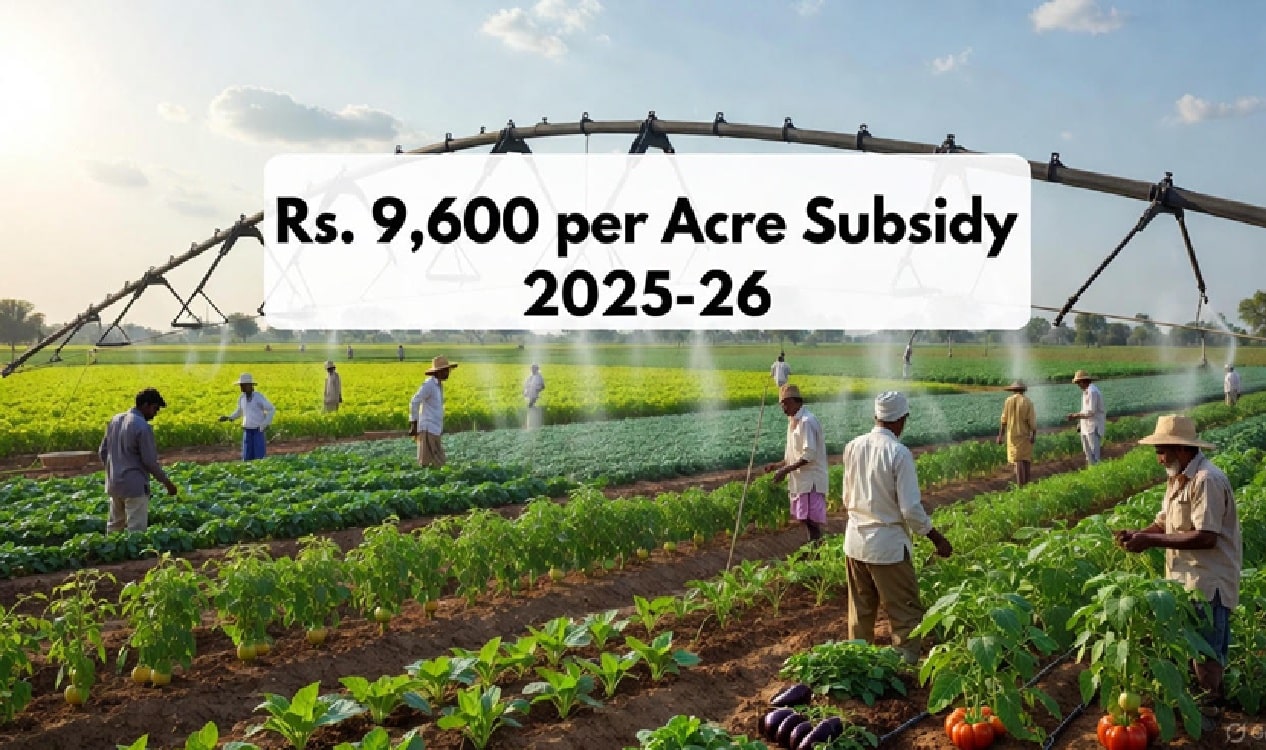
Farmers receive substantial financial aid under the MIDH scheme for vegetable cultivation in Telangana. The government estimates that producing six tons of vegetables per acre costs around Rs. 24,000, covering seeds, fertilizers, pesticides, plant protection, and nutrient management. To ease this burden, it offers a 40% subsidy, amounting to Rs. 9,600 per acre, deposited directly into farmers’ accounts.
This subsidy applies to new cultivations in 2025-26, with a cap of 2.5 acres per farmer to ensure widespread benefits. For hybrid vegetables like tomatoes and brinjal, the unit cost per hectare (about 2.47 acres) stands at Rs. 60,000, leading to a proportional subsidy that matches the per-acre figure. Farmers procure inputs from approved sources, and upon verification, the aid disburses via the Direct Benefit Transfer (DBT) system.
The scheme emphasizes a cluster approach, where groups of farmers in areas like Rangareddy and Vikarabad focus on one crop for better monitoring and marketing. Priority goes to small and marginal farmers, Scheduled Castes (SC), Scheduled Tribes (ST), and women, with reserved funds ensuring inclusivity. Unlike one-time grants, this support spreads over seasons, with 60% in the first year and 40% later, contingent on 80% plant survival.
Integrating micro-irrigation adds value, as subsidies link with Telangana State Micro Irrigation Project (TSMIP). Farmers who adopt drip systems or mulching see reduced water usage by up to 50%, enhancing yields in arid zones. The government prohibits repeat benefits if farmers received aid since 2014-15, treating the family as a single unit to prevent misuse.
Eligible Vegetables for Subsidies in Telangana: From Tomatoes to Bottle Gourds
The program covers a wide array of vegetables suited to Telangana’s semi-arid climate. Farmers cultivate tomatoes, brinjal (eggplant), ladyfinger (okra), cabbage, cauliflower, chillies, ridge gourd, capsicum, cluster beans, cucumber, snake gourd, and bottle gourd with subsidy support. These crops thrive in the state’s red sandy soils and offer multiple harvests per year.
Tomatoes lead the list, with hybrids yielding 20-30 tons per acre. Farmers in districts like Mahabubnagar prefer varieties resistant to bacterial wilt. Brinjal, another staple, benefits from grafting techniques demonstrated at COEs, reducing losses from soil-borne diseases. Chillies, crucial for Telangana’s spicy cuisine, receive aid for both green and red varieties, with exports to markets in Mumbai.
Leafy vegetables like cabbage and cauliflower suit cooler months, while gourds such as bottle and snake perform well in summer. Capsicum and cluster beans add diversity, appealing to urban consumers seeking colorful salads. The scheme promotes organic add-ons, like hydroponics for year-round production, with 50% subsidies on setups costing Rs. 350 per square meter.
Farmers select crops based on local demand and soil tests. For instance, onion storage subsidies help in areas prone to post-harvest losses, with low-cost structures at Rs. 7,000 per metric ton, 50% subsidized. This eligibility ensures farmers align with market needs, boosting income through value addition.
How to Apply for Vegetable Cultivation Subsidies in Telangana
Farmers apply easily through local horticulture officers. Start by submitting a detailed application, including land documents, Aadhaar card, bank details, and a crop plan. Officials verify eligibility, focusing on new cultivators without prior subsidies.
Once selected, farmers purchase seedlings from accredited nurseries, such as those at Jeedimetla or Mulugu COEs. These centers provide free or subsidized hybrids, ensuring quality. After planting, submit bills for inputs, and the department processes the Rs. 9,600 per acre subsidy within weeks via DBT.
Deadlines matter: Identify beneficiaries by April 26, 2025, and complete area expansion by July-August. Register on the MIDH Suraksha portal (midhsuraksha.in) for tracking. District Mission Committees approve proposals, with monthly reporting ensuring accountability.
For protected cultivation, like shade net houses, apply for credit-linked subsidies up to 50% on Rs. 710 per square meter. Banks partner in this, offering loans with back-ended aid. Farmers display scheme boards at sites, promoting awareness. Violations, like misusing funds, lead to recovery with interest under the Revenue Recovery Act.
Best Practices for Successful Vegetable Farming in Telangana
Successful farmers prepare soil meticulously. Test pH levels, aiming for 6-7, and incorporate organic matter like farmyard manure at 10 tons per acre. Rotate crops to prevent diseases, following brinjal with legumes.
Irrigation plays a key role. Use drip systems to deliver water directly to roots, saving 30-50% compared to flood methods. In Telangana’s hot summers, mulch with plastic sheets (50% subsidized) to retain moisture and suppress weeds.
Pest management integrates bio-pesticides. For tomatoes, monitor for fruit borers and apply neem oil early. Nutrient plans include balanced fertilizers: 100 kg nitrogen, 60 kg phosphorus, and 80 kg potassium per acre for high yields.
Harvest at peak ripeness. For chillies, pick green for local sales or dry for powder. Post-harvest, use subsidized pack houses (50% aid on Rs. 4 lakh units) for grading and storage, reducing spoilage by 20%.
Adopt climate-smart practices. In flood-prone areas like Khammam, raised beds prevent waterlogging. Training at Krishi Vigyan Kendras (KVKs) equips farmers with these techniques, ensuring subsidies translate to profits.
Overcoming Challenges in Vegetable Cultivation: Solutions for Telangana Farmers
Farmers encounter pests, market volatility, and water scarcity. Aphids and whiteflies devastate crops, but integrated pest management (IPM) with traps and beneficial insects cuts chemical use by 40%.
Price fluctuations hit hard. Link with cooperatives or apps like e-NAM for better rates. Government vending carts (50% subsidized at Rs. 30,000) enable direct sales in Hyderabad.
Water issues in dry districts like Adilabad demand rainwater harvesting. Subsidies for tube wells under MNREGA integrate seamlessly. Soil salinity affects brinjal; grafted plants (75% FLD subsidy) offer resistance.
Labor shortages prompt mechanization. Small tools for weeding and harvesting reduce dependency. Women-led self-help groups (SHGs) share resources, amplifying subsidy benefits.
Success Stories: Telangana Farmers Thriving with Subsidies
Raju from Siddipet expanded his tomato farm from 1 to 2.5 acres using the Rs. 9,600 subsidy. With COE seedlings, he doubled yields to 25 tons, earning Rs. 5 lakhs annually.
Lakshmi, a woman farmer in Rangareddy, adopted shade nets for capsicum. The 50% aid cut costs, and her off-season produce sold at premium prices in urban markets.
In Vikarabad, a cluster of 20 farmers focused on onions with storage subsidies. They reduced losses from 30% to 5%, boosting collective income by Rs. 10 lakhs.
These stories showcase how subsidies empower, with many farmers reinvesting in solar dryers for value-added products like chilli powder.
Future Prospects: Sustainable Vegetable Farming in Telangana
Looking ahead, Telangana targets 26 lakh tons by integrating tech like AI for pest detection. Organic farming links with PKVY, offering extra aid for certification.
Climate resilience grows through drought-resistant varieties. Exports to Middle East could rise with better PHM infrastructure, like cold storages (35% subsidized).
Policy continuity in Budget 2025-26 promises higher allocations. Farmers who embrace these will lead India’s green revolution, ensuring fresh vegetables for all.
In summary, Telangana’s vegetable subsidies open doors to prosperity. Apply today and transform your farm into a thriving enterprise.