Yes Bank, Polycab, Paytm Why Your Portfolio Tanked
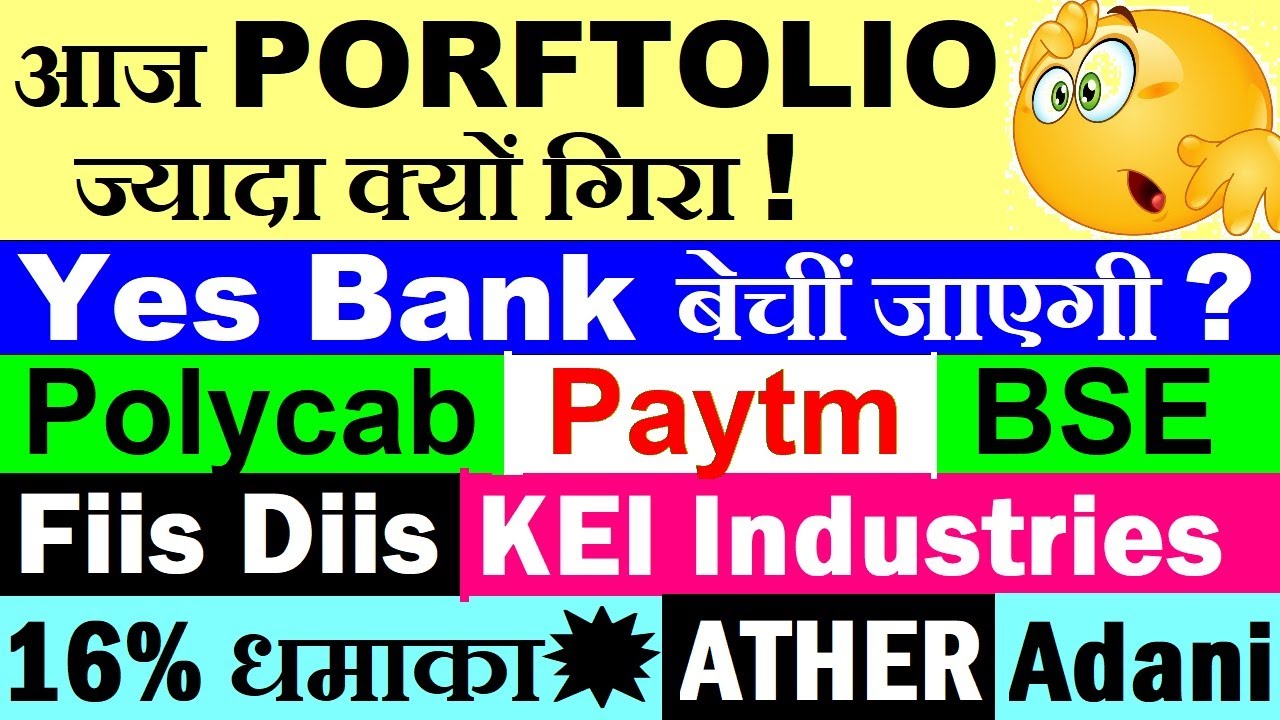
The stock market can feel like a rollercoaster, especially when your portfolio takes a hit while the broader market seems to shrug it off. If you’re wondering why your investments plummeted today despite a relatively stable market, you’re not alone. From Yes Bank’s rumored buyout to Polycab’s stellar earnings and Paytm’s struggles, today’s market action was a whirlwind of corporate earnings, IPO listings, and global influences. Key factors driving portfolio volatility, dissects the performance of major players like Yes Bank, Polycab, BSE, Paytm, KEI Industries, Ather Energy, and Adani, and offers actionable insights to navigate these choppy waters.
Understanding Today’s Market Dynamics
The Indian stock market today resembled a tightrope walk—neither soaring nor crashing but stuck in a frustrating limbo. The Nifty 50, a benchmark for large-cap stocks, wavered with minor fluctuations, closing down about 80 points. This kind of sideways movement often masks the chaos in individual portfolios, where mid-cap and small-cap stocks can swing wildly. Let’s break down why your portfolio might have suffered more than the broader market.
The Portfolio vs. Market Disconnect
Your portfolio isn’t a mirror image of the Nifty 50. While the Nifty comprises 50 large-cap giants, your holdings likely span large-caps, mid-caps, small-caps, and even micro-caps or penny stocks. Each segment behaves differently. Today, mid-cap and small-cap indices saw declines of 2-3%, far outpacing the Nifty’s modest dip. If your portfolio leans heavily into these segments, you likely felt the sting.
Why does this happen? Mid-caps and small-caps are more volatile, reacting sharply to earnings reports, market sentiment, and global cues. In contrast, large-caps in the Nifty 50 are steadier, cushioned by their size and liquidity. Comparing your portfolio’s performance directly to the Nifty is like comparing a speedboat to a cruise ship—different beasts, different journeys.
Actionable Tip: If you want your portfolio to track the market closely, consider investing in Nifty 50 ETFs or index funds. These mimic the index’s performance, reducing the gap between your returns and the market’s.
Corporate Earnings: Hits and Misses
Quarterly earnings season is a make-or-break period for stocks, and today’s results from KEI Industries, Polycab, Paytm, and BSE set the tone for market movements. Let’s analyze the standout performers and laggards.
KEI Industries: Wiring Up Strong Growth
KEI Industries, a key player in the wires and cables sector, grabbed attention with its Q4 results. The company reported a 25% surge in revenue and a 34% leap in net profit year-on-year. However, margins narrowed slightly, reflecting higher input costs or competitive pricing pressures.
Market Impact: KEI’s robust numbers fueled optimism in the wires and cables segment, boosting investor confidence in related stocks like Polycab. However, the stock’s post-earnings movement was muted, suggesting the market had already priced in these gains.
Why It Matters for Your Portfolio: If you hold KEI or similar mid-cap industrials, today’s flat performance might have dragged your portfolio, especially if you expected a sharper rally.
Polycab India: A Bright Spark in Cables
Polycab India, another wires and cables giant, delivered a stellar Q4 performance. Revenue grew 25%, margins expanded, and net profit soared 33% to ₹727 crore. The company’s fast-moving electrical goods (FMEG) segment reached breakeven, signaling operational efficiency. Polycab also recommended a final dividend of ₹35 per share, sweetening the deal for shareholders.
Market Impact: Polycab’s stock gained traction, reinforcing the wires and cables sector’s appeal. Investors saw Polycab’s results as a bellwether for smaller peers like RR Kabel, which also reported strong numbers recently.
Why It Matters for Your Portfolio: If Polycab is in your portfolio, you likely enjoyed a boost today. However, if your holdings are concentrated in other sectors, you missed this sector-specific rally.
Paytm: A Revenue Slide and Narrowed Losses
Paytm, the fintech darling, reported a 16% drop in Q4 revenue, reflecting regulatory challenges and a shrinking payments business. Consolidated losses narrowed to ₹540 crore, an improvement but a reminder of Paytm’s ongoing profitability struggles. Like many startups, Paytm’s strategy hinges on scaling revenue before tackling profitability—a long game that tests investor patience.
Market Impact: Paytm’s stock faced pressure, contributing to broader weakness in fintech and startup stocks. Investors remain wary of regulatory risks and competitive threats.
Why It Matters for Your Portfolio: If Paytm or similar high-growth, loss-making stocks dominate your portfolio, today’s decline likely hit hard. Diversifying into profitable companies could balance such risks.
BSE: A Dividend Bonanza
The Bombay Stock Exchange (BSE) stole the show with a 362% surge in Q4 profit to ₹494 crore, driven by a 75% jump in operational revenue to ₹850 crore. BSE announced a total dividend of ₹23 per share, including a ₹5 special dividend to mark its 150th anniversary and an ₹18 regular dividend. The record date for the dividend is May 14, with payments expected by September.
Market Impact: BSE’s stock soared, rewarding shareholders and signaling strength in India’s financial infrastructure. The generous dividend payout attracted income-focused investors.
Why It Matters for Your Portfolio: If you hold BSE, today was a win. However, if your portfolio lacks exposure to such niche players, you missed this rally.
IPO Spotlight: Ather Energy’s Modest Debut
Ather Energy, the electric vehicle maker, made its stock market debut today with a listing at a 2% premium. In a bullish market, Ather might have commanded a higher premium, but today’s cautious sentiment capped gains. IPOs often thrive in bull runs, as companies rush to capitalize on investor enthusiasm. In today’s tepid market, Ather’s listing was respectable but unremarkable.
Why It Matters for Your Portfolio: If you subscribed to Ather’s IPO, your gains were modest. IPOs can be a gamble in range-bound markets, so focus on fundamentals before diving in.
Actionable Tip: Research upcoming IPOs thoroughly, especially in high-growth sectors like EVs. In sideways markets, prioritize companies with strong financials over hype-driven listings.
Adani Group: A Payment Cloud Looms
Adani Group faced scrutiny today over a ₹75,000 crore payment owed by Bangladesh for power supplied by Adani Power. The group reassured shareholders that the full amount would be recovered, but doubts persist amid geopolitical tensions. This uncertainty weighed on Adani stocks, contributing to portfolio declines for investors with heavy exposure.
Market Impact: Adani Group stocks saw mixed performance, with some subsidiaries holding steady while others dipped. The broader conglomerate remains a lightning rod for market sentiment.
Why It Matters for Your Portfolio: If Adani stocks are a significant chunk of your portfolio, today’s uncertainty likely hurt. Diversifying across sectors can mitigate such concentrated risks.
Yes Bank: Buyout Buzz and Clarifications
Yes Bank was in the spotlight due to rumors that Japan’s Sumitomo Mitsui Banking Corporation (SMBC) might acquire a 51% stake. Early reports suggested RBI approval, sparking a sharp rally in Yes Bank’s stock. However, the bank clarified that claims of RBI approval were “factually incorrect,” cooling the frenzy. Talks with SMBC are ongoing, but no deal is confirmed.
Market Impact: Yes Bank’s stock surged initially but pared gains after the clarification, reflecting the market’s sensitivity to news-driven volatility.
Why It Matters for Your Portfolio: If you hold Yes Bank, today’s rollercoaster likely left you dizzy. Stocks driven by rumors are risky, so focus on confirmed developments before adjusting positions.
Actionable Tip: Monitor distressing news can amplify volatility. Monitor Yes Bank’s fundamentals, such as loan growth and asset quality, to assess its long-term potential.
FII and DII Activity: A Tug of War
Foreign Institutional Investors (FIIs) and Domestic Institutional Investors (DIIs) played a pivotal role in today’s market. FIIs bought ₹3,794 crore worth of stocks, continuing their buying streak, while DIIs sold ₹1,300-1,400 crore. FII buying is a positive signal, bolstered by a weakening US dollar against the rupee, which makes Indian equities more attractive. A softer dollar (down from a peak of 110 on the Dollar Index) reduces currency risk for FIIs, encouraging inflows.
Market Impact: FII buying provided stability, cushioning the market’s decline. Without this support, the Nifty could have fallen further. DII selling, however, reflects profit-taking or portfolio rebalancing.
Why It Matters for Your Portfolio: FII inflows stabilize large-cap stocks, but mid-caps and small-caps, where DIIs are active, saw heavier selling pressure. If your portfolio is mid-cap heavy, this explains some of the damage.
Actionable Tip: Track FII/DII activity on platforms like Moneycontrol or BSE India to gauge market sentiment. A sustained FII buying trend could signal a broader rally.
CCL Products: A Rocket in a Sideways Market
CCL Products, a coffee exporter, was a rare bright spot, surging 16-17% after reporting stellar Q4 results. Revenue and profit growth exceeded expectations, and the market rewarded the company’s operational strength. In a sideways market, such outperformers stand out, driven by strong fundamentals rather than sentiment.
Market Impact: CCL’s rally lifted sentiment in the FMCG and export sectors, but its impact was limited to specific portfolios.
Why It Matters for Your Portfolio: If you missed CCL, it’s a reminder to diversify into fundamentally strong mid-caps. Stocks like CCL can outperform even in tough markets.
Actionable Tip: Use screener tools like Screener.in to identify mid-caps with strong earnings growth and reasonable valuations.
Why Your Portfolio Hurt More Than the Market
The burning question: why did your portfolio tank when the market fell just 80 points? Here’s the math:
- Diverse Holdings: Unlike the Nifty 50’s large-cap focus, your portfolio likely includes mid-caps, small-caps, or sector-specific stocks. These segments saw declines of 2-3% today, compared to the Nifty’s 0.4% drop.
- Sector Exposure: If you’re heavily invested in sectors like fintech (Paytm), power (Adani), or banking (Yes Bank), negative news or earnings misses amplified losses.
- Leverage or Margin: Using borrowed funds magnifies both gains and losses. A 2% stock drop can feel like 4% if you’re leveraged.
- Lack of Hedging: Without strategies like stop-loss orders or put options, your portfolio is fully exposed to downside risk.
Actionable Tip: Rebalance your portfolio to align with your risk tolerance. If mid-cap volatility is too much, increase large-cap or ETF exposure. Consider hedging tools if you’re an active trader.
Navigating a Sideways Market
A range-bound market tests patience, but it’s also an opportunity to refine your strategy. Here’s how to stay ahead:
1. Focus on Fundamentals
Stocks like Polycab, BSE, and CCL Products show that strong earnings can drive gains even in tough markets. Prioritize companies with consistent revenue growth, expanding margins, and manageable debt.
2. Diversify Across Caps
A mix of large-caps, mid-caps, and small-caps balances stability and growth. For example, pair a stable large-cap like HDFC Bank with a growth-oriented mid-cap like Polycab.
3. Monitor Global Cues
A weakening dollar and FII inflows are bullish signals. Keep an eye on global macro trends, such as US interest rates or commodity prices, which influence Indian markets.
4. Use Dividends for Income
Stocks like BSE and Polycab offer attractive dividends, providing cash flow during volatility. Reinvest dividends to compound returns over time.
5. Stay Disciplined
Avoid chasing rumors (like Yes Bank’s buyout buzz) or overhyped IPOs. Stick to a disciplined investment plan, whether it’s systematic investment plans (SIPs) or dollar-cost averaging.
Conclusion: Turn Volatility Into Opportunity
Today’s market was a stark reminder that portfolios don’t move in lockstep with indices like the Nifty 50. While the market dipped modestly, mid-cap and small-cap heavy portfolios bore the brunt of earnings disappointments, sector-specific news, and DII selling. Yet, bright spots like Polycab, BSE, and CCL Products highlight the rewards of picking fundamentally strong stocks.
By understanding the disconnect between your portfolio and the market, diversifying across market caps, and focusing on earnings-driven opportunities, you can navigate volatility with confidence. Use today’s lessons to reassess your holdings, align with your risk tolerance, and position for the next market move—whether it’s a bull run or a deeper correction.
Ready to take control? Review your portfolio today, track FII/DII flows, and explore fundamentally strong stocks to weather the storm and seize opportunities.