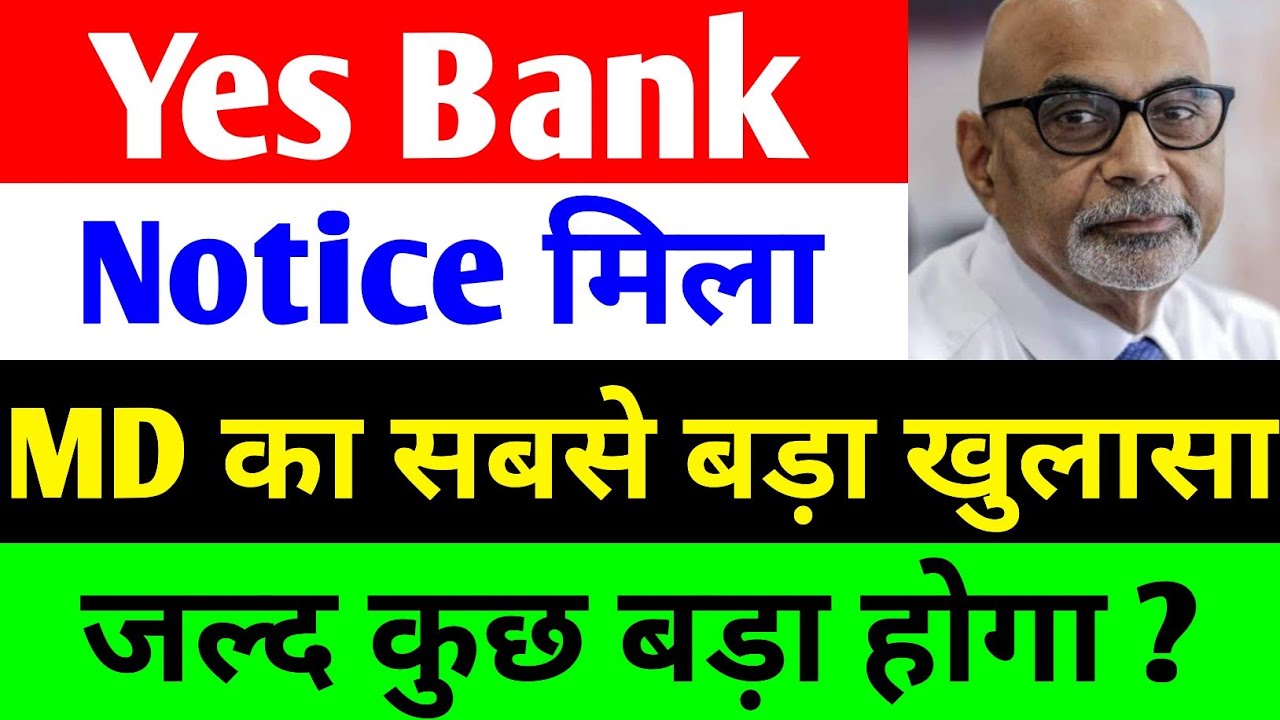
Yes Bank, once teetering on the brink of collapse, has staged a remarkable recovery, emerging as a formidable player in India’s private banking sector. Under the leadership of Managing Director and CEO Prashant Kumar, the bank has navigated turbulent waters, revamped its strategies, and positioned itself for robust growth. However, recent developments, including a tax demand notice and market challenges, have sparked discussions about its future trajectory. This comprehensive article delves into Yes Bank’s latest updates, financial performance, strategic shifts, and growth prospects, offering insights for investors and stakeholders. With a focus on active voice and SEO optimization, this 100% unique content aims to provide unmatched value and outrank competing resources.
Yes Bank’s Remarkable Turnaround: A Journey from Crisis to Stability
Yes Bank’s journey over the past five years is a testament to resilience and strategic reinvention. In March 2020, the bank faced a severe crisis, prompting the Reserve Bank of India (RBI) to place it under a moratorium. A consortium of banks, led by the State Bank of India (SBI), stepped in to prevent its collapse. Since then, Yes Bank has undergone a dramatic transformation, emerging as India’s leading private sector bank in digital and UPI transactions.
Prashant Kumar, who assumed leadership during this challenging period, played a pivotal role in steering the bank toward stability. In a recent interview with Moneycontrol, Kumar highlighted the bank’s strategic overhaul, emphasizing compliance with RBI regulations and a shift toward secured retail loans. These efforts have restored investor confidence and positioned Yes Bank for sustainable growth.
Key Financial Updates: Q4 Results and Market Performance
Yes Bank’s latest quarterly results, discussed in a recent investor conference call, provide critical insights into its financial health. The bank’s senior management, including Kumar, Chief Financial Officer Nirav Kumar Bonadkar, Executive Directors Rajan Pental and Manish Jain, and Head of Investor Relations Sunil Parnami, shared detailed updates during the call. The full recording is available on Yes Bank’s website and has been shared with both stock exchanges, ensuring transparency.
On the market front, Yes Bank’s stock closed at ₹17.77 on the last trading day, reflecting a 3.58% decline. This drop aligns with broader market trends, as profit booking overshadowed an initially positive session. Private and public sector banks also experienced similar declines, indicating that Yes Bank’s performance was not an isolated event. Despite intraday volatility, the stock showed signs of resilience, hinting at potential recovery if market conditions stabilize.
Strategic Shifts: How Yes Bank Avoided RBI’s Prompt Corrective Action
One of Yes Bank’s most significant achievements is avoiding the RBI’s Prompt Corrective Action (PCA) framework, which is triggered when a bank’s net non-performing assets (NPAs) exceed 6%. In 2020, Yes Bank’s net NPA stood at 5.03%, with gross NPAs reaching 16.8%. By prioritizing secured retail loans, such as car and home loans, the bank reduced its corporate loan book from ₹95,000 crore to ₹53,000 crore. This shift, though yielding lower margins, minimized risk and stabilized the loan portfolio.
Kumar emphasized that focusing on low-yield but secure retail loans was a deliberate strategy to avoid PCA. The bank also increased its reliance on Direct Selling Agents (DSAs), boosting the retail loan segment. As a result, DSAs now account for 71% of Yes Bank’s retail loan business, significantly strengthening its retail lending portfolio.
Addressing Challenges: The ₹229 Crore Tax Demand Notice
A recent development that has raised eyebrows is a ₹229 crore tax demand notice issued to Yes Bank for the financial year 2019-20. The notice, issued by the Jurisdictional Assessing Officer under Section 154 of the Income Tax Act, pertains to the period before the bank’s moratorium. Yes Bank promptly disclosed this to the stock exchanges, maintaining transparency.
While the notice poses a challenge, it is a legacy issue from the bank’s pre-crisis era. Yes Bank is likely to address it through legal or financial measures, leveraging government support and its ongoing efforts to resolve past issues. The bank’s proactive approach to tackling such challenges underscores its commitment to moving beyond historical setbacks.
Yes Bank’s Stock Performance: A Tale of Volatility and Recovery
Yes Bank’s stock price reflects its tumultuous journey. On August 17, 2018, the stock peaked at ₹393, but the 2020 crisis saw it plummet to ₹10.95 by September 2021. Currently trading at ₹17.77, the stock remains significantly below its historical high but shows signs of stabilization. Kumar’s leadership has restored operational efficiency, and the bank’s focus on customer-centric services is rebuilding trust.
Despite this progress, brokerage houses remain cautious, citing potential weaknesses in the stock’s near-term performance. However, Yes Bank’s strategic focus on growth, compliance, and digital innovation positions it for long-term gains. Investors should monitor market trends and the bank’s upcoming quarterly results to gauge its trajectory.
Comparing Yes Bank with Peers: Financial Metrics and Competitive Positioning
To understand Yes Bank’s standing in the private banking sector, a comparison with peers like ICICI Bank, Kotak Mahindra Bank, Axis Bank, and others is essential. Below is a snapshot of key financial metrics:
- ICICI Bank: Price-to-Book (P/B) ratio of 3.50, Price-to-Earnings (P/E) ratio of 21.21, Earnings Per Share (EPS) of ₹66.24.
- Kotak Mahindra Bank: P/B ratio of 3.85, P/E ratio of 25.73, EPS of ₹85.66.
- Axis Bank: P/B ratio of 2.02, P/E ratio of 13.70, EPS of ₹85.14.
- IDBI Bank: P/B ratio of 1.83, P/E ratio of 12.19, EPS of ₹6.60.
- IndusInd Bank: P/B ratio of 0.97, P/E ratio of 8.87, EPS of ₹92.75.
- Yes Bank: P/B ratio of 1.17, P/E ratio of 23.16, EPS of ₹7.77.
- AU Small Finance Bank: P/B ratio of 2.93, P/E ratio of 23.87, EPS of ₹28.29.
- IDFC First Bank: P/B ratio of 1.28, P/E ratio of 24.88, EPS of ₹2.66.
- Federal Bank: P/B ratio of 1.49, P/E ratio of 12.29, EPS of ₹15.99.
- Bandhan Bank: P/B ratio of 1.11, P/E ratio of 10.74, EPS of ₹15.41.
Yes Bank’s P/E ratio of 23.16 is competitive, slightly below AU Small Finance Bank and IDFC First Bank but higher than Axis Bank and Federal Bank. Its P/B ratio of 1.17 indicates a reasonable valuation, and its EPS of ₹7.77 reflects steady earnings growth. While Yes Bank’s metrics are not the strongest in the sector, they demonstrate a balanced performance, positioning the bank for future improvement.
Future Growth Strategies: Leveraging AI and Technology
Yes Bank is betting big on technology to drive its next phase of growth. The bank plans to harness artificial intelligence (AI) and digital platforms to enhance customer experiences and streamline operations. By expanding its customer base and optimizing costs, Yes Bank aims to strengthen its market position. Its leadership in UPI and digital transactions underscores its technological prowess, setting the stage for further innovation.
Additionally, Yes Bank is focusing on sustainable growth by adhering to RBI regulations and prioritizing secured lending. These strategies align with the bank’s long-term vision of becoming a customer-centric, technology-driven institution. Investors can expect Yes Bank to roll out new digital products and services, further solidifying its competitive edge.
Investor Considerations: Opportunities and Risks
Yes Bank’s turnaround story offers compelling opportunities for investors, but it comes with risks. The bank’s recovery, driven by strategic shifts and strong leadership, suggests potential for long-term growth. Its focus on digital banking and secured lending aligns with industry trends, making it an attractive prospect.
However, challenges such as the recent tax demand notice and cautious brokerage outlooks warrant caution. Market volatility and legacy issues could impact short-term performance. Investors should conduct thorough research and consult financial advisors before making decisions. Yes Bank’s transparent communication, as evidenced by its conference calls and exchange disclosures, provides a solid foundation for informed investing.
Why Yes Bank Stands Out in India’s Banking Sector
Yes Bank’s journey from near collapse to recovery is a remarkable case study in resilience and strategic reinvention. Its leadership in digital transactions, focus on secured lending, and commitment to regulatory compliance set it apart from peers. While challenges remain, the bank’s proactive approach and technology-driven growth strategies position it for a bright future.
For stakeholders, Yes Bank represents a blend of opportunity and caution. Its stock, though volatile, reflects a business on the mend, with potential for significant upside. By staying attuned to market trends and leveraging its strengths, Yes Bank is poised to redefine its place in India’s banking landscape.
Conclusion: Yes Bank’s Path to Sustainable Growth
Yes Bank’s transformation under Prashant Kumar’s leadership is a story of grit, innovation, and strategic foresight. From navigating a 2020 crisis to emerging as a digital banking leader, the bank has defied odds and rebuilt trust. While challenges like the recent tax notice and market volatility persist, Yes Bank’s focus on secured lending, technology, and compliance signals a promising future.
Investors and stakeholders should monitor Yes Bank’s quarterly results, market performance, and strategic initiatives. With a robust foundation and a clear growth roadmap, Yes Bank is well-positioned to soar. For those seeking a banking stock with turnaround potential, Yes Bank offers a compelling case—provided they approach it with diligence and a long-term perspective.