
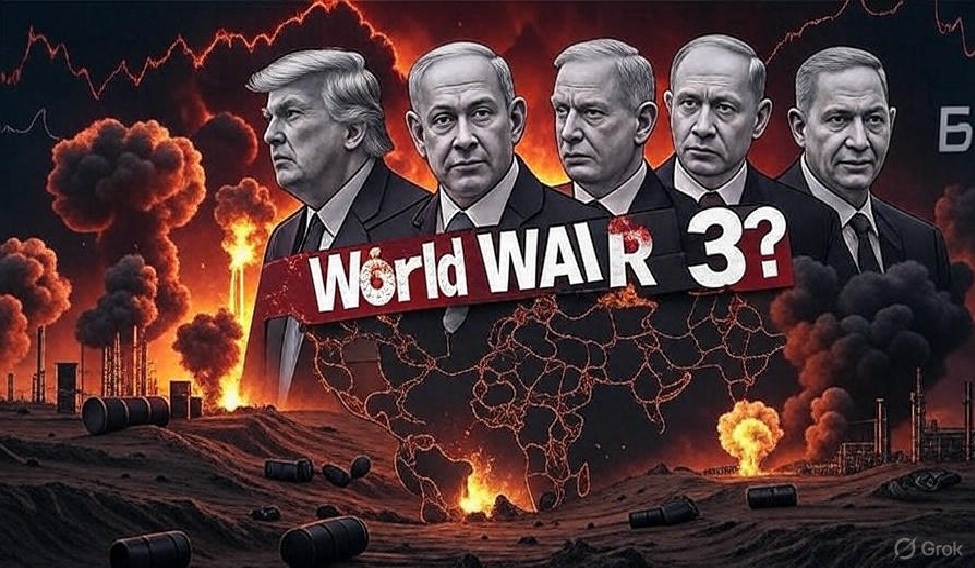
The Middle East is once again at the epicenter of global attention as the intensifying conflict between Israel and Iran raises fears of broader regional instability and potential global repercussions. Recent military actions, including Israel’s strikes on Iran’s nuclear sites and oil fields, Iran’s retaliatory attacks, and the involvement of global powers like the United States and the United Kingdom, have heightened concerns about a possible escalation into a larger conflict. The ripple effects of this crisis are already impacting global markets, particularly crude oil prices, and threatening economic stability worldwide. This article explores the latest developments in the Israel-Iran conflict, the strategic motivations behind the attacks, the economic consequences, and the potential for a wider war.
The Roots of the Israel-Iran Conflict
The current escalation stems from long-standing tensions between Israel and Iran, rooted in ideological, geopolitical, and strategic differences. Israel has consistently viewed Iran’s nuclear ambitions as an existential threat, fearing that a nuclear-armed Iran could target its territory. To preempt this possibility, Israel launched preemptive strikes on Iran’s nuclear facilities, aiming to neutralize the perceived threat before it materializes. These actions align with Israel’s longstanding policy of preventing adversaries from acquiring weapons of mass destruction.
Iran, in response, has retaliated with missile and drone attacks on Israeli targets, demonstrating its military capabilities and unwillingness to back down. The tit-for-tat strikes have intensified, with both nations showcasing advanced weaponry and testing each other’s defenses. Israel’s air defense systems, once considered nearly impenetrable, have faced challenges in intercepting Iran’s barrage of missiles, highlighting the evolving nature of the conflict.
Why Israel Targets Iran’s Nuclear Sites
Israel’s strikes on Iran’s nuclear facilities are driven by a clear strategic objective: to prevent Iran from developing nuclear weapons. Israeli officials argue that a nuclear-armed Iran would pose an immediate danger to the nation’s survival. By conducting preemptive strikes, Israel aims to disrupt Iran’s nuclear program and delay its ability to produce weapons-grade material. These operations, often described as “preemptive strikes,” reflect Israel’s proactive approach to national security.
Iran’s Retaliatory Strikes and Regional Ambitions
Iran’s response has been equally aggressive, with missile and drone attacks targeting Israeli military and civilian infrastructure. These actions serve multiple purposes: to demonstrate Iran’s military strength, deter further Israeli aggression, and rally domestic and regional support. Iran’s leadership has also used the conflict to assert its influence in the Middle East, positioning itself as a key player in the region’s geopolitical landscape.
The Economic Fallout: Crude Oil Prices Soar
One of the most immediate and tangible impacts of the Israel-Iran conflict is the sharp rise in crude oil prices. The Middle East accounts for a significant portion of global oil production, and any disruption in the region sends shockwaves through energy markets. Following Israel’s strikes on Iran’s oil fields, crude oil prices surged by 7-8% in a single day, climbing from the $60-65 range to over $75. Analysts from major financial institutions, such as JPMorgan, warn that prices could reach $120 per barrel if the conflict escalates further.
Why Oil Prices Are Skyrocketing
The surge in oil prices is driven by fears of supply disruptions. Iran, a major oil producer, has seen its oil fields and depots targeted by Israeli strikes, raising concerns about reduced output. Additionally, the Strait of Hormuz—a critical chokepoint through which 20-25% of the world’s crude oil passes—has emerged as a potential flashpoint. Iran’s lawmakers have hinted at the possibility of closing the strait as a retaliatory measure, which could severely disrupt global oil supplies and send prices spiraling further.
Global Economic Implications
Rising oil prices have far-reaching consequences for the global economy. Higher energy costs drive inflation, increase transportation and manufacturing expenses, and strain household budgets. For oil-importing nations like India, the impact is particularly severe. As oil prices climb, India’s import bill swells, putting pressure on its trade balance and potentially slowing GDP growth. The interconnected nature of global markets means that inflationary pressures in one region can quickly spread, threatening economic stability worldwide.
The Role of Global Powers: U.S., U.K., and Beyond
The Israel-Iran conflict is not confined to the two nations directly involved. The entry of global powers, particularly the United States and the United Kingdom, has raised the stakes and fueled speculation about a potential “World War 3” scenario. Former U.S. President Donald Trump has issued a stark warning to Iran, promising “full-strength retaliation” if U.S. assets in the Middle East are attacked. The U.K., meanwhile, has signaled its support for Israel, with British jets reportedly active in the region.
U.S. Involvement and Strategic Assets
The United States maintains a significant military presence in the Middle East, with air bases, naval facilities, and aircraft carriers strategically positioned across the region. These assets, often referred to as “red lines,” are critical to U.S. influence and security in the Middle East. Iran’s threats to target U.S. and allied bases have heightened tensions, prompting warnings from American leaders. The U.S. has made it clear that any attack on its assets would trigger a robust response, potentially escalating the conflict into a broader regional war.
The U.K.’s Role and Regional Tensions
The United Kingdom’s involvement adds another layer of complexity. British officials have indicated a willingness to support Israel, though they emphasize that their participation is not direct combat. The presence of U.K. jets in the region, however, suggests a readiness to intervene if the situation deteriorates further. The U.K.’s financial minister has also highlighted the potential economic risks of the conflict, underscoring the global stakes involved.
Other Players in the Conflict
Beyond the U.S. and U.K., other nations are aligning themselves in the conflict. Pakistan has publicly expressed support for Iran, urging Muslim-majority countries to unite against Israel. This stance reflects broader geopolitical alignments in the region, with some nations rallying behind Iran due to shared ideological or strategic interests. However, the involvement of major powers like the U.S. complicates the situation, as few countries are willing to directly challenge American influence.
The Strait of Hormuz: A Global Economic Lifeline
The Strait of Hormuz remains a critical factor in the Israel-Iran conflict. This narrow waterway, located between Iran and Oman, is one of the world’s most important oil transit routes. Any disruption—whether through military action or a deliberate closure by Iran—could have catastrophic consequences for global energy markets. Iran’s consideration of closing the strait is seen as a tactical move to exert pressure on the international community and deter further aggression.
The Strategic Importance of the Strait
The Strait of Hormuz handles approximately 20-25% of global crude oil trade, making it a vital artery for the world economy. A closure would lead to immediate supply shortages, driving oil prices to unprecedented levels and disrupting global trade. Even a temporary slowdown in shipping through the strait could cause significant economic damage, as seen in past instances of regional instability.
Iran’s Tactical Leverage
Iran’s threats to close the Strait of Hormuz are part of a broader strategy to assert its influence and deter adversaries. By signaling its willingness to disrupt global oil supplies, Iran aims to create panic in international markets and pressure Western nations to restrain Israel. However, closing the strait would also harm Iran’s own economy, as it relies heavily on oil exports. This delicate balance makes the strait a high-stakes bargaining chip in the conflict.
The Risk of a Wider Conflict
The involvement of multiple countries, including the U.S., U.K., and Pakistan, has fueled fears of a broader conflict that could spiral into a global war. The term “World War 3” has surfaced in discussions, reflecting concerns about a chain reaction of alliances and retaliatory actions. Historical examples, such as the Russia-Ukraine conflict or India-Pakistan tensions, demonstrate how bilateral disputes can remain contained. However, the entry of additional nations risks creating a domino effect, drawing in more actors and escalating the situation.
Why a Third Country’s Involvement Matters
The introduction of a third country into the Israel-Iran conflict could transform it from a regional dispute into a global crisis. Alliances and mutual defense agreements could pull in additional nations, creating a complex web of conflicts. For example, if the U.S. or U.K. directly engages Iran, other nations aligned with Iran—such as Russia or China—might feel compelled to respond, further escalating tensions.
The Role of Diplomacy in De-escalation
Amid the escalating tensions, there are calls for diplomacy to prevent further conflict. The U.S. has urged both Israel and Iran to cease hostilities, emphasizing that continued attacks could lead to catastrophic consequences. Diplomatic efforts to broker a ceasefire or negotiate a de-escalation are critical to avoiding a wider war. However, the deep-seated mistrust between Israel and Iran, coupled with the involvement of global powers, complicates these efforts.
The Impact on Global Markets and Economies
The Israel-Iran conflict is already reshaping global markets, with crude oil prices serving as a barometer of the crisis. Beyond oil, the conflict has implications for trade, inflation, and economic growth. Developing nations, particularly those reliant on oil imports, face significant challenges as rising energy costs strain their economies.
India’s Economic Vulnerability
India, one of the world’s largest oil importers, is particularly vulnerable to the crisis. Higher oil prices increase India’s import bill, putting pressure on its trade balance and currency. This, in turn, could slow economic growth and exacerbate inflationary pressures. The conflict’s impact on India underscores the interconnected nature of global economies and the far-reaching consequences of regional instability.
Mitigating the Economic Impact
To mitigate the economic fallout, governments and central banks may need to implement targeted measures. These could include diversifying energy sources, increasing domestic production, or providing subsidies to cushion the impact of rising fuel prices. International cooperation will also be crucial to stabilize oil markets and prevent further disruptions.
What’s Next: Monitoring the Crisis
The Israel-Iran conflict remains highly fluid, with the potential for rapid changes in the situation. Key factors to watch include:
- Crude Oil Prices: Continued attacks on Iran’s oil infrastructure or threats to the Strait of Hormuz could drive prices higher, impacting global markets.
- Third-Country Involvement: The entry of additional nations, particularly major powers, could escalate the conflict and increase the risk of a wider war.
- Diplomatic Efforts: Successful negotiations or ceasefires could de-escalate tensions and stabilize markets.
- Market Reactions: Global financial markets, particularly energy and commodity markets, will react swiftly to new developments in the conflict.
Preparing for Uncertainty
Businesses, investors, and policymakers must prepare for a range of scenarios, from a contained regional conflict to a broader war with global implications. Diversifying supply chains, securing energy reserves, and monitoring geopolitical developments will be critical to navigating the uncertainty.
Conclusion: A Call for Restraint and Diplomacy
The Israel-Iran conflict is a stark reminder of the fragility of global stability and the interconnectedness of economies. As tensions rise and the specter of a wider war looms, the international community must prioritize diplomacy and restraint to prevent catastrophic consequences. The stakes are high, not only for the Middle East but for the entire world. By addressing the root causes of the conflict and working toward a peaceful resolution, global leaders can avert a crisis that threatens to reshape the geopolitical and economic landscape.